
A good thermal camera for roof inspection helps you spot trapped moisture, insulation gaps, and heat loss before small issues turn into expensive repairs.
We selected a mix of handheld and smartphone-compatible models for contractors, inspectors, and serious DIY users who want dependable thermal detail without guesswork.
Best 10 Thermal Camera for Roof Inspection Picks for 2026
Commercial-Grade Spot Checks
FLIR TG165-X Thermal Imaging Camera

- MSX improves thermal image readability
- Bullseye laser helps target the measurement area
- IP54 housing and drop-tested build for jobsite use
Best For: Contractors and inspectors needing a rugged spot-check camera
High-Resolution Inspection Tool

- 512×384 X³ IR resolution for detailed imaging
- 3.5" IPS screen plus 2MP visual camera
- WiFi, USB PC analysis, and file management tools
Best For: Professionals needing detailed roof inspections and reporting features
Advanced Touchscreen Imaging
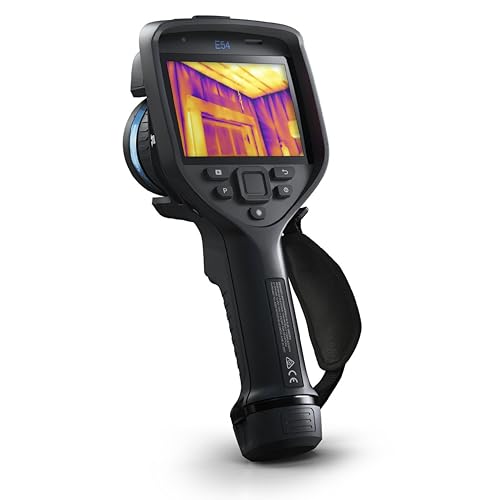
- 320x240 infrared resolution with MSX enhancement
- 4" touchscreen makes on-device review easier
- METERLiNK supports data embedding from compatible meters
Best For: Inspectors needing advanced roof inspection imaging and data integration
Field-Ready Value Pick

- TISR-enhanced 512 x 384 imaging for clearer scans
- 64GB storage and Wi-Fi help with documentation
- IP54 build with 2-meter drop resistance
Best For: Buyers wanting a durable roof inspection camera with easy documentation
Portable iOS Roof Check Tool
FLIR ONE Pro LT for Lightning iPhones

- Lightning-port iPhone compatibility
- 1440x1080 visual plus 80x60 thermal imaging
- Drop-rated and cloud-sharing ready
Best For: iPhone users with Lightning ports who want a compact roof inspection camera
Handheld Detail Scanner

- 320x240 screen with TISR-enhanced 240x180 resolution
- 25Hz smooth thermal viewing with laser targeting
- Windows PC analysis and report generation
Best For: Users who want detailed handheld inspections and PC reporting
AI Roof Inspection Assistant
HF96 Thermal Camera with Scene Detection

- AI scene recognition for leaks and insulation gaps
- Live super resolution to 240x240 clarity
- 11-hour runtime with IP54 durability
Best For: Inspectors who want AI-assisted thermal scans for roofs and buildings
Compact Site-Ready Thermal Scanner
H128 Handheld Thermal Camera, 240 x 240 TISR

- 240x240 TISR with 25Hz smooth imaging
- Up to 24-hour battery life
- IP65 and 6.56-foot drop resistance
Best For: Long inspection days and rugged field use
Dual-View Inspection Pro

- Dual IR + 2MP visible camera
- 512x384 TISR with 25Hz imaging
- PC analysis with 2D/3D reporting
Best For: Roof inspections that need thermal plus visual context
Budget-Friendly Thermal Spotter
Thermal Camera, 240 x 240 TISR, 50° FOV

- 240x240 super-resolution with 25Hz refresh
- 50° field of view for broader scans
- IP54 rating and 6.6-foot drop resistance
Best For: Simple roof checks and general troubleshooting
Commercial-Grade Spot Checks – FLIR TG165-X Thermal Imaging Camera
If you want a thermal camera for roof inspection that’s simple, rugged, and fast to read, the FLIR TG165-X is built for practical field use. Its 80×60 IR image, MSX visual enhancement, and bullseye laser make it easier to pinpoint hot areas and confirm what you’re seeing on the roof.
Best For: Contractors and inspectors who want a durable, easy-to-use roof inspection camera with clear spot targeting.
Pros:
- MSX adds visible detail to thermal images for easier interpretation
- Bullseye laser helps show the measurement area quickly
- Wide temperature range from -25°C to 300°C supports building checks
- IP54 enclosure and drop-tested design suit rough jobsite conditions
Cons:
- Lower 80×60 IR resolution than higher-end inspection cameras
- Best suited to spot checks rather than highly detailed thermal analysis
Overall, the TG165-X is a straightforward, rugged option when you need reliable roof inspections without a complicated workflow. It focuses on speed, durability, and readable thermal spotting rather than advanced imaging extras.
High-Resolution Inspection Tool – Thermal Master Thor 002
The Thermal Master Thor 002 is a strong pick if you want a thermal camera for roof inspection with more image detail and broader documentation tools. It combines 512×384 X³ IR resolution, a 2MP visible camera, and a bright 3.5″ IPS screen, which makes it easier to review thermal patterns on the roof and keep records on site.
Best For: Professionals who want higher-resolution roof inspection imaging with app, PC, and reporting support.
Pros:
- Upgraded 512×384 thermal resolution for more detailed inspections
- 2MP visual camera and 3.5″ IPS display improve image clarity
- Wide -4°F to 1022°F range with ±3.6°F accuracy
- WiFi, USB PC analysis, voice notes, and QR file management support documentation
Cons:
- Larger, heavier handheld design than simpler spot-check cameras
- Advanced features may be more than needed for basic roof scans
For roof work that benefits from sharper images and better reporting, the Thor 002 offers a strong mix of clarity and workflow tools. It’s a more feature-rich choice when you want both inspection detail and documentation flexibility.
Advanced Touchscreen Imaging – FLIR E54 Thermal Camera
The FLIR E54 is a more advanced thermal camera for roof inspection when you need sharper imaging and a wider toolset. Its 320×240 infrared resolution, MSX enhancement, and 4″ touchscreen make it better suited to structured inspection work where image detail and easy navigation matter.
Best For: Inspectors who want a more advanced roof inspection camera with touchscreen control and data integration.
Pros:
- 320×240 IR resolution offers strong image detail for inspection work
- MSX helps combine visible and thermal information for easier interpretation
- 4″ touchscreen supports smoother on-device operation
- METERLiNK can embed data from compatible meters into IR images
Cons:
- Corded-electric power design is less portable than battery-only units
- More advanced setup may be unnecessary for basic roof spot checks
For roof inspections that call for clearer images and better workflow integration, the E54 stands out as a capable professional tool. It’s best when you want inspection-grade detail instead of a simple handheld thermal snapshot.
Field-Ready Value Pick – TOPDON TC004 Thermal Camera
The TOPDON TC004 is a practical thermal camera for roof inspection if you want a big screen, solid resolution, and easy field handling. Its 3.5-inch display, TISR-enhanced 512 x 384 imaging, red laser pointer, and built-in storage make it a convenient option for checking roof temperature differences and saving evidence as you go.
Best For: Buyers who want a field-ready roof inspection camera with strong storage and simple reporting workflow.
Pros:
- TISR boosts 256×192 thermal input up to 512×384 for sharper images
- 3.5-inch display helps make hot spots easier to review
- 64GB built-in storage supports lots of images and videos
- IP54 protection, 2-meter drop resistance, and LED light improve field use
Cons:
- Battery life is listed at 8 hours, which is good but not class-leading
- Resolution starts lower before enhancement, so it’s still a mid-tier imaging system
For roof inspections that need a balance of clarity, storage, and durability, the TC004 is a sensible all-around choice. It keeps the workflow simple while still offering the tools needed for efficient on-site documentation.
Portable iOS Roof Check Tool – FLIR ONE Pro LT for Lightning iPhones
If you need a thermal camera for roof inspection and already use an iPhone with a Lightning port, the FLIR ONE Pro LT offers a compact way to spot temperature differences without carrying a full handheld unit. Its 80×60 thermal resolution is modest, but the higher 1440×1080 visual image helps with reference detail when checking roof surfaces and problem areas.
Best For: iPhone users with Lightning-port devices who want a lightweight, jobsite-tough roof inspection camera.
Pros:
- Compatible with iOS devices that use a Lightning port
- 1440×1080 visual resolution paired with 80×60 thermal resolution
- Rated to survive a 1.5-meter drop for jobsite use
- Can upload, organize, and share images through FLIR Ignite Cloud
Cons:
- Not compatible with iPhone 15 and later USB-C models
- Thermal resolution is lower than larger handheld inspection cameras
For roof inspection work where portability matters most, this model is best when you want quick thermal checks from a phone-based tool. It fits a very specific ecosystem, but within that lane it’s a practical inspection companion.
Handheld Detail Scanner – FOXWELL RT280 Thermal Camera
For anyone comparing a thermal camera for roof inspection with more traditional handheld tools, the FOXWELL RT280 brings a larger screen, stronger image detail, and PC-based reporting. Its 320×240 LCD, TISR-enhanced resolution, and 25Hz refresh rate make it a solid option when you want smoother thermal viewing while checking roofs, leaks, or other building issues.
Best For: Inspectors who want a handheld thermal camera with PC analysis and stronger image detail for building diagnostics.
Pros:
- 2.8-inch 320×240 display with TISR-enhanced 240×180 effective resolution
- 25Hz frame rate for smooth viewing during inspections
- Includes PC software for 2D/3D analysis and report generation on Windows
- Built-in 8GB storage holds more than 20,000 images and videos
Cons:
- PC analysis is not compatible with Mac
- Handheld format is less pocketable than a phone attachment
The RT280 is aimed at users who want more inspection depth than a phone accessory can usually provide. If your roof work involves documentation, temperature comparisons, and reporting, this model is built for that workflow.
AI Roof Inspection Assistant – HF96 Thermal Camera with Scene Detection
If you want a thermal camera for roof inspection that helps interpret what you’re seeing, the HF96 stands out for its AI scene recognition and live super resolution. It is designed to identify water leaks and insulation gaps faster, while the 240×240 thermal output and 25Hz refresh rate help keep scans clear and usable during building checks.
Best For: Roof and building inspectors who want AI-assisted thermal scanning with long runtime and easy field use.
Pros:
- AI IntellFault scene recognition can help locate water leaks and insulation gaps
- Live super resolution enhances images to 240×240 clarity
- Up to 11 hours of runtime supports long inspection sessions
- IP54 protection, 6.6-foot drop testing, and 4 GB storage add field durability
Cons:
- Moisture readings are not included
- Advanced scene features require firmware update and menu setup
The HF96 is the most inspection-guided option in this group, especially when roof problems need faster identification rather than manual interpretation alone. Its mix of AI assistance, portability, and battery life makes it well suited to full-day work.
Compact Site-Ready Thermal Scanner – H128 Handheld Thermal Camera, 240 x 240 TISR
If you want a thermal camera for roof inspection that’s easy to carry around all day, the H128 is built for quick checks and longer work sessions. Its 240×240 TISR enhancement, 25Hz refresh rate, and temperature alarm make it a practical choice for spotting abnormal heat patterns, while the IP65 body adds confidence when you’re working in tough conditions.
Best For: Inspectors who want a durable, lightweight thermal camera for roof inspection and other field checks with long battery life.
Pros:
- 240×240 TISR output and 40mk sensitivity help reveal small temperature differences.
- Up to 24 hours of battery life supports extended inspection days.
- IP65 protection and 6.56-foot drop resistance improve jobsite durability.
- Temperature alarm and max/min/center tracking speed up anomaly detection.
Cons:
- Lower base resolution than higher-end dual-camera thermal models.
- No visible-light camera for side-by-side real-world image comparison.
This is a strong fit if your priority is dependable thermal scanning with long runtime and rugged handling. It focuses on core inspection needs rather than advanced analysis extras, which can be a plus for straightforward roof work.
Dual-View Inspection Pro – FOXWELL RT280 PRO 640×480
The FOXWELL RT280 PRO is a strong thermal camera for roof inspection if you want both thermal and visible context in one tool. Its dual-lens design, five image modes, and PC analysis software make it easier to compare heat patterns against the actual roof surface and document findings clearly.
Best For: Roof inspectors and technicians who want dual-camera imaging plus detailed analysis and reporting.
Pros:
- Built-in IR and 2MP visible camera support thermal, visible, PIP, overlay, and outline fusion modes.
- 512×384 TISR enhancement and 25Hz frame rate help produce detailed, smooth images.
- High/low alarms, laser targeting, and LED light improve spotting and aiming in difficult spaces.
- PC software supports 2D/3D analysis, point/line/area tools, and report generation.
Cons:
- Windows-only analysis software; not compatible with Mac.
- More features may be more than needed for simple quick checks.
This model stands out when image context and documentation matter as much as detection. It’s a better fit for users who want a more complete inspection workflow instead of a basic spot-check camera.
Budget-Friendly Thermal Spotter – Thermal Camera, 240 x 240 TISR, 50° FOV
For buyers who need a straightforward thermal camera for roof inspection without a lot of extras, this handheld unit covers the essentials well. It offers 240×240 super-resolution, a 25Hz refresh rate, and a wide 50° field of view to help scan large areas efficiently and flag unusual heat patterns.
Best For: Homeowners and technicians who want a simple, durable thermal camera for roof inspection and general troubleshooting.
Pros:
- 240×240 super-resolution improves clarity over basic thermal imagers.
- 50° field of view helps cover broad areas during scanning.
- Temperature alarm shows highest, lowest, and center readings for faster spotting.
- IP54 resistance and 6.6-foot drop protection support field use.
Cons:
- No visible camera or advanced PC analysis features listed.
- Indoor/outdoor usage is listed as indoor, which may matter for some workflows.
This is a practical pick if you mainly want clear thermal readings, a wide scan area, and a rugged handheld design. It keeps the feature set focused on inspection basics rather than advanced reporting tools.
How We Picked the Best Thermal Camera for Roof Inspection
For this roundup, we focused on models that make roof work easier in real-world conditions: useful thermal resolution, practical temperature range, stable frame rate, readable displays, and features that support fast scanning on ladders or from attic access points. We also weighed portability, battery life, and whether the camera is better suited to quick spot checks or more detailed inspections.
Quick Comparison
The best Thermal Camera for Roof Inspection depends on how you work. Smartphone add-ons are convenient for light duty and occasional checks. Handheld cameras usually offer better screens, stronger thermal performance, and easier operation outdoors. Higher-resolution models are better when you need to distinguish small moisture patterns, flashing issues, or subtle thermal bridges across larger roof sections.
Key Buying Factors for a Thermal Camera for Roof Inspection
Thermal Resolution
Resolution affects how much detail you can see in roof surfaces, seams, and wet spots. Higher resolution generally makes it easier to identify fine temperature differences, especially when scanning from a distance. If you regularly inspect larger or more complex roofs, prioritize clearer imaging over bare-minimum specs.
Display, Focus, and Ease of Use
A bright screen, simple controls, and quick start-up matter when you are moving between roof planes, attic spaces, and exterior walls. Features such as visual overlays, laser pointers, and good ergonomics can speed up image capture and reduce missed areas.
Temperature Range and Sensitivity
Roof inspections often involve subtle differences rather than extreme heat. Look for a camera that can detect small temperature changes and handle both hot sun-exposed surfaces and cooler shaded sections. This matters when comparing suspect areas and confirming whether a patch is truly abnormal.
Battery Life and Field Durability
Long battery life is valuable on larger properties, and rugged construction helps when you are working on rooftops, in attics, or in changing weather. A dependable Thermal Camera for Roof Inspection should be easy to carry, quick to power on, and tough enough for daily use.
Who Should Buy Which Thermal Camera for Roof Inspection?
Choose a smartphone thermal camera if you want convenience, occasional use, and a lower entry cost. Pick a midrange handheld if you inspect roofs regularly and want a better balance of portability and image quality. Go for a higher-end model if you need sharper detail, more reliable documentation, and a tool that can support professional reporting across multiple property types.
If your priority is finding leaks, insulation defects, or hidden moisture fast, focus on image clarity first, then battery life and workflow features. That combination will usually deliver the best results in the field.