
Choosing the right Sony camera for landscape photography comes down to resolution, dynamic range, lens flexibility, and how much weight you want to carry into the field.
Below, we focus on cameras that make sense for landscapes first, whether you want a rugged full-frame body, a versatile zoom kit, or a compact option for travel days.
Best 10 Sony Camera for Landscape Photography Picks for 2026
Full-Frame All-Rounder
Sony Alpha a7 IV with 28-70mm Lens

- 33MP full-frame sensor for detailed landscape images
- Sensor-shift stabilization supports handheld shooting
- 759-point AF and articulating LCD improve flexibility
Best For: Full-frame landscape shooters who want a versatile do-it-all Sony
Budget APS-C Bundle

- 24.2MP APS-C sensor for entry-level landscape work
- Includes 16-50mm and 55-210mm lenses
- Fast AF and 4K video add extra value
Best For: New landscape shooters who want a low-cost Sony bundle
Zoom-Heavy Compact

- 24-600mm ZEISS lens for huge framing flexibility
- Optical stabilization supports handheld telephoto shots
- 1-inch 20.1MP sensor with 4K video
Best For: Travel photographers who want an all-in-one zoom landscape camera
Value Full-Frame Bundle

- 33MP full-frame body for detailed landscape files
- Includes case, spare battery, cable, and 128GB card
- Two memory slots support backup-friendly shooting
Best For: Landscape shooters who want a bundled full-frame Sony kit
Compact Travel Zoom
Sony RX100 VII for Landscape Photography

- 24-200mm Zeiss zoom for flexible framing
- 20.1MP 1-inch stacked CMOS sensor
- Tilting LCD plus electronic viewfinder
Best For: Travelers who want a pocketable landscape camera
Full-Frame Starter Kit

- 24.2MP full-frame sensor with wide dynamic range
- 28-70mm zoom for landscapes and general use
- Bundle includes card, battery, case, and filter kit
Best For: Photographers who want a full-frame bundle ready out of the box
Ultra-Wide Compact

- 20mm ultra-wide lens for broad views
- 1-inch sensor with bright f/2 lens
- Compact body with articulating touchscreen
Best For: Casual shooters who want a lightweight ultra-wide option
Compact Travel Hybrid
Sony Alpha a6700 APS-C kit with 16-50mm + 55-210mm

- 26MP APS-C sensor for detailed landscape shots
- Includes 16-50mm and 55-210mm lenses
- 5-axis stabilization and AI autofocus for handheld shooting
Best For: travelers and hobbyists wanting a flexible APS-C landscape kit
High-Resolution Pro Body
Sony Alpha 7R V 61MP full-frame camera
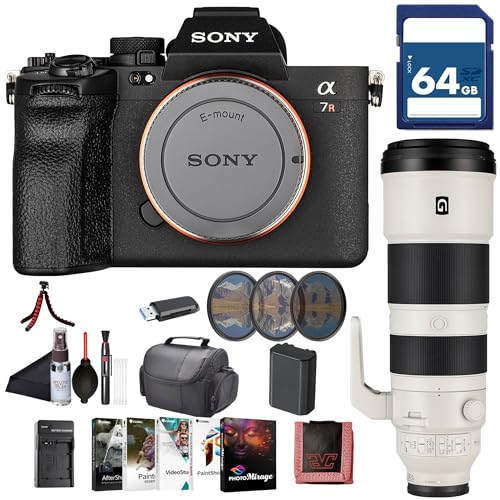
- 61MP full-frame sensor for maximum landscape detail
- 8-stop stabilization helps with handheld shots
- Dual card slots and pro workflow features
Best For: professional landscape shooters who need top-end resolution
Budget-Friendly APS-C
Sony Alpha a6400 with 16-50mm lens
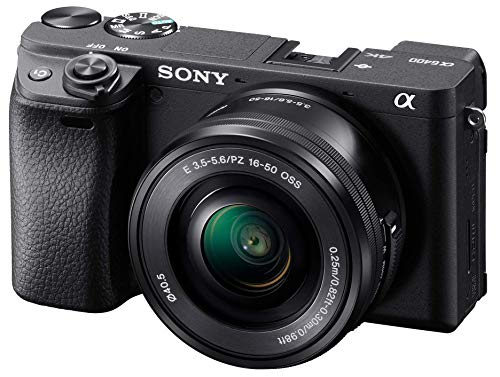
- 24.2MP APS-C sensor for solid landscape detail
- Real-time Eye AF and object tracking
- Compact body with tilting touchscreen and kit lens
Best For: beginners and budget buyers starting landscape photography
Full-Frame All-Rounder – Sony Alpha a7 IV with 28-70mm Lens
If you want a Sony camera for landscape photography that also handles travel, video, and everyday shooting, the Alpha a7 IV is a strong full-frame choice. Its 33MP sensor, sensor-shift stabilization, and 28-70mm zoom give you a flexible starting point for wide scenes, stitched panoramas, and handheld work in changing light.
Best For: Photographers who want a full-frame Sony with strong image quality and a versatile kit lens.
Pros:
- 33MP full-frame Exmor R sensor for detailed landscape files.
- Sensor-shift image stabilization helps when shooting handheld.
- 759-point autofocus and real-time Eye AF add reliability for mixed-use shooting.
- Articulating LCD and electronic viewfinder make framing easier from awkward angles.
Cons:
- Kit lens max aperture of f/3.5-5.6 is not especially bright.
- 28-70mm range is useful, but some landscape shooters may want a wider lens later.
Overall, the a7 IV is the most balanced option here if you want a high-resolution Sony body that can grow with your landscape kit. It is especially appealing if you value full-frame detail, stabilization, and a modern feature set in one camera.
Budget APS-C Bundle – Sony a6100 with Dual Lenses
If you are looking for a Sony camera for landscape photography without jumping to a full-frame body, the a6100 bundle is a practical entry point. The 24.2MP APS-C sensor, fast autofocus, and included 16-50mm plus 55-210mm lenses give you a usable range for wide scenic shots and longer detail compositions.
Best For: Beginners or budget-minded buyers who want an APS-C Sony bundle with two lenses included.
Pros:
- 24.2MP APS-C sensor is a solid step into interchangeable-lens landscape shooting.
- Fast 0.02-second autofocus with real-time AF and object tracking.
- Bundle includes 16-50mm and 55-210mm lenses plus 64GB card and accessories.
- 4K video with full pixel readout adds extra versatility.
Cons:
- APS-C sensor is smaller than full-frame options for maximum detail and flexibility.
- The bundle is not an all-in-one solution and may still need extra accessories.
This is a sensible starter kit if you want to begin shooting landscapes with a compact Sony system. The included lenses and fast AF make it easy to cover a lot of situations right away.
Zoom-Heavy Compact – Sony RX10 IV Bridge Camera
Sony Cyber‑Shot RX10 IV with 0.03 Second Auto-Focus & 25x Optical Zoom (DSC-RX10M4), Black, 2.32
Check Price On AmazonThe RX10 IV is a very different kind of Sony camera for landscape photography, aimed at photographers who want one fixed-lens body with serious zoom reach. Its 24-600mm ZEISS lens, 20.1MP 1-inch sensor, and optical stabilization make it useful for wide scenic views, compressed mountain layers, and detail-heavy landscape studies without changing lenses.
Best For: Travelers and landscape photographers who want extreme zoom in a compact bridge camera.
Pros:
- 24-600mm ZEISS zoom covers both wide scenes and distant details.
- Optical image stabilization helps for handheld shooting at long focal lengths.
- 0.03-second AF and 315 phase-detection points improve responsiveness.
- 1-inch 20.1MP sensor and 4K video add solid imaging capability.
Cons:
- 1-inch sensor is smaller than APS-C and full-frame alternatives.
- Fixed lens design offers less upgrade flexibility than interchangeable-lens bodies.
For photographers who value reach and convenience over lens swapping, the RX10 IV stands out. It is especially appealing if your landscape work includes distant peaks, layered scenes, or travel situations where carrying multiple lenses is not ideal.
Value Full-Frame Bundle – Sony Alpha 7 IV with Zoom Kit
If you want a Sony camera for landscape photography and prefer a bundle with useful extras, this Alpha 7 IV kit is worth a look. You get the same 33MP full-frame body, sensor-shift stabilization, and 28-70mm zoom lens platform, plus added items like a carrying case, spare battery, HDMI cable, and memory card.
Best For: Buyers who want a full-frame Sony landscape camera bundle with accessories included.
Pros:
- 33MP full-frame sensor is well suited to detailed landscape files.
- Sensor-shift stabilization helps with handheld shooting.
- Includes a carrying case, extra battery, HDMI cable, and 128GB memory card.
- Two memory slots add flexibility for longer sessions and backups.
Cons:
- Kit lens max aperture of f/3.5-5.6 is modest.
- Bundle value depends on whether you need the included accessories.
This bundle makes sense if you want the a7 IV platform and prefer to get started with several practical extras in the box. It is a strong choice for landscape shooters who also want a camera ready for broader stills-and-video use.
Compact Travel Zoom – Sony RX100 VII for Landscape Photography
If you want a Sony camera for landscape photography that stays truly pocketable, the RX100 VII is built around reach and speed in a compact body. Its 24-200mm Zeiss zoom gives you flexibility for wide scene framing, detail shots, and quick composition changes without swapping lenses.
Best For: Travelers and hikers who want a compact Sony camera for landscape photography with a strong zoom range.
Pros:
- 24-200mm Zeiss zoom covers wide scenic views and tighter landscape details.
- 1-inch stacked CMOS sensor and 20.1MP resolution deliver solid still image quality.
- Fast hybrid autofocus with real-time tracking helps lock focus quickly.
- Tilting LCD and electronic viewfinder make it easier to frame from low or high angles.
Cons:
- Maximum aperture narrows as you zoom, so light gathering is limited at the long end.
- Compact controls and fixed lens design may feel restrictive compared with interchangeable-lens bodies.
This is a strong pick if portability matters as much as image quality. For landscape shooters who prioritize convenience and a versatile built-in zoom, it offers a well-balanced mix of reach, autofocus performance, and pocket-sized handling.
Full-Frame Starter Kit – Sony a7 III Landscape Bundle
For a Sony camera for landscape photography that leans into image quality, the a7 III brings a 24.2MP full-frame sensor and a versatile 28-70mm lens bundle. It is a practical choice if you want room for wide scenic shots, solid dynamic range, and a system you can grow into over time.
Best For: Photographers who want a full-frame Sony camera for landscape photography with a ready-to-use lens bundle.
Pros:
- 24.2MP full-frame Exmor R sensor is designed for strong image quality and wide dynamic range.
- 28-70mm lens gives a useful standard zoom range for landscapes and everyday shooting.
- 693-point hybrid AF system offers fast, reliable autofocus coverage.
- Bundle includes a memory card, battery, case, filter kit, and cleaning accessories for immediate use.
Cons:
- The included lens has a variable f/3.5-5.6 aperture, which is less bright than premium glass.
- It is a larger mirrorless setup than compact travel-focused alternatives.
This bundle makes sense if you want a capable landscape body without building a kit from scratch. The full-frame sensor and included accessories make it an accessible entry into a more serious Sony system.
Ultra-Wide Compact – Sony ZV-1F for Scenic Shots
The ZV-1F is not a traditional landscape body, but it can still work as a Sony camera for landscape photography when portability and a very wide view matter most. Its 20mm ultra-wide lens and 1-inch sensor make it easy to capture broad scenes, especially when you want a lightweight camera that is simple to carry.
Best For: Casual shooters who want an ultra-wide Sony camera for landscape photography in a compact body.
Pros:
- 20mm ultra-wide lens helps fit expansive scenery into the frame.
- 1-inch sensor and f/2 lens support low-light shooting and background defocus.
- Side-articulating touchscreen makes composition easier from creative angles.
- Eye AF and autofocus tracking add confidence for quick, handheld shooting.
Cons:
- No viewfinder, so bright outdoor framing relies on the LCD.
- Digital image stabilization is less suited to dedicated landscape work than optical systems.
- Fixed 20mm lens offers little flexibility compared with zoom-focused options.
If you mainly want a lightweight camera for wide scenic snapshots, the ZV-1F is easy to carry and easy to use. It is best viewed as a simple ultra-wide option rather than a full-featured landscape specialist.
Compact Travel Hybrid – Sony Alpha a6700 APS-C kit with 16-50mm + 55-210mm
If you want a Sony camera for landscape photography that stays light while still giving you room to frame wide scenes and distant details, the a6700 bundle is a practical all-in-one option. Its 26MP APS-C sensor, 5-axis image stabilization, and included 16-50mm and 55-210mm lenses make it easy to cover everything from sweeping vistas to compressed mountain layers without building a kit from scratch.
Best For: Travelers and hobbyists who want a compact Sony landscape setup with two bundled zoom lenses.
Pros:
- 26MP APS-C sensor delivers plenty of detail for landscapes and general travel shooting.
- Includes both 16-50mm and 55-210mm lenses, giving you wide and telephoto flexibility.
- 5-axis image stabilization and AI-powered autofocus help with sharper handheld shots.
- Compact mirrorless body is designed for creative adventures and easy carry.
Cons:
- APS-C sensor won’t match full-frame resolution and depth of field control.
- Bundle adds useful accessories, but that also makes it a heavier package overall.
- Not water resistant, so it needs care in rough outdoor conditions.
Overall, the a6700 bundle is a strong pick if you value portability and lens coverage more than maximum resolution. It gives landscape shooters a flexible Sony starting point with enough image quality for prints, travel albums, and detailed edits.
High-Resolution Pro Body – Sony Alpha 7R V 61MP full-frame camera
For serious Sony camera for landscape photography buyers, the a7R V is built around a 61MP full-frame sensor that prioritizes detail, dynamic range, and cropping flexibility. The body also adds 8-stop 5-axis stabilization, a high-resolution EVF, and a 4-axis multi-angle LCD, making it a strong choice for precise composition and demanding landscape work.
Best For: Professional landscape photographers who want maximum resolution and advanced workflow features.
Pros:
- 61MP full-frame sensor captures exceptional detail for large prints and heavy cropping.
- 8-stop in-body stabilization supports handheld shooting in lower light.
- AI autofocus and real-time recognition help maintain sharp focus in varied scenes.
- Dual CFexpress Type A/SD slots and FTP support suit pro-level workflows.
Cons:
- Body-only package requires separate lenses, so total system cost is higher.
- Large 61MP files will demand more storage and processing power.
- Heavier pro body is less casual to carry than APS-C options.
The a7R V stands out when image detail matters most and you want maximum room to crop or print big. If your landscape work is careful, deliberate, and print-focused, this is the most capable body in the lineup.
Budget-Friendly APS-C – Sony Alpha a6400 with 16-50mm lens
If you’re looking for a Sony camera for landscape photography without jumping to a high-end body, the a6400 is a compact APS-C option with dependable autofocus and a versatile kit lens. Its 24.2MP sensor, fast 11fps shooting, and tilting touchscreen make it a practical choice for everyday outdoor shooting, travel, and casual scenic work.
Best For: Beginners and budget-conscious shooters who want a small Sony mirrorless kit for landscapes and travel.
Pros:
- 24.2MP APS-C sensor offers solid detail for landscapes and general use.
- Real-time Eye AF and object tracking help with reliable focus.
- Compact body and included 16-50mm lens make it easy to carry.
- Tilting touchscreen is useful for composing from awkward angles.
Cons:
- APS-C sensor is less capable than full-frame for maximum detail and tonal flexibility.
- Included lens is limited compared with higher-end landscape zooms.
- Older feature set lacks the more advanced AI and stabilization found in newer models.
For buyers who want an affordable entry into Sony’s mirrorless system, the a6400 is a sensible starting point. It won’t match the a7R V’s output, but it provides a lightweight, capable platform for learning landscape photography.
How We Picked the Best Sony Camera for Landscape Photography
For a Sony Camera for Landscape Photography, we prioritized image quality, sensor size, weather-aware field use, stabilization, interchangeable-lens flexibility, and value at different budgets. We also considered how practical each setup is for hiking, road trips, and tripod-based shooting.
Quick Comparison
Full-frame bodies are the best choice if you want maximum detail and cleaner shadow recovery. APS-C models are easier to carry and still deliver strong results, especially when paired with a sharp wide-angle lens. Compact models can be useful for casual travel landscapes, but they trade away flexibility and ultimate image quality.
Key Buying Factors for Sony Camera for Landscape Photography
Sensor Size and Resolution
Higher resolution helps capture fine texture in rocks, trees, and distant ridgelines, while full-frame sensors usually provide better dynamic range and low-light performance. If you plan to print large or crop heavily, higher megapixels can be a major advantage.
Lens System
Landscape photography often benefits more from lens choice than from camera features alone. Look for compatibility with wide-angle zooms, sharp primes, and weather-resistant options if you shoot outdoors often.
Stabilization and Tripod Use
In-body image stabilization can help for handheld shooting at dawn or dusk, but a sturdy tripod still matters for maximum sharpness. If you hike a lot, body weight and balance may matter as much as specs.
Viewfinder, Screen, and Workflow
A good electronic viewfinder helps with composition in bright light, while a tilting screen can make low-angle framing easier. Fast, reliable menu access and strong battery life also matter during long sessions.
Who Should Buy Which Sony Camera for Landscape Photography?
If you want the best all-around balance, a full-frame mirrorless body is the safest choice. If you want lighter gear for day hikes, an APS-C option is often the smarter value. If you mainly shoot travel scenes and want something pocketable, a premium compact can work, but it is best for convenience rather than maximum landscape quality.
For most buyers, the ideal Sony Camera for Landscape Photography is the one that matches your shooting style: high-resolution full-frame for serious printing, APS-C for portability, and compact zoom models for easy travel.