
Wildlife photographers need support that moves fast, holds steady, and stays comfortable in the field. A good monopod can make long lenses easier to manage without slowing you down.
Below, we’ve rounded up the best options for different budgets and setups so you can pick a monopod that matches your gear, terrain, and shooting style.
Best 10 Monopod for Wildlife Photography Picks for 2026
Ultra-Portable Fluid Head Pick
NEEWER 70.5" Monopod with Feet

- Detachable tripod base for uneven ground
- Fluid head with 360° pan and tilt
- 13.2 lb load capacity; 70.5" max height
Best For: Travel shooters who want extra stability and smooth head movement
Lightweight Budget Travel Pick

- Weighs just 0.59 lb and collapses to 16.75"
- Rubber foot with retractable leg spike
- Includes carry pouch and 3/8" adapter
Best For: Hikers and casual wildlife shooters who prioritize portability
High-Capacity Field Support Pick
COMAN 73.2" Monopod with Q6 Head

- 22 lb load capacity for heavier setups
- Q6 fluid head with 360° pan and tilt
- Three-in-one base works as stand or low-angle support
Best For: Photographers with heavier rigs who want a sturdy field monopod
Carbon Fiber Rapid-Adjust Pick

- Rapid twist-lock height adjustment
- Carbon fiber body weighs 3.4 lb
- Modular 3-in-1 design with 22 lb capacity
Best For: Active wildlife photographers who need fast setup changes
Portable Travel Monopod
ULANZI TB12 61-Inch Camera Monopod

- 0.83 lb aluminum design for easy carry
- 61-inch max height with 5 sections
- Supports up to 11.02 lb and folds to 16.9 inches
Best For: Hikers and travel shooters needing a lightweight monopod
Carbon Fiber Pro Monopod

- Carbon fiber build weighs 1.27 lb
- 44 lb max load for heavy rigs
- Extends to 66.93 inches and folds to 21.45 inches
Best For: Heavy camera and lens setups that still need a lightweight support
Modular Monopod With Feet
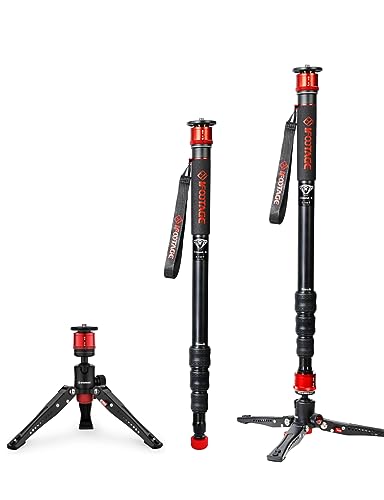
- Detachable mini tripod base for added stability
- 71.7-inch max height with 5-section aluminum build
- 17.6 lb payload with quick-disconnect locking
Best For: Wildlife shooters wanting extra steadiness from a foldable base
Travel-friendly hybrid
NEEWER Basics 72" Tripod Monopod
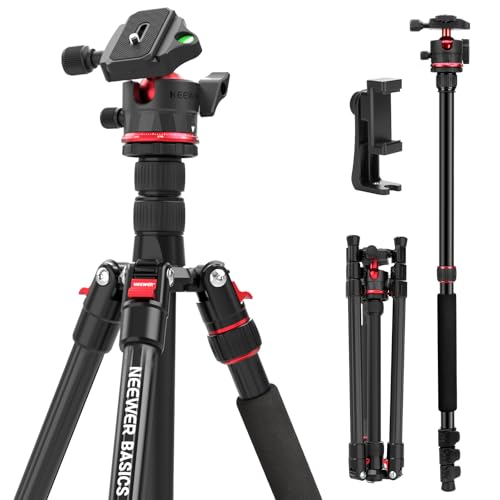
- Converts to a monopod for mobile shooting
- Folds to 17 inches and weighs 2.9 lb
- 72-inch height with 360° ball head
Best For: Wildlife shooters who want one compact support that can switch between tripod and monopod use.
Heavy-duty flexibility

- 26.4 lb load capacity for larger rigs
- 3-in-1 design with detachable feet
- Quick-release and 360° panning features
Best For: Wildlife photographers using heavier camera setups who want extra support and quick setup changes.
Lightweight carbon option
Koolehaoda 62" Carbon Fiber Monopod

- 10-layer carbon fiber keeps weight low
- 6-section design extends from 15 to 62 inches
- 22 lb load rating with carrying bag included
Best For: Wildlife photographers who prioritize low weight and easy transport for handheld field shooting.
Ultra-Portable Fluid Head Pick – NEEWER 70.5" Monopod with Feet
If you want a monopod for wildlife photography that can adapt to uneven ground, this NEEWER model adds a removable tripod base, 360° swivel, and 45° tilt support. The fluid video head and pan/tilt controls make it easier to track birds or moving animals smoothly while keeping your framing controlled.
Best For: Photographers who want a compact travel monopod with added stability and smooth head movement for field shooting.
Pros:
- Detachable tripod base helps stabilize the setup on uneven terrain.
- Fluid head offers 360° pan and -70°/+90° tilt for flexible framing.
- Supports up to 13.2 lb and extends to 70.5 inches.
- Includes carrying bag and lanyard for easier transport.
Cons:
- Not water resistant.
- Heavier than the simplest travel monopods.
- Load capacity is lower than some higher-end wildlife options.
This is a practical pick if you need a monopod that balances portability with a more versatile base and head than a basic stick design. It is especially appealing for photographers who move quickly between locations and want extra control without carrying a full tripod.
Lightweight Budget Travel Pick – Altura Photo 62-Inch Monopod
This Altura Photo monopod is a simple, lightweight option for wildlife photography when you want to travel light and keep setup fast. It collapses to 16.75 inches, includes a carry pouch, and adds a rubber foot with a retractable leg spike for indoor or outdoor terrain.
Best For: Hikers and casual wildlife shooters who need a compact, easy-to-carry support.
Pros:
- Very light at 0.59 lb and compact when collapsed.
- Soft foam grip and safety wrist strap improve handling.
- Retractable leg spike and rubber foot add versatility on different surfaces.
- Includes a 3/8-inch adapter plus carry pouch.
Cons:
- 5 lb weight limit is modest.
- Does not include a built-in fluid head.
- Shorter maximum height than taller field-focused monopods.
As a straightforward field support, this model prioritizes portability over advanced features. It makes sense if you want a monopod for wildlife photography that disappears into a backpack and does the basic stabilization job well.
High-Capacity Field Support Pick – COMAN 73.2" Monopod with Q6 Head
For wildlife photography, this COMAN monopod stands out if you want a stronger support system with a higher load rating and a quick-release workflow. The removable tripod base, Q6 fluid head, and 360°/tilt movement give you the flexibility to handle changing shooting angles in the field.
Best For: Photographers using heavier camera setups who want a sturdy monopod with fluid head control.
Pros:
- High 22 lb load capacity suits heavier rigs.
- Q6 fluid head supports 360° pan and +90°/-60° tilt.
- Quick-release system helps speed up camera attachment and removal.
- Three-in-one design can be used as a monopod, stand, or low-angle tripod base.
Cons:
- At 3.9 lb, it is heavier than lighter travel monopods.
- Folded length is relatively large compared with ultra-compact models.
- Not water resistant.
This is a strong choice when stability and capacity matter more than minimum packed size. If your wildlife kit includes a larger camera or video setup, the added support and quick switching features can be very useful.
Carbon Fiber Rapid-Adjust Pick – SIRUI SVM-165 Carbon Monopod
The SIRUI SVM-165 is built for wildlife photography situations where fast height changes matter, thanks to its one-step rapid release system. Its carbon fiber construction, modular 3-in-1 design, and stable feet make it a versatile option for shooters who move often and need quick setup changes.
Best For: Active wildlife photographers who value fast adjustment, low weight, and modular flexibility.
Pros:
- Rapid twist-lock system speeds up height adjustment.
- Carbon fiber build keeps weight down at 3.4 lb.
- Modular 3-in-1 design works as a monopod, extension rod, or low-angle base.
- 22 lb load rating and 15 cm feet improve stability.
Cons:
- Shorter folded length and smaller minimum height may not suit every workflow.
- Carbon fiber design typically comes at a premium over aluminum models.
- Not water resistant.
If you need a monopod for wildlife photography that can keep pace with unpredictable movement, this model is especially compelling. The fast adjustment system and modular base make it easy to react quickly without sacrificing support.
Portable Travel Monopod – ULANZI TB12 61-Inch Camera Monopod
If you want a monopod for wildlife photography that is easy to carry on hikes, the ULANZI TB12 is built around portability. Its 61-inch aluminum build, 0.83 lb weight, and 5-section design make it a practical option when you need quick support without hauling a full tripod.
Best For: Hikers and travel photographers who want a lightweight, compact support option for wildlife shoots.
Pros:
- Weighs about 0.83 lb, so it is easy to carry in the field.
- Extends to 61 inches with 4 adjustable height levels for flexible framing.
- Supports up to 11.02 lb, which suits many compact cameras, CSCs, and DSLRs.
- Folds down to 16.9 inches for easier packing in a carry-on.
Cons:
- Lower payload than the heavier-duty models in this roundup.
- Aluminum construction is practical, but not as premium as carbon fiber.
For photographers who value compact carry size and fast setup more than maximum load capacity, this monopod offers a straightforward and versatile field solution.
Carbon Fiber Pro Monopod – Leofoto MP-364C 67"
The Leofoto MP-364C is a monopod for wildlife photography that prioritizes strength-to-weight performance. Its carbon fiber tubes, 44 lb load rating, and 1.27 lb weight make it a strong pick when you need reliable support for heavier camera and lens setups in the field.
Best For: Photographers carrying heavier DSLR bodies and lenses who want a lightweight professional monopod.
Pros:
- Carbon fiber construction keeps weight to just 1.27 lb.
- Very high 44 lb load capacity for demanding camera and lens combinations.
- Reaches 66.93 inches while still folding to 21.45 inches.
- 4-section design keeps the package manageable for field use.
Cons:
- No mention of water resistance in the supplied details.
- Premium load capacity may be more than casual users need.
If your priority is a lighter monopod that still handles serious gear, this model stands out for its load rating and carbon fiber build.
Modular Monopod With Feet – IFOOTAGE Cobra 3 A180T 71"
If you want a monopod for wildlife photography with extra stability, the IFOOTAGE Cobra 3 A180T adds a detachable mini tripod base and modular quick-disconnect design. Its 71.7-inch maximum height and 17.6 lb payload make it a flexible aluminum option for cameras and camcorders.
Best For: Wildlife shooters who want a monopod with a foldable base for added steadiness.
Pros:
- Detachable mini tripod base adds stability beyond a standard monopod.
- Quick-disconnect locking mechanism is designed for faster deployment.
- 5-section aluminum build extends to 71.7 inches.
- Supports up to 17.6 lb and includes freely convertible 1/4″ and 3/8″ mount screws.
Cons:
- At 2.76 lb, it is heavier than the lighter travel-focused options.
- Folded length of 27.2 inches is less compact for packing.
For users who want more support than a simple stick-style monopod, the Cobra 3 A180T offers a useful balance of height, payload, and modular versatility.
Travel-friendly hybrid – NEEWER Basics 72" Tripod Monopod
If you want a monopod for wildlife photography that can also pull double duty as a travel tripod, the NEEWER Basics TP14B is built around portability and flexibility. It folds down to 17 inches, extends to 72 inches, and can convert into a monopod when you need a lighter setup for moving between locations.
Best For: Wildlife shooters who want one compact support that can switch between tripod and monopod use.
Pros:
- Transforms into a monopod for more mobile shooting.
- Lightweight 2.9 lb build and 17-inch folded size make it travel-friendly.
- 72-inch max height gives useful reach for eye-level framing.
- 360° ball head with 90° tilt adds framing flexibility.
Cons:
- Max load is 13.2 lb, so it is not the strongest option here.
- Not water resistant, which matters in rough outdoor conditions.
This is the most versatile choice in the group if you need a single support for cameras and phones, but it is better suited to lighter wildlife kits than heavy telephoto rigs.
Heavy-duty flexibility – SIRUI 75.8" Monopod with Feet
For a monopod for wildlife photography that needs more stability than a basic stick, the SIRUI AM-404FL+QC-55 stands out with its detachable feet and high load rating. It works as a fixed video monopod, a plain extension rod, or a low-angle mini tripod, giving you more options when your shooting position changes in the field.
Best For: Wildlife photographers using heavier camera setups who want extra support and quick setup changes.
Pros:
- Max load of 26.4 lb supports more substantial camera rigs.
- 3-in-1 design lets you use it with feet, without feet, or as a low-angle tripod.
- Quick-release system is designed for fast device swaps in two steps.
- Built-in 360° panning works even without a ball head.
Cons:
- At 2.1 kg, it is heavier than the lighter travel-focused options.
- More complex than a simple monopod if you only want minimal gear.
This model makes sense when stability and adaptability matter more than absolute minimal weight. It is a strong fit for wildlife work where you may want to switch between handheld-like mobility and more planted support.
Lightweight carbon option – Koolehaoda 62" Carbon Fiber Monopod
If you want a lightweight monopod for wildlife photography, the Koolehaoda 62-inch carbon fiber model focuses on low weight, easy carry, and solid vibration damping. It extends from 15 to 62 inches with six sections, and its carbon fiber build is meant to stay rigid without adding much bulk to your kit.
Best For: Wildlife photographers who prioritize low weight and easy transport for handheld field shooting.
Pros:
- Carbon fiber construction keeps weight down while improving rigidity and damping.
- 6-section twist locks allow fast height changes from 15 to 62 inches.
- 22 lb load rating supports many DSLR and mirrorless setups.
- Includes a carrying bag and metal spike for field use.
Cons:
- Lower max load than the SIRUI, so it is not ideal for the heaviest wildlife rigs.
- Requires a twist-lock workflow, which may be slower than lever-style legs for some users.
This is the most carry-friendly option in the list and a sensible pick if you want a simple, compact support for moving through trails or long shooting days. It is especially appealing when weight savings matter as much as stability.
How We Picked the Best Monopod for Wildlife Photography
For this roundup, we focused on the features that matter most in a Monopod for Wildlife Photography: load capacity, stability, weight, height range, portability, and ease of setup. We also prioritized models with field-friendly details such as twist locks, quick-release plates, feet or mini-tripod bases, and construction that can handle frequent travel.
Because wildlife work often means standing for long periods and reacting quickly, we gave extra attention to designs that balance support with fast repositioning. Carbon fiber models tend to be lighter for long hikes, while aluminum models can offer strong value and durability.
Quick Comparison
In general, carbon fiber options are best when minimizing carry weight is a priority, especially for hikers and travel shooters. Aluminum monopods usually make more sense for buyers who want solid support at a lower price. Models with feet or a small tripod base offer more stand-alone stability, while traditional unipods stay lighter and faster to move. If you use a heavy telephoto lens, look closely at the maximum load rating and the quality of the head or mounting plate.
Key Buying Factors for a Monopod for Wildlife Photography
Height and Eye-Level Comfort
Choose a monopod that extends high enough for comfortable framing without forcing you to hunch. Taller photographers and shooters who work from uneven ground should pay close attention to maximum height.
Weight and Packability
If you hike or travel often, a lighter carbon fiber option can reduce fatigue. If you shoot mostly from a vehicle, hide, or short walk-in location, a heavier aluminum model may be perfectly practical.
Stability and Base Design
Feet, a mini-tripod base, or a fluid head can improve control when tracking animals or holding a long lens steady. Traditional monopods are still useful when speed matters most, but added base support can be a real advantage for static watching and panning.
Load Capacity and Lens Support
Make sure the monopod can comfortably support your camera and longest lens combination. For wildlife setups, it’s smart to choose a model with more capacity than you think you need, especially if you plan to add a head or adapter.
Locks, Sections, and Setup Speed
Rapid adjustment is valuable when an animal appears unexpectedly. Fewer sections can mean faster deployment, while secure lock mechanisms help maintain confidence on rough terrain.
Who Should Buy Which Monopod for Wildlife Photography?
Choose a carbon fiber model if you prioritize low weight for hiking, travel, or all-day carry. Pick an aluminum monopod if you want better value and dependable support for occasional or vehicle-based wildlife shoots. If you regularly use long telephoto lenses, look for higher load ratings and a sturdier base. If your shooting style demands frequent repositioning, a fast-adjust, quick-release design is likely the best fit.
For most buyers, the best Monopod for Wildlife Photography is the one that matches your lens weight, mobility needs, and typical shooting environment rather than the one with the most features on paper.