
The best voice recorders with external microphone input give you more control than a basic built-in-mic dictaphone. You can connect a lavalier, handheld, or other compatible microphone to improve placement, clarity, and recording flexibility.
This roundup includes dedicated music recorders, compact interview tools, AI note-taking devices, and high-capacity digital recorders. Compare input support, storage, battery life, file handling, and transcription features to find the right fit.
Best 10 Voice Recorders with External Microphone Input Picks for 2026
Best Multitrack Pick

- Two XLR/TRS inputs for external gear
- Four-track, 32-bit float recording
- USB-C recording and SD-card backup
Best For: Musicians, podcasters, filmmakers, and multitrack creators
Best Everyday Voice Recorder

- 64GB storage for long recording sessions
- Seven-level voice activation
- WAV/MP3 recording with playback tools
Best For: Lectures, meetings, interviews, and everyday speech capture
Best Compact XLR Option

- Two locking XLR/TRS combo inputs
- 32-bit/96kHz recording
- Waveform display and 1TB SDXC support
Best For: Portable two-source recording for filmmakers, musicians, and podcasters
Best High-Capacity Speech Recorder

- 128GB storage for extended voice recording
- Six-level voice activation
- Folders, bookmarks, and password protection
Best For: Long lectures, meetings, interviews, and organized speech archives
Premium AI Recorder
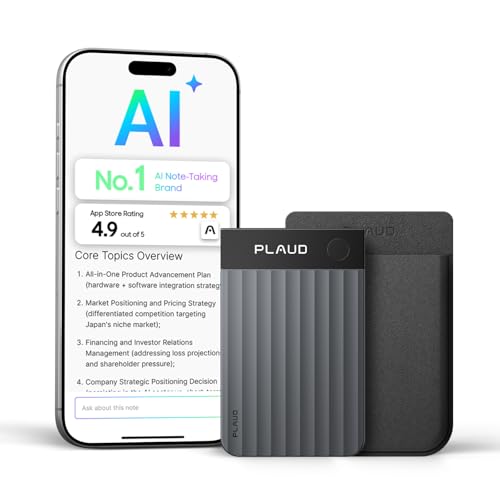
- Four microphones capture voices from up to 16.4 feet away.
- 64GB storage with up to 30 hours of Enhance-mode recording.
- AI transcription, summaries, and productivity outputs.
Best For: Professionals wanting slim, AI-assisted meeting capture
Simple Everyday Recorder

- One-button recording and easy playback controls.
- Voice activation and DSP noise reduction for everyday use.
- 16GB storage with more than 30 hours of recording.
Best For: Students and buyers seeking simple lecture or meeting recording
High-Capacity AI Recorder

- 128GB storage and up to 33 hours of continuous recording.
- Transcription in 113 languages with summaries and speaker identification.
- Wired OTG transfers to phones without Bluetooth.
Best For: Users needing high storage and AI-assisted transcription
High-Capacity Pick

- Up to 136GB total storage
- 1536kbps PCM with noise reduction
- Up to 68 hours of recording
Best For: Long lectures, meetings, and high-volume recording
External Mic Pick
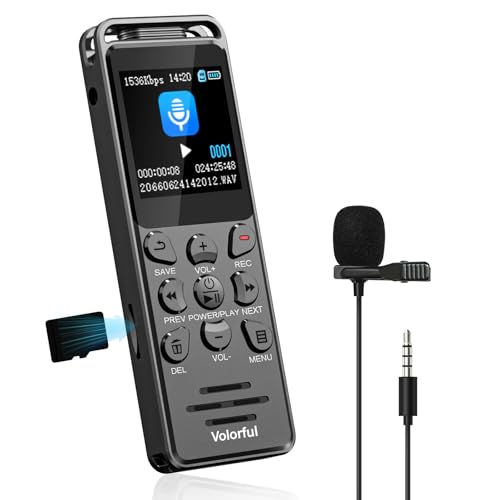
- Includes a clip-on lavalier mic
- Up to 1536kbps PCM recording
- Up to 70 hours of battery life
Best For: Interviews, lectures, and content creation
Feature-Rich Value

- Supports internal and external recording
- 64GB storage with up to 4,600 hours
- Scheduled recording and file bookmarking
Best For: Flexible lecture, interview, and field recording
Best Multitrack Pick – Zoom H4 Essential
For shoppers comparing voice recorders with external microphone input, the Zoom H4 Essential is a versatile choice for music, podcasts, interviews, video audio, and live performances. Its two XLR/TRS inputs support external microphones, instruments, mixers, and soundboards, while 32-bit float recording helps reduce concern about distorted takes.
Best For: Musicians, podcasters, filmmakers, and creators who need multitrack recording and flexible connections.
Pros:
- Two XLR/TRS inputs for external microphones, instruments, mixers, or soundboards
- Records up to four tracks and supports 32-bit float, clip-free audio
- Built-in stereo microphones and USB-C recording or streaming
- Spoken menu guidance can make operation more accessible
Cons:
- Requires two AA batteries
- More functionality than needed for simple lecture or memo recording
The H4 Essential stands out when external-input flexibility and multitrack capability matter more than pocket-sized simplicity. It also provides SD-card recording with USB-C connectivity for a practical backup workflow.
Best Everyday Voice Recorder – EVISTR L357 64GB Recorder
The EVISTR L357 is a practical option among voice recorders with external microphone input searches, although its supplied specifications list a built-in microphone rather than an external microphone connection. It focuses on lectures, meetings, interviews, and everyday voice capture with voice activation, playback controls, and 64GB of storage.
Best For: Students, teachers, business users, and anyone wanting a straightforward recorder for spoken audio.
Pros:
- 64GB capacity stores up to 4,660 hours at 32Kbps
- Voice activation with seven sensitivity levels can reduce silent sections
- Supports WAV and MP3 recording, playback, A-B repeat, and variable speed
- Up to 32 hours of continuous recording on a full charge
Cons:
- Supplied details specify a built-in microphone, not an external microphone input
- Not designed for multitrack or XLR-based recording setups
Choose the L357 for convenient speech recording and large onboard storage rather than studio-style connectivity. Its simple recording controls and voice-activated mode are especially useful for classes, meetings, and interviews.
Best Compact XLR Option – Zoom H1 XLR
The Zoom H1 XLR is a strong fit for buyers seeking voice recorders with external microphone input in a compact format. It has two locking XLR/TRS combo inputs for microphones and instruments, plus a 3.5mm stereo input and headphone output for additional connection and monitoring flexibility.
Best For: Filmmakers, musicians, podcasters, and users who need a small recorder for two external sources.
Pros:
- Two locking XLR/TRS inputs accommodate microphones and instruments
- 32-bit/96kHz recording supports detailed audio capture
- OLED waveform display helps monitor levels
- 3.5mm stereo input, headphone output, and SDXC support up to 1TB
Cons:
- Requires two AA batteries
- Shorter stated battery life of about 10 hours
- Does not offer the four-track capability listed for the H4 Essential
The H1 XLR is a focused solution when two external inputs are enough and portability matters. Its waveform display and locking connectors make it particularly suitable for mobile production and on-location recording.
Best High-Capacity Speech Recorder – EVIDA V618 128GB Recorder
The EVIDA V618 is aimed at long-duration speech recording, not external microphone setups. While the supplied details list a built-in noise-cancelling microphone and no headphone jack, its 128GB storage, voice activation, password protection, and multiple recording formats make it useful for lectures, meetings, and conversations.
Best For: Students, professionals, writers, and users who prioritize storage and organized voice recordings.
Pros:
- 128GB storage supports up to 9,296 hours of recording
- Voice activation offers six sensitivity levels
- Supports MP3 recording at multiple bit rates and WAV at 1536Kbps
- Includes folders, bookmarks, password protection, and USB file transfer
Cons:
- Supplied details specify a built-in microphone rather than external microphone input
- No headphone jack is listed
- Mono recording may be less suitable for music or stereo production
The V618 makes the most sense for high-volume voice archiving and organized file storage. If connecting an external microphone is essential, consider one of the Zoom models instead.
Premium AI Recorder – Plaud Note Pro
For shoppers seeking voice recorders with external microphone input, the Plaud Note Pro is worth considering for its four built-in microphones and AI-focused workflow. It captures in-person conversations and phone calls, stores up to 64GB, and can turn recordings into transcripts, summaries, and finished work.
Best For: Professionals who want slim, AI-assisted recording and organized meeting notes.
Pros:
- Four microphones capture voices from up to 16.4 feet away.
- Offers 64GB of storage and up to 30 hours of recording in Enhance mode.
- AI features can create transcripts, highlights, summaries, emails, reports, and more.
- Ultra-slim 30g design includes a display, case, ring, and charging cable.
Cons:
- Uses built-in microphones rather than an external microphone input.
- Some transcription features require a paid plan after the included Starter Plan allowance.
- There is no headphone jack.
The Note Pro is more than a traditional dictaphone, combining compact hardware with transcription and productivity tools. However, buyers specifically needing a physical external-microphone connection should look elsewhere.
Simple Everyday Recorder – Sunlan 16GB Voice Recorder
For shoppers comparing voice recorders with external microphone input, this Sunlan model offers straightforward recording with a built-in microphone, a 3.5mm headphone jack, and support for external sound speaker playback. Its one-button controls make it practical for lectures, meetings, interviews, and basic dictation.
Best For: Students and users who want an uncomplicated, affordable recorder with playback and voice activation.
Pros:
- Simple REC, STOP, and PLAY controls are easy to operate.
- DSP noise reduction and a sensitive microphone support clearer voice recordings.
- Voice-activated recording can reduce silent periods and conserve power.
- Provides 16GB of storage and more than 30 hours of continuous recording.
Cons:
- The notes identify a built-in microphone but do not confirm an external microphone input.
- Playback battery life is listed at about seven hours.
- Its recording mode is mono with noise cancellation rather than stereo.
This recorder keeps the workflow simple and includes useful features such as A-B repeat, music playback, and USB file transfer. It is a sensible basic option, but confirm the connection requirements if an external microphone is essential.
High-Capacity AI Recorder – EVISTR L359 AI Voice Recorder
Among voice recorders with external microphone input, the EVISTR L359 stands out for its large 128GB capacity, AI transcription tools, and wired OTG transfer. It records in WAV or MP3, supports noise reduction and voice activation, and connects to phones through the included OTG accessories for processing in the AI DVR Link app.
Best For: Students and professionals who need extensive storage, AI summaries, and wired phone transfers.
Pros:
- 128GB storage can hold up to 9,216 hours at 32kbps.
- AI DVR Link supports transcription in 113 languages, summaries, mind maps, speaker identification, and Ask AI insights.
- 3072Kbps HD recording, noise reduction, and voice-activated recording support varied use cases.
- Includes USB, OTG, and Lightning-to-USB-C accessories for wired transfers.
Cons:
- The notes identify a built-in microphone and do not confirm an external microphone input.
- Continuous recording is listed at up to 33 hours, which is less than the maximum storage capacity.
- AI processing depends on the AI DVR Link app.
The L359 is a capable all-in-one recorder for users who value storage and post-recording organization. Its wired OTG workflow is useful for direct phone transfers, but shoppers needing an actual external microphone jack should verify compatibility before buying.
High-Capacity Pick – Tonfarb 136GB Voice Recorder
If you need voice recorders with external microphone input, verify the included accessories and input method before buying. This Tonfarb model emphasizes long recording time, simple one-touch controls, and noise-reduced PCM audio for lectures, meetings, interviews, and everyday notes.
Best For: Users who prioritize maximum storage, long battery life, and straightforward recording controls.
Pros:
- Includes 8GB built-in storage plus a 128GB TF card, with up to 136GB total capacity.
- Records in up to 1536kbps PCM and includes automatic noise reduction and voice activation.
- Offers up to 68 hours of continuous recording and one-click recording even when powered off.
- Features USB-C transfer, password protection, A-B repeat, and a durable metal body.
Cons:
- The supplied specifications identify the microphone as built-in, so external-microphone compatibility is not clearly established.
- The 1.44-inch screen is compact for navigating a large library of recordings.
Its standout advantage is endurance: the combination of generous storage and a 68-hour battery suits extended classes, interview schedules, or back-to-back meetings. However, shoppers specifically seeking an external mic input should confirm the connection options before purchase.
External Mic Pick – Volorful VV68 Recorder
For shoppers comparing voice recorders with external microphone input, this Volorful kit is the clearest fit in the group because it includes a clip-on lavalier microphone. It combines that close-mic setup with DSP noise reduction, PCM recording, a lock button, and practical playback tools.
Best For: Interviews, lectures, content creation, and users who want a ready-to-use lavalier microphone kit.
Pros:
- Includes an external clip-on lavalier microphone designed to keep the mic close to the speaker.
- Supports PCM recording up to 1536kbps with DSP noise reduction and dual microphones.
- Provides up to 70 hours of battery life and expandable storage support up to 256GB.
- Offers one-touch recording, a dedicated LOCK button, VOR, scheduled recording, and adjustable playback speed.
Cons:
- The included storage is 32GB total, less than the capacity offered by the larger Tonfarb models.
- Although the product highlights an external microphone, the detailed specifications list the microphone form factor as built-in.
This is the most practical choice for buyers who want an external mic included rather than purchasing one separately. The lavalier should help with speaker-focused recordings, while the lock button and timed file features add useful protection and organization for regular work or study.
Feature-Rich Value – Tonfarb 64GB Voice Recorder
This Tonfarb model is a versatile option for shoppers seeking voice recorders with external microphone input, especially those who value multiple recording modes and easy file handling. It supports internal and external recording, includes a mic cable and line-in cable, and adds scheduled recording, bookmarking, and A-B playback.
Best For: Students, interviewers, and field users who want flexible recording and playback features at a moderate capacity.
Pros:
- Supports internal and external recording and includes both a mic cable and line-in cable.
- Offers up to 1536kbps PCM recording with automatic noise reduction.
- Stores up to 4,600 hours with its 64GB memory and supports up to 48 hours of continuous recording.
- Includes voice activation, scheduled recording, file segmentation, bookmarking, password protection, and MP3 playback.
Cons:
- Its listed battery average is 32 hours, while the recording-time specification states up to 48 hours, so actual runtime may vary by use.
- The detailed specifications list a USB 2.0 interface rather than USB-C.
Compared with the other options, this recorder offers the broadest set of recording-management functions and explicitly supports external recording in the supplied notes. It is a strong everyday choice when scheduled capture, line-in flexibility, and organized playback matter more than maximum storage or battery life.
How We Picked the Best Voice Recorders with External Microphone Input
We selected these 10 models across several use cases, including filmmaking, podcasting, music capture, lectures, meetings, interviews, and general note-taking. Our comparison emphasizes microphone connectivity, recording quality, storage, playback, battery performance, portability, and workflow features such as voice activation or AI transcription.
Product descriptions and specifications can vary by configuration, so confirm the exact input type, included accessories, supported file formats, and software requirements before buying.
Quick Comparison
| Best For | What to Prioritize | Most Useful Features |
|---|---|---|
| Music and filmmaking | Dedicated mic input, preamps, and manual controls | Multitrack recording, low-noise capture, monitoring |
| Interviews and podcasts | Reliable external microphone compatibility | Clear speech, headphone monitoring, simple file transfer |
| Lectures and meetings | Long battery life and ample storage | Voice activation, playback, compact design |
| AI-assisted notes | Transcription workflow and app support | Summaries, searchable recordings, cloud or device access |
Key Buying Factors for Voice Recorders with External Microphone Input
Check the Exact Microphone Input
“External microphone support” is not universal. Look for the actual connector and signal type, such as 3.5mm microphone input, XLR, or a combined XLR/TRS jack. Some inputs provide plug-in power, while professional condenser microphones may require phantom power. Confirm that your microphone and any adapter are electrically compatible.
Match Recording Quality to the Job
For speech, intelligible midrange and low handling noise matter more than extreme specifications. Music and film work may benefit from higher-resolution recording, adjustable gain, stereo or multitrack options, and headphone monitoring. Built-in limiters can also help prevent clipped dialogue or performances.
Consider Storage, Battery, and File Transfer
Large capacities are useful for long lectures and frequent recording, but advertised recording hours depend on format, bitrate, and storage conditions. USB-C or other straightforward transfer options make backups easier. If you record away from outlets, compare real-world battery claims and charging behavior.
Evaluate Workflow Features
Voice activation can reduce silent sections, while playback controls help with review. AI transcription and summarization may save time, but check language support, subscription requirements, privacy policies, and whether processing occurs locally or through a cloud service.
Who Should Buy Which Voice Recorders with External Microphone Input?
Choose a dedicated Zoom-style handheld recorder if you need dependable external-mic control for music, film, interviews, or podcasts. Pick a compact digital dictaphone if your priority is affordable lecture and meeting recording with simple playback and generous storage. An AI-enabled recorder is better for users who value searchable transcripts and summaries over advanced manual audio control.
Before ordering, verify the product’s connector, microphone power requirements, supported file formats, and return policy. The best option is the one that fits your microphone, recording environment, and editing or transcription workflow—not simply the model with the largest storage number.