
The best portable voice recorders make it easier to capture lectures, interviews, meetings, ideas, and musical performances without relying on a phone. The right model balances recording quality, storage, battery life, controls, and portability for your everyday workflow.
Our selection includes simple digital dictaphones, high-capacity voice-activated recorders, musician-friendly audio devices, and newer AI note takers with transcription and summarization features.
Best 10 Portable Voice Recorders Picks for 2026
Reliable Everyday Recorder

- Up to 57 hours of battery life
- Built-in USB file transfer
- 4GB MP3 voice recorder
Best For: Lectures, meetings, notes, and everyday recording
Creator-Ready Stereo Recorder

- X/Y stereo microphones
- 32-bit float clip-free audio
- USB-C microphone mode
Best For: Music, podcasts, video, interviews, and livestreams
High-Capacity Lecture Recorder

- 64GB storage capacity
- Voice activation with seven sensitivity levels
- Up to 32 hours of continuous recording
Best For: Lectures, meetings, interviews, and long-term recording storage
AI-Powered Note-Taking Recorder

- Automatic transcription and summaries
- Ask Pocket extracts insights and next steps
- Up to four days of battery life
Best For: Smartphone users managing meetings, calls, and ideas
Best High-Capacity Pick

- 128GB storage with MP3 and WAV options
- Noise cancellation and adjustable voice activation
- Up to 54 hours of continuous recording
Best For: Lectures, meetings, interviews, and heavy recording use
Best AI Workflow Pick
Plaud Note Pro AI Voice Recorder
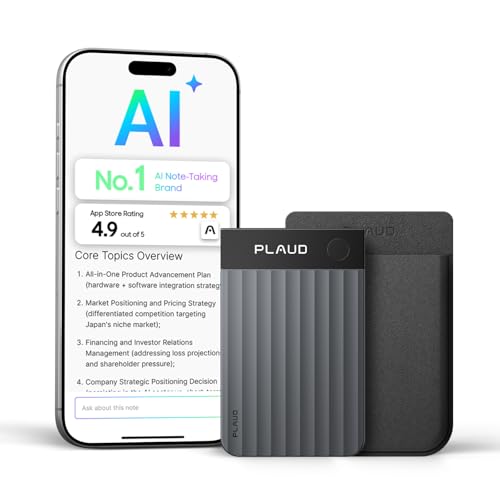
- Four microphones capture voices up to 5 meters away
- AI transcription, summaries, and workflow outputs
- Ultra-slim 30g design with 64GB storage
Best For: Professional conversations, meetings, and follow-up tasks
Best Simple Budget Pick
Sunlan 16GB Digital Voice Recorder

- Simple one-button recording and playback
- Noise reduction with voice activation
- USB storage and 3.5mm headphone support
Best For: Students and casual lecture or meeting recording
AI Note-Taking Pick

- AI transcription in 113 languages with smart summaries
- 128GB storage and up to 33 hours of recording
- One-touch controls with password protection and OTG transfer
Best For: Students and professionals who want organized notes from recordings
Long-Battery Pick
Elasound 132GB Voice Activated Recorder

- Up to 9800 hours of stated storage at 32kbps
- Up to 100 hours of continuous recording
- Triple noise reduction, voice activation, and USB-C transfer
Best For: Extended lectures, interviews, meetings, and work recording
Best Simple Pick
HoTiyan 8GB Digital Voice Recorder

- Three-button operation with stereo recording and noise reduction
- Voice activation helps reduce silent clips
- A-B repeat, variable speed, password protection, and MP3 playback
Best For: Everyday lectures, meetings, and straightforward personal recording
Reliable Everyday Recorder – Sony ICD-PX370
Sony ICD-PX370 Mono Digital Voice Recorder with Built-In USB Voice Recorder,black
Check Price On AmazonThe Sony ICD-PX370 is a straightforward choice among portable voice recorders for lectures, meetings, notes, and other everyday audio capture. It records in MP3 format, offers up to 57 hours of battery life, and includes built-in USB connectivity for transferring files to a computer.
Best For: Students, professionals, and anyone who wants simple recording with long battery life and easy computer transfers.
Pros:
- Up to 57 hours of recording and battery life
- Built-in USB connection simplifies file transfer
- 4GB of internal storage
Cons:
- Uses two AAA alkaline batteries rather than a rechargeable battery
- Mono recording may be less suitable for stereo music or ambient audio
The ICD-PX370 focuses on dependable, uncomplicated recording. Its MP3 format, compact design, and direct USB connection make it a practical option when convenience matters more than advanced recording controls.
Creator-Ready Stereo Recorder – Zoom H1 Essential
The Zoom H1 Essential is one of the more versatile portable voice recorders for creators who need clearer stereo sound. Its X/Y microphones, 32-bit float recording, and USB-C microphone mode support everything from interviews and podcasts to music sessions and livestreams.
Best For: Musicians, podcasters, video creators, interviewers, and users who want a recorder that can also serve as a USB microphone.
Pros:
- X/Y stereo microphones capture detailed, natural sound
- 32-bit float recording helps provide clip-free audio
- USB-C microphone mode works with computers, cameras, and smartphones
- Supports WAV recording and includes a headphone jack
Cons:
- About 10 hours of digital recording time
- Requires two AAA batteries
With stereo capture and a USB microphone mode, the H1 Essential is designed for more than basic voice memos. It is a strong fit for users who want one compact device for field recording, content production, and remote audio work.
High-Capacity Lecture Recorder – EVISTR L357 64GB Recorder
The EVISTR L357 is a feature-rich option among portable voice recorders for lectures, meetings, and interviews. It combines 64GB of storage with voice activation, adjustable recording gain, WAV or MP3 recording, playback controls, and a rechargeable battery rated for up to 32 hours of continuous recording.
Best For: Students, teachers, interviewers, and professionals who need extensive storage and voice-activated recording.
Pros:
- 64GB capacity stores a large library of recordings
- Voice activation can reduce silent sections
- Adjustable seven-level recording gain and noise reduction
- USB-C transfer works with Windows and Mac
Cons:
- Its numerous settings may take more time to learn than a basic recorder
- Voice activation may not suit recordings where quiet intervals are important
The L357 stands out for storage and control. Its time-based file naming, variable-speed playback, and voice-activation features make it particularly useful for managing frequent recordings, while the rechargeable battery avoids routine battery replacement.
AI-Powered Note-Taking Recorder – Pocket AI Voice Recorder
The Pocket AI Voice Recorder takes a different approach to portable voice recorders by pairing one-tap recording with automatic transcription, summaries, action items, and conversation maps. It connects to smartphones through Bluetooth and can attach to MagSafe-compatible devices for hands-free use.
Best For: Smartphone users who want recordings transformed into searchable summaries, questions, and next steps.
Pros:
- Automatically transcribes and summarizes conversations
- Ask Pocket can answer questions grounded in recordings
- MagSafe compatibility supports hands-free recording
- Up to four days of battery life
Cons:
- Some advanced features require an optional subscription
- Designed for smartphone use and Bluetooth connectivity rather than standalone operation
Pocket is best suited to users who care more about turning conversations into organized notes than managing audio files manually. Its long battery life and phone-friendly design make it convenient for meetings, calls, and ideas captured throughout the day.
Best High-Capacity Pick – EVIDA 128GB Voice Recorder
For shoppers comparing portable voice recorders for lectures, meetings, interviews, and everyday note-taking, the EVIDA 9296 offers extensive storage and flexible recording formats. Its noise-canceling microphone, voice activation, playback, and password protection make it a versatile standalone recorder.
Best For: Students, teachers, business users, writers, and anyone who needs substantial storage and organized recordings.
Pros:
- 128GB capacity stores up to 9,296 hours of recordings and supports MP3 or WAV formats.
- 1536Kbps PCM recording, noise cancellation, and adjustable voice activation help focus on speech.
- Includes playback, password protection, A-B repeat, bookmarks, four-folder organization, and USB flash-drive functionality.
- Offers up to 54 hours of continuous recording and an 18-month warranty.
Cons:
- The built-in microphone operates in mono, and the device has no headphone jack.
- Its large storage capacity may be more than casual users need.
The EVIDA is a practical choice when storage, recording controls, and file organization matter more than a minimalist design. It is especially well suited to users who want a traditional recorder with useful extras.
Best AI Workflow Pick – Plaud Note Pro AI Voice Recorder
The Plaud Note Pro stands out among portable voice recorders for professionals who want recordings turned into organized notes and work products. Four microphones capture voices from up to 5 meters, while the Plaud app adds transcription, summaries, integrations, and AI-assisted outputs.
Best For: Professionals and teams who want to capture conversations, transcribe them, and create structured follow-up materials.
Pros:
- Four microphones detect in-person conversations up to 5 meters away and support phone-call recording.
- AI features can produce transcripts, highlights, summaries, emails, reports, presentations, and spreadsheets.
- Ultra-slim 2.99mm design weighs 30g and includes a 0.95-inch status display.
- Offers 64GB storage, up to 30 hours in Enhance mode or 50 hours in Endurance mode, and integrations with tools such as Google Calendar, Slack, and Notion.
Cons:
- Many productivity features depend on the Plaud app and its transcription plans.
- It has no headphone jack and provides 30 hours of battery life in the listed digital recording specification.
The Note Pro is less of a traditional file-only recorder and more of an AI note-taking system. Choose it when searchable transcripts, summaries, and workflow integrations are worth prioritizing over simple manual playback.
Best Simple Budget Pick – Sunlan 16GB Digital Voice Recorder
For buyers who want portable voice recorders with straightforward controls, the Sunlan 16GB model keeps the process simple: press record, stop when finished, and use playback to review the file. It combines noise reduction, voice activation, a built-in speaker, and USB file transfer in a compact rechargeable design.
Best For: Students and casual users recording lectures, interviews, meetings, or reminders without complicated setup.
Pros:
- One-button recording and simple playback make it easy to use.
- DSP noise reduction and a sensitive microphone support clearer speech capture at up to 1536kbps.
- Voice activation can begin recording when sound is detected and reduce idle recording time.
- Functions as a music player and detachable USB storage device, with a 3.5mm headphone jack.
Cons:
- Its 16GB capacity is considerably lower than the EVIDA model’s storage.
- Battery life is listed as more than 30 hours for recording and about 7 hours for playback.
The Sunlan is a sensible entry-level option for users who value quick operation and basic recording tools. It delivers useful speech-focused features without adding the broader organization and AI capabilities found on more advanced models.
AI Note-Taking Pick – EVISTR L359 AI Voice Recorder
For shoppers seeking portable voice recorders with more than basic audio capture, the EVISTR L359 adds AI-assisted transcription and organization. It records at up to 3072Kbps, includes noise reduction and voice activation, and connects to a phone through the included OTG accessories.
Best For: Students, professionals, and anyone who wants recordings converted into searchable notes and summaries.
Pros:
- AI transcription supports 113 languages, with summaries, mind maps, speaker identification, and Ask AI features through the companion app.
- 128GB storage and up to 33 hours of continuous recording.
- One-touch recording, a HOLD switch, password encryption, and wired OTG file transfer.
Cons:
- The AI features require the AI DVR Link app and phone connection.
- Its stated continuous recording time is shorter than some alternatives in this roundup.
The L359 is a strong choice when organizing spoken content matters as much as recording it. Its compact 65g design and privacy features add practicality for meetings, classes, and interviews.
Long-Battery Pick – Elasound 132GB Voice Activated Recorder
The Elasound is one of the more storage-focused portable voice recorders, pairing up to 9800 hours of stated audio capacity with up to 100 hours of continuous recording. Its voice activation, triple noise reduction, and USB-C connectivity make it suited to extended recording sessions.
Best For: Professionals, journalists, and users recording long lectures, meetings, interviews, or work sessions.
Pros:
- 128GB TF-card storage is rated for up to 9800 hours at 32kbps.
- Up to 100 hours of continuous recording and headphone playback.
- Voice activation, AI intelligent triple noise reduction, and included OTG, USB-C, microphone, and headphone accessories.
Cons:
- The large storage figure depends on the lower 32kbps recording setting.
- The listed dimensions are relatively bulky compared with smaller pocket recorders.
Choose the Elasound when recording endurance and file capacity take priority. It also functions as an MP3 player and USB flash drive, adding utility beyond voice recording.
Best Simple Pick – HoTiyan 8GB Digital Voice Recorder
The HoTiyan H-10001 keeps portable voice recorders straightforward with three-button operation, stereo recording, and voice activation. Its 8GB storage, rechargeable battery, and supplied Micro USB cable cover everyday lectures, meetings, interviews, and playback.
Best For: Buyers who want an uncomplicated recorder for routine classes, meetings, and personal listening.
Pros:
- High-sensitivity microphone, noise reduction, and a professional recording chip support HD stereo recording.
- Voice activation can reduce silent sections and conserve storage space.
- Includes A-B repeat, variable playback speed, password protection, timestamps, and MP3-player functionality.
Cons:
- 8GB capacity is much lower than the other listed recorders.
- Up to 20 hours of continuous recording is comparatively limited.
- File transfers use the older Micro USB connection.
This model is a sensible fit for basic recording rather than high-capacity archiving. Its physical controls and learning-friendly playback features are useful if you prefer a simple device without app-dependent tools.
How We Picked These Portable Voice Recorders
We selected models across several common use cases, including lectures, business meetings, interviews, content creation, music recording, and hands-free note capture. We compared the features that matter most in daily use: microphone performance, recording formats, storage capacity, battery operation, playback controls, file transfer, transcription tools, and overall portability.
Because needs vary, this list includes both straightforward recorders and AI-focused devices. A basic recorder may be the better choice for dependable offline recording, while an AI model can save time by converting conversations into searchable notes.
Quick Comparison
| Best For | Look For | Recommended Type |
|---|---|---|
| Lectures and classes | Voice activation, long battery life, easy playback | Compact digital recorder |
| Meetings and interviews | Clear microphones, noise reduction, ample storage | High-capacity recorder |
| Music and content | Better microphone detail and manual controls | Portable field recorder |
| Fast notes and summaries | Automatic transcription and AI organization | AI voice recorder |
Key Buying Factors for Portable Voice Recorders
Recording Quality and Microphones
For speech, prioritize intelligible vocals and useful noise reduction. Stereo microphones can create a more natural sense of space, while a focused mono microphone is often sufficient for a single speaker. Musicians and creators should look for better microphone sensitivity, higher-quality recording formats, and input options when available.
Storage and Battery Life
More storage is useful for long lectures, frequent interviews, or unattended recording, but capacity alone does not determine quality. Check whether the device supports a memory card, offers USB charging, and provides enough battery life for a full day. Voice activation can reduce empty recordings and conserve storage.
Controls, Playback, and File Transfer
Physical buttons, a readable display, bookmarks, and variable-speed playback are valuable when reviewing recordings quickly. USB connectivity makes it easier to move files to a computer. Confirm compatibility with your preferred operating system and check whether recordings use commonly supported formats.
Transcription and Privacy
AI transcription can turn recordings into searchable notes and summaries, but these features may require an app, subscription, internet connection, or cloud upload. If privacy is important, choose a model that records and stores files locally, and review the manufacturer’s data practices before recording sensitive conversations.
Who Should Buy Which Portable Voice Recorders?
Students and occasional note takers should choose a small, simple recorder with voice activation, reliable playback, and rechargeable operation. Professionals who record meetings or interviews regularly will benefit from generous storage, stronger noise reduction, and quick file transfer. Musicians, podcasters, and creators should favor a field recorder designed for fuller sound and more control. Buyers who want searchable notes and less manual typing should consider an AI voice recorder, provided its transcription workflow and privacy terms fit their needs.