
As a director, having the right video monitor can make all the difference in your filmmaking process. You need something that not only offers clarity and brightness but also integrates seamlessly with your gear. From compact options for on-the-go shoots to larger monitors suited for live productions, the choices can be overwhelming. Let’s explore the top 10 video monitors that can truly elevate your projects and enhance your creative vision.
SEETEC ATEM156 15.6 Inch Live Streaming Broadcast Director Monitor

If you’re a director looking for a reliable monitoring solution, the SEETEC ATEM156 15.6 Inch Live Streaming Broadcast Director Monitor is an excellent choice. With its 1920 x 1080 resolution and IPS LCD panel, you’ll enjoy sharp images and a wide 170° viewing angle. It features four HDMI inputs/outputs for quad split display, perfect for your ATEM Mini Pro video switcher. The monitor also supports multi-view monitoring and includes professional functions like Peaking Focus and False Color. Weighing just 6.99 pounds, it’s portable and comes with a V-mount battery plate for flexible power options.
Best For: Directors and video production professionals seeking a portable and reliable live streaming monitor with advanced features.
Pros:
- High-resolution 1920 x 1080 IPS LCD panel for sharp image quality.
- Multi-view monitoring capability and professional features like Peaking Focus and False Color for enhanced production control.
- Lightweight design at 6.99 pounds, with flexible power options including a V-mount battery plate.
Cons:
- Battery not included with purchase, requiring an additional investment for portable use.
- Limited to 250 cd/m² brightness, which may not be sufficient in very bright environments.
- Some users may find the customizable shortcut keys challenging to set up initially.
FEELWORLD FW568 6 inch DSLR Camera Field Monitor
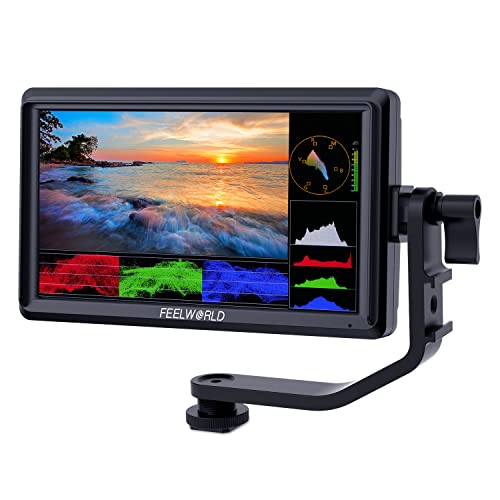
The FEELWORLD FW568 6-inch DSLR camera field monitor is an ideal choice for directors and videographers seeking a compact yet powerful monitoring solution. With a Full HD 1920×1080 resolution and Rec.709 color calibration, it guarantees stunning image quality. Weighing just 175g, it’s perfect for on-set and field use. You can customize your viewing experience with support for up to 32 LUTs and utilize built-in waveform monitoring for precise image analysis. Plus, its 4K HDMI compatibility and advanced features like false color and focus assist enhance your shooting accuracy. Just remember, batteries and a power adapter aren’t included.
Best For: Directors and videographers looking for a lightweight and versatile field monitor with advanced features for high-quality filming.
Pros:
- Compact and lightweight design at only 175g, making it easy to transport and mount on various cameras.
- High-resolution display with Full HD 1920×1080 and Rec.709 color calibration for accurate color representation.
- Supports multiple advanced monitoring features such as waveform monitoring, false color, and focus assist to enhance shooting precision.
Cons:
- Batteries and power adapter are not included, requiring additional purchases for complete functionality.
- The used version has a smaller 5.5-inch screen and lacks certain features like the type-c interface and Waveform LUT function.
- Limited onboard storage for LUTs, as it supports only up to 32 custom LUTs.
FEELWORLD FW759 7 Inch DSLR Camera Field Monitor
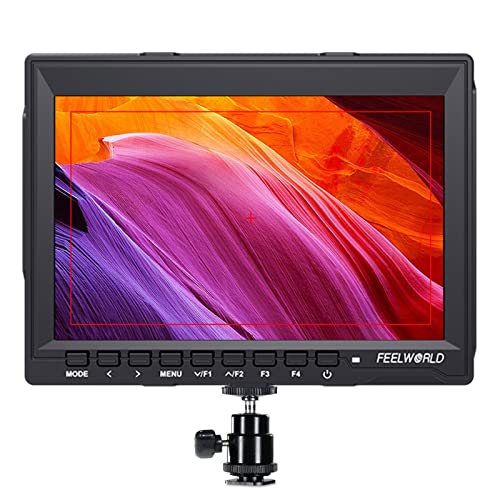
For filmmakers looking for a reliable and portable monitoring solution, the Feelworld FW759 7 Inch DSLR Camera Field Monitor stands out with its ultra-slim design and lightweight build. With a resolution of 1280×800 and a brightness of 400cd/m², you’ll enjoy high-definition visuals and precise color reproduction. It supports 4K HDMI and AV input, making it compatible with most DSLRs and camcorders. Plus, advanced features like peaking focus assist and image freeze enhance your shooting experience. The package includes necessary accessories, but remember that batteries and power cords are sold separately. Elevate your filmmaking with this exceptional monitor!
Best For: Filmmakers seeking a lightweight and portable monitor that delivers high-definition visuals and advanced shooting features.
Pros:
- High-definition resolution of 1280×800 ensures excellent picture quality and color accuracy.
- Ultra-slim and lightweight design makes it easy to carry and mount on various camera setups.
- Advanced functionalities like peaking focus assist and image freeze enhance the overall shooting experience.
Cons:
- Battery and power cord not included, requiring additional purchases for full functionality.
- Brightness of 400cd/m² may be insufficient for use in very bright outdoor environments.
- Limited to HDMI and AV input, which may restrict compatibility with some older camera models.
Osee G7 Pro 7 Inch HDR Camera Video Field Monitor

Offering an impressive brightness of 3000 Nits, the Osee G7 Pro 7 Inch HDR Camera Video Field Monitor stands out as an essential tool for directors working in bright environments. With a Full HD resolution of 1920×1080 and a 1300:1 contrast ratio, it delivers exceptional clarity and detail. The touch screen enhances usability, enabling you to control camera functions like WB and ISO seamlessly. Plus, with dual HDMI and SDI inputs, connectivity is a breeze. Weighing only 1.76 pounds, it’s lightweight for easy handling. Overall, this monitor is designed to elevate your filmmaking experience.
Best For: Filmmakers and content creators who require a high-brightness monitor for outdoor shooting in bright conditions.
Pros:
- Exceptional brightness of 3000 Nits ensures visibility in direct sunlight.
- Touch screen functionality allows easy access to camera controls and settings.
- Lightweight design at 1.76 pounds for convenient portability.
Cons:
- Requires NP-F battery for camera control, which may need to be purchased separately.
- Higher price point compared to standard monitors due to advanced features.
- Limited to Full HD resolution, which may not meet the needs of some high-end professionals.
VILTROX DC-X2 Camera Field Monitor (6 Inch, 2000 Nits)

Designed with filmmakers in mind, the VILTROX DC-X2 Camera Field Monitor boasts an impressive 2000 Nits brightness, ensuring clear visibility even in bright daylight conditions. Its 6-inch IPS touchscreen offers 160° wide viewing angles and a crisp Full HD resolution of 1920×1080. With 4K HDMI input/output support, you can easily synchronize your camera footage. Professional monitoring features like waveform and false color enhance your shooting experience. The intuitive interface allows quick access to adjustments, while four customizable shortcut keys let you tailor settings to your needs. Plus, it comes with essential accessories for seamless operation.
Best For: Filmmakers and content creators seeking a high-performance, portable monitor for clear visibility and professional monitoring features in various lighting conditions.
Pros:
- 2000 Nits ultra-brightness for excellent visibility in daylight.
- Intuitive touchscreen interface with customizable shortcut keys for easy operation.
- Comprehensive professional monitoring features enhance shooting accuracy and creativity.
Cons:
- The 6-inch screen may be small for some users who prefer larger displays.
- Battery life may vary depending on usage and settings.
- Requires additional cables and power supplies for optimal use, which may not be included for all setups.
FEELWORLD ATEM156 Quad-Split Monitor 4K 15.6

The FEELWORLD ATEM156 Quad-Split Monitor is an excellent choice for directors who need to manage multiple video feeds simultaneously during live productions. With its 15.6″ IPS display and 1920 x 1080 resolution, you can view four HDMI signals in quad split, providing stunning color accuracy. It supports DCI 4K and UHD 4K inputs, enhancing your live streaming setup. The monitor integrates seamlessly with ATEM switchers and OBS, ensuring user-friendly operation. Plus, its lightweight aluminum casing offers durability and excellent heat dissipation. You’ll appreciate the intuitive hotkeys and VESA mount compatibility for easy setup and adjustments during shoots.
Best For: The FEELWORLD ATEM156 Quad-Split Monitor is best for directors and live production professionals who require real-time monitoring of multiple video feeds.
Pros:
- Versatile Display: Supports DCI 4K and UHD 4K inputs with quad-split capability for viewing four HDMI signals simultaneously.
- Seamless Integration: Compatible with ATEM switchers, OBS, and eCam Live, enhancing live streaming setups.
- Durable Design: Lightweight aluminum casing provides excellent heat dissipation and durability for on-location use.
Cons:
- Limited Brightness: The brightness of 250 cd/m² may not be sufficient for very bright environments.
- No Battery Included: The V-mount battery plate is included, but the battery must be purchased separately.
- HDCP Compatibility: Requires an HDMI splitter to strip HDCP signals if necessary, which can add complexity to setup.
FEELWORLD FW759 7 Inch DSLR Camera Field Monitor

For filmmakers on the move, the FEELWORLD FW759 7 Inch DSLR Camera Field Monitor stands out with its ultra-slim design and lightweight build, weighing just 300 grams. With a resolution of 1280×800 and a brightness of 400cd/m², it delivers clear visuals, even in bright conditions. Supporting 4K HDMI and AV input, it’s compatible with most DSLRs and camcorders, making it versatile for your setup. Advanced features like peaking focus assist and zoom functionality enhance your shooting experience. Packed with essentials like a battery and sunshade, this monitor is perfect for those seeking portability without sacrificing quality.
Best For: Filmmakers and content creators looking for a portable, high-quality monitor to enhance their shooting experience on the go.
Pros:
- Ultra-slim and lightweight design makes it easy to transport and mount on stabilizers or gimbals.
- High resolution (1280×800) and brightness (400cd/m²) provide clear visibility in various lighting conditions.
- Advanced features like peaking focus assist and zoom functionality improve focus accuracy and shooting efficiency.
Cons:
- Limited battery life with the included F550 battery (2200mAh) may require additional power sources for extended use.
- The screen size (7 inches) may be too small for some users needing a larger display for detailed monitoring.
- Lack of built-in speakers may limit functionality for audio monitoring during shoots.
Osee Lilmon 5 Touch Screen Camera Field Monitor

If you’re a director seeking precision in your visuals, the Osee Lilmon 5 Touch Screen Camera Field Monitor is an exceptional choice. With its 5.5-inch high-brightness display at 1000 nits and a resolution of 1920×1080 pixels, you’ll get clear images even in bright light. The 160° wide-angle design improves visibility from various angles. It features 4K HDMI input and loop-out for live signal monitoring. With the intuitive Touch Swift OS, you can easily customize settings for framing and exposure. Plus, its professional monitoring tools guarantee your color fidelity remains excellent, making it a valuable asset for your filmmaking journey.
Best For: Filmmakers and directors seeking a high-quality, portable monitor for precise visual monitoring in bright lighting conditions.
Pros:
- High brightness display at 1000 nits ensures clear visibility even in sunlight.
- Intuitive Touch Swift OS allows for easy customization and quick access to essential monitoring tools.
- Professional monitoring features such as 3D LUT support and calibration options enhance color fidelity and creative flexibility.
Cons:
- Relatively small screen size of 5.5 inches may not suit all users’ preferences for larger displays.
- A weight of 1.1 pounds may be considered heavier compared to other portable monitors.
- Limited customer reviews may not provide a comprehensive understanding of long-term performance and reliability.
Portkeys LH7P 7” Camera Field Monitor

Designed with directors in mind, the Portkeys LH7P 7” Camera Field Monitor boasts an impressive 1000nit brightness and FHD resolution, ensuring you see every detail in varying lighting conditions. Its touchscreen allows for seamless wireless control of your camera, letting you adjust settings effortlessly. You can connect multiple monitors within 50 meters, ensuring synchronized video focus. With support for up to 4K UHD resolution and real-time audio monitoring, you won’t miss a beat. The advanced features, like custom 3D LUT support and histogram monitoring, elevate your filming experience, making this monitor a must-have for serious filmmakers.
Best For: The Portkeys LH7P 7” Camera Field Monitor is best for professional filmmakers and directors who require high visibility and wireless control for their camera setups.
Pros:
- 1000nit brightness ensures visibility in various lighting conditions.
- Supports up to 4K UHD resolution, providing high-quality video output.
- Advanced monitoring features like custom 3D LUT support and waveform enhance filming capabilities.
Cons:
- Limited to specific camera models for wireless control functionality.
- May require additional accessories for optimal setup and use.
- Size might be cumbersome for handheld operations compared to smaller monitors.
SEETEC WPC215 21.5 inch High Bright Broadcast Monitor

The SEETEC WPC215 21.5 inch High Bright Broadcast Monitor stands out as an exceptional choice for filmmakers and directors who need reliable performance in outdoor settings. With a brightness of 1000 nits and Full HD resolution, you’ll easily see your footage in direct sunlight. Its versatile connectivity, including dual HDMI and SDI inputs, makes it compatible with various cameras. Plus, the extensive LUT and exposure tools help you perfect your shots. The sturdy carrying case guarantees it’s protected during transport, allowing you to focus on your creative vision without worrying about damage. This monitor’s quality will elevate your filmmaking experience.
Best For: Filmmakers and directors seeking a high-performance monitor for outdoor use with excellent visibility and versatile connectivity options.
Pros:
- High brightness of 1000 nits ensures visibility in direct sunlight.
- Supports extensive LUT and exposure tools for precise shot adjustments.
- Comes with a durable carrying case for protection during transport.
Cons:
- Weighs 37.3 pounds, which may be cumbersome for some users.
- Limited to Full HD resolution, which may not meet the needs of those requiring 4K.
- The price point may be higher compared to standard monitors without high brightness features.
Factors to Consider When Choosing a Video Monitor for Directors
When choosing a video monitor, you should consider several key factors that can impact your production. Display size, resolution, and brightness play essential roles in how effectively you can see your shots. Additionally, think about connectivity options, monitor features, and portability to find the best fit for your needs.
Display Size Importance
Choosing the right display size for your video monitor is essential for effective directing. Larger screens, like 15.6 inches or more, enhance visibility, making it easier for you to monitor multiple camera angles and detailed shots during production. If you’re working with smaller setups or need something portable, a 7-inch monitor might suit your needs. However, in studio environments where you’re farther from the screen, consider a larger monitor, such as 21.5 inches, for better assessment of image quality. Remember, larger monitors often provide improved resolutions, allowing for accurate focus checking. On the other hand, smaller monitors are lightweight and easily transportable, while larger ones may require sturdier mounting solutions, especially in live broadcasting scenarios for quad-split viewing.
Resolution and Brightness
After settling on the right display size, you’ll want to focus on resolution and brightness, both essential for effective monitoring. A Full HD resolution of 1920×1080 is a common standard that delivers sharp images, critical for detailed evaluations. Brightness, measured in nits, is also fundamental; aim for monitors with 1000 nits or more to guarantee visibility in bright outdoor conditions, minimizing glare. A contrast ratio around 1000:1 enhances the differences between light and dark areas, improving detail and color accuracy. Wider viewing angles, like 170°, keep colors consistent, even when viewed from the side—important for collaborative work. Finally, advanced features like LUT support and waveform monitoring can greatly boost your ability to manage resolution and brightness effectively.
Connectivity Options Available
As you evaluate video monitors for directing, the variety of connectivity options can greatly impact your production workflow. Look for monitors with a range of input/output options like HDMI, SDI, and USB to guarantee compatibility with different camera systems. Supporting 4K HDMI input/output is vital for high-resolution video transmission, especially in today’s filming landscape. Monitors with loop-out capabilities allow for simultaneous monitoring on multiple displays without losing signal quality. Additionally, consider models that offer wireless connectivity for remote control and monitoring, making your setup more versatile. Finally, make sure the monitor supports various frame rates and resolutions to adapt to diverse filming scenarios, enhancing your flexibility in production setups.
Monitor Features and Functions
When selecting a video monitor for directing, examining specific features and functions can greatly enhance your production experience. Look for monitors with high resolution, like Full HD (1920×1080), to guarantee precise image quality and accurate color reproduction. Brightness levels matter too; options of 1000 nits or higher improve visibility in bright outdoor conditions. Advanced features such as waveform monitoring, false color, and peaking focus assist are essential for achieving accurate exposure and focus. Custom 3D LUT support allows you to apply specific color grading in real-time, maintaining your creative vision. Finally, verify the monitor has multiple HDMI inputs/outputs and SDI compatibility to facilitate seamless integration with various camera systems, boosting your workflow efficiency.
Portability and Weight
Portability and weight are vital considerations for directors who need to move quickly between locations. Opting for lighter monitors, which can weigh as little as 175 grams, makes transport and setup much easier. Look for ultra-slim models around 17mm thick; they enhance portability without sacrificing display quality. Many monitors designed for field use weigh under 2 pounds, allowing for hassle-free filming on the go. Additionally, consider monitors that easily mount on stabilizers or gimbals, providing flexibility during shoots. Battery-powered options are essential for portability, as they eliminate the need for cumbersome power cords, enabling you to shoot effortlessly in remote locations. Prioritize these features to streamline your filmmaking experience and maintain your creative flow.