
A trail camera should capture the animal passing through—not just the empty path it leaves behind. Motion detection, trigger speed, nighttime visibility, and battery life matter more than a big megapixel number alone.
These 10 picks cover solar-powered Wi-Fi models, straightforward non-cellular cameras, compact options, and two-packs for monitoring multiple spots. Use the guide below to match the features to your setup.
Best 10 Trail Camera with Motion Sensor Picks for 2026
Best for Flexible Solar Placement
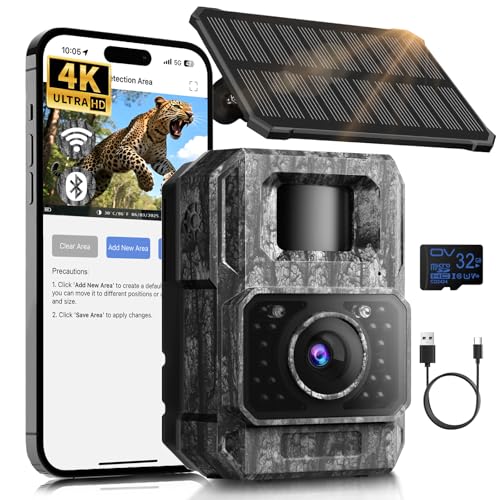
- Angle-adjustable solar panel
- 4K video and 64MP photos
- Local app access; no remote alerts
Best For: Solar-powered monitoring in spots with uneven sunlight
Best for Wide-Angle App Viewing
MAXDONE Solar WiFi Trail Camera
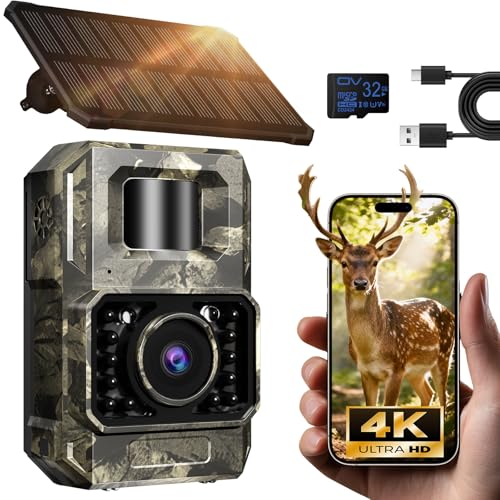
- 100-degree field of view
- Detachable solar panel
- Nearby app preview and downloads
Best For: Wide-trail scouting with on-site phone access
Best for Long-Range No-Glow Night Vision
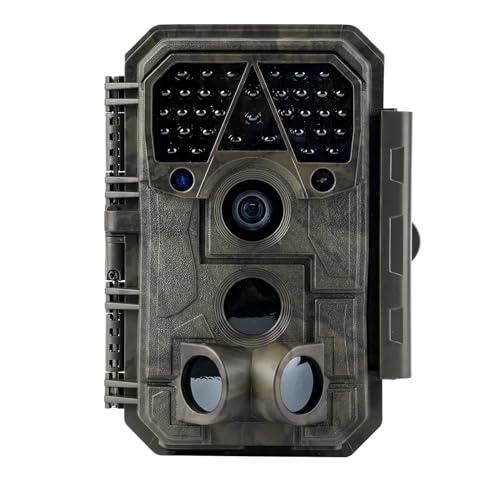
- 100-foot claimed no-glow range
- 0.1-second claimed trigger
- 2.4-inch screen; no wireless access
Best For: Discreet nighttime wildlife scouting
Best for Broad Detection Coverage

- 120-degree detection angle
- 4K video and no-glow LEDs
- 16GB card included; batteries extra
Best For: Wide-area scouting without wireless access
Easy-Setup Pick

- 36MP photos and 2K video
- 850nm infrared night vision
- IP66 housing; 2-inch screen
Best For: Beginners monitoring wildlife or backyards
Two-Camera Pick
WOSODA G200 Trail Camera 2-Pack

- Two cameras for separate spots
- 0.3-second specified trigger
- 850nm IR; IP65 waterproof rating
Best For: Covering two trails or scouting locations
Compact Pick

- Compact camouflage housing
- 30MP photos and 1080p video
- IP66 rating; mounting strap included
Best For: Small outdoor wildlife-monitoring setups
Ready-to-Deploy Pair
WOSODA G200 48MP Trail Cameras

- Two cameras with two 16GB SD cards
- Stated 0.3-second trigger; up to 60-foot detection
- IP65 rating and 850nm low-glow infrared
Best For: Two-location wildlife monitoring with included storage
Compact Scout
WOSPORTS Mini 30MP Trail Camera

- 30MP photos and 1080p video
- Compact camouflage body with PIR detection
- Requires four AA batteries and an SD card
Best For: Discreet deer scouting and backyard observation
Flexible Capture Pair
WOSODA G200 48MP Trail Camera Set

- Two cameras and two 16GB SD cards
- Single-photo, three-photo, or video modes
- 0.3-second stated trigger and IP65 rating
Best For: Two-site scouting with selectable capture modes
Best for Flexible Solar Placement – MAXDONE 4K Solar Trail Camera
If you need a trail camera with motion sensor recording for a spot that gets uneven sunlight, this MAXDONE model has a separate, angle-adjustable solar panel. Its 6000mAh rechargeable battery and included 32GB SD card make it a practical option for longer-term backyard or woodland monitoring.
Best For: Outdoor locations where you want solar charging and occasional phone-based footage retrieval.
Pros:
- Adjustable solar panel can be aimed toward available sunlight.
- Offers 4K video, 64MP photos, a claimed 0.1-second trigger, and infrared night vision up to 65 feet.
- Bluetooth and a camera-generated Wi-Fi hotspot let you review files in the TrailCamGO app without removing the card.
Cons:
- Does not connect to home Wi-Fi or cellular networks and cannot send real-time motion alerts.
- Phone connection is short-range; the listing recommends staying within 10 feet for app use.
This is a good fit when panel positioning matters more than remote access. The camera keeps recording when your phone is away, but you must return within connection range to retrieve footage wirelessly.
Best for Wide-Angle App Viewing – MAXDONE Solar WiFi Trail Camera
This trail camera with motion sensor recording combines a 100-degree view with 4K video and local phone access. The current solar-powered version has a detachable, adjustable panel, making it worth considering when you want to check wildlife footage nearby without pulling the SD card.
Best For: Scouting wider trails with local app viewing and rechargeable solar power.
Pros:
- Captures 64MP photos and 4K video across a 100-degree field of view.
- Detachable solar panel and rechargeable battery provide flexible power options.
- TrailCam GO supports local previewing and downloads; 850nm low-glow night vision reaches a claimed 65 feet.
Cons:
- App access requires you to be near the camera; it does not connect to home Wi-Fi.
- Orders placed before December 25, 2025, were for a non-solar version, so confirm the version if buying older stock.
Choose this model for its wider framing and convenient on-site downloads, not for remote notifications. Its Wi-Fi connection is for local file access rather than checking the camera from home.
Best for Long-Range No-Glow Night Vision – Meidase P70 Trail Camera
For a straightforward trail camera with motion sensor activation, the non-cellular, non-Wi-Fi Meidase P70 prioritizes quick triggering and nighttime reach. Its claimed 0.1-second trigger and 100-foot no-glow infrared range suit trails where animals may move through quickly after dark.
Best For: Wildlife scouting where discreet, longer-range night recording matters more than phone connectivity.
Pros:
- 940nm no-glow LEDs provide a claimed 100-foot night-vision range.
- Records 64MP photos and 1296p video, with H.264 compression for smaller video files.
- Built-in 2.4-inch color screen allows on-site review.
Cons:
- No Wi-Fi or cellular connection for phone access or remote alerts.
- Requires an SD card and eight AA batteries, neither of which is included; the compatible solar panel is sold separately.
The P70 makes sense if you plan to visit the camera to review footage and want no-glow illumination. Budget for the required card and batteries before deployment.
Best for Broad Detection Coverage – WOSPORTS G600 4K Trail Camera
If animals approach from several directions, this trail camera with motion sensor detection offers a 120-degree detection angle and a claimed 0.2-second trigger. The WOSPORTS G600 also records 4K video and includes a 16GB memory card, so you can set it up without buying storage separately.
Best For: Monitoring broad trails, farm areas, or backyards without wireless connectivity.
Pros:
- Wide 120-degree detection angle and adjustable one- to three-shot burst mode.
- Captures up to 64MP photos and 4K video, with 940nm no-glow infrared LEDs.
- Includes a 16GB card and a 2-inch screen for reviewing footage at the camera.
Cons:
- No cellular or Wi-Fi connection for remote viewing or alerts.
- Eight AA batteries are not included; rechargeable battery and solar-panel options are sold separately.
Its broad detection area is useful when you cannot predict where movement will enter the frame. Plan on retrieving footage in person and supplying batteries for the initial setup.
Easy-Setup Pick – CEYOMUR 36MP Trail Camera
If you want a trail camera with motion sensor detection that is straightforward to set up, this CEYOMUR model is geared toward beginners. Its lens, screen, and controls sit on one side, so you can preview the shot and adjust the angle while mounting it.
Best For: First-time users monitoring wildlife, backyards, or farms.
Pros:
- Captures 36MP photos and 2K video.
- Built-in 850nm infrared LEDs provide black-and-white night images.
- IP66-rated housing and a 2-inch screen suit outdoor setup and playback.
Cons:
- Requires eight AA batteries and an SD card, neither of which is included.
- Night images are black and white.
The accessible controls and on-camera preview make this a practical starting point if you prefer a simple camera over a more involved setup.
This two-pack makes it easier to cover separate locations with a trail camera with motion sensor detection at each spot. WOSODA specifies a 0.3-second trigger and detection up to 60 feet, alongside 48MP photos and 1080p video.
Best For: Monitoring two trails, outdoor areas, or scouting locations.
Pros:
- Includes two cameras for placement in different locations.
- Specified 0.3-second trigger speed and up to 60-foot detection range.
- 850nm low-glow infrared night vision and IP65 waterproof rating.
Cons:
- SD cards are not included.
- Non-cellular and non-Wi-Fi design does not provide wireless image access.
Choose this set when coverage across two positions matters more than remote connectivity; each camera records locally to an SD card.
For a smaller trail camera with motion sensor detection, this WOSPORTS mini model pairs a camouflage body with a mounting strap for trees, posts, or fences. It captures 30MP photos and 1080p video, with 850nm infrared LEDs for black-and-white night images.
Best For: Compact setups for deer scouting, garden monitoring, or backyard wildlife observation.
Pros:
- Compact, lightweight design is easier to carry and conceal.
- PIR motion sensor and 850nm infrared night vision support day-and-night monitoring.
- IP66 waterproof rating and included adjustable mounting strap.
Cons:
- Four AA batteries and an SD card are not included.
- Supports SD cards up to 32GB, a lower stated limit than some alternatives.
This is a sensible option where a discreet mounting position matters; plan to supply batteries and a compatible card before taking it outdoors.
Ready-to-Deploy Pair – WOSODA G200 48MP Trail Cameras
If you need a trail camera with motion sensor coverage at two locations, this WOSODA G200 pair includes two 16GB SD cards. Each camera offers a stated 0.3-second trigger, motion detection up to 60 feet, 48MP photos, and 1080p video.
Best For: Monitoring two wildlife trails or outdoor areas without buying cameras separately.
Pros:
- Two cameras and two 16GB SD cards are included.
- IP65 waterproof rating and camouflage housings suit outdoor placement.
- 850nm low-glow infrared supports nighttime black-and-white capture.
Cons:
- Non-Wi-Fi design requires SD-card access to review footage.
- Nighttime images are black and white.
This is a practical two-site option when included storage and straightforward mounting matter more than wireless access. The supplied notes also list straps and stand-mount support for placement.
Compact Scout – WOSPORTS Mini 30MP Trail Camera
For a discreet trail camera with motion sensor detection, the WOSPORTS Mini pairs a camouflage body with 30MP photos and 1080p video. Its PIR sensor and 850nm infrared LEDs support wildlife capture by day and black-and-white images at night.
Best For: Buyers who want a small camera for deer scouting, backyard observation, or bird watching.
Pros:
- Compact 4.25 × 4.21 × 3.43-inch body weighs about 0.73 pounds.
- Runs on four AA batteries and includes an adjustable mounting strap.
- Simple controls allow on-camera setting adjustments.
Cons:
- Four AA batteries and an SD card are not included.
- Supported SD-card capacity tops out at 32GB.
Its small size makes it easier to conceal than a bulkier camera, but plan to supply power and storage before installing it. The notes describe a fast trigger without specifying a response time.
Flexible Capture Pair – WOSODA G200 48MP Trail Camera Set
This WOSODA set offers two cameras for shoppers seeking a trail camera with motion sensor coverage in more than one spot. The supplied notes specify a 0.3-second trigger, detection up to 60 feet, 48MP photos, 1080p video, and two included 16GB SD cards.
Best For: Covering a backyard, farm, or forest location with two cameras and selectable capture modes.
Pros:
- Offers single-photo, three-photo, and video recording modes.
- 850nm low-glow infrared supports nighttime capture without a bright flash.
- IP65 rating, camouflage finish, and mounting hardware support outdoor setup.
Cons:
- Footage is stored on SD cards rather than delivered wirelessly.
- Nighttime photos are black and white.
Choose this set if changing between burst photos and video is useful for your scouting routine. The listed SD-card support extends to 256GB, but higher-capacity cards are not included.
How We Picked the Best Trail Camera with Motion Sensor
We compared the listed features most likely to affect everyday use: motion activation, stated trigger speed where available, nighttime illumination, power options, connectivity, size, and pack value. The selection spans solar-powered Wi-Fi cameras, non-cellular models, mini cameras, and two-packs. Listed resolution is useful for narrowing options, but it does not establish real-world image quality; the product specifications alone cannot tell you how reliably a camera detects wildlife or how clear its night footage will be.
Quick Comparison: Which Type Fits Your Setup?
Solar Wi-Fi cameras: The two MAXDONE options suit spots you can visit periodically and where solar exposure may reduce battery changes. Check their stated connection range and app requirements; Wi-Fi and Bluetooth do not mean you can view images from anywhere.
Standalone cameras: The Meidase P70 and WOSPORTS full-size model are alternatives if you prefer a camera without Wi-Fi or cellular service. Plan to retrieve footage at the camera.
Compact cameras and two-packs: WOSPORTS Mini models suit discreet placement. WOSODA two-packs let you watch two trails or approaches at once; compare the included accessories, since some listed bundles specify an SD card and others do not.
Key Buying Factors for a Trail Camera with Motion Sensor
Detection and Placement
Trigger time is the delay between detection and capture, while detection range and field of view affect what enters the frame. A fast advertised trigger can help on narrow trails, but placement matters just as much. Aim across a path rather than straight down it, and clear nearby branches that may cause false triggers.
Night Images and Resolution
No-glow infrared can be useful when you want less visible illumination at night; other IR setups may be easier to notice. Compare sample nighttime images when available. Megapixel and video-resolution claims alone do not guarantee detail, especially when animals are moving after dark.
Power, Storage, and Weather Exposure
For distant sites, weigh battery access against solar exposure before choosing a power setup. Confirm the required batteries and memory-card type, supported card capacity, and whether a card is included. Waterproof claims are worth checking against the specific rating and installation guidance, particularly for an exposed mount.
Who Should Buy Which Trail Camera with Motion Sensor?
Choose a solar MAXDONE model if reducing battery swaps is your priority and the location gets suitable sunlight. Start with the Meidase P70 or full-size WOSPORTS if you want a standalone, non-Wi-Fi setup; compare their night-vision and trigger specifications before deciding. Consider CEYOMUR for a simpler single-camera option, WOSPORTS Mini for a smaller footprint, or a WOSODA two-pack when covering multiple locations matters more than advanced connectivity. Whichever you choose, test motion capture and night framing at home before leaving it in the field.