
A thermal imaging camera for HVAC technicians can speed up diagnostics, reveal hidden hot spots, and help verify system performance without guesswork.
In this 2026 roundup, we focus on practical models that balance image quality, temperature range, battery life, and ease of use for field work.
Best 10 Thermal Imaging Camera for HVAC Technicians Picks for 2026
Commercial Grade Pick
FLIR TG165-X for HVAC and electrical checks

- 80x60 IR with MSX image enhancement
- Bullseye laser and spot thermometer help targeting
- IP54, drop-tested design for field use
Best For: Technicians who need a rugged, simple inspection camera
Ultra-Light Runtime Pick
GT14S for long HVAC inspection days

- Only 240g for easy carry
- Thermometer mode plus thermal imaging
- Up to 14 hours of battery life
Best For: Mobile technicians who need a lightweight all-day tool
Report-Ready Workhorse
TOPDON TC004 with Wi-Fi and storage

- 512 x 384 TISR-enhanced thermal imaging
- Wi-Fi transfer and TopInfrared app support
- 64GB storage plus IP54 and drop resistance
Best For: Technicians who want strong imaging and easy reporting
Compact Touchscreen Model
2.8inch Thermal Imaging Camera for HVAC Technicians
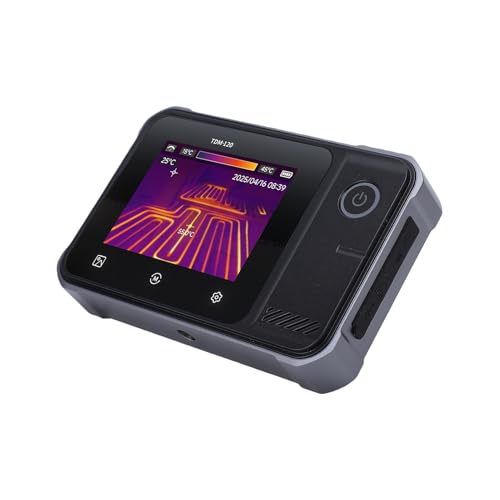
- 120x90 IR resolution with ±2°C accuracy
- 2.8-inch touchscreen with 6 color palettes
- 32GB storage and 1500mAh battery
Best For: Technicians needing a simple portable imager for HVAC, leak, and electrical checks
Rugged Analysis Pick
FOXWELL RT280 Thermal Imaging Camera

- 320x240 LCD with TISR-enhanced detail
- Windows PC analysis with report generation
- IP54 protection and 6.6-foot drop resistance
Best For: Technicians needing detailed imaging, PC analysis, and a rugged handheld design
Pocket Phone Adapter
GOYOJO Thermal Imaging Camera for Android/iPhone

- 192x192 thermal resolution with 50° field of view
- USB-C plug-and-play with no batteries
- Pocket-sized design for tight spaces
Best For: Mobile techs who want a compact smartphone-based thermal imager for quick checks
Top Pick for All-Day HVAC Work
GT24S Thermal Camera with Thermometer Mode

- Native 256 x 192 IR detector
- Thermometer and thermal imaging modes
- Up to 10-hour battery life
Best For: Technicians who need a versatile thermal camera for HVAC checks and electrical troubleshooting
Best Smartphone Thermal Camera
VEVOR Thermal Imaging Camera for Android & iOS

- Works wirelessly with Android and iOS
- 256 x 192 IR plus visible-light overlay
- IP54 protection and no manual focusing
Best For: Mobile technicians who want a wireless thermal imager for fast on-the-go diagnostics
Best for Reporting and Analysis
FOXWELL HT280 Thermal Imaging Camera

- 2.8-inch LCD with TISR enhancement
- Windows software for point, line, and area analysis
- Stores over 20,000 images or videos
Best For: Technicians who want on-device inspection plus Windows-based analysis and reporting
Commercial Grade Pick – FLIR TG165-X for HVAC and electrical checks
If you want a thermal imaging camera for HVAC technicians that favors fast, straightforward inspections, the FLIR TG165-X is built around practical field use. Its 80×60 thermal resolution, spot thermometer, and Bullseye laser help you find the measurement area quickly, while MSX adds visible detail to make the image easier to interpret.
Best For: Technicians who want a rugged, easy-to-use camera for HVAC, building, and electrical troubleshooting.
Pros:
- MSX enhances thermal images with visible detail for easier reading.
- Bullseye laser shows the measurement area for faster targeting.
- Measures from -25°C to 300°C, covering common HVAC checks.
- IP54 enclosure and drop-tested build suit jobsite use.
Cons:
- 80×60 IR resolution is more basic than higher-resolution options.
- Fewer advanced reporting and analysis features than PC-connected models.
This is a strong fit if you prioritize durability and quick spot checks over high-end imaging depth. It’s especially useful when you want a simple commercial-grade tool for everyday HVAC and electrical work.
High-Resolution Analyzer – GODIAG thermal imager with PC reporting
This thermal imaging camera for HVAC technicians is aimed at users who want more detail and more documentation from each inspection. With 320×240 TISR, 256×192 IR resolution, PC analysis, video recording, and CSV/PNG export, the GODIAG model is built for deeper troubleshooting and report-ready workflows.
Best For: Technicians who need high-resolution imaging plus PC-based analysis and file export.
Pros:
- High-resolution thermal output with sensitive detection for subtle differences.
- PC software supports real-time analysis, 3D imaging, and exports.
- 12-hour battery life supports all-day inspections.
- Includes 32GB SD card and video recording for documentation.
Cons:
- Heavier than ultra-light handheld options.
- Feature set may be more than needed for basic quick checks.
If your workflow involves saving files, reviewing data on a computer, or producing detailed service records, this model offers a lot of capability. It’s a practical choice for technicians who want imaging detail and reporting flexibility in one handheld tool.
Ultra-Light Runtime Pick – GT14S for long HVAC inspection days
For technicians who want a thermal imaging camera for HVAC technicians that stays easy to carry all day, the GT14S focuses on portability and runtime. Its 240g body, thermometer mode, live tracking, and 14-hour battery life make it a flexible option for long inspection routes and mixed diagnostic work.
Best For: Mobile technicians who want a lightweight camera with long battery life and dual inspection modes.
Pros:
- Very light 240g design is easy to carry during extended use.
- Thermometer mode and thermal imaging support flexible checks.
- 14-hour battery life is well suited to full workdays.
- Wide temperature range and alarms help spot anomalies quickly.
Cons:
- Smaller battery capacity than some larger handheld models.
- 1-year warranty is shorter than some competing options.
This model makes sense if comfort and battery endurance matter as much as performance. It gives you a broad temperature range and practical inspection tools without adding much weight to your kit.
Report-Ready Workhorse – TOPDON TC004 with Wi-Fi and storage
If your priority is a thermal imaging camera for HVAC technicians that can document jobs efficiently, the TOPDON TC004 is designed for that workflow. It combines 512 x 384 TISR-enhanced imaging, a 3.5-inch display, Wi-Fi transfer, and 64GB of built-in storage for busy field use.
Best For: Technicians who want a durable camera with easy file transfer and plenty of onboard storage.
Pros:
- 512 x 384 TISR-enhanced imaging helps reveal subtle temperature differences.
- 3.5-inch display gives a comfortable viewing area for inspections.
- Wi-Fi and TopInfrared app support faster reporting.
- 64GB built-in storage holds lots of images and videos.
- IP54 protection and 2-meter drop resistance suit field work.
Cons:
- Requires a separate A battery rather than an included rechargeable pack.
- Bulkier than the lightest compact thermal cameras.
For technicians who need solid image clarity and a smoother reporting workflow, this is a very practical choice. The combination of storage, Wi-Fi, and rugged construction makes it well suited to repeated daily inspections.
Compact Touchscreen Model – 2.8inch Thermal Imaging Camera for HVAC Technicians
If you want a thermal imaging camera for HVAC technicians that’s easy to carry and quick to read, this compact touchscreen model covers the basics well. It combines 120×90 infrared resolution, ±2°C accuracy, and automatic high/low temperature tracking to help you spot leaks, electrical overheating, and insulation defects on site.
Best For: Technicians who want a lightweight, simple thermal imager for HVAC checks, electrical inspections, and leak detection.
Pros:
- 120×90 infrared resolution with ±2°C accuracy for clear fault location
- 2.8-inch touchscreen with 6 color palettes for easy viewing and adjustment
- 32GB storage keeps thousands of thermal images on the device
- 1500mAh battery supports extended on-site inspection sessions
Cons:
- Lower resolution than higher-end thermal cameras
- Battery capacity is modest for very long workdays
- Best suited to practical field use rather than advanced analysis
This is a straightforward choice if you need a portable inspection tool for everyday HVAC and electrical work. It focuses on usability, storage, and core thermal detection rather than premium features.
Rugged Analysis Pick – FOXWELL RT280 Thermal Imaging Camera
For buyers comparing a thermal imaging camera for HVAC technicians, the FOXWELL RT280 stands out for image detail and analysis tools. It pairs a 320×240 LCD screen with TISR enhancement, 25Hz smooth capture, and PC software for point, line, and area temperature analysis, making it well suited to more structured inspections.
Best For: Professionals who want a more detailed handheld thermal camera with PC analysis and rugged field durability.
Pros:
- 320×240 LCD and TISR-enhanced effective resolution for clearer thermal visuals
- Windows PC software supports 2D/3D analysis and report generation
- 8GB storage holds over 20,000 images and videos
- IP54 rating and 6.6-foot drop resistance for jobsite use
Cons:
- PC analysis is not compatible with Mac
- Bulkier than a phone-attached thermal imager
- May be more camera than needed for very basic checks
The RT280 is a strong fit if you want better visual clarity and deeper documentation tools in one handheld unit. It’s especially useful when inspections need reports, stored evidence, and dependable ruggedness.
Pocket Phone Adapter – GOYOJO Thermal Imaging Camera for Android/iPhone
If you prefer a thermal imaging camera for HVAC technicians that stays pocket-sized, this GOYOJO plug-in model turns a compatible smartphone into a thermal imager. With 192×192 resolution, a wide 50° field of view, and USB-C plug-and-play operation, it’s built for fast checks of leaks, overheating, and insulation issues without carrying a separate handheld unit.
Best For: Mobile technicians and DIY users who want a compact, phone-based thermal camera for quick inspections.
Pros:
- 192×192 infrared resolution for more detailed thermal images
- USB-C plug-and-play design requires no batteries or pairing
- Wide 50° field of view helps scan walls, ceilings, and floors
- Compact size makes it easy to carry into tight spaces
Cons:
- Requires a compatible Android or iPhone 15/16/17 series phone
- Not a standalone camera with its own battery
- Better suited to quick mobile inspections than full bench-style workflows
This model makes sense if you want thermal capability with minimal bulk and no extra charging. It’s a practical pick for fieldwork where portability matters more than having a dedicated handheld device.
Top Pick for All-Day HVAC Work – GT24S Thermal Camera with Thermometer Mode
If you want a thermal imaging camera for HVAC technicians that balances handheld convenience with strong measurement range, the GT24S is built for daily field use. Its native 256 x 192 IR sensor is upscaled on-screen to 320 x 240, while the 25Hz refresh rate and thermometer mode help you track changing temperatures on equipment, ductwork, and electrical components in real time.
Best For: Technicians who need a versatile thermal camera for HVAC checks, electrical troubleshooting, and long inspection days.
Pros:
- Native 256 x 192 IR detector with real-time upscaling to 320 x 240 for clearer thermal detail
- Dual thermal imaging and thermometer modes for both area scanning and precise point readings
- Wide -4°F to 1202°F range with ±2% accuracy and adjustable emissivity/distance settings
- Up to 10 hours of battery life and 198g weight support extended one-handed use
Cons:
- No visual-light camera overlay mentioned in the supplied notes
- Screen size is not specified in the supplied details
This is a practical pick if you want a single thermal tool that can handle HVAC faults, overloaded panels, and other inspection tasks without frequent charging. The combination of fast updates, alarm support, and broad temperature coverage makes it a strong fit for technicians who move between jobs all day.
Best Smartphone Thermal Camera – VEVOR Thermal Imaging Camera for Android & iOS
For HVAC technicians who prefer a compact phone-connected tool, this VEVOR thermal imaging camera for Android & iOS offers a practical way to inspect temperature patterns without carrying a full-size handheld unit. The 256 x 192 IR resolution, 25Hz refresh rate, and visible-light overlay make it easier to compare hotspots, track airflow issues, and inspect tight spaces from a distance.
Best For: Mobile technicians who want a wireless thermal imager that pairs with a smartphone for fast on-the-go diagnostics.
Pros:
- Wireless compatibility with both Android and iOS smartphones
- 256 x 192 IR resolution plus 640 x 480 visible light for better target differentiation
- 25Hz refresh rate for smooth real-time viewing
- IP54 protection and no manual focusing needed
Cons:
- Temperature ceiling is lower than some handheld HVAC-focused models at 1022°F in the title, with notes listing 1112°F
- Depends on a smartphone rather than offering a built-in large display
This model fits techs who value portability and quick setup over standalone hardware. If you already work from your phone and want thermal, visual, and PIP views in one compact package, it’s a sensible jobsite companion.
Best for Reporting and Analysis – FOXWELL HT280 Thermal Imaging Camera
The FOXWELL HT280 is a strong thermal imaging camera for HVAC technicians who need more than a quick temperature check. It combines a 2.8-inch LCD, 25Hz thermal imaging, and PC analysis software so you can document issues, review 2D or 3D thermal views, and generate reports after the job.
Best For: Technicians who want on-device thermal inspection plus Windows-based analysis and reporting.
Pros:
- 2.8-inch LCD with 320 x 240 display and 260 x 260 TISR-enhanced resolution
- Windows PC software supports point, line, and area temperature analysis
- Stores over 20,000 images or videos for later review
- Temperature alarms, 9 color palettes, and a wide 50° x 50° field of view
Cons:
- PC analysis is Windows only and not compatible with Mac
- Temperature range tops out at 932°F, which is lower than some competing models
If your HVAC work involves diagnostics you need to document, this model adds useful workflow tools beyond basic imaging. Its storage, alarm functions, and analysis software make it especially appealing for technicians who create service reports or compare readings over time.
How We Picked the Best Thermal Imaging Camera for HVAC Technicians
We prioritized cameras that make HVAC troubleshooting easier in real-world conditions: enough thermal resolution for spotting temperature differences, a usable display, reliable temperature measurement, and battery life that lasts through service calls. We also considered portability, boot-up speed, recording or PC analysis features, and whether the camera fits common HVAC tasks like supply/return checks, duct leaks, insulation issues, and electrical overheating.
Quick Comparison
When comparing a Thermal Imaging Camera for HVAC Technicians, look first at resolution and temperature range, then compare screen size, thermal sensitivity, frame rate, and workflow features such as onboard reporting, video capture, or smartphone connectivity. Higher resolution helps with finer detail, while a wider temperature range is useful for both cold-air and heat-related diagnostics.
Key Buying Factors for Thermal Imaging Camera for HVAC Technicians
Thermal Resolution and Image Clarity
Resolution affects how well you can separate small temperature differences on coils, ducts, breakers, and vents. For HVAC work, clearer images usually mean faster identification of weak spots and fewer repeat scans.
Temperature Range and Accuracy
Choose a model that covers the temperatures you commonly inspect, from cold air leaks to overheating electrical components. A built-in thermometer or spot reading can help confirm what the image suggests.
Ergonomics and Durability
Field-friendly design matters. A compact body, readable screen, and simple controls reduce fatigue during long service days. If you work in tight mechanical spaces, weight and grip are especially important.
Battery Life and Data Features
Long runtime is valuable for technicians moving between jobs. Recording, image storage, Wi-Fi, or PC analysis can also simplify documentation, customer explanations, and follow-up reporting.
Who Should Buy Which Thermal Imaging Camera for HVAC Technicians?
If you want a straightforward, rugged option for everyday inspections, pick a handheld model with a balanced display and dependable runtime. If you need deeper analysis or more detailed imaging, look for higher resolution and PC software support. Technicians who prefer mobile workflows may benefit from smartphone-compatible cameras, while those handling frequent commercial calls may want the best battery life and widest measurement range. In short, the best Thermal Imaging Camera for HVAC Technicians is the one that matches your typical job mix, not just the highest spec sheet number.