
Thermal imaging can help electricians spot hot spots, overloaded circuits, loose connections, and other hidden problems before they become failures.
This guide focuses on the best thermal imaging camera for electrical work in 2026, with picks for field inspections, troubleshooting, and everyday commercial use.
Best 10 Thermal Imaging Camera for Electrical Work Picks for 2026
Large Screen Reporting Pick
TOPDON TC004 Thermal Imaging Camera

- 3.5-inch display for easier hotspot review
- TISR boosts 256x192 IR to 512x384
- 64GB storage plus Wi-Fi and PC analysis
Best For: Technicians who need a clear screen and easier reporting
Rugged Pro Grade Pick
FLIR TG165-X Thermal Imaging Camera

- MSX adds visual detail to thermal images
- Bullseye laser improves target alignment
- IP54-rated, drop-tested, with 10-year detector coverage
Best For: Pros who want a rugged FLIR camera for field inspections
Phone-Friendly Compact Pick
TOPDON TC002C Duo Thermal Camera

- USB-C compatibility for phones, tablets, and Windows devices
- TISR boosts 256x192 IR to 512x384
- Ultra-compact 1.1 oz design with photo and video recording
Best For: Mobile users who want a lightweight USB-C thermal imager
Detailed Field Inspector
320x240 Thermal Clarity for Electrical Inspections

- 320×240 LCD with TISR-enhanced thermal detail
- 25Hz refresh and laser targeting for faster checks
- Windows PC software with 2D/3D analysis and reports
Best For: Electricians who want clearer thermal detail and PC-based reporting
Long-Run Dual-Mode Pick
Long-Run Dual-Mode Thermal Checking

- Native 256×192 IR with 320×240 real-time upscaling
- Thermal mode plus thermometer mode for point checks
- Up to 10 hours of battery life in a 198g body
Best For: Technicians who want a lightweight camera with point-reading flexibility
Smart Touchscreen Inspector
Touchscreen Smart Scene Thermal Camera
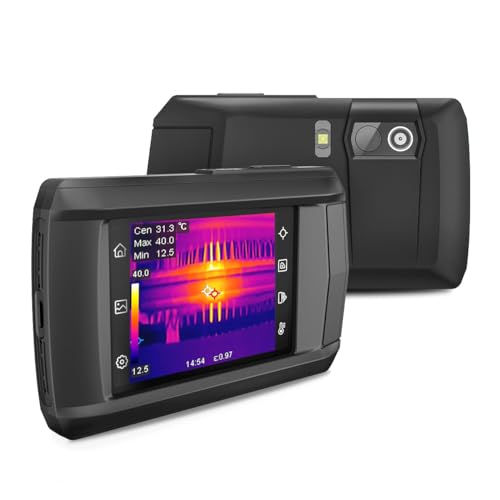
- 3.5" touchscreen with simple phone-style controls
- Dual-camera modes including Thermal, Visual, Fusion, PIP, and Blending
- IntellFault scene recognition with live super resolution
Best For: Users who want an easy touchscreen camera with guided scene detection
Mini Thermal Pick for Everyday Inspections

- 240x240 TISR-enhanced imaging from a 128x128 base
- 25Hz refresh, alerts, and auto photo capture
- 15-hour battery life with IP54 and 2m drop resistance
Best For: Routine electrical inspections in a compact handheld form
High-Detail Thermal Option for Pro Diagnostics

- 512x384 X³IR thermal resolution with 40mK sensitivity
- 3.5-inch IPS screen plus 2MP visible camera
- WiFi/USB transfer, voice notes, and video capture
Best For: Pro users who need detailed thermal inspection and documentation tools
Long-Run Rugged Choice for Field Work

- 240x240 TISR imaging with 40mk sensitivity
- Up to 24 hours of battery life for long inspections
- IP65 protection plus 6.56-foot drop resistance
Best For: Long electrical inspections in tough jobsite conditions
AI Scene Detection Pick – HF96 Thermal Camera with AI Scene Detection
If you want a thermal imaging camera for electrical work that helps reduce guesswork, the HF96 is built around quick anomaly spotting and easy day-to-day use. Its live super-resolution view, laser pointer, and wide temperature range make it useful for checking panels, hotspots, and other inspection targets.
Best For: Electricians and inspectors who want automated scene recognition plus a compact, long-running handheld camera.
Pros:
- IntellFault scene recognition can automatically identify hot spots and cold spots.
- Live super resolution boosts thermal images to 240×240 for clearer inspection detail.
- 25Hz refresh rate and 50mK sensitivity help with smooth scanning and small temperature changes.
- Laser pointer, 7 color palettes, and PC software add flexibility for field and analysis work.
Cons:
- No moisture readings, so it is not a replacement for a dedicated moisture meter.
- Uses manual controls and firmware-dependent scene features, which may take setup time.
- Best suited to inspection workflows rather than advanced industrial reporting.
Overall, the HF96 stands out if you want a practical electrical inspection camera with helpful automation, solid battery life, and durable construction for everyday jobsite use.
Large Screen Reporting Pick – TOPDON TC004 Thermal Imaging Camera
The TOPDON TC004 is a thermal imaging camera for electrical work that focuses on readability, storage, and reporting. Its larger display, enhanced thermal resolution, and Wi-Fi connectivity make it a strong fit when you need to inspect equipment and document results efficiently.
Best For: Technicians who want a larger screen and easy file transfer for inspection reports.
Pros:
- 3.5-inch display makes it easier to review hot spots and temperature differences.
- 256×192 IR resolution enhanced to 512×384 with TISR for sharper detail.
- 64GB built-in storage supports lots of images and videos during a workday.
- Wi-Fi and PC analysis help speed up file transfer and reporting.
Cons:
- Heavier than compact phone-attached options, so it is less pocket-friendly.
- More focused on inspection and reporting than on ultra-portable quick checks.
In practice, the TC004 is a smart pick if you value a clearer screen and better documentation tools over the smallest possible form factor.
Rugged Pro Grade Pick – FLIR TG165-X Thermal Imaging Camera
The FLIR TG165-X is a commercial-grade thermal imaging camera for electrical work, HVAC, and building inspection. It combines a spot thermometer, Bullseye laser, and FLIR MSX image enhancement to make target identification and temperature checks straightforward in the field.
Best For: Professionals who want a rugged FLIR tool with easy-to-read images and dependable jobsite durability.
Pros:
- MSX overlays visual detail onto the thermal image for easier interpretation.
- Bullseye laser helps show the size of the measurement area.
- IP54 enclosure and drop-tested design support harsh work environments.
- Comes with a 2-year camera warranty and 10-year detector coverage.
Cons:
- 80×60 IR resolution is lower than some newer competitors.
- Temperature range is narrower than some high-range inspection cameras.
If you want a trusted, rugged inspection tool from FLIR rather than the highest pixel count, the TG165-X remains a practical and proven choice.
Phone-Friendly Compact Pick – TOPDON TC002C Duo Thermal Camera
The TOPDON TC002C Duo is a compact thermal imaging camera for electrical work that plugs into USB-C phones and tablets, making it easy to carry and quick to set up. With super resolution, a wide temperature range, and app-based control, it is aimed at mobile inspections where portability matters.
Best For: Users who want a lightweight USB-C thermal camera they can use with a phone or tablet.
Pros:
- Works with USB-C smartphones and tablets across iOS, Android, and Windows devices.
- 256×192 IR with TISR super resolution up to 512×384 improves image detail.
- 25Hz refresh rate and 40mK sensitivity help track changing heat patterns smoothly.
- Very compact at 1.1 oz, with photo, video, and app-based control support.
Cons:
- Not compatible with Mac devices or Android 16 devices temporarily.
- Depends on a connected mobile device, so it is not a standalone handheld unit.
The TC002C Duo makes sense if you want a highly portable thermal camera for electrical work and prefer controlling everything from a USB-C device.
Detailed Field Inspector – 320×240 Thermal Clarity for Electrical Inspections
If you want a thermal imaging camera for electrical work that balances detail, portability, and practical analysis tools, the FOXWELL RT280 is built for hands-on inspections. Its 320×240 display, 25Hz refresh rate, and TISR-enhanced thermal detail help make hotspots and small temperature differences easier to spot on panels, equipment, and other troubleshooting targets.
Best For: Electricians and technicians who want clearer thermal detail plus PC-based report analysis.
Pros:
- 320×240 LCD and TISR-enhanced output for more detailed thermal viewing
- 25Hz frame rate and 50° x 38° field of view for smooth inspection scanning
- PC software supports point, line, and area analysis with 2D/3D thermal views
- 8GB eMMC storage can hold over 20,000 images and videos
Cons:
- PC analysis software is Windows only, not compatible with Mac
- Higher-resolution display does not change the underlying thermal sensor details alone
- Bulkier feature set may be more than casual users need
For electrical diagnostics, the RT280 stands out when you want strong onboard visibility plus a deeper analysis workflow back at the computer. The temperature alarms, laser targeting, and rugged build make it a sensible field tool for repeated inspections.
Long-Run Dual-Mode Pick – Long-Run Dual-Mode Thermal Checking
The GT24S is a practical thermal imaging camera for electrical work if you want a lightweight tool that can also switch into a precise thermometer mode. Its native 256×192 infrared detector, 25Hz update rate, and temperature alarms are aimed at fast fault-finding on overloaded panels, motors, HVAC equipment, and other common inspection points.
Best For: Technicians who need a lightweight thermal camera with both scene scanning and single-point temperature readings.
Pros:
- Native 256×192 IR detector with real-time 320×240 upscaling on screen
- Thermal imaging and thermometer modes for flexible inspection workflows
- 25Hz frame rate, auto alarms, and adjustable emissivity for practical diagnostics
- Up to 10 hours of battery life for full-day use
Cons:
- Screen and resolution specs are practical, but not the highest in the lineup
- No mention of visual camera fusion modes or advanced scene automation
- Best results still depend on correct emissivity and distance settings
For electrical troubleshooting, the GT24S is appealing because it keeps the workflow simple: scan the scene, lock onto a target, and keep moving. The long battery life and compact 198g design make it especially useful for overhead work, crawl spaces, and long service calls.
Smart Touchscreen Inspector – Touchscreen Smart Scene Thermal Camera
If you’re comparing a thermal imaging camera for electrical work and want a more guided, easy-to-use interface, the HP96 is designed to simplify inspections. Its 3.5-inch touchscreen, visible-light camera, and fast scene recognition features help you move quickly from a broad scan to a more detailed look at overheating components or other anomalies.
Best For: Users who want an easy touchscreen thermal camera with scene recognition and dual-camera views.
Pros:
- 3.5″ touchscreen with phone-style controls for quick operation
- Dual cameras and five imaging modes, including Thermal, Visual, Fusion, PIP, and Blending
- IntellFault scene recognition for spotting issues like overheating, leaks, and insulation gaps
- Live super resolution boosts viewing and photos from 96×96 to 240×240
Cons:
- Base IR resolution is 96×96, so it relies on enhancement for sharper viewing
- Battery life is listed at up to 4 hours, which is shorter than some competitors
- Scene recognition needs firmware support and specific mode selection to use
The HP96 is a strong choice if ease of operation matters as much as detection capability. For electrical checks, the automatic temperature tracking, alert thresholds, and multi-mode display options make it easier to confirm what you’re seeing and act quickly.
Mini Thermal Pick for Everyday Inspections – TOPDON TC004 Mini
If you want a thermal imaging camera for electrical work that balances portability with useful clarity, the TOPDON TC004 Mini is built for quick inspections on panels, outlets, and general troubleshooting. Its 128×128 thermal base, enhanced to 240×240 with TISR, plus a 25Hz refresh rate, helps you spot hotspots with smoother image updates.
Best For: Technicians who want a pocket-friendly thermal camera for routine electrical checks and general maintenance.
Pros:
- TISR enhancement improves 128×128 thermal data to 240×240 for clearer detail.
- 25Hz refresh rate and 40° x 30° field of view support smooth, practical inspections.
- High/low temperature alerts and automatic photo capture help streamline diagnostics.
- 15-hour battery life and IP54 / 2-meter drop resistance suit on-the-go work.
Cons:
- Lower base thermal resolution than higher-end handheld models.
- No charging head included with the cable.
Overall, this model makes sense if you need a compact, dependable thermal camera for electrical work without stepping into a larger or more complex platform. It prioritizes everyday usability, alerting, and battery life over advanced imaging hardware.
High-Detail Thermal Option for Pro Diagnostics – Thermal Master Thor 002
For buyers comparing a thermal imaging camera for electrical work, the Thermal Master Thor 002 stands out for its higher-resolution thermal output and larger display. It combines a 512×384 X³IR thermal image with a 2MP visible camera, which is useful when you want more context during inspections and reporting.
Best For: Professionals who want higher-detail thermal imaging and broader documentation tools for electrical and facility inspections.
Pros:
- 512×384 X³IR resolution and 40mK sensitivity support very detailed inspection work.
- 3.5-inch 640×480 IPS screen and 2MP visual camera improve on-device viewing.
- Wireless image transfer, video/photo capture, and voice notes help with documentation.
- Laser positioning, high/low alarms, IP54 protection, and 2-meter drop resistance add worksite confidence.
Cons:
- Larger and heavier than compact handheld alternatives.
- Higher-end feature set may be more than casual users need.
This is the strongest fit if you care most about detail, reporting, and flexible workflow tools. It is a more complete inspection platform for electricians and other trades that need thermal evidence plus documentation in one unit.
Long-Run Rugged Choice for Field Work – H128 Handheld Thermal Camera
If your priority in a thermal imaging camera for electrical work is long runtime and durability, the H128 is a very practical choice. It uses 240×240 TISR enhancement, 25Hz imaging, and a temperature alarm to help you identify abnormal heat quickly while staying ready for extended field use.
Best For: Electricians and maintenance crews who need a durable thermal camera for long inspections and rough jobsite conditions.
Pros:
- 240×240 TISR clarity and 40mk sensitivity help reveal small temperature differences.
- Up to 24 hours of battery life supports all-day or multi-day work.
- IP65 protection and 6.56-foot drop resistance make it well suited to demanding sites.
- Temperature alarm, max/min/center tracking, and tripod mount improve inspection workflow.
Cons:
- Thermal resolution is enhanced from 128×128 rather than starting at a higher native level.
- No visible light camera is listed for added visual context.
For users who value endurance and ruggedness over extra imaging extras, this model is easy to recommend. It is built to keep working through long electrical inspections while giving you the alerts and measurement tools needed for fast troubleshooting.
How We Picked the Best Thermal Imaging Camera for Electrical Work
We prioritized temperature range, thermal resolution, refresh rate, screen quality, battery life, and practical features like laser pointers, visual overlays, and PC analysis. For electrical work, accuracy and fast spot detection matter more than gimmicks, so we favored models that make it easier to identify abnormal heat quickly and document findings clearly.
Quick Comparison
In a fast-moving electrical inspection, a handheld thermal camera is usually the best all-around choice. Higher-resolution models are better for tracing fine differences across panels and breakers, while compact phone-connected cameras are appealing for portability and lower cost. If you need long shifts, strong battery life and a clear display can matter as much as raw resolution.
Key Buying Factors for a Thermal Imaging Camera for Electrical Work
Resolution and Image Clarity
Higher thermal resolution helps you distinguish between adjacent breakers, terminals, and conductors. Super-resolution features can improve the view, but native thermal resolution still matters for clean, reliable readings.
Temperature Range and Sensitivity
Look for a camera that covers common electrical fault temperatures with enough headroom for hot components. Good thermal sensitivity helps reveal small anomalies before they turn into obvious failures.
Refresh Rate and Workflow
A smoother refresh rate makes it easier to scan panels, switchgear, and motors without lag. For electrical troubleshooting, a responsive image is more useful than a larger but sluggish display.
Display, Overlays, and Analysis
A bright screen, visual camera overlay, laser targeting, and software support can make reports easier to interpret. If you document inspections, PC or app analysis is worth considering.
Battery Life and Portability
Field techs may prefer a lightweight camera with long runtime, while inspectors working on larger sites may want a more rugged handheld unit with a larger screen and better ergonomics.
Who Should Buy Which Thermal Imaging Camera for Electrical Work?
If you want the most flexible option for routine electrical diagnostics, choose a handheld camera with strong resolution and a usable display. If you already work from a smartphone or tablet, a compact USB-C model can be a smart, portable alternative. For budget-conscious buyers, entry-level cameras with solid battery life are often enough for basic hot-spot detection. For higher-demand users, choose a premium Thermal Imaging Camera for Electrical Work with better resolution, analysis tools, and clearer onboard imaging.