
A good thermal camera kit helps home inspectors spot hidden moisture, insulation gaps, electrical hot spots, and HVAC issues faster and with more confidence. The right choice depends on image clarity, temperature range, app or report tools, and how easily it fits into your inspection workflow.
Below, we focus on practical options that balance accuracy, portability, and value so you can choose a kit that supports real-world residential inspections in 2026.
Best 10 Thermal Camera Kit for Home Inspectors Picks for 2026
Smartphone Thermal Pick

- 256x192 IR imaging with 40mK sensitivity
- Point, line, area tools and over-temp alerts
- Runs from Android devices and Windows laptops
Best For: Android users wanting a lightweight plug-in inspector camera
Rugged Handheld Option

- 80x60 IR camera with spot thermometer
- MSX detail enhancement and laser pointer
- IP54-rated, drop-tested handheld build
Best For: Inspectors needing a durable standalone thermal camera
High-Detail Phone Add-On
Thermal Master P1 for iPhone and Android

- 320x240 X³ IR resolution with 25Hz refresh
- Works with iOS, Android, and Windows devices
- Alarms, isotherm mode, and 15x digital zoom
Best For: Cross-platform users wanting a detailed phone-based thermal imager
Best Detail Standalone
GH340 Super Resolution Thermal Camera

- 640x480 super-resolution thermal imaging
- Dual-camera design with auto temp tracking
- IP54-rated with 8-hour runtime and USB-C charging
Best For: Inspectors wanting a detailed handheld camera for building diagnostics
Pro-Grade Thermal Detail
Thor002 High-Resolution Inspection Camera

- 512×384 X³ IR resolution with 3.5-inch IPS screen
- 5 vision modes plus voice notes and LED flashlight
- 32GB storage, app/PC connectivity, and 10.5-hour runtime
Best For: Inspectors needing higher-detail imaging and long inspection sessions
Smart Scene Scanner
HF96V Leak-Finding Thermal Camera
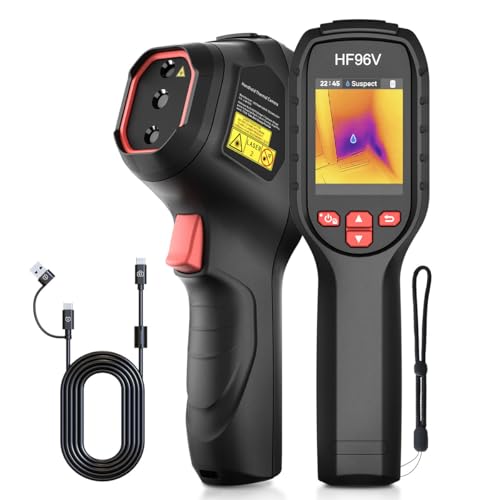
- IntellFault scene recognition for leaks and insulation gaps
- Fusion, thermal, and visual modes with dual cameras
- 50° FOV, auto spot tracking, and up to 11-hour battery life
Best For: Inspectors who want automated detection and quick scanning
Compact Report Builder

- Pocket-size body with 3.5-inch display and flashlight
- 160×120 thermal imaging with MSX visual enhancement
- Wi‑Fi plus FLIR Ignite for sharing and reporting
Best For: Inspectors who prioritize portability and easy report sharing
AI Leak-Focused Thermal Pick
HF96 Thermal Camera with AI Scene Detection

- AI scene recognition for leaks and insulation gaps
- 240x240 super-resolution view at 25Hz
- 11-hour battery and IP54 rugged build
Best For: Inspectors who want automated leak and insulation-gap detection with long runtime.
Phone-First Thermal Clip-On
GOYOJO Thermal Imaging Camera for iPhone/Android

- USB-C plug-and-play with no batteries
- 192x192 thermal resolution and 50° field of view
- Pocket-size design for phones and tight spaces
Best For: Inspectors and DIYers who want the lightest, phone-based thermal option.
Rugged Report-Ready Thermal Choice
Firecore FI160S Thermal Imaging Camera

- 320x240 super resolution with 160x120 IR core
- 32GB storage plus Windows report software
- Dual-camera modes with laser, LED, and alarms
Best For: Inspectors who need strong image detail, storage, and PC-based report support.
Smartphone Thermal Pick – TOPDON TC001 for Android
If you want a compact thermal camera kit for home inspectors that works from a phone or tablet, the TOPDON TC001 is a practical plug-in option. It offers infrared imaging, dual-light modes, temperature alerts, and report features in a tiny body that runs off the connected device rather than its own battery.
Best For: Android-based inspectors who want a lightweight, portable thermal tool for quick building scans and issue checks.
Pros:
- 256×192 infrared imaging with 40mK thermal sensitivity for clearer issue detection
- Supports point, line, and area measurements plus over-temperature alerts
- Can capture photos, video, infrared, and dual-light images
- Very portable at 30g and powered by the connected device
Cons:
- Not compatible with iOS devices
- Requires a phone, tablet, or Windows laptop to operate
- No internal battery, so runtime depends on the host device
Overall, the TC001 is a flexible inspection accessory if you already work in the Android ecosystem and value portability over a standalone handheld design.
Rugged Handheld Option – FLIR TG165-X for Inspections
The FLIR TG165-X is a durable handheld choice for a thermal camera kit for home inspectors who need a simple commercial-grade tool. Its thermal imaging, spot temperature reading, and laser pointer make it useful for building, HVAC, and electrical checks where fast visual confirmation matters.
Best For: Inspectors who want a rugged standalone camera for building, HVAC, and electrical work.
Pros:
- Measures from -25°C to 300°C with 80×60 IR imaging
- MSX helps sharpen thermal images with visible detail
- Laser pointer shows the measurement area for quicker targeting
- IP54 enclosure and drop-tested design for tougher jobsite use
Cons:
- Lower IR resolution than higher-end thermal imagers
- Bulkier than phone-attached thermal camera options
- Temperature range is narrower than some competing models
For buyers who prioritize reliability, durability, and straightforward operation, the TG165-X is a solid field tool that favors practical inspection work over extra software features.
High-Detail Phone Add-On – Thermal Master P1 for iPhone and Android
The Thermal Master P1 is a strong fit if you want a thermal camera kit for home inspectors that attaches through USB-C and works across major device platforms. It combines a higher-resolution sensor, adjustable settings, and a wide temperature span to help reveal insulation gaps, HVAC issues, and electrical hot spots.
Best For: Inspectors who want a compact, cross-platform phone thermal imager with more detail than basic add-ons.
Pros:
- 320×240 X³ IR resolution for sharper thermal detail
- Works with iOS, Android, and Windows via USB-C
- Supports high/low temperature alarms, isotherm mode, and 15x digital zoom
- Adjustable emissivity, ambient temperature, and distance settings improve measurement accuracy
Cons:
- Lightning iPhones need a separate adapter sold separately
- Depends on the Thermal Master app and a compatible device
- Not a standalone handheld camera
As a portable inspection accessory, the P1 balances image detail and convenience well, especially for users who want a more capable phone-based thermal solution.
Best Detail Standalone – GH340 Super Resolution Thermal Camera
If you need a thermal camera kit for home inspectors with a more detailed standalone view, the GH340 stands out for its 640×480 super resolution and dual-camera design. It adds auto temperature tracking, multiple image modes, and a rugged build that suits inspections for insulation, leaks, HVAC, and electrical issues.
Best For: Inspectors who want a higher-resolution handheld camera for more detailed building diagnostics.
Pros:
- 640×480 super resolution thermal imaging with a 2MP visual camera
- Auto temperature tracking and high/low temperature alarms
- Three image modes and six color palettes for flexible viewing
- USB-C charging, IP54 rating, and 8-hour runtime for field use
Cons:
- Heavier and larger than smartphone-based thermal accessories
- Accuracy is listed at ±2°C, so fine measurements still need care
- More advanced than basic users may need for simple spot checks
The GH340 is the most inspection-focused option in this group when image detail and on-device usability matter more than portability alone.
Pro-Grade Thermal Detail – Thor002 High-Resolution Inspection Camera
If you want a thermal camera kit for home inspectors that leans toward detailed diagnostics, the Thermal Master Thor002 is built for serious image review. It combines a 3.5-inch IPS screen, multi-mode thermal viewing, and PC analysis support, making it a practical choice for building checks, electrical work, and broader inspection tasks.
Best For: Inspectors who want higher-detail thermal imaging, long runtime, and on-device recording for deeper follow-up analysis.
Pros:
- Upgraded 512×384 X³ IR resolution for sharper thermal detail on the device.
- 5 vision modes, including IR-Fuse, Pro-Mix, PIP, and visible-light viewing.
- Supports 32GB storage, wireless app transfer, and wired Windows PC analysis.
- Up to 10.5 hours of runtime with IP54 protection and 2m drop resistance.
Cons:
- Fixed-focus design limits flexibility versus adjustable-focus models.
- Some temperature measurement relies on on-screen spot placement, which can introduce minor parallax.
The Thor002 stands out when image clarity and workflow flexibility matter more than simplicity alone. For inspectors who routinely document findings and review thermal data in detail, it offers a strong feature set without straying beyond practical inspection use.
Smart Scene Scanner – HF96V Leak-Finding Thermal Camera
The HF96V is a thermal camera kit for home inspectors that focuses on fast anomaly detection and easy-to-read results. With dual cameras, a wide 50° field of view, and intelligent scene recognition, it is designed to help you spot potential moisture, insulation, and electrical issues with less guesswork.
Best For: Home inspectors who want automated scene recognition and simple, fast scanning for leaks and insulation gaps.
Pros:
- IntellFault scene recognition is designed to identify water leaks and insulation gaps quickly.
- Dual-camera setup with fusion, thermal, and visual modes for better context.
- 50° FOV and auto-tracking of hot, cold, and center spots help speed scanning.
- Up to 11 hours of battery life, plus Windows software and tripod support.
Cons:
- Base IR resolution is 96×96 before Live Super Resolution enhancement.
- Advanced scene features may require firmware updates and setup steps.
For inspectors who value guided detection over manual interpretation, the HF96V offers a practical balance of automation and usability. Its wide coverage, scene tools, and simple controls make it a good fit for routine home inspection workflows.
Compact Report Builder – FLIR C5 Pocket Thermal Camera
The FLIR C5 is a compact thermal camera kit for home inspectors who want a pocketable tool with straightforward reporting features. Its true thermal imaging, MSX enhancement, and Wi‑Fi/FLIR Ignite support make it useful for documenting building, HVAC, electrical, and mechanical findings without carrying a larger system.
Best For: Inspectors who need a small, easy-to-share thermal camera for documentation and customer reports.
Pros:
- Compact pocket design with 3.5-inch screen and built-in LED flashlight.
- 160×120 true thermal imaging with MSX for clearer-looking images.
- Wi‑Fi and FLIR Ignite cloud support for uploading, reporting, and sharing.
- Includes 5MP visual camera and comes with pouch, wrist strap, and USB cable.
Cons:
- Lower thermal resolution than higher-end inspection models.
- Single fixed-focus setup may be less versatile for varied distances.
The C5 is a strong pick when portability and documentation matter most. It is not the most detailed thermal imager here, but its compact form and cloud workflow make it especially convenient for everyday inspection reporting.
AI Leak-Focused Thermal Pick – HF96 Thermal Camera with AI Scene Detection
If you’re shopping for a thermal camera kit for home inspectors, the HF96 stands out for its AI scene detection and practical inspection features. It combines thermal imaging, a thermometer, and a laser pointer in one handheld tool, while the live super-resolution display helps sharpen detail for HVAC, electrical, and building checks.
Best For: Inspectors who want automated leak and insulation-gap detection with long runtime.
Pros:
- IntellFault scene recognition helps identify water leaks and insulation gaps faster.
- Live super resolution boosts images to 240×240 with 25Hz viewing for smoother scanning.
- Wide -4°F to 1022°F range, ±3.6°F accuracy, and a 50° field of view suit many inspection tasks.
- Up to 11 hours of battery life, 4 GB storage, and IP54/6.6-foot drop durability support field work.
Cons:
- No moisture readings are included, so it is not a full moisture-detection solution.
- Scene features require a firmware update and a menu setting change to use.
- Bulkier than a phone add-on since it is a standalone handheld camera.
The HF96 is a strong fit if you want guided thermal inspection help and long-lasting, jobsite-ready hardware. Its mix of AI detection, useful range, and rugged build makes it especially practical for home inspection workflows.
Phone-First Thermal Clip-On – GOYOJO Thermal Imaging Camera for iPhone/Android
The GOYOJO thermal camera is a practical choice if you want a thermal camera kit for home inspectors that rides along with your phone. It plugs in over USB-C with no batteries or pairing, turning compatible Android and iPhone 15/16/17 devices into a pocket thermal imager for quick HVAC, plumbing, and electrical checks.
Best For: Inspectors and DIYers who want the lightest, phone-based thermal option.
Pros:
- USB-C plug-and-play design needs no batteries or pairing.
- 192×192 IR resolution and 12μm pixel pitch provide detailed thermal imaging.
- 50° field of view works well for scanning ceilings, floors, and walls.
- Compact size makes it easy to carry for ladder work and tight spaces.
Cons:
- Requires a compatible smartphone, so it is not a standalone camera.
- Temperature range tops out at 752°F, which is lower than some handheld units.
- The tiny accessory format may be less convenient than a dedicated handheld for extended inspections.
This model is best when portability and simplicity matter more than a full standalone thermal tool. For quick home inspection spot checks, it offers useful imaging in a very small package.
Rugged Report-Ready Thermal Choice – Firecore FI160S Thermal Imaging Camera
For buyers comparing a thermal camera kit for home inspectors, the Firecore FI160S is a feature-rich handheld option built for documentation and field use. Its 320×240 super-resolution output, dual-camera viewing modes, and Windows PC analysis software make it especially useful when you need both fast scanning and organized reporting.
Best For: Inspectors who need strong image detail, storage, and PC-based report support.
Pros:
- 160×120 IR resolution with super resolution up to 320×240 improves image clarity.
- 32GB storage can hold over 30,000 thermal images.
- Four image modes, including Picture-in-Picture and Thermal Mix, add context during inspections.
- Laser, LED light, alarms, and min/max tracking help in dark or confined spaces.
Cons:
- Windows software is not compatible with Mac.
- At 40° x 30° FOV, it is narrower than some 50° alternatives.
- Runtime is over 6 hours, which is good but shorter than some long-endurance models.
The FI160S is the most report-friendly option in this group, especially if you want more image context and built-in storage. It is a solid fit for inspectors who value detail, alerts, and workflow support over ultra-compact design.
How We Picked the Best Thermal Camera Kit for Home Inspectors
To narrow down this Thermal Camera Kit for Home Inspectors roundup, we prioritized inspection-ready features over marketing claims. That means usable thermal resolution, dependable temperature measurement, visible-light support where available, and workflow features like report generation, wireless connectivity, and portable form factors.
We also looked at whether each model is better suited to quick walk-through checks, detailed documentation, or broader field use across HVAC, electrical, plumbing, and moisture-related inspections.
Quick Comparison
For fast decisions: smartphone-connected models are typically the most convenient and budget-friendly, compact standalone cameras offer easier one-handed use, and higher-resolution handheld units are better when you need cleaner detail in walls, ceilings, and mechanical spaces. If your work depends on frequent client reporting, prioritize cameras with analysis software, saved images, and temperature alarms.
Key Buying Factors for Thermal Camera Kit for Home Inspectors
Resolution and Image Detail
Thermal resolution affects how well you can identify small temperature differences and define edges around leaks, missing insulation, or overloaded components. Higher resolution generally makes documentation easier, especially in larger rooms or at longer distances.
Temperature Range and Sensitivity
Look for a range that covers cold spots and hot equipment without clipping readings. Sensitivity, often shown as mK, matters when you need to detect subtle anomalies rather than obvious heat sources.
Screen, Connectivity, and Reporting
Standalone screens are convenient in the field, while USB-C and wireless options can improve portability for inspectors who prefer using a phone or tablet. If you produce client deliverables, features like image storage, secondary analysis, and test report support can save time later.
Visual Camera and Targeting Aids
A visible-light camera, laser pointer, or scene overlay can make it easier to document exact problem areas. These tools are especially helpful when explaining findings to clients who may not be familiar with thermal imaging.
Battery Life and Durability
Long runtime matters during full-day inspections. A rugged, compact body is also important because a good inspection camera needs to move easily from attic to basement to panel room.
Who Should Buy Which Thermal Camera Kit for Home Inspectors?
If you want the simplest setup, choose a compact phone-connected model for quick checks and easy sharing. If you need better field independence and cleaner documentation, a handheld camera with a built-in screen is a stronger all-around pick. For inspectors who handle frequent HVAC, electrical, and moisture-related reports, higher-resolution models with analysis tools are usually worth the extra cost.
In short, the best Thermal Camera Kit for Home Inspectors is the one that fits your daily workflow, gives you enough detail to trust your findings, and helps you communicate those findings clearly to clients.