
Finding hidden drafts, insulation gaps, and problem areas is much easier with a thermal camera. The right model helps you spot temperature differences fast, so you can inspect windows, doors, vents, and walls with more confidence.
Below, we focus on practical options for homeowners, HVAC techs, and inspectors who want a thermal camera for finding air leaks without wasting money on features they will not use.
Best 10 Thermal Camera for Finding Air Leaks Picks for 2026
Smartphone Thermal Add-On

- Turns a supported phone into a thermal camera
- 192x192 IR resolution with 50° field of view
- No batteries or pairing; USB-C plug-and-play
Best For: Supported-phone owners who want an ultra-portable leak-finding camera
Long-Run Handheld
- Up to 14 hours of battery life
- 50° field of view speeds up surface scanning
- Thermometer mode with hot/cold spot alerts
Best For: People who want a lightweight handheld camera for long inspection sessions
High-Detail Leak Finder
- 320x240 super resolution for clearer inspection detail
- 25Hz imaging for smoother wall and floor scans
- 8GB storage and temperature alarms built in
Best For: DIY users who want sharper thermal images for leak and moisture checks
Pro-Grade Building Tool

- MSX adds visible detail to thermal readings
- Laser pointer and spot thermometer aid inspections
- IP54 rugged design for job-site use
Best For: Pros who need a durable thermal camera for building and HVAC inspections
Smart Leak Scanner
- Scene recognition helps flag insulation gaps and water leaks
- Live super resolution improves viewing from 96x96 to 240x240
- Touchscreen controls and multiple image modes simplify use
Best For: Homeowners and DIY users wanting easy leak spotting
High-Detail Inspector

- Native 256x192 IR delivers stronger image quality
- Thermal and thermometer modes cover scanning and spot checks
- 10-hour battery life supports all-day inspections
Best For: Home inspection and HVAC users who want sharper thermal detail
Pro-Grade Detail Cam

- 512x384 X³IR resolution offers the most detail here
- Six-point measurement and emissivity control improve diagnostics
- WiFi, USB, voice notes, and QR tools support reporting
Best For: Professionals needing high-resolution inspections and documentation
Dual-Light Home Inspector

- Dual-light fusion shows thermal and real-world details together.
- 240×240 TISR, 25Hz, and <40mK sensitivity help spot small leaks.
- HVAC, electrical, and water-pipe modes make it beginner-friendly.
Best For: Home inspections where visual context helps trace drafts and heat loss.
Precision Report Builder

- 320×240 LCD and 240×180 TISR help show clearer temperature detail.
- Windows software adds point, line, area, and 2D/3D analysis.
- 8GB storage and laser targeting make inspections easier to document.
Best For: Inspectors who want PC reporting and organized thermal records.
Portable Leak Spotter

- 240×240 super-resolution and 25Hz refresh keep scans clear.
- Temperature alarm highlights hot and cold anomalies fast.
- IP54 protection and drop resistance suit on-the-go use.
Best For: Simple, durable leak detection for homeowners and DIY users.
Smartphone Thermal Add-On – GOYOJO USB-C Thermal Imager
If you want a thermal camera for finding air leaks without carrying a separate handheld unit, this GOYOJO model turns a compatible smartphone into a plug-and-play thermal imager. Its 192×192 infrared resolution, 50° field of view, and wide temperature range make it a practical option for spotting drafts, insulation gaps, plumbing issues, and other temperature anomalies during home checks.
Best For: Smartphone users who want a compact thermal leak detector for DIY home inspections and quick spot checks.
Pros:
- USB-C plug-and-play design with no batteries or pairing required
- 192×192 IR resolution helps reveal temperature differences more clearly
- 50° field of view is useful for scanning walls, ceilings, and floors
- Broad -4°F to 752°F range covers home, HVAC, and electrical checks
Cons:
- Requires a compatible Android or iPhone 15/16/17 series device
- Not a standalone camera, so your phone is part of the setup
This is a strong pick if convenience matters most and you already use a supported phone. It is especially appealing for quick leak-finding work around the house, where portability and fast setup can matter as much as image quality.
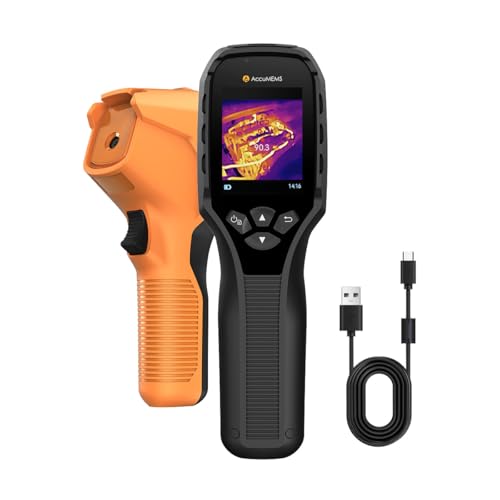
Long-Run Handheld – GT14S Thermal Imager
The GT14S is a practical thermal camera for finding air leaks when you want a lightweight handheld tool with strong runtime. Its 50° field of view, thermometer mode, alarm functions, and high-sensitivity sensor are designed to make scanning walls, ceilings, and other surfaces faster and easier to monitor in real time.
Best For: Users who want a lightweight handheld thermal camera with long battery life and alert features.
Pros:
- Up to 14 hours of runtime from the built-in 2500mAh battery
- 50° field of view helps cover larger areas quickly
- Thermometer mode plus center/hot/cold spot modes add inspection flexibility
- Custom high/low temperature alarms can flag abnormal conditions
Cons:
- Lower thermal resolution is not stated in the supplied notes
- Best suited for inspection tasks rather than advanced imaging detail
For routine leak detection, the GT14S stands out for comfort and endurance. If you expect to spend long stretches checking rooms or moving between jobs, the combination of compact weight and all-day battery life is a practical advantage.
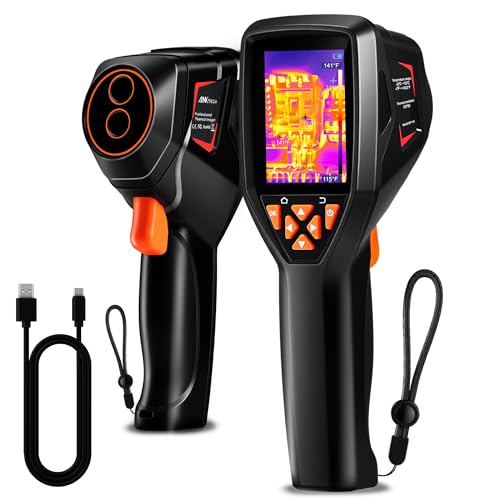
High-Detail Leak Finder – DP10 320×240 Thermal Camera
If your priority is seeing subtle temperature differences, this thermal camera for finding air leaks offers a 320×240 super-resolution view that can help expose damp patches, seepage, and hidden problem areas. The 25Hz refresh rate makes it easier to scan walls and subfloors smoothly, while the built-in alarms and storage support more organized home inspections.
Best For: Homeowners and DIY inspectors who want clearer thermal detail for moisture and draft detection.
Pros:
- 320×240 super resolution improves visibility over the native sensor image
- 25Hz imaging provides smoother scanning across walls and subfloors
- Custom alarms and hot/cold spot tracking help flag anomalies quickly
- Built-in 8GB storage can save a large number of images and videos
Cons:
- Bulkier than a phone-based thermal attachment
- May be more than casual users need for occasional checks
This model is a solid choice when image clarity is the deciding factor. For finding air leaks, moisture paths, and hidden cold spots, the combination of enhanced resolution and smooth live viewing makes it easier to interpret what you are seeing.
Pro-Grade Building Tool – FLIR TG165-X Thermal Camera
The FLIR TG165-X is a commercial-grade thermal camera for finding air leaks when you want a rugged, straightforward tool for building and HVAC inspections. Its MSX image enhancement, laser pointer, and IP54-rated housing are aimed at making measurements easier to interpret and the device more durable on the job.
Best For: Contractors and serious DIYers who need a durable inspection camera for building, HVAC, and electrical work.
Pros:
- MSX enhancement adds visible detail to thermal images for easier reading
- Laser pointer helps indicate the measurement area quickly
- IP54 enclosure and drop-tested design improve durability
- Includes a spot thermometer and covers -25°C to 300°C
Cons:
- 80×60 IR resolution is lower than some higher-detail alternatives
- More of a professional tool than an entry-level bargain option
If you value ruggedness and clarity aids over flashy extras, the TG165-X is easy to justify. It is built for inspection work where reliability, simple operation, and recognizable thermal patterns matter more than maximum resolution.
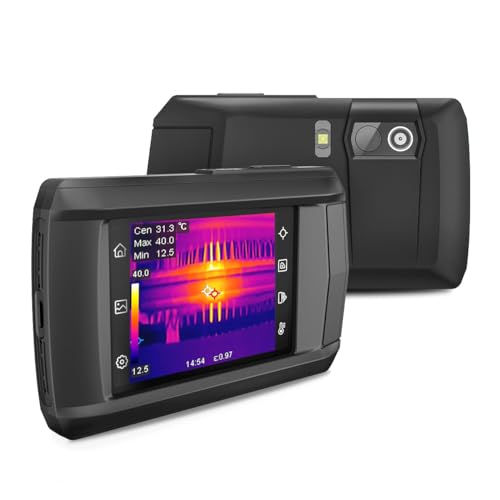
Smart Leak Scanner – HP96 Thermal Camera
If you want a thermal camera for finding air leaks, the HP96 is built for quick home inspections with scene recognition that can help identify insulation gaps and water leaks. Its 3.5″ touchscreen, dual-camera views, and live super-resolution make it easier to spot abnormal temperature patterns around windows, walls, and other problem areas.
Best For: Homeowners and DIY inspectors who want simple leak detection with guided scene recognition.
Pros:
- IntellFault scene recognition helps identify water leaks and insulation gaps automatically
- Live super resolution boosts viewing from 96×96 to 240×240 for clearer inspection detail
- 3.5″ touchscreen and multiple imaging modes make it easy to use
- Custom alerts, LED flashlight, and compact design support practical field work
Cons:
- No moisture readings, so it only shows thermal patterns
- Native IR resolution is lower than higher-end inspection models
- Best suited to general leak spotting rather than advanced diagnostics
The HP96 is a straightforward option if your main goal is to visually trace likely air leaks and insulation defects without a complicated learning curve. It focuses on usability and guided detection rather than maximum sensor resolution.
High-Detail Inspector – GT24S Thermal Camera
For a thermal camera for finding air leaks, the GT24S is a strong pick when you want sharper native image quality and flexible measurement modes. Its 256×192 native IR detector, 320×240 upscaling, and high sensitivity make it well suited for tracing drafts around windows, walls, and other problem areas.
Best For: Users who want a more detailed thermal view for home inspection, HVAC, and electrical work.
Pros:
- True 256×192 native IR detector offers stronger hardware image quality than software-interpolated models
- Thermal and thermometer modes give both area scanning and precise point readings
- Useful for air gaps, water leaks, HVAC faults, and electrical inspections
- 10-hour battery life supports a full day of inspection work
Cons:
- Still a handheld specialty tool, so it is not meant for casual everyday use
- Display and feature set are focused on function rather than premium extras
- Best value comes when you need the extra detail for real inspection work
The GT24S stands out for buyers who want better raw thermal detail without moving into premium pricing territory. If spotting leaks and temperature anomalies accurately matters more than having the fanciest interface, this is an easy model to consider.
Pro-Grade Detail Cam – Thermal Master Thor 002
If you need a thermal camera for finding air leaks with more detail and flexibility, the Thermal Master Thor 002 is the most advanced option here. It combines 512×384 X³IR resolution, a 2MP visual camera, and multiple measurement points to help you inspect larger spaces and narrow down problem areas with more confidence.
Best For: Professionals and serious users who want high-resolution thermal imaging for detailed inspections.
Pros:
- 512×384 X³IR resolution provides the highest level of thermal detail in this group
- 2MP visual camera, 3.5″ IPS screen, and 25Hz refresh support clear inspections
- Measures six points at once and includes adjustable emissivity for better accuracy
- Long battery life, WiFi/USB transfer, voice notes, and QR code file management aid documentation
Cons:
- Larger and heavier than simpler handheld options
- Feature set may be more than casual users need for basic leak finding
- Higher-end specs can make it a bigger investment for occasional use
The Thor 002 is the best fit when image clarity and reporting features matter as much as leak detection itself. It is a capable inspection tool for users who want more confidence when evaluating air gaps, building envelopes, and other thermal anomalies.
Dual-Light Home Inspector – Dual-Light Thermal Imager
If you want a thermal camera for finding air leaks around outlets, ducts, pipes, and wall cavities, this dual-light model makes it easier to connect heat patterns with the real scene. The 240×240 TISR enhancement, 25Hz refresh rate, and <40mK sensitivity help reveal subtle temperature differences that often point to insulation gaps or hidden drafts.
Best For: Homeowners, inspectors, and DIYers who want clearer context while tracing leaks and heat loss.
Pros:
- Dual-light fusion overlays thermal data with real visual details for easier identification of edges and components.
- Smart modes for HVAC, floor heating, water pipe, electrical, and pet use simplify operation.
- 25Hz scanning and high sensitivity help catch small temperature changes without lag.
- Built-in alerts, 8GB storage, PC software, and PDF export support inspection records.
Cons:
- Effective thermal resolution is based on enhancement from a 96×96 IR sensor.
- Those wanting very advanced reporting tools may prefer a more specialized workflow.
Overall, this is a practical pick if you want a thermal camera for finding air leaks and also need an easy-to-read image that shows where the issue is in the room or wall.
Precision Report Builder – RT280 Thermal Camera
This thermal camera for finding air leaks is built for users who want a sharp screen and structured analysis. The RT280 combines a 320×240 LCD, 240×180 TISR effective resolution, and 25Hz refresh rate to help identify temperature differences around windows, panels, ducts, and other problem areas.
Best For: Users who want detailed inspection readouts and PC-based reporting for leak hunting.
Pros:
- 320×240 display and TISR enhancement improve thermal clarity during inspections.
- Windows PC software supports point, line, and area analysis plus 2D/3D views and report generation.
- 8GB eMMC storage can hold over 20,000 images and videos.
- Laser pointer, LED light, and 9 color palettes help in dark or confined spaces.
Cons:
- PC analysis is not compatible with Mac.
- Accuracy is specified at ±3.6°F / ±2%, which may be less exacting than some users want.
For buyers who care as much about documenting findings as spotting them, this model stands out with its reporting tools and large onboard storage.
Portable Leak Spotter – YXI96 Thermal Camera
If you need a thermal camera for finding air leaks without extra complexity, this handheld option focuses on the basics that matter most: clear thermal imaging, a 25Hz refresh rate, and a temperature alarm that highlights abnormal hot or cold spots. Its 240×240 super-resolution and 50° field of view make it useful for scanning walls, car components, and electrical areas where drafts or heat loss may show up.
Best For: Budget-minded buyers who want a simple, portable leak-finding tool.
Pros:
- 240×240 super-resolution provides clearer detail than standard low-res thermal views.
- Temperature alarm with highest, lowest, and center readings helps flag problem areas quickly.
- Wide 50° FOV supports scanning larger sections of a room or surface.
- Drop resistance and IP54 rating add durability for field use.
Cons:
- No PC software or report-generation features are listed.
- Fewer imaging modes than some competing models.
This is a straightforward choice if you want a durable handheld thermal camera for finding air leaks and other temperature anomalies without paying for advanced extras.
How We Picked the Best Thermal Camera for Finding Air Leaks
We prioritized thermal cameras that make air leaks easier to identify in real-world use. That means a clear thermal image, useful temperature range, stable frame rates, and features that help you interpret what you see, such as visual overlays, laser pointers, alarms, and scene modes. We also looked at screen size, battery life, and whether the camera is easy to use in tight spaces.
Quick Comparison
For most buyers, the best Thermal Camera for Finding Air Leaks is not always the one with the highest resolution. Better contrast, a readable display, and dependable temperature measurement often matter more. High-resolution handheld units are better for detailed inspections, while compact phone-connected models can be a smart budget choice for occasional home checks.
Key Buying Factors for a Thermal Camera for Finding Air Leaks
Resolution and Image Clarity
Higher thermal resolution helps reveal small temperature shifts around window frames, attic doors, ductwork, and electrical penetrations. If you plan to inspect large areas or want more detail, choose a model with at least 240 x 240 or better native thermal resolution.
Temperature Range and Sensitivity
For leak detection, you want a camera that can clearly show cooler and warmer spots in the conditions you actually test in. A wide temperature range is useful, but thermal sensitivity and good image processing are what make subtle air leaks stand out.
Display and Usability
A bright screen, easy menus, and a comfortable grip matter when you are scanning walls or ceilings for several minutes. Visual camera overlays, touchscreen controls, and image enhancement features can make comparisons faster and reduce guesswork.
Inspection Features
Helpful extras include temperature alarms, spot readings, thermometer mode, multiple color palettes, and a laser pointer for aiming. For HVAC and building inspection work, these can speed up diagnosis and documentation.
Who Should Buy Which Thermal Camera for Finding Air Leaks?
Homeowners who want occasional draft checks can usually choose a compact, budget-friendly model with solid basic imaging. HVAC technicians, property inspectors, and serious DIY users should look for higher resolution, better screen quality, and stronger measurement tools. If you need a Thermal Camera for Finding Air Leaks in different lighting conditions and across a range of building materials, prioritize clarity and ergonomics over gimmicks.
In short, choose the camera that matches how often you inspect, how much detail you need, and whether portability or advanced reporting matters more for your workflow.