
The right night-sky lens depends on more than a wide aperture. Focal length, sensor coverage, corner performance, and whether you use a star tracker all affect what you can photograph.
These 10 Nikon Z-mount listings span wide-field primes, zooms, APS-C lenses, and specialty options. Some appear to be alternate listings of the same lens, so compare the exact package and seller before buying.
Best 10 Nikon Z Lens for Astrophotography Picks for 2026
Best Wide-Field Prime

- Wide 20mm prime
- Bright f/1.8 aperture
- Filters and cleaning kit included
Best For: Wide-field nightscapes on Nikon Z
Best Fast APS-C Manual Prime

- Very bright f/0.95 aperture
- Manual-focus APS-C design
- 0.25m minimum focus distance
Best For: Hands-on night photography with a Nikon Z APS-C camera
Best Ultra-Wide Zoom

- Flexible 12-20mm range
- Constant f/2.8 aperture
- Rear sheet-filter holder
Best For: Flexible ultra-wide framing on full-frame Nikon Z
Best Specialty Low-Light Prime
Nikon NIKKOR Z 58mm f/0.95 S Noct

- Exceptionally bright f/0.95
- Tighter 58mm framing
- Manual focus; 4.4 lb listed weight
Best For: Deliberate, tighter-framed low-light photography
Fast Wide Prime

- 16mm wide-angle prime
- Fast f/1.8 maximum aperture
- LCD displays focus distance
Best For: Wide Nikon Z nightscapes
Best for Everyday Use

- Flexible 12–20mm framing
- Constant f/2.8 maximum aperture
- Integrated rear filter holder
Best For: Flexible ultra-wide nightscapes
Telephoto Option
Nikon NIKKOR Z 70-180mm f/2.8 (Renewed)

- 70–180mm for tighter framing
- f/2.8 maximum aperture
- 90-day limited warranty
Best For: Tight telephoto night-sky compositions
Best Fast Full-Frame Wide Angle

- Full-frame 16mm, f/1.8 prime
- LCD shows focus distance
- 565g; no stabilization
Best For: Full-frame Nikon Z night-landscape shooters
Best Manual APS-C Ultra-Wide

- 107° diagonal APS-C view
- f/2 maximum aperture
- Manual focus; check shutter setting
Best For: APS-C Nikon Z users comfortable with manual focus
Best Lightweight Full-Frame Ultra-Wide
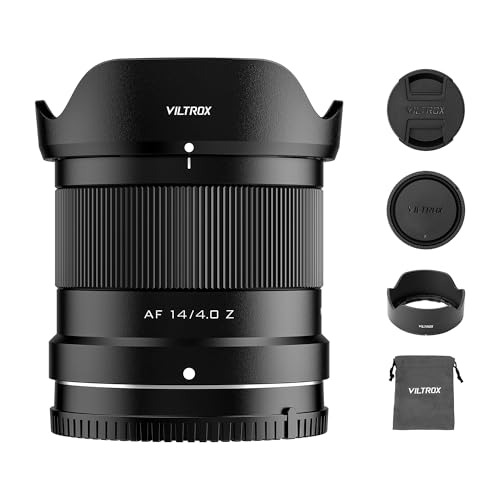
- Full-frame 112.6° view
- Lightweight 185g build
- f/4 maximum aperture
Best For: Travel-minded full-frame Nikon Z shooters
Best Wide-Field Prime – Nikon NIKKOR Z 20mm f/1.8 S
If you want a Nikon Z lens for astrophotography that also handles daytime landscapes, this 20mm f/1.8 S prime offers a wide view, a bright aperture, and S-Line optics designed to control aberrations and flare.
Best For: Nikon Z shooters who prefer wide-field night-sky compositions and a versatile landscape prime.
Pros:
- 20mm field of view captures expansive scenes.
- f/1.8 maximum aperture suits low-light shooting.
- Bundle includes filters and cleaning accessories.
Cons:
- Fixed focal length offers no zoom flexibility.
- Included filters may not suit every night-sky setup.
This is the straightforward pick for wide nightscapes if you value a faster aperture over the framing flexibility of a zoom.
Best Fast APS-C Manual Prime – Meike 25mm f/0.95
For a Nikon Z lens for astrophotography on an APS-C setup, the Meike 25mm f/0.95 prioritizes a very large aperture and hands-on control. It is a manual-focus lens; full-frame Z bodies need APS-C mode for its intended coverage.
Best For: Nikon Z APS-C users comfortable focusing and setting exposure manually for night scenes.
Pros:
- f/0.95 maximum aperture supports low-light shooting.
- 25mm prime works for night views, landscapes, and other subjects.
- 0.25m minimum focusing distance adds close-up flexibility.
Cons:
- No autofocus or lens-based stabilization.
- Requires APS-C mode on full-frame Z cameras and may require enabling shutter release without a lens.
Choose it for aperture and manual control, but check your camera settings before heading out after dark.
Best Ultra-Wide Zoom – Tamron 12-20mm f/2.8
If framing flexibility matters more than the widest aperture, this Nikon Z lens for astrophotography spans 12-20mm with a constant f/2.8 aperture. Its supplied description also highlights optical control of sagittal coma flare, a relevant consideration for point-like stars.
Best For: Full-frame Nikon Z users who want one ultra-wide zoom for night skies, landscapes, and interiors.
Pros:
- 12-20mm range offers multiple ultra-wide compositions.
- Constant f/2.8 aperture keeps exposure consistent while zooming.
- Rear sheet-filter holder and fast, quiet autofocus broaden its uses.
Cons:
- f/2.8 is slower than the f/1.8 and f/0.95 primes here.
- Approximately 1.3 lb weight may matter on a lightweight kit.
It is a versatile choice when you want to adjust your framing without changing lenses; weigh that convenience against the brighter primes.
Best Specialty Low-Light Prime – Nikon NIKKOR Z 58mm f/0.95 S Noct
The NIKKOR Z 58mm f/0.95 S Noct is a specialty Nikon Z lens for astrophotography when your composition calls for a tighter 58mm view rather than an ultra-wide sky. Its exceptionally large aperture comes with manual focus and a substantial 4.4 lb listed weight.
Best For: Experienced Nikon Z photographers planning deliberate, tighter-framed low-light images.
Pros:
- f/0.95 maximum aperture offers substantial low-light capability.
- 58mm focal length provides a different framing option from ultra-wide lenses.
- Includes a trunk case and screw-on hood.
Cons:
- Manual focus requires careful adjustment.
- 4.4 lb listed weight makes it less convenient to carry.
- 58mm view is not suited to expansive nightscapes.
Consider the Noct for a specific low-light vision, not as a general-purpose replacement for a wide astrophotography lens.
Fast Wide Prime – Viltrox AF 16mm f/1.8 Z
If you’re choosing a Nikon Z lens for astrophotography, this Viltrox pairs a wide 16mm view with an f/1.8 maximum aperture. Its 15-element design includes three aspherical and four ED elements, with the latter intended to reduce color bleeding across the image.
Best For: Nikon Z shooters who want a fast, wide prime for nightscapes.
Pros:
- 16mm focal length and f/1.8 maximum aperture suit wide, low-light scenes.
- Built-in LCD shows settings such as aperture and focus distance.
- Supports both autofocus and manual focus.
Cons:
- Fixed 16mm focal length offers no zoom flexibility.
- No lens-based image stabilization.
This is the widest-aperture option of the three for broad night-sky compositions. The display is a useful aid for checking focus distance, but you’ll need to be comfortable composing at one focal length.
For a Nikon Z lens for astrophotography with framing flexibility, this Tamron covers 12–20mm at a maximum aperture of f/2.8. Its supplied description specifically highlights corner-to-corner resolution for astrophotography and nightscapes.
Best For: Nightscape photographers who want to adjust ultra-wide framing without changing lenses.
Pros:
- 12–20mm zoom range provides multiple ultra-wide compositions.
- f/2.8 maximum aperture is available for low-light shooting.
- Includes an integrated rear filter holder and flower-shaped hood.
Cons:
- f/2.8 is less light-gathering than the Viltrox prime’s f/1.8.
- Listed weight is 2.2 pounds.
Choose this lens when the ability to reframe matters more than having the fastest aperture in this group. Its rear filter holder may also appeal to photographers who plan filter-based nightscape setups.
This renewed NIKKOR is a specialized Nikon Z lens for astrophotography: its 70–180mm range favors tighter compositions rather than sweeping nightscapes. The f/2.8 maximum aperture provides a consistent low-light starting point throughout the zoom range.
Best For: Nikon Z photographers planning tight night-sky compositions with a telephoto zoom.
Pros:
- 70–180mm zoom range allows tighter framing.
- f/2.8 maximum aperture across the range.
- Compatible with Nikon Z 1.4x and 2.0x teleconverters, sold separately.
Cons:
- Not wide enough for expansive sky-and-landscape views.
- Renewed listing specifies a 90-day limited warranty.
Consider this a complement to an ultra-wide lens, not a replacement. The notes describe in-body stabilization on compatible full-frame Z cameras, but that does not substitute for a stable setup when using long exposures to photograph stars.
Best Fast Full-Frame Wide Angle – Viltrox 16mm f/1.8 Z
If you want a Nikon Z lens for astrophotography that combines a wide view with a large aperture, the Viltrox 16mm f/1.8 is a practical full-frame option. Its 105.6° angle of view helps fit expansive night landscapes into the frame.
Best For: Nikon Z full-frame shooters who want a fast ultra-wide prime with autofocus.
Pros:
- f/1.8 maximum aperture suits low-light shooting.
- 16mm focal length captures expansive scenes.
- Built-in LCD displays aperture and focus distance.
Cons:
- No image stabilization.
- At 565g, it is heavier than the Viltrox 14mm f/4 Air in this roundup.
The fast aperture is the main reason to choose this lens for night skies; the LCD focus-distance readout is a useful extra when setting up a shot.
Best Manual APS-C Ultra-Wide – Meike 10mm f/2 Z
The Meike 10mm f/2 is a Nikon Z lens for astrophotography aimed at photographers comfortable focusing manually. Designed for APS-C coverage, it offers a 107° diagonal view and an f/2 maximum aperture for wide night-sky compositions.
Best For: Nikon Z APS-C users who prefer a fully manual ultra-wide lens.
Pros:
- 10mm focal length delivers an expansive APS-C view.
- f/2 maximum aperture supports low-light shooting.
- Accepts 77mm filters.
Cons:
- Fully manual focus requires hands-on setup.
- You may need to enable your camera’s release-without-lens setting.
- Full-frame Nikon Z bodies require APS-C mode for the intended coverage.
Choose this lens if manual operation fits your workflow. Its wide view is the draw, but check your camera settings before heading out to shoot.
Best Lightweight Full-Frame Ultra-Wide – Viltrox 14mm f/4 Air
For a portable Nikon Z lens for astrophotography, the Viltrox 14mm f/4 Air offers a full-frame 112.6° view in a 185g body. It fits photographers who prioritize carrying less gear and including more of the sky and foreground.
Best For: Full-frame Nikon Z shooters who value a lightweight, ultra-wide lens for night landscapes and daytime use.
Pros:
- 14mm full-frame view captures broad scenes.
- 185g design is easy to carry.
- STM autofocus adds versatility for other subjects.
Cons:
- f/4 maximum aperture admits less light than the f/1.8 and f/2 options in this roundup.
This is the portability pick rather than the fast-aperture pick. Its wide coverage is appealing for sky-heavy compositions, but account for the f/4 limit when planning night exposures.
How We Picked the Best Nikon Z Lens for Astrophotography
We considered each listed lens by its stated focal length, maximum aperture, sensor coverage, and likely night-sky use. A wide focal length helps fit the Milky Way and foreground into one frame; a fast aperture helps keep exposures shorter when shooting from a fixed tripod. We also kept specialty lenses in view for tracked sky images or tighter compositions. This is a comparison of the supplied listings, not a claim that every lens was field-tested. In particular, check independent star-field examples for corner sharpness and coma before committing to an expensive lens.
Quick Comparison
For a full-frame, tripod-based Milky Way setup, the Nikon Z 20mm f/1.8 S and Viltrox 16mm f/1.8 offer the most straightforward combinations of wide views and bright apertures on this list. The Viltrox 14mm f/4 gives a wider view but gathers less light at its maximum aperture. The Tamron 12–20mm f/2.8 listings offer framing flexibility; verify the exact model, mount, and full-frame coverage with the seller before purchasing.
For Nikon Z DX bodies, the Meike 10mm f/2 provides a much wider view than the Meike 25mm f/0.95, while the 25mm suits narrower compositions. The Nikon 58mm f/0.95 Noct and 70–180mm f/2.8 are specialty choices rather than typical first lenses for a Milky Way landscape. The two Viltrox 16mm listings and two Tamron 12–20mm listings may represent duplicate products or different packages; compare what is actually included.
Key Buying Factors for a Nikon Z Lens for Astrophotography
Sensor Coverage and Field of View
Match the lens’s image circle to your camera. An APS-C/DX lens on a full-frame Z body generally requires a cropped shooting area, reducing your usable frame. Also account for crop factor when comparing focal lengths: a 10mm DX lens gives a field of view roughly like 15mm on full frame.
Aperture and Star Shape
F/1.8 or f/2 can help with untracked exposures, but a large maximum aperture does not guarantee clean stars near the frame edges. Look for sample images showing coma, astigmatism, and vignetting at the apertures you intend to use. Stopping down may improve results at the cost of light.
Focusing and Practical Details
Reliable manual focus matters even on autofocus lenses: check that you can magnify a bright star and make precise adjustments. Consider weight, filter compatibility, weather protection, and whether a bundle’s accessories add value. For a renewed lens, review the warranty and return terms.
Who Should Buy Which Nikon Z Lens for Astrophotography?
Start with a fast, full-frame wide prime if you want a versatile Milky Way landscape lens; choose an ultra-wide zoom if changing compositions without swapping lenses matters more. DX shooters seeking expansive skies should prioritize the 10mm over the 25mm. Choose the 25mm, 58mm, or 70–180mm for deliberately tighter sky subjects, ideally after planning your framing and whether you will use a tracker. Whatever you choose, confirm the exact listing specifications before checkout.