
If you want to use Canon EF or EF-S lenses on a Micro Four Thirds camera, the right adapter can make a huge difference in control and convenience. Some models keep things simple and fully manual, while others add electronic features, autofocus support, or focal reduction.
This roundup focuses on the best options for different shooting needs, from budget-friendly adapters to speed boosters built for more light and a wider field of view.
Best 10 Ef to Micro Four Thirds Adapter with Aperture Control Picks for 2026
Simple Manual EF-to-MFT Adapter
Canon EF/EF-S to Micro Four Thirds

- All-metal hardened anodized aluminum build
- Supports EF and EF-S lenses on MFT bodies
- Infinity focus or beyond allowed
Best For: A durable manual adapter for EF and EF-S lenses on Micro Four Thirds cameras
Speed Booster with AF
VILTROX EF-M2 II 0.71x focal reducer

- 0.71x focal reducer increases light and widens view
- Supports autofocus and camera-based aperture control
- Metal build with copper contacts and IS function
Best For: Shooters who want AF, focal reduction, and aperture control on M4/3 cameras
Manual EF Adapter with Aperture Ring
Pixco EF to M4/3 adapter with aperture ring
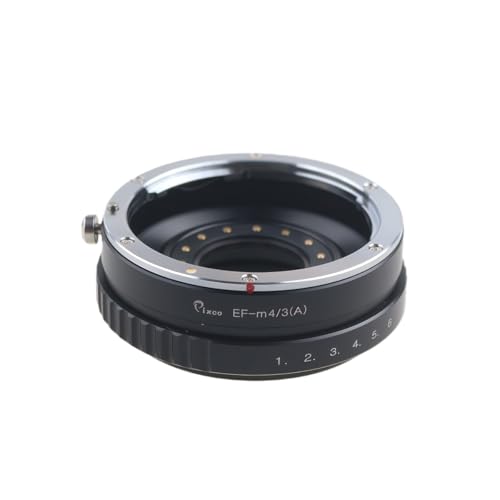
- Built-in aperture control ring
- All-metal 150g construction
- Maintains accurate infinity focus
Best For: Users who want manual aperture control directly on the adapter
Speed Booster Autofocus Pick
VILTROX EF-M2 Pro 0.71x for M4/3

- 0.71x focal reducer widens the field of view
- Supports autofocus, aperture control, and EXIF data
- Rotating lock design with USB-C firmware upgrades
Best For: Users who want a speed booster with autofocus and aperture control
Simple Aperture Ring Choice
Vello EF/EF-S to MFT with Aperture Control

- Integrated aperture diaphragm for lens control
- Supports infinity focus with matte black interior
- Zinc alloy build for a sturdier feel
Best For: Manual shooters who want a simple adapter with aperture control
Autofocus Budget Pick
VILTROX EF-M1 for Canon EF to M4/3

- Autofocus with electronic aperture control
- Real-time EXIF data transmission supported
- USB firmware upgrade port for updates
Best For: Buyers who want autofocus and aperture control without a speed booster
Smart Focal-Reducer Adapter
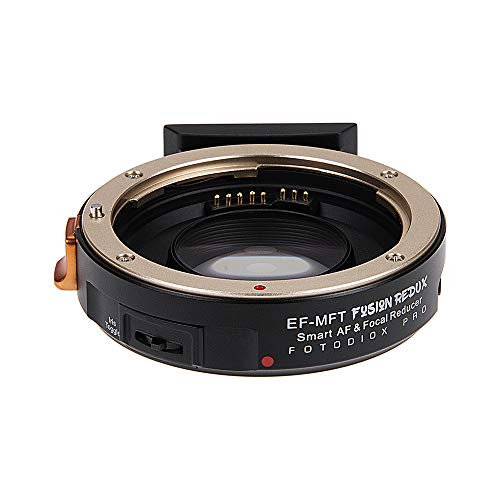
- Electronic communication and control
- Built-in focal reducer reduces crop factor
- Iris Toggle Switch for aperture control
Best For: Users who want smart lens communication and focal reduction
Durable Manual Mount Adapter

- Infinity focus with no glass inside
- Aviation-grade aluminum and magnesium alloy
- Tight fit with no light leakage
Best For: Manual shooters who want a lightweight, durable adapter
Simple Manual EF-to-MFT Adapter – Canon EF/EF-S to Micro Four Thirds
If you want a straightforward ef to micro four thirds adapter with aperture control handled on the camera body, this Fotodiox option is a simple, all-metal way to mount Canon EF and EF-S lenses on Micro Four Thirds mirrorless cameras. It’s aimed at photographers who value a secure mechanical fit, infinity focus support, and a no-frills adapter design.
Best For: Shooters who want a durable manual adapter for EF and EF-S lenses on MFT bodies.
Pros:
- Supports Canon EF and EF-S lenses on Micro Four Thirds mirrorless cameras
- High-tolerance precision construction with infinity focus or beyond allowed
- All-metal hardened anodized aluminum build
- Backed by a 24-month Fotodiox warranty
Cons:
- No built-in aperture control ring
- Manual-use adapter only, with no autofocus support stated
- Not designed for image stabilization
This is a solid pick if you simply need a reliable EF-to-MFT mount adapter and are comfortable controlling exposure through the camera and lens setup. It focuses on durability and fit rather than added electronics.
Speed Booster with AF – VILTROX EF-M2 II 0.71x focal reducer
The VILTROX EF-M2 II is a strong choice if you want an ef to micro four thirds adapter with aperture control plus autofocus support. As a 0.71x focal reducer, it is designed to let Canon EF lenses work on M4/3 cameras while boosting light transmission and giving you direct aperture adjustment from the camera.
Best For: Users who want autofocus, focal reduction, and camera-controlled aperture with EF lenses on M4/3 bodies.
Pros:
- 0.71x focal reducer for a wider field of view
- Auto focus function supported
- Adjust aperture directly from the camera
- Metal construction with inbuilt copper electronic contacts and IS function
Cons:
- More expensive and complex than a simple passive adapter
- Compatibility depends on supported lens and camera models
- Firmware updates may be needed over time
This adapter stands out when you want more than basic mounting: it adds focal reduction, AF support, and aperture control in one package. It’s a practical upgrade for video or still shooters who want their EF glass to behave more like native M4/3 optics.
Budget Manual EF-to-MFT Adapter – K&F Concept all-metal EF to MFT adapter
This K&F Concept option is a practical ef to micro four thirds adapter with aperture control only in the manual sense, since it does not add electronics or auto aperture features. It’s built for photographers who want a simple metal adapter for Canon EF and EF-S lenses on Micro Four Thirds bodies, with a matte interior to help reduce reflections.
Best For: Buyers looking for an affordable manual adapter for EF/EF-S lenses on MFT cameras.
Pros:
- All-metal hardened anodized aluminum construction
- Matting varnish inside to help avoid light reflection
- Supports manual focus, manual exposure, and infinity focus
- Compatible with a wide range of Olympus, Panasonic, and BMPCC bodies
Cons:
- No built-in aperture control ring
- No autofocus support
- Manual-only operation may not suit users who want convenience features
For the price-conscious buyer, this is a dependable no-electronics adapter that prioritizes fit, finish, and basic optical usability. It’s best when you already expect to manage aperture and focus manually.
Manual EF Adapter with Aperture Ring – Pixco EF to M4/3 adapter with aperture ring
If you specifically want an ef to micro four thirds adapter with aperture control, the Pixco stands out because it includes a built-in aperture control ring for manual adjustment of EF lenses on M4/3 cameras. It is a fully manual adapter, so it suits users who are comfortable operating without electronic communication between lens and camera.
Best For: Photographers who want a manual aperture ring on EF lenses used with Micro Four Thirds cameras.
Pros:
- Built-in aperture control ring for manual adjustment
- All-metal construction with a secure 150g build
- Maintains accurate infinity focus
- Compatible with EF lenses and most M4/3 cameras
Cons:
- Fully manual operation with automatic functions disabled
- Not compatible with EF-S lenses per the supplied notes
- Requires setting camera to “Release without lens”
This is the most direct match for buyers who want manual aperture control at the adapter itself. If you don’t need autofocus or electronic communication, it offers a practical way to run EF lenses on M4/3 bodies.
Speed Booster Autofocus Pick – VILTROX EF-M2 Pro 0.71x for M4/3
If you want an ef to micro four thirds adapter with aperture control that also widens your field of view, the VILTROX EF-M2 Pro is built for that job. Its 0.71x focal reducer can help reduce the crop factor, while autofocus, EXIF transmission, and lens stabilization support make it a practical option for EF/EF-S glass on compatible M4/3 bodies.
Best For: Shooters who want autofocus plus aperture control and a wider look from Canon EF lenses on M4/3 cameras.
Pros:
- 0.71x focal reducer increases the angle of view and helps create stronger background blur.
- Built-in electronic contacts support autofocus, aperture control from the camera body, and EXIF data transmission.
- Supports IS anti-shake functions and uses a rotating lock design for a more secure mount.
- USB-C firmware upgrade support lets the adapter be updated over time.
Cons:
- Compatibility is limited to listed Micro Four Thirds and M4/3 camera models.
- It is a dedicated adapter/booster, so it adds some weight and complexity compared with a simple mechanical ring.
- Does not add image stabilization on its own; it relies on supported lens/body features.
The EF-M2 Pro is the most feature-rich choice here if you want autofocus, aperture control, and a focal-reducing boost in one adapter. For the right compatible camera, it offers a strong balance of flexibility and convenience.
Simple Aperture Ring Choice – Vello EF/EF-S to MFT with Aperture Control
The Vello adapter is a straightforward ef to micro four thirds adapter with aperture control for photographers who just want EF/EF-S lenses to mount on Micro Four Thirds cameras. It keeps things simple with an integrated aperture diaphragm, infinity focus support, and a matte black interior designed to reduce reflections.
Best For: Buyers who want a basic manual EF-to-MFT adapter with aperture adjustment and no autofocus features.
Pros:
- Integrated aperture diaphragm gives you aperture control with compatible EF/EF-S lenses.
- Supports infinity focus, which is useful for general photo and video use.
- Zinc alloy construction should feel solid and durable.
- Matte black interior helps minimize internal reflections.
Cons:
- No autofocus support is listed.
- No electronic EXIF transmission is listed.
- Does not include stabilization or speed booster features.
This is a good pick if your priority is a basic mechanical solution with aperture control rather than advanced electronics. It suits users who want reliable lens mounting and manual control at a lower-complexity level.
Autofocus Budget Pick – VILTROX EF-M1 for Canon EF to M4/3
If you need an ef to micro four thirds adapter with aperture control and autofocus, the VILTROX EF-M1 focuses on those essentials without adding a focal reducer. It supports EF/EF-S lenses on compatible M4/3 and Micro Four Thirds cameras, with electronic contacts for real-time lens and body data.
Best For: Shooters who want autofocus, aperture control, and firmware upgrade support in a straightforward adapter.
Pros:
- Supports autofocus with a built-in internal aperture motor and electronic contact control.
- Lets you adjust aperture directly from the camera side.
- EXIF transmission shows aperture, shutter, and ISO information in real time.
- USB firmware upgrade port allows updates and bug fixes.
Cons:
- Does not include a focal reducer or speed booster.
- No image stabilization is listed.
- Compatibility is limited to the camera models named in the product notes.
The EF-M1 is the practical choice if you want electronic lens control more than optical modification. It keeps the feature set focused on autofocus and aperture adjustment for compatible camera bodies.
Smart Focal-Reducer Adapter – Fotodiox Pro Fusion Redux
If you want an ef to micro four thirds adapter with aperture control that does more than a basic mechanical mount, the Fotodiox Pro Fusion Redux is built around electronic communication and a built-in focal reducer. It’s aimed at Canon EF lenses on Micro Four Thirds bodies and adds an Iris Toggle Switch for aperture control on select cameras that don’t allow in-camera adjustment.
Best For: Shooters who want electronic lens communication plus focal reduction on compatible Micro Four Thirds cameras.
Pros:
- Built-in FUSION technology enables electronic communication and control.
- Built-in focal reducer helps reduce crop factor and amplify incoming light.
- Iris Toggle Switch adds aperture control on select cameras without in-camera aperture support.
- Designed for Canon EF lenses on Micro Four Thirds bodies.
Cons:
- Not compatible with EF-S lenses.
- Aperture control is limited to select cameras.
- Heavier than simple manual adapters at 0.39 lbs.
This is the most feature-rich option here if your priority is more control and a focal-reducer design, but you’ll want to confirm lens compatibility before buying. It suits users who need smarter adaptation rather than a purely manual mount.
All-Metal Manual Adapter – K&F Concept EOS to M4/3
This ef to micro four thirds adapter with aperture control is a straightforward manual solution for Canon EF and EF-S lenses on Micro Four Thirds cameras. It supports infinity focus and uses a full manual design, but because most Canon EF lenses lack a manual aperture ring, the aperture typically stops down to its smallest f/stop by default.
Best For: Budget-minded users who need a simple all-metal EF to M4/3 mount adapter with infinity focus.
Pros:
- Precision-made for a secure fit and infinity focus.
- Brass and aluminum construction, not plastic.
- Compatible with many Olympus PEN and Panasonic Lumix Micro Four Thirds bodies.
- Simple manual adapter design keeps the setup lightweight.
Cons:
- No electronic control or autofocus.
- Most Canon EF lenses lose aperture transfer and stop down by default.
- Canon STM series lenses do not work with this adapter.
If you mainly want reliable mounting and infinity focus, this is the practical no-frills choice. Just be aware that aperture handling is manual-only and not fully transferred from the lens.
Durable Manual Mount Adapter – PHOLSY EF to M4/3
For a no-electronics ef to micro four thirds adapter with aperture control in the manual sense, the PHOLSY adapter focuses on a tight, precise fit and full infinity focus. It has no glass and no electronic contacts, so you manage settings manually while keeping the lens’s native optical performance unchanged.
Best For: Photographers who want a lightweight, durable manual adapter for Canon EF/EF-S lenses on Micro Four Thirds bodies.
Pros:
- Infinity focus allowed with no glass in the adapter.
- No electronic contacts, so there’s no added optic degradation.
- Built from aviation-grade aluminum and magnesium alloy.
- Tight fit and no light leakage for a secure connection.
Cons:
- No autofocus or electronic aperture control.
- You must manually adjust all settings.
- Requires enabling “shoot with no lens attached” in the camera menu.
This is a strong pick if you value durability, light weight, and a clean mechanical connection. It’s best for users comfortable with full manual operation rather than automated lens control.
How We Picked the Best Ef to Micro Four Thirds Adapter with Aperture Control
We looked for adapters that match real-world buyer needs first: secure lens fit, dependable aperture control, strong camera compatibility, and clear value for the price. We also considered whether each Ef to Micro Four Thirds Adapter with Aperture Control is best suited for manual stills, hybrid video, or autofocus-assisted shooting.
Because not every adapter works the same way, we favored a mix of straightforward mechanical models and more advanced smart adapters so you can choose based on how you actually shoot.
Quick Comparison
Simple adapters are usually the most affordable and reliable if you only need physical mounting plus manual aperture control. Smart adapters and focal reducers cost more, but they can offer electronic communication, autofocus support, or a wider effective field of view. If you shoot video, a speed booster may be especially attractive. If you want maximum consistency and fewer variables, a basic adapter is often the safer choice.
Key Buying Factors for an Ef to Micro Four Thirds Adapter with Aperture Control
Manual Vs. Electronic Control
Manual adapters rely on the lens’ own aperture ring or an integrated control mechanism. Electronic or smart adapters may pass lens data and support autofocus, but compatibility can vary by camera body and lens model.
Aperture Control Feel and Precision
Look for smooth, repeatable aperture adjustment with minimal play. If you shoot video, small, predictable changes matter more than raw feature count.
Mount Security and Build Quality
A snug mount and solid metal construction help protect both lens and camera. This matters more with heavier EF zooms and frequent lens changes.
Speed Booster Vs. Standard Adapter
A focal reducer can improve low-light performance and reduce crop factor, but it also adds cost and complexity. A standard Ef to Micro Four Thirds Adapter with Aperture Control is usually better if you simply want reliable mounting and exposure control.
Camera and Lens Compatibility
Always confirm support for your specific Micro Four Thirds body and EF/EF-S lenses. Some adapters work better with certain Panasonic, Olympus, or Blackmagic models than others.
Who Should Buy Which Ef to Micro Four Thirds Adapter with Aperture Control?
If you want the simplest, most affordable route, choose a manual adapter with aperture control. If you need autofocus or electronic communication, look at smart adapters that explicitly support your camera and lens combination. If you shoot low light, want a wider look, or use full-frame EF glass on MFT, a 0.71x speed booster may be the best fit. For budget-conscious buyers, a basic adapter from a trusted brand is usually the best balance of price and reliability.
In short, match the adapter to your shooting style rather than chasing the longest feature list. The best choice is the one that gives you the aperture control, stability, and compatibility you need every day.