
As an independent filmmaker, choosing the right cinema camera can greatly impact your project’s quality. In 2026, you’ll find a variety of options tailored to different needs and preferences. From compact designs to high-resolution capabilities, each camera offers distinct advantages. But with so many choices, how do you determine which one truly fits your vision? Let’s explore the top contenders that could elevate your filmmaking experience.
Canon XA60 Professional UHD 4K Camcorder

If you’re an independent filmmaker seeking a versatile and high-quality camera, the Canon XA60 Professional UHD 4K Camcorder stands out with its impressive 20x optical zoom lens. It captures stunning 4K UHD video at 160Mbps, guaranteeing your projects look professional. With dual SD card slots, you can record simultaneously or relay, providing flexibility in your workflow. The 3.5-inch touchscreen and tiltable OLED EVF enhance usability, while the Dynamic IS guarantees steady shots. Plus, with XLR audio inputs, you’ll achieve exceptional sound quality. Weighing just 1.63 pounds, it’s portable enough for any shoot, making it a perfect choice for you.
Best For: Independent filmmakers and content creators looking for a versatile, high-quality camcorder with professional features.
Pros:
- Impressive 20x optical zoom allows for versatile shooting from a distance.
- Dual SD card slots enable simultaneous or relay recording for flexible workflow.
- Dynamic IS and 4-channel linear PCM audio ensure stable video and exceptional sound quality.
Cons:
- 1/2.3 CMOS sensor may not perform as well in low-light conditions compared to larger sensors.
- Weight of 1.63 pounds can be slightly heavy for extended handheld use.
- Limited to 4K UHD at 30P/24P, which may not satisfy all professional frame rate needs.
Blackmagic Design Pocket Cinema Camera 4K (CINECAMPOCHDMFT4K)

The Blackmagic Design Pocket Cinema Camera 4K (CINECAMPOCHDMFT4K) stands out as an exceptional choice for independent filmmakers seeking a compact yet powerful tool for their projects. With a 4/3” image sensor and a native resolution of 4096 x 2160, it captures stunning detail. You’ll appreciate the 13 stops of dynamic range and dual gain ISO up to 25,600, ensuring low noise in various lighting conditions. Recording options include SD/UHS-II and external SSD via USB-C, while the built-in microphone and audio inputs enhance flexibility. Its lightweight design and large 5” LCD display make it an ideal, user-friendly companion on set.
Best For: Independent filmmakers and content creators looking for a compact, high-quality camera with advanced features for cinematic production.
Pros:
- High image quality with 4/3” sensor and 13 stops of dynamic range for stunning detail in various lighting conditions.
- Versatile recording options including ProRes and Blackmagic RAW, compatible with SD, CFast, and external SSDs.
- Lightweight and user-friendly design with a large 5” LCD, making it easy to operate on set without additional monitors.
Cons:
- No included lens; users need to purchase compatible lenses separately or use adapters for other lens types.
- Limited internal storage; requires external media for extensive recording times, which may add to setup complexity.
- Battery life may be short depending on usage, necessitating additional batteries for prolonged shoots.
Blackmagic Design Cinema Camera 6K

For independent filmmakers seeking exceptional image quality, the Blackmagic Design Cinema Camera 6K stands out with its impressive full-frame 6K image sensor, delivering a native resolution of 6048 x 4032. With 13 stops of dynamic range and dual gain ISO up to 25,600, you’ll capture stunning details in any lighting. Its Leica L lens mount enhances versatility, while the built-in OLPF improves detail handling. You can record in 12-bit Blackmagic RAW or use real-time H.264 proxies, ensuring cinematic quality. The lightweight design features an adjustable 5” HDR LCD, making it easy to shoot without an external monitor.
Best For: Independent filmmakers and content creators seeking high-quality cinematic footage with versatile shooting options.
Pros:
- Impressive full-frame 6K image sensor offers stunning detail and resolution.
- Multiple recording options provide flexibility with 12-bit Blackmagic RAW and real-time H.264 proxies.
- Lightweight design and adjustable HDR LCD eliminate the need for external monitors, enhancing portability.
Cons:
- Limited battery life may require additional batteries for extended shooting sessions.
- Lack of built-in stabilization may necessitate the use of external stabilizers for smooth footage.
- Higher price point compared to entry-level cameras may be a barrier for some beginners.
5K Video Camera Camcorder for YouTube

With its impressive 5K video capture capability, the K Video Camera Camcorder is perfect for YouTube creators enthusiastic to elevate their content quality. You’ll appreciate the versatility of its 4 recording modes, including time-lapse and slow-mo, while the 3″ rotatable touch screen guarantees you can shoot from any angle. The included Ultimate Creator Bundle provides essential accessories like a tripod and external microphone, making it beginner-friendly. Plus, with WiFi control for live streaming, you can share instantly. Just remember to use manual focus for sharpness and be aware of Mac compatibility issues. Happy filming!
Best For: YouTube creators and content enthusiasts looking to enhance their video quality with an easy-to-use camcorder.
Pros:
- High-quality 5K video capture and 64MP photos for stunning visuals.
- Includes essential accessories in the Ultimate Creator Bundle for a complete filming experience.
- WiFi control enables live streaming and instant sharing on social media.
Cons:
- Manual focus is recommended for optimal sharpness, which may require practice.
- There may be compatibility issues with Mac systems affecting file recognition and playback.
- Limited to 20fps at 5K resolution, which might not suit all shooting preferences.
Sony FX30 Cinema Line Camera Body (ILME-FX30B)

Independent filmmakers seeking a powerful yet portable camera will find the Sony FX30 Cinema Line Camera Body (ILME-FX30B) an exceptional choice. With its 26MP APS-C sensor and advanced 4K recording capabilities, you can capture stunning, detailed footage. The compact design houses professional features like 6K oversampling, S-Cinetone profiles, and dual CFexpress/SD card slots. Weighing just 646 grams, it’s lightweight and durable, with dust and moisture resistance for outdoor shoots. Plus, the included accessories—like the Sony E 15mm lens and various filters—ensure you’re well-equipped for any project. This camera is perfect for creating cinematic content on the go.
Best For: Independent filmmakers and content creators looking for a lightweight, high-quality camera with advanced video recording features.
Pros:
- Compact design allows for easy portability, making it ideal for on-the-go productions.
- Advanced video capabilities include 4K recording up to 120p and 10-bit 4:2:2 color for professional-grade footage.
- Durable construction with dust and moisture resistance ensures reliability in various shooting environments.
Cons:
- Limited internal storage may require additional memory cards for extended shooting sessions.
- Higher price point compared to entry-level cameras may not suit budget-conscious buyers.
- Learning curve for those unfamiliar with professional video settings and features.
Blackmagic Design Pocket Cinema Camera 6K G2 (CINECAMPOCHDEF6K2)

The Blackmagic Design Pocket Cinema Camera 6K G2 is an ideal choice for filmmakers who seek high-quality production in a compact package. With its Super 35 image sensor and a native resolution of 6144 x 3456, you’ll capture stunning visuals. The camera boasts 13 stops of dynamic range and Dual gain ISO up to 25,600, ensuring excellent performance in various lighting conditions. You can record using SD/UHS-II, CFast 2.0 cards, or external SSDs via USB-C, supporting formats like Apple ProRes and 12-bit Blackmagic RAW. Lightweight and user-friendly, it features a 5” adjustable LCD, perfect for on-the-go filmmakers.
Best For: Filmmakers looking for a compact, high-quality camera that excels in diverse lighting conditions.
Pros:
- Lightweight design with a carbon fiber polycarbonate composite body for easy portability.
- High dynamic range (13 stops) and Dual gain ISO for excellent performance in low light.
- Versatile recording options with support for industry-standard formats like Apple ProRes and 12-bit Blackmagic RAW.
Cons:
- Limited internal recording capacity compared to some larger cameras.
- May require additional accessories for optimal use, such as lenses and external storage.
- The 5” LCD, while adjustable, may not be large enough for all users, especially in bright conditions.
8K Video Camera Camcorder for YouTube Vlogging
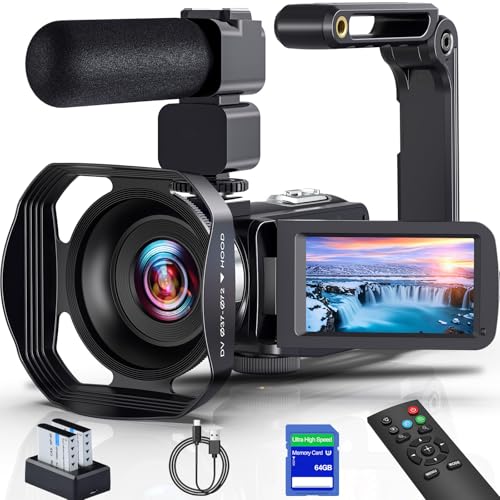
For aspiring YouTube vloggers seeking high-quality visuals, the K Video Camera Camcorder stands out with its impressive 8K video resolution and 64MP image capabilities. You’ll love the 18X digital zoom and infrared night vision, ensuring clear shots even in low light. The 3.0-inch touch screen rotates 270 degrees, making it easy to capture every angle. With Wi-Fi connectivity via the Hello Cam app, remote control is a breeze. Plus, it functions as a webcam for live streaming. Enjoy creative shooting modes and compatibility with SD cards up to 256GB, enhancing your vlogging experience. This camcorder’s user-friendly features make it a top choice!
Best For: Aspiring YouTube vloggers and beginner content creators looking for high-quality video and photo capabilities in an easy-to-use camcorder.
Pros:
- Supports up to 8K video resolution and 64MP images for stunning visuals.
- User-friendly 3.0-inch touch screen that rotates 270 degrees for versatile shooting angles.
- Includes Wi-Fi connectivity and remote control for convenient operation from a distance.
Cons:
- The HDMI cable is not included, requiring an additional purchase for direct TV connection.
- Limited frame rates for 8K video (only 15FPS), which may not suit all filming needs.
- Infrared night vision may not be as effective in extremely low light conditions compared to higher-end models.
Blackmagic Design Pocket Cinema Camera 6K Pro (CINECAMPOCHDEF06P)

Looking for a camera that delivers stunning image quality without breaking the bank? The Blackmagic Design Pocket Cinema Camera 6K Pro is your answer. With a Super 35 image sensor and a native resolution of 6144 x 3456, it captures every detail beautifully. You’ll appreciate its 13 stops of dynamic range and dual gain ISO up to 25,600, minimizing grain and noise. The lightweight body and multifunction handgrip make it easy to handle, while the 5” HDR LCD display means you won’t need an external monitor. Plus, it comes with essential accessories and a DaVinci Resolve Studio activation key for seamless editing.
Best For: Filmmakers and content creators seeking a high-quality, versatile camera that offers professional features at an affordable price.
Pros:
- Exceptional image quality with a Super 35 sensor and 13 stops of dynamic range.
- Compact and lightweight design with a multifunction handgrip for ease of use.
- Includes essential accessories and a DaVinci Resolve Studio activation key for enhanced post-production capabilities.
Cons:
- Limited internal storage options; requires external media for extensive recording.
- No built-in stabilization, which may necessitate additional equipment for steady shots.
- Battery life may be short during intensive use, requiring extra batteries for longer shoots.
8K Ultra HD Video Camera Camcorder with Wifi for Vlogging
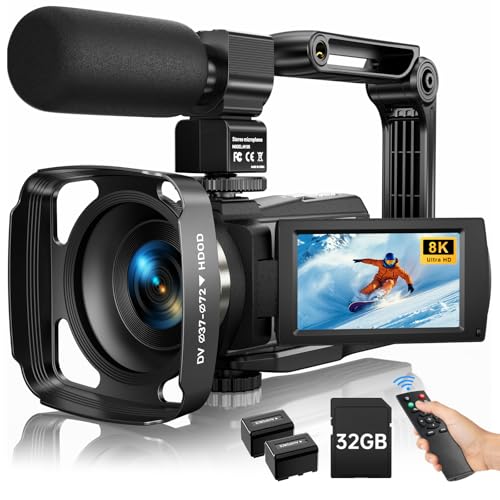
Independent filmmakers seeking high-quality video for vlogging will appreciate the 8K Ultra HD resolution offered by this camera camcorder. With options for lower resolutions like 6K and 4K, you can adapt to your needs. The 6-axis anti-shake technology guarantees stable footage, while the rotatable 3-inch touchscreen makes framing shots a breeze. Built-in Wi-Fi allows easy sharing to social media, and the external X-Y stereo microphone captures clear audio, minimizing background noise. Plus, its versatility makes it perfect for various activities. With 24/7 technical support, you’ll always have help when you need it. Immerse yourself in your vlogging journey with this reliable tool!
Best For: Independent filmmakers and vloggers seeking high-quality video capture and versatile features for their creative projects.
Pros:
- 8K Ultra HD video resolution provides stunning image quality for professional-looking content.
- 6-axis anti-shake technology ensures stable footage, reducing the risk of shaky videos.
- Built-in Wi-Fi and companion app facilitate easy sharing to social media platforms.
Cons:
- 8K video is limited to 15FPS, which may not be suitable for all filming scenarios.
- The camera’s reliance on an external microphone may require additional investment for optimal audio quality.
- Some users may find the learning curve steep due to its advanced features and settings.
Sony FX3 Full-Frame Cinema Camera Bundle
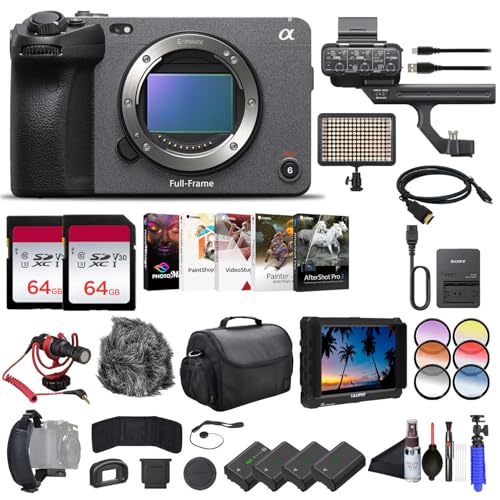
The Sony FX3 Full-Frame Cinema Camera Bundle is an exceptional choice for independent filmmakers and content creators who demand professional-quality visuals without the bulk of traditional cinema cameras. With its compact design, this camera features a 10.2MP back-illuminated sensor that delivers over 15 stops of dynamic range and stunning low-light performance. You’ll appreciate the 4K recording capability at 120p, perfect for cinematic effects. The bundle includes essential accessories like a monitor, shotgun microphone, and stabilization gear, ensuring you’re ready for any shoot. Plus, advanced autofocus and extended recording options make it easy to capture your vision with precision.
Best For: Independent filmmakers, documentary shooters, and YouTubers seeking professional-level visuals in a compact package.
Pros:
- Exceptional low-light performance with over 15 stops of dynamic range for stunning visuals.
- 4K recording capability at 120p allows for cinematic effects and smooth playback.
- Comprehensive bundle includes essential accessories for immediate use and versatility on shoots.
Cons:
- Higher price point compared to entry-level cameras, which may be a barrier for some users.
- Learning curve for beginners unfamiliar with advanced filmmaking features and settings.
- Limited battery life may require additional purchases for extended shooting sessions.
Factors to Consider When Choosing a Cinema Camera for Independent Filmmakers
When you’re choosing a cinema camera, several key factors can make a big difference in your filmmaking experience. You’ll want to reflect on the sensor size, dynamic range, and available recording formats that best suit your vision. Plus, don’t forget about lens compatibility and the quality of audio inputs, as they can greatly impact your final product.
Sensor Size Importance
Choosing the right sensor size for your cinema camera can greatly impact your film’s visual quality and overall production experience. Larger sensors, like full-frame or Super 35, capture more light, improving image quality, particularly in low-light scenarios. They provide better depth of field control and a wider field of view, enhancing the cinematic feel of your shots. Additionally, larger sensors excel at noise reduction at high ISO settings, ensuring cleaner images in challenging lighting. However, consider that a bigger sensor can affect lens compatibility and the overall weight of your camera rig. Balancing these factors is essential as you make your decision, so think about your project’s specific needs and shooting conditions before choosing the right sensor size.
Dynamic Range Considerations
Understanding dynamic range is essential for independent filmmakers, as it plays a pivotal role in how your camera captures detail in both highlights and shadows. A camera with around 13 stops of dynamic range can handle challenging lighting, preserving bright highlights while maintaining dark shadow detail. This capability enhances your film’s visual depth, allowing for more flexibility in post-production. If you often shoot in low-light conditions, look for cameras with a dual gain ISO feature, as this reduces noise and maximizes your usable dynamic range. Also, consider how well the camera handles color grading; a broader dynamic range gives you more creative freedom for adjustments. Ultimately, your camera’s dynamic range greatly impacts your film’s visual quality and audience engagement.
Recording Formats Available
Selecting the right recording format can greatly influence your filmmaking process and the quality of your final product. Many cinema cameras offer high-quality options like Apple ProRes, which simplifies editing and color grading. If you need more flexibility, consider models that support RAW formats, such as Blackmagic RAW, for enhanced detail and dynamic range.
Additionally, pay attention to the media types supported, like SD/UHS-II or CFast 2.0 cards, as well as the option to use external SSDs via USB-C. Built-in codecs can help manage file sizes while maintaining quality, streamlining your workflow. Finally, check the maximum resolution and frame rates available, since these factors are essential for achieving cinematic footage.
Lens Compatibility Options
Lens compatibility plays an essential role in your filmmaking toolkit, allowing you to explore a range of visual styles and effects. When choosing a cinema camera, consider the specific lens mounts it offers, like MFT or PL, since this determines which lenses you can use without adapters. Adapters can expand your options by letting you use lenses from different manufacturers, but they might impact image quality and focus. It’s wise to check the availability of high-quality lenses for your chosen mount, as this directly influences your project’s production value. Additionally, compatibility with both prime and zoom lenses provides versatility, letting you switch between fixed focal lengths for sharpness and zoom lenses for flexible framing, enhancing your storytelling.
Audio Input Quality
When you’re choosing a cinema camera, one of the key factors to contemplate is audio input quality. High-quality audio is essential for enhancing your film’s production value, ensuring clear dialogue and sound effects. Look for cameras with XLR inputs, which allow you to connect professional-grade microphones for superior sound. Additionally, having control over audio levels and monitoring capabilities is vital for capturing ideal audio during your shoots. Cameras offering dual audio input options give you the flexibility to record multiple sound sources simultaneously, such as dialogue and ambient sounds. Finally, consider a camera that supports high-resolution audio formats, like 4-channel linear PCM, to elevate the fidelity and richness of your recorded sound.
Portability and Weight
As you begin your filmmaking journey, considering portability and weight can greatly enhance your shooting experience. A lightweight cinema camera, typically around 1.5 to 2 pounds, allows you to shoot for extended periods without fatigue. Portability is essential for independent filmmakers working in diverse locations—compact cameras fit easily into bags and can be handheld without cumbersome setups. Smaller dimensions enable versatile shooting angles and quick adjustments, making your workflow smoother. Opt for cameras that require minimal additional rigging; a lighter setup boosts mobility and reduces setup time. Finally, choose a design that facilitates intuitive handling, where controls are easily accessible. This way, you can focus on your creative process rather than wrestling with cumbersome gear.
Price and Budgeting
How can you guarantee your investment in a cinema camera aligns with your budget? Start by establishing a clear budget that includes not just the camera’s purchase price, but also lenses, accessories, and post-production software. Explore a range of cameras that fit your specific needs, noting the significant price differences from entry-level to high-end models. Don’t forget to factor in ongoing expenses like storage media, batteries, and maintenance, which can impact your overall budget. Research financing options, as many retailers offer payment plans that make high-quality gear more accessible. Finally, analyze the resale value of the camera model you’re considering; some brands maintain better value, enhancing your long-term investment.