
If you want remote wildlife monitoring without constantly swapping AA batteries, a cellular trail camera with rechargeable battery is a smart upgrade. These models are built for longer field use, faster image delivery, and simpler maintenance.
In this roundup, we focus on trail cameras that balance battery life, connectivity, image quality, and practical hunting or property-monitoring features for 2026.
Best 10 Cellular Trail Camera with Rechargeable Battery Picks for 2026
Solar-First Stealth Scout
Moultrie Edge Solar Cellular Trail Camera

- Integrated solar panel with rechargeable battery pack
- 40MP photos, 1080p HD video, and 0.4s trigger
- Auto-connects to strongest of four major U.S. networks
Best For: Long-term scouting with minimal battery maintenance
Dual-Cam Value Tracker

- 2-pack cellular setup with shared data plan support
- 7800mAh rechargeable battery with up to 2 months use
- Live View, on-demand requests, and built-in GPS
Best For: Users who want two rechargeable cameras and live monitoring
Rechargeable Power Buck Watcher
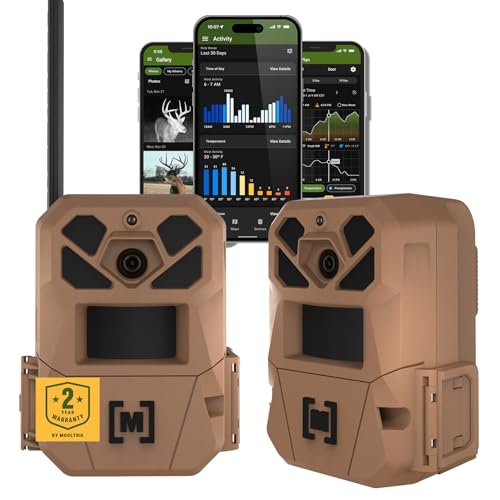
- Compatible with EDGE lithium battery packs and solar panels
- AI buck detection with 40MP photos and 1080p video
- 0.5s trigger speed and built-in GPS
Best For: Deer hunters building a rechargeable-ready two-camera setup
Solar App Scout
MAXDONE 4K WiFi Bluetooth Trail Camera

- 5200mAh rechargeable battery with solar charging
- 4K video and 64MP still images
- 0.1s trigger, 100-degree detection angle, and IP66 housing
Best For: Local wireless users who want solar-powered rechargeable operation
Editor’s Pick
GardePro X66 Pro Cellular Trail Camera with Live View

- Live View and on-demand HD requests
- Rechargeable battery with 64GB SD card included
- Triple-network connectivity with built-in GPS
Best For: Users who want live access and a ready-to-use bundle
Value Twin Pack
SPYPOINT Flex-M2 Cellular Trail Camera Pair

- Twin-pack with 32MP photos and 1080p video
- Dual-SIM LTE for stronger carrier coverage
- Compatible with LIT-22 rechargeable battery pack
Best For: Hunters who need two-camera coverage and app control
Rechargeable Battery Choice
GardePro X50P Cellular Trail Camera

- Includes an 8000mAh rechargeable battery pack
- Triple-network support with video previews
- No-glow infrared with 0.1s trigger speed
Best For: Buyers wanting a rechargeable, low-glow cellular camera
Best with Extra Features
SPYPOINT FLEX-M Cellular Trail Cameras
- Twin-pack cellular setup for wider coverage
- Free 100-photo monthly plan included
- Optional solar panels for longer runtime
Best For: Value-minded hunters wanting two connected cameras
Rechargeable WiFi Performer
Meidase P300 Pro Rechargeable WiFi Trail Cam

- 7800mAh rechargeable battery built in
- Direct phone WiFi control with app
- 64GB SD card included in the box
Best For: Users who want long battery life without cellular fees
Solar-First Stealth Scout – Moultrie Edge Solar Cellular Trail Camera
If you want a cellular trail camera with rechargeable battery support that can stay out longer with fewer check-ins, the Moultrie Edge Solar is built around that goal. Its integrated solar panel and built-in rechargeable battery pack are designed for continuous field use, while the cellular connection sends photos and video without requiring SD card retrieval.
Best For: Hunters who want a low-maintenance cellular camera for long deployments on remote properties.
Pros:
- Integrated solar panel plus rechargeable battery pack reduces manual battery swaps.
- 40MP photos and 1080p HD video with audio for detailed scouting.
- Multi-carrier auto-connect helps it use the strongest of four major U.S. networks.
- 0.4-second trigger and 100-foot detection range support fast-moving game.
Cons:
- Requires a cellular plan, with flexible plans starting at $9.99.
- Best results depend on adequate sun exposure for the solar panel.
Overall, this model stands out for set-it-and-forget-it field use, especially when solar charging can keep the rechargeable battery topped off. It combines fast capture, strong connectivity, and remote app access in a package aimed at hunters who value fewer trips into the woods.
Dual-Cam Value Tracker – GardePro X66 Pro 2-Pack
The GardePro X66 Pro is a cellular trail camera with rechargeable battery power geared toward buyers who want live checking, shared data, and a two-camera setup. Its 7800mAh battery is meant to support around two months of use under the listed photo assumptions, and the app can handle Live View, on-demand requests, and motion alerts when you have an active plan.
Best For: Buyers who want a rechargeable cellular two-pack with live-view features and shared data planning.
Pros:
- 2-pack format offers more coverage right away.
- 7800mAh rechargeable battery supports up to about 2 months under stated usage.
- Live View and on-demand image or clip requests add flexibility.
- Triple-network support and built-in GPS improve tracking and placement.
Cons:
- Cellular features require a separate data plan.
- Live View and on-demand requests also depend on an active plan.
- Solar panel is sold separately for longer year-round power support.
This model makes sense if you want value from a rechargeable cellular setup and like managing multiple cameras under one shared plan. It offers strong speed, wide detection, and practical app features, though the subscription requirement is part of the package.
Rechargeable Power Buck Watcher – Moultrie Edge 3 2 Pack
The Moultrie Edge 3 2-pack is a cellular trail camera option for hunters who want rechargeable power compatibility along with fast alerting and app-based control. It works with EDGE Series lithium battery packs and solar panels, so you can build a longer-running setup while keeping access to 40MP images, 1080p video, and GPS mapping.
Best For: Deer hunters who want a rechargeable-ready cellular camera system in a two-pack.
Pros:
- Compatible with EDGE Series lithium battery packs and solar panels.
- 40MP photos, 1080p HD video, and AI buck detection.
- 0.5-second trigger and 100-foot range help catch moving deer cleanly.
- Built-in GPS and Live Aim make placement and tracking easier.
Cons:
- Rechargeable batteries and solar panels are part of the power options, not the listed in-box essentials.
- Requires a cellular plan starting at $9.99.
As a two-camera bundle, this is a practical choice for hunters who want a connected scouting system rather than a single standalone unit. The rechargeable power compatibility adds flexibility, while the AI detection and remote controls keep the focus on fast, useful deer data.
Solar App Scout – MAXDONE 4K WiFi Bluetooth Trail Camera
If you want a trail camera with rechargeable battery support for local app-based use, the MAXDONE solar model leans into convenience and high-resolution capture. Its built-in 5200mAh rechargeable battery pairs with solar charging, while WiFi and Bluetooth let you view, download, and share files from the free app without removing the card.
Best For: Backyard users and landowners who want a rechargeable solar camera with local wireless app access.
Pros:
- 5200mAh rechargeable battery plus solar charging supports maintenance-free use.
- 4K video and 64MP images offer very high-resolution capture.
- 0.1-second trigger and 100-degree detection angle help catch motion quickly.
- Includes 32GB TF card and IP66 waterproof housing for outdoor use.
Cons:
- This is WiFi/Bluetooth, not cellular, so it does not send data over a mobile network.
- First-time setup requires very close phone placement near the camera.
- Built-in hotspot use is limited to the camera’s own connection setup.
For buyers who mainly need a rechargeable solar camera with easy local access, this model offers strong specs and simple app control. It is less of a true cellular scouting tool, but it works well when you want wireless convenience and high-resolution footage without ongoing plan fees.
Editor’s Pick – GardePro X66 Pro Cellular Trail Camera with Live View
If you want a cellular trail camera with rechargeable battery that leans toward premium features, the GardePro X66 Pro is built for fast scouting and remote checking. It combines Live View, on-demand image or video requests, and motion-triggered alerts, so you can verify activity without walking in. The included rechargeable setup, 64GB industrial-grade SD card, and shared data plan support make it a practical all-in-one option for field use.
Best For: Hunters and property owners who want live access, GPS tracking, and a ready-to-use bundle.
Pros:
- Live View and on-demand HD requests for real-time checking
- Rechargeable battery setup plus included 64GB SD card
- Triple-network support with automatic carrier switching
- Built-in GPS with auto-sync for mapping hotspots and bait sites
Cons:
- Live View and on-demand requests require a separate active data plan
- Best GPS performance is outdoors in open areas
- Advanced features may be more than casual users need
The X66 Pro stands out if you value convenience and visibility over a basic scouting camera. Its feature set is especially strong for users who want fewer trips to the field and more control from the app.
Value Twin Pack – SPYPOINT Flex-M2 Cellular Trail Camera Pair
The SPYPOINT Flex-M2 twin pack is a strong pick if you need a cellular trail camera with rechargeable battery support and want coverage across two locations. It delivers 32MP photos, 1080p video with sound, and dual-SIM LTE connectivity that automatically connects to the strongest available signal. For hunters who want flexible remote management and a two-camera setup, this bundle offers a lot of utility for the price.
Best For: Hunters who want a two-camera cellular setup with app control and rechargeable battery compatibility.
Pros:
- Twin-pack gives you two cameras for wider coverage
- 32MP photos and 1080p videos with sound
- Dual-SIM LTE and automatic carrier switching
- Works with the LIT-22 rechargeable battery pack for longer use
Cons:
- LIT-22 rechargeable battery pack is not included
- Battery pack is an add-on, not built into the bundle
- More features may mean a steeper setup curve than a basic cam
This package is best when you need coverage, not just one camera in one spot. The twin pack, app-based controls, and rechargeable-battery compatibility make it a practical scouting solution for longer seasons.
Rechargeable Battery Choice – GardePro X50P Cellular Trail Camera
The GardePro X50P is a straightforward cellular trail camera with rechargeable battery power built in, making it a solid fit for buyers who want to cut down on disposable battery changes. It supports triple-network connectivity, motion-triggered video previews, and shared data-plan access, so it covers the basics while still offering useful remote features. The 8000mAh lithium battery pack and no-glow infrared design make it especially appealing for low-maintenance field use.
Best For: Buyers who want a rechargeable, no-glow cellular trail camera with simple shared-plan use.
Pros:
- 8000mAh rechargeable lithium battery pack included
- Triple-network support with automatic signal selection
- Motion-triggered 960×540 video previews for quick checking
- No-glow infrared and 0.1s trigger for stealthy capture
Cons:
- SD card is not included
- USB power adapter is not included
- Requires a separate cellular data plan
The X50P keeps the focus on dependable field use and battery convenience rather than extra-frills hardware. If you want a rechargeable option that is easy to share and built for discreet monitoring, it fits the brief well.
Best with Extra Features – SPYPOINT FLEX-M Cellular Trail Cameras
If you want a cellular trail camera with rechargeable battery support through optional solar pairing, the SPYPOINT FLEX-M twin pack is built for budget-conscious hunters and landowners who still want dependable remote access. It offers no-WiFi operation, cross-carrier connectivity, and app-based control, making it easy to monitor wildlife or property without being tied to a local network.
Best For: Buyers who want an affordable two-camera cellular setup with flexible app management and optional extended power.
Pros:
- Free photo transmission plan includes up to 100 photos per month with no fees or commitment.
- Dual-SIM LTE cross-carrier coverage helps keep the camera connected without manual carrier swapping.
- Supports Photo, Video, Time-Lapse, and Time-Lapse+ capture modes.
- Compatible with optional solar panels for extended autonomy.
Cons:
- Solar panels are sold separately, so extended power is not included out of the box.
- Video resolution tops out at 720p.
- The free plan is limited to 100 photos per month.
Overall, this is a practical pick if you want a value-focused cellular trail camera setup that emphasizes easy activation, app control, and flexible capture modes. The twin pack adds convenience for covering multiple areas while keeping recurring costs relatively low.
Rechargeable WiFi Performer – Meidase P300 Pro Rechargeable WiFi Trail Cam
The Meidase P300 Pro is a strong option if you need a cellular trail camera with rechargeable battery-style convenience in a non-cellular WiFi design. Its built-in 7800mAh rechargeable battery, 165-foot wireless range, and phone-based app control make it a practical choice for users who want long runtime and easy setup without monthly fees.
Best For: Property owners and wildlife watchers who want long battery life, local phone control, and a ready-to-use SD card.
Pros:
- Built-in 7800mAh rechargeable battery is rated for up to 1 year of use.
- Direct phone WiFi control lets you view, download, and adjust settings through the app.
- Includes a 64GB industrial SD card right in the box.
- Fast 0.1s trigger speed and no-glow night vision help capture quick movement discreetly.
Cons:
- It is non-cellular, so it will not send images over mobile networks.
- Phone control only works through direct smartphone connection, not home routers or computers.
- Open-area wireless range can weaken through walls, metal, or dense vegetation.
This camera makes sense if your priority is long battery life and simple local management rather than live cellular transmission. It combines a rechargeable power setup with solid image specs and a complete accessory bundle.
Solar Cellular Tracker – SEHMUA AI Animal Detection Cellular Trail Camera
If you are shopping for a cellular trail camera with rechargeable battery support, the SEHMUA model stands out for its built-in 4W solar panel and always-on remote access. It combines 4G LTE connectivity, live 2K video, and app-based control, so you can monitor wildlife in real time without needing Wi-Fi on site.
Best For: Users who want live streaming, solar-assisted power, and AI-driven wildlife monitoring.
Pros:
- Built-in 4W solar panel is designed to reduce charging hassles.
- 2K live video and phone remote access work through the Ucon app.
- AI recognition can identify species and predict activity peaks when cloud storage is enabled.
- 0.2s trigger speed and 120° field of view support fast, wide coverage.
Cons:
- Uses the included SIM card only, and it is not detachable.
- Data plans are required after the initial trial period.
- Memory card is not included and cloud storage features require subscription.
For buyers who want the most connected experience, this camera blends cellular transmission, solar-assisted power, and smart animal detection into one package. It is a good fit when real-time monitoring matters more than minimizing app or data-plan costs.
How We Picked the Best Cellular Trail Camera with Rechargeable Battery
We prioritized rechargeable power options, dependable cellular connectivity, and features that matter in the field: trigger speed, night performance, weather resistance, app usability, and alert reliability. We also looked for models that make remote management easier, whether that means live view, GPS, shared plans, or integrated solar support.
Quick Comparison: What Matters Most
Some cameras are best for set-and-forget use with solar assistance, while others emphasize fast alerts, multi-carrier support, or simple plan sharing. If you want the least maintenance, look for a Cellular Trail Camera with Rechargeable Battery and solar charging. If you need frequent access to footage, prioritize live view, image previews, and stronger app controls.
Key Buying Factors for a Cellular Trail Camera with Rechargeable Battery
Battery Capacity and Charging Method
Higher-capacity rechargeable batteries generally mean fewer trips into the field. Solar integration can extend runtime significantly, but it works best in open locations with reliable sunlight. If you deploy cameras in shaded woods, choose a battery system that still performs well on charge alone.
Cellular Network Compatibility
Multi-carrier or dual-SIM support can improve coverage in rural areas. A camera is only useful if it can consistently send photos or video from your actual location, so network flexibility is often more important than headline resolution.
Image Quality and Trigger Performance
Look for a good balance of resolution, night vision quality, and trigger speed. Higher megapixels can help, but a fast trigger and clean low-light images usually matter more for wildlife identification and pattern tracking.
App Features and Data Management
Shared plans, camera sharing, instant alerts, and live view can make a big difference for teams, families, or land managers. Check whether the app is easy to use and whether the data plan fits your expected image or video volume.
Durability and Placement
Weather sealing, concealment, and GPS tracking are useful if the camera stays out for long periods. Also consider whether the camera needs Wi-Fi for setup or works fully over cellular, especially if you deploy it in remote terrain.
Who Should Buy Which Cellular Trail Camera with Rechargeable Battery?
If you want the lowest-maintenance option, choose a solar-assisted model. If your priority is fast remote monitoring and sharing, pick a camera with live view and strong app controls. If you need dependable coverage across mixed rural networks, a dual-SIM or multi-carrier model is usually the safest choice. For budget-conscious buyers, focus on battery life, core connectivity, and night performance before paying extra for advanced features.
For most buyers, the best Cellular Trail Camera with Rechargeable Battery is the one that matches your location, network signal, and how often you actually need to check images.