
When it comes to wildlife photography, the right camera can make all the difference in capturing those fleeting moments. The Canon EOS R series has several impressive options tailored for this purpose. From high-speed shooting to outstanding image quality, these cameras offer features that cater to both novice and experienced photographers. But which models stand out the most for your wildlife adventures? Let’s explore the top choices that could elevate your photography game.
Canon EOS R7 Mirrorless Camera (Body Only)

The Canon EOS R7 Mirrorless Camera is an excellent choice for wildlife photographers who demand high image quality and rapid performance in challenging environments. With its 32.5 MP APS-C sensor and DIGIC X processor, you’ll capture sharp images effortlessly. The camera’s impressive continuous shooting speeds—15 fps with the mechanical shutter and 30 fps electronically—ensure you never miss a moment. Plus, the Dual Pixel CMOS AF technology offers precise subject tracking, covering nearly the entire frame. Lightweight at just 1.1 lbs, it’s easy to carry on long outings, making it your go-to tool for stunning wildlife shots in any setting.
Best For: Wildlife photographers seeking high-quality images and fast performance in demanding conditions.
Pros:
- High Image Quality: 32.5 MP sensor delivers sharp and detailed images.
- Fast Continuous Shooting: Capable of 15 fps mechanical and 30 fps electronic shooting speeds.
- Lightweight Design: Weighs only 1.1 lbs, making it easy to carry during long shoots.
Cons:
- Limited Low-Light Performance: While the ISO range is expandable, performance may not match full-frame cameras.
- No Built-in Flash: Lacks an integrated flash, requiring external options for low-light situations.
- Battery Life: Despite an extra battery pack, heavy usage during video recording may drain the battery quickly.
Canon EOS R6 Mark II Mirrorless Camera (Body Only)

For wildlife photographers seeking a blend of speed and precision, the Canon EOS R6 Mark II stands out with its impressive high-speed continuous shooting capability of up to 40 fps. This full-frame mirrorless camera boasts a 24.2 MP CMOS sensor, ensuring stunning image quality even in challenging conditions. With advanced Dual Pixel CMOS AF II, it captures fast-moving subjects effortlessly. The 3.0-inch vari-angle touchscreen allows for versatile shooting angles. Plus, its connectivity options, like built-in Wi-Fi and Bluetooth, streamline sharing. Weighing just 1.3 pounds, it’s lightweight enough for long days in the field. With a 4.7-star rating, it’s a top choice for wildlife enthusiasts.
Best For: Wildlife photographers and enthusiasts looking for a high-performance mirrorless camera with fast autofocus and continuous shooting capabilities.
Pros:
- High-speed continuous shooting of up to 40 fps, ideal for capturing dynamic action shots.
- Advanced autofocus system with Dual Pixel CMOS AF II for precise subject tracking.
- Lightweight design at just 1.3 pounds, making it easy to carry for extended periods.
Cons:
- Price point may be high for amateur photographers or those on a budget.
- Limited battery life when recording high-resolution videos continuously.
- Requires specific Canon lenses, which may limit compatibility with existing equipment.
Canon EOS R100 Mirrorless Camera Double Lens Kit
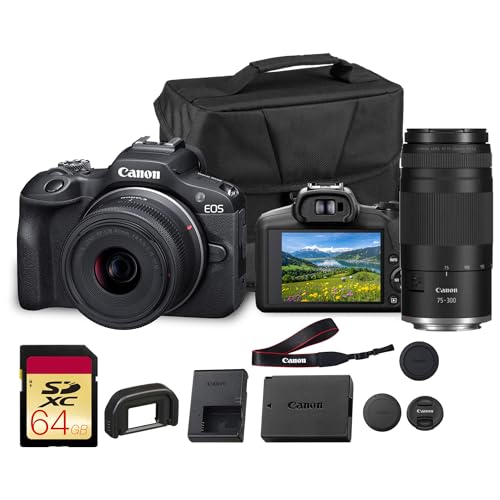
Looking for a versatile camera that can easily handle wildlife photography? The Canon EOS R100 Mirrorless Camera Double Lens Kit is your ideal choice. With a 24.2MP APS-C sensor and DIGIC 8 processor, you’ll capture stunning images effortlessly. The kit includes a wide-angle RF-S 18-45mm lens and a telephoto RF 75-300mm lens, giving you the flexibility to shoot from different distances. Weighing just 4.16 pounds, it’s perfect for on-the-go adventures. Plus, its intuitive controls make it beginner-friendly. Enjoy 4K video capability and excellent autofocus with Eye Detection AF, ensuring you never miss a moment in the wild.
Best For: The Canon EOS R100 Mirrorless Camera Double Lens Kit is best for beginners and content creators looking for a versatile and easy-to-use camera for various photography styles.
Pros:
- Compact and lightweight design makes it ideal for travel and outdoor photography.
- Includes both wide-angle and telephoto lenses for versatile shooting options.
- 4K video capability and advanced autofocus features enhance creative possibilities.
Cons:
- Limited optical zoom range with a maximum of 3x may not suit all wildlife photography needs.
- The camera may not have as many advanced features as higher-end models, which could limit experienced photographers.
- Battery life may be shorter during extensive use, particularly when shooting in 4K video.
Canon EOS R100 Mirrorless Camera with RF-S18-45mm Lens Kit

Ideal for aspiring wildlife photographers, the Canon EOS R100 Mirrorless Camera with RF-S18-45mm Lens Kit delivers impressive image quality and performance with its 24.1 Megapixel APS-C sensor. With the DIGIC 8 processor, you’ll enjoy enhanced shooting functionality and 4K video recording at 24 fps. The Dual Pixel CMOS AF system, featuring 143 zones, guarantees precise focus on both human and animal subjects. Plus, with a continuous shooting speed of up to 6.5 frames per second, capturing fast-moving wildlife is a breeze. Its compact design, along with connectivity options like Bluetooth and Wi-Fi, makes it perfect for on-the-go shooting.
Best For: Aspiring wildlife photographers who seek a compact camera with advanced autofocus and 4K video capabilities.
Pros:
- High image quality with a 24.1 Megapixel APS-C sensor and DIGIC 8 processor.
- Versatile autofocus system with Dual Pixel CMOS AF, featuring human and animal detection.
- Compact and lightweight design for easy portability during outdoor shoots.
Cons:
- Limited maximum aperture of F4.5 may restrict low-light performance.
- Continuous shooting speed of 6.5 fps may not be sufficient for fast-action sports photography.
- Only one-year warranty, which may be shorter than some competing models.
Canon RF100-400mm F5.6-8 is USM, Telephoto

The Canon RF100-400mm F5.6-8 IS USM telephoto lens stands out as a must-have for wildlife photographers seeking versatility and portability. Its compact design and lightweight build make it easy to carry on long shoots. With a zoom range of 100-400mm, you’ll capture stunning images from a distance. The lens features up to 5.5 stops of Optical Image Stabilization, ensuring sharp shots even in challenging conditions. Thanks to Canon’s Nano USM technology, autofocus is fast and quiet. Plus, it’s compatible with tele extenders, allowing you to reach even further. This lens is a game-changer for your wildlife photography adventures.
Best For: Wildlife photographers seeking a compact and versatile telephoto lens for capturing stunning images from a distance.
Pros:
- Compact and lightweight design, making it easy to carry during long shoots.
- Up to 5.5 stops of Optical Image Stabilization for sharp shots in challenging conditions.
- Fast and quiet autofocus powered by Canon’s Nano USM technology.
Cons:
- Maximum aperture of f/5.6-8 may limit performance in low-light situations.
- Minimum focusing distance of 2.89 feet at 200mm may not be ideal for all close-up photography.
- Lens may require additional tele extenders for maximum focal length versatility, which can add to overall cost.
Canon EOS R10 Mirrorless Camera with RF-S 18-45mm Lens Kit

For wildlife enthusiasts seeking a compact yet powerful camera, the Canon EOS R10 Mirrorless Camera with RF-S 18-45mm Lens Kit stands out with its impressive 24.2 MP APS-C CMOS sensor. You’ll love the DIGIC X image processor, enhancing performance for sharp photos and ultra-high-definition videos. With high-speed continuous shooting at 15 fps, capturing fast-moving subjects becomes effortless. The smart autofocus technology guarantees crystal-clear focus on your wildlife subjects. Plus, its lightweight design and comfortable grip make it easy to handle during long shoots. You’ll also appreciate the vibrant LED screen for clear image viewing and shot planning.
Best For: Wildlife enthusiasts seeking a compact and powerful camera for capturing sharp, high-definition images of fast-moving subjects.
Pros:
- High-speed continuous shooting at 15 fps allows for effortless capture of fast-moving wildlife.
- Smart autofocus technology ensures crystal-clear focus on subjects, enhancing photography quality.
- Lightweight and compact design makes it easy to handle during long shoots, ideal for outdoor photography.
Cons:
- The kit lens (RF-S 18-45mm) may not provide the reach needed for distant wildlife photography.
- Battery life may be limited during extensive shooting sessions, requiring additional batteries for longer outings.
- The camera may not offer as many advanced features as higher-end models, which could be a drawback for professional users.
Canon EOS R7 Mirrorless Camera with RF 75-300mm Lens and Accessories

Wildlife enthusiasts and aspiring photographers will appreciate the Canon EOS R7 Mirrorless Camera, particularly when paired with the RF 75-300mm lens. This powerful combo features a 32.5MP APS-C sensor and 15fps continuous shooting, perfect for capturing fast-moving subjects. The Dual Pixel AF II guarantees quick and accurate autofocus, while in-body image stabilization keeps your shots steady. With 4K UHD video capabilities and an ISO range of 100-25600, you can tackle various lighting conditions. Included accessories like the tripod grip and memory card make this kit a thorough choice for wildlife photography. Get ready to capture stunning moments!
Best For: Wildlife enthusiasts and aspiring photographers looking for a versatile camera system to capture fast-moving subjects and varied lighting conditions.
Pros:
- High-resolution 32.5MP APS-C sensor allows for detailed images, ideal for wildlife photography.
- Fast 15fps continuous shooting and Dual Pixel AF II provide excellent tracking of moving subjects.
- In-body image stabilization helps maintain steady shots, even in challenging conditions.
Cons:
- Weight of 2 pounds may be cumbersome for extended use or travel.
- Limited low-light performance at the highest ISO settings compared to full-frame cameras.
- RF 75-300mm lens may not be as bright as faster lenses, which could affect performance in low-light situations.
Canon EOS R Mirrorless Camera (Body Only)

Designed for passionate wildlife photographers, the Canon EOS R Mirrorless Camera offers an impressive 30.3 MP full-frame sensor that captures stunning detail in every shot. Its Dual Pixel CMOS AF boasts 5,655 manually selectable points, achieving focus in just 0.05 seconds. You can shoot up to 12 frames per second, perfect for fast-moving subjects. With RF mount compatibility and optional adapters for EF and EF-S lenses, you’ll enjoy versatility in your gear. The built-in electronic viewfinder and vari-angle touchscreen make framing shots easy, while the lightweight design guarantees portability. Plus, the durable chassis withstands tough conditions, so you’re ready for any adventure.
Best For: Wildlife photographers looking for a powerful and versatile mirrorless camera that excels in fast-paced shooting environments.
Pros:
- High-resolution 30.3 MP full-frame sensor for exceptional image quality and detail.
- Fast Dual Pixel CMOS AF with 5,655 selectable points, achieving focus in just 0.05 seconds.
- Lightweight and compact design for easy portability in the field.
Cons:
- Body only purchase may require additional investment in lenses and accessories.
- Limited battery life may necessitate carrying extra batteries for extended shoots.
- No in-body stabilization, which may impact handheld shooting in low light conditions.
Canon EOS R10 Mirrorless Camera Kit with RF-S 18-150mm Lens

The Canon EOS R10 Mirrorless Camera Kit with RF-S 18-150mm Lens stands out as an excellent choice for aspiring wildlife photographers who crave versatility in their gear. With a 24.2MP APS-C sensor and Dual Pixel CMOS AF II, you’ll capture stunning detail and focus on your subjects effortlessly. The 4K UHD video recording at 60p and Full HD slow-motion capabilities allow you to document wildlife in dynamic ways. The RF-S 18-150mm lens is perfect for both wide landscapes and close-ups, while the included 64GB memory card guarantees you won’t miss a moment. Plus, the shoulder bag makes transport a breeze!
Best For: The Canon EOS R10 Mirrorless Camera Kit is best for aspiring wildlife photographers and videographers seeking a versatile and high-quality imaging solution.
Pros:
- High-resolution 24.2MP APS-C sensor delivers stunning image quality and detail.
- Versatile RF-S 18-150mm lens allows for a wide range of shooting scenarios, from landscapes to close-ups.
- 4K UHD video recording and Full HD slow-motion capabilities enhance creative storytelling options.
Cons:
- Limited low-light performance compared to full-frame cameras may affect shooting in dim conditions.
- RF-S lens compatibility may restrict the use of other RF lenses without an adapter.
- Weight of the kit might be a consideration for long hikes or extended use in the field.
Canon EOS R5 Mirrorless Camera (Body Only)
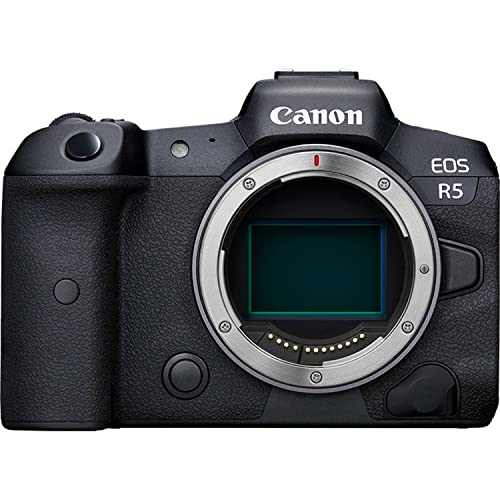
For wildlife photographers seeking unparalleled image quality, the Canon EOS R5 Mirrorless Camera stands out with its impressive 45-megapixel full-frame sensor. With its advanced DIGIC X processor and ISO range up to 51,200, you’ll capture stunning details, even in low light. The Dual Pixel CMOS AF offers 1,053 focus points, ensuring precise autofocus for fast-moving subjects. Plus, its 20 fps electronic shutter lets you freeze action effortlessly. Lightweight magnesium alloy construction makes it portable for outdoor adventures. With 8K RAW video capabilities, it’s perfect for those wanting to document wildlife in motion. Experience exceptional clarity and versatility in your photography.
Best For: Wildlife photographers seeking high-resolution images and advanced autofocus capabilities for capturing fast-moving subjects.
Pros:
- Exceptional 45-megapixel full-frame sensor offers stunning image quality even in low light.
- Fast continuous shooting up to 20 fps with an electronic shutter, ideal for action shots.
- Versatile video capabilities with 8K RAW recording, perfect for documenting wildlife in motion.
Cons:
- Higher price point may not be suitable for beginner photographers.
- The lightweight design may feel less robust for some users in rugged conditions.
- Limited battery life when shooting in high-resolution video modes.
Factors to Consider When Choosing a Canon Eos R Camera for Wildlife
When choosing a Canon EOS R camera for wildlife photography, you’ll want to take into account several key factors. Sensor resolution, autofocus performance, and continuous shooting speed can make a big difference in capturing those fleeting moments. Additionally, think about lens compatibility and image stabilization technology to guarantee you get the best results in the field.
Sensor Resolution Importance
Sensor resolution plays a vital role in wildlife photography, directly influencing the quality of your images. A higher sensor resolution, like the 32.5 MP of the Canon EOS R7, captures intricate details, showcasing textures and features of animals in their natural habitats. When you need to crop images to focus on distant subjects, that increased resolution helps maintain image quality, ensuring your shots remain sharp. Additionally, high resolutions improve low-light performance, allowing you to capture wildlife during dawn or dusk with less noise. This is essential for dynamic action shots, as higher megapixels enhance subject tracking and detail retention. Ultimately, investing in a camera with superior sensor resolution elevates your wildlife photography experience.
Autofocus Performance Features
Capturing stunning wildlife images goes beyond just having a high-resolution sensor; autofocus performance is equally important. You’ll want a camera with advanced autofocus systems like Canon’s Dual Pixel CMOS AF technology, which provides rapid and accurate focus adjustments for those fast-moving subjects. Look for models that offer up to 651 autofocus zones, ensuring extensive coverage and improved tracking across the frame. Subject detection capabilities that recognize animals can help maintain focus even during unpredictable movements. Enhanced head, face, and eye detection is vital too, as it keeps the focal point on the animal’s defining features. These autofocus features greatly boost your chances of capturing breathtaking wildlife moments.
Continuous Shooting Speed
Continuous shooting speed is a game changer for wildlife photography, allowing you to capture those split-second moments that can make or break a shot. When selecting a Canon EOS R camera, look for models with continuous shooting rates of 15 fps or higher, especially with mechanical shutters, to freeze action in dynamic scenes. If you want an edge, consider cameras with electronic shutter capabilities, which can reach an impressive 30 fps. Additionally, utilizing RAW Burst Mode with pre-shooting functionality can considerably increase your chances of capturing essential wildlife behavior just before it happens. Remember, a fast autofocus system is critical for keeping up with moving subjects, ensuring you don’t miss those fleeting opportunities in the wild.
Lens Compatibility Options
When choosing a Canon EOS R camera for wildlife photography, lens compatibility is a crucial factor that can greatly influence your shooting experience. These cameras support a wide range of lenses, including both RF and EF/EF-S options, which gives you versatile shooting potential. For instance, the RF100-400mm F5.6-8 IS USM lens is perfect for capturing distant wildlife while remaining portable. If you already own EF or EF-S lenses, using the Mount Adapter EF-EOS R lets you utilize those options, expanding your focal length choices. Opt for lenses with Optical Image Stabilization to reduce camera shake, and take advantage of the advanced autofocus systems in EOS R cameras for fast, silent focusing on moving animals without disturbing them.
Image Stabilization Technology
To guarantee sharp images of wildlife, it’s vital to take into account image stabilization technology in a Canon EOS R camera. This technology helps reduce camera shake, which is essential when shooting at slower shutter speeds or using long telephoto lenses. Look for cameras with in-body image stabilization (IBIS) that can provide up to 8 stops of shake correction, improving clarity in low-light conditions and while tracking moving subjects. Additionally, optical image stabilization (OIS) in lenses works alongside IBIS to minimize vibrations during handheld shooting. These advanced stabilization features not only enhance still images but also improve video quality, making it easier to capture smooth footage of unpredictable wildlife. Choose a camera that meets these stabilization needs for the best results.
Weight and Portability
Choosing the right Canon EOS R camera for wildlife photography involves not just advanced features like image stabilization but also considering weight and portability. A lighter camera, ideally around 1.1 to 1.3 pounds, makes handling easier during those long hours in the field. When you’re hiking through varied terrains, compact designs greatly enhance portability, allowing you to carry your gear without hassle. Opt for a model under 2 pounds to reduce fatigue, keeping you agile while tracking elusive subjects. Pay attention to overall dimensions, as more compact cameras fit better in bags and are easier to transport. Finally, remember that a lightweight body combined with the right lens is essential for stability, minimizing shake when photographing distant wildlife.
Battery Life Considerations
Battery life plays a pivotal role in wildlife photography, as long hours in the field can quickly drain your camera’s power. Opting for a camera with a high-capacity battery, like the LP-E6NH, can greatly extend your shooting time. Many Canon EOS R models support USB Power Adapter functionality, allowing you to charge your battery while shooting—ideal for extended outdoor trips. Be mindful that continuous shooting at high fps can rapidly consume battery life, so balance your shooting modes with energy management. Utilizing energy-saving settings, such as auto power-off, can also help during inactive periods. Don’t forget to monitor battery level indicators and carry spare batteries, especially in remote areas where charging options might be limited.