
Outdoor filming demands more support than handheld shooting can provide, but a full tripod is not always practical. The best camera monopods for outdoor filming add stability, reach, and smoother movement while remaining quick to carry between locations.
This roundup compares 10 options across carbon fiber and aluminum designs, removable tripod bases, compact travel builds, and video-oriented features. Use the buying guide below to match the right monopod to your camera setup and shooting style.
Best 10 Camera Monopods for Outdoor Filming Picks for 2026
Fast-Adjust Carbon Support
SmallRig 68.9" Carbon Fiber Video Monopod

- One-button lift-and-lock operation
- 68.9-inch reach with fluid head
- Quick-release feet and versatile mounts
Best For: Outdoor videographers needing fast adjustments and high load capacity
Modular Field Performer
IFOOTAGE Cobra 3 A180T 71" Monopod
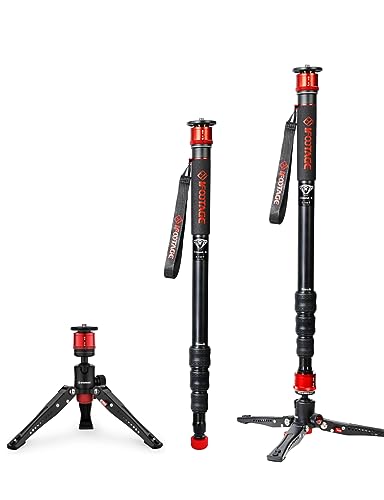
- 71.7-inch maximum height
- Detachable mini tripod base
- 17.6-pound payload with quick disconnect
Best For: Outdoor filming that benefits from modular support and rapid deployment
Stable Budget Stand
NEEWER T222 Extendable Camera Monopod
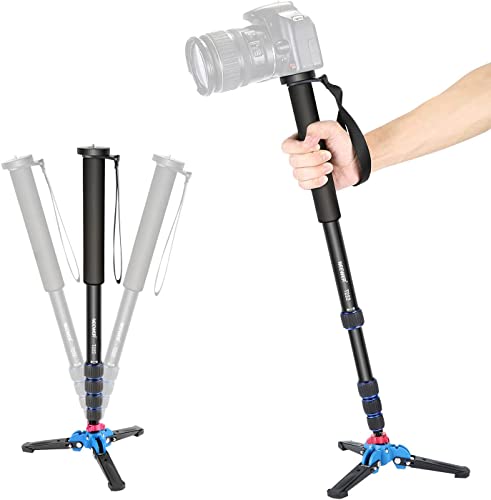
- 66-inch height and 20.5-inch folded length
- Detachable three-leg base with 360-degree rotation
- 11-pound maximum load
Best For: Portable outdoor shooting with added base support and panoramic movement
Ultralight Trail Companion

- 0.83-pound aluminum design
- Folds to 16.9 inches for travel
- Monopod, selfie-stick, and trekking modes
Best For: Hiking, travel, and lightweight outdoor photography
Lightweight Trail Pick

- Weighs 0.59 pounds and folds to 16.75 inches
- 62-inch height with rubber foot and retractable spike
- Supports cameras and accessories up to 5 pounds
Best For: Hikers and travelers using lightweight camera setups
Fast-Setup Carbon Fiber Pick

- One-click height adjustment with four-section carbon fiber leg
- Detachable 360-degree A32 ball head and quick-release plate
- Converts between monopod, pole, and low-angle stand
Best For: Outdoor shooters needing fast setup and flexible support
All-Terrain Stability Pick

- Extends from 18 to 69.6 inches across six sections
- Supports up to 6 kilograms with aluminum construction
- Includes removable tripod base, rubber feet, and metal spikes
Best For: Outdoor and tabletop shooters wanting reach and adaptable support
Best Lightweight Pick

- 0.88-pound aluminum construction
- 17.6-pound load capacity
- Interchangeable rubber and spike feet
Best For: Traveling creators and outdoor vloggers
Best Fluid-Head Option

- 22-pound maximum load
- Q6 fluid head with 360-degree rotation
- Three-in-one monopod and tripod-base design
Best For: Videographers with heavier rigs and gimbals
Best Value Travel Design

- 67-inch maximum height
- 15.5-pound load capacity
- Rubber foot and metal spike included
Best For: Traveling shooters who need simple terrain flexibility
Fast-Adjust Carbon Support – SmallRig 68.9" Carbon Fiber Video Monopod
For outdoor filming, the SmallRig S5565 combines carbon fiber construction, a fluid head, and a one-button lift-and-lock system for quick height changes. It extends to 68.9 inches, folds to 29.9 inches, and supports up to 33.07 pounds at the monopod legs.
Best For: Videographers who need fast, one-handed adjustments and broad camera or gimbal compatibility.
Pros:
- One-button lift and lock enables quick height changes.
- Carbon fiber and aluminum construction balances durability with portability.
- Includes quick-release tripod feet and 1/4-inch and 3/8-inch mounting options.
- Fluid head supports compatible DSLRs, mirrorless cameras, cages, and other gear.
Cons:
- At 5.51 pounds, it is heavier than several travel-oriented monopods.
- The 29.9-inch folded length may be less compact for small bags.
Its strong payload rating and video-focused controls make it a capable choice for demanding outdoor setups, though its weight favors filmmakers who prioritize support over ultralight packing.
Modular Field Performer – IFOOTAGE Cobra 3 A180T 71" Monopod
The IFOOTAGE Cobra 3 A180T is a practical option among camera monopods for outdoor filming, with a 71.7-inch maximum height, five sections, and a detachable mini tripod base. Its twist-lock joints and automatic quick-disconnect mechanism are designed for rapid setup.
Best For: Outdoor creators who want a tall, modular monopod that can switch between handheld support and a low-profile standing base.
Pros:
- Extends to 71.7 inches while folding to 27.2 inches.
- Detachable, foldable mini tripod creates a versatile three-in-one setup.
- Supports up to 17.6 pounds and weighs 2.76 pounds.
- 1/4-inch and 3/8-inch mount screws convert freely.
Cons:
- Aluminum construction is heavier than some carbon fiber alternatives.
- It is not water resistant.
With a tall working height and quick-release modular design, the Cobra 3 suits changing outdoor shooting positions, especially when a compact base is useful between takes.
Stable Budget Stand – NEEWER T222 Extendable Camera Monopod
The NEEWER T222 adds a detachable three-leg base to a five-section aluminum monopod, making it a useful budget-minded choice for camera monopods for outdoor filming. It reaches 66 inches, folds to 20.5 inches, and supports up to 11 pounds.
Best For: Photographers and videographers who want a portable monopod with added base stability and panoramic movement.
Pros:
- Detachable tripod base supports the monopod and allows 360-degree panoramic rotation.
- 15-degree base tilt helps with angled shooting.
- Five-section adjustment system offers flexible working heights.
- Folds to 20.5 inches and includes a comfortable foam handle.
Cons:
- The supplied guidance says the monopod should be held when a camera is mounted.
- Its 11-pound capacity is lower than the SmallRig and IFOOTAGE options.
- It is not water resistant.
The T222 is a sensible choice when portability and a supportive base matter more than a high payload, but users should follow the handling guidance and keep a hand on the monopod during use.
Ultralight Trail Companion – ULANZI TB12 61-Inch Monopod
At just 0.83 pounds, the ULANZI TB12 is a highly portable option among camera monopods for outdoor filming. Its five-section aluminum design extends from 16.9 to 61 inches, supports up to 11.02 pounds, and can also serve as a selfie stick or walking and trekking pole.
Best For: Travelers, hikers, and hobbyist photographers who prioritize low weight and compact packing.
Pros:
- Weighs approximately 0.83 pounds for easy carrying.
- Folds to 16.9 inches and fits into a 20-inch carry-on.
- Offers five height positions from 16.9 to 61 inches.
- Supports up to 11.02 pounds and provides multiple outdoor-use modes.
Cons:
- Its 61-inch maximum height is lower than the other listed models.
- It is not water resistant.
- The notes emphasize hobbyist and compact-camera use rather than heavy video rigs.
The TB12 is best viewed as a lightweight travel aid rather than a dedicated heavy-duty video support. Its compact size and walking-stick modes make it particularly convenient for hikes and location scouting.
Lightweight Trail Pick – Compact Altura Photo Monopod
If you want camera monopods for outdoor filming that are easy to carry, the Altura Photo 62-Inch Monopod focuses on portability and basic stability. Its aluminum construction weighs just 0.59 pounds, collapses to 16.75 inches, and includes a carry pouch for travel or hiking.
Best For: Hikers, travelers, and photographers using lightweight DSLR, mirrorless, video, or scope setups up to 5 pounds.
Pros:
- Very lightweight and compact for backpacks or carry-on bags.
- 62-inch maximum height with four telescoping sections.
- Rubber foot and retractable spike adapt to indoor and outdoor terrain.
- Soft foam grip and wrist strap improve handling.
Cons:
- Supports up to 5 pounds, less than the heavier-duty alternatives here.
- Does not include a ball head.
The Altura is a straightforward choice when low carry weight matters most. It offers useful terrain features and a universal mount, but heavier camera rigs may require a stronger monopod.
Fast-Setup Carbon Fiber Pick – COMAN M1mini Monopod
For camera monopods for outdoor filming where quick repositioning matters, the COMAN M1mini combines a one-click, four-section carbon fiber design with a detachable A32 ball head. Its multiple configurations let you use it as a supported monopod, portable pole, or low-angle stand.
Best For: Outdoor filmmakers and photographers who want fast height changes, flexible shooting angles, and support for heavier equipment.
Pros:
- One-click lifting system speeds up height adjustment.
- Detachable ball head provides 360-degree rotation and supports horizontal or vertical shooting.
- Three-in-one design includes a monopod, portable pole, and low-angle stand.
- Supports up to 15 kilograms and includes a quick-release plate with safety latch.
Cons:
- At 1.63 kilograms and 26 inches folded, it is less compact than the lightweight Altura.
- The more feature-rich design may be more equipment than casual users need.
The M1mini is the most versatile option of the three for demanding outdoor workflows. Its ball head, base, and rapid adjustment system add flexibility, while the higher weight may matter on long hikes.
All-Terrain Stability Pick – Koolehaoda K-266 Monopod
The Koolehaoda K-266 is a practical choice among camera monopods for outdoor filming when height range and ground adaptability are priorities. Its six-section aluminum body extends to 69.6 inches, while interchangeable rubber caps and metal spikes help it handle smooth or soft surfaces.
Best For: DSLR, mirrorless, and camcorder users who need a tall, adjustable monopod with a removable support base for outdoor and tabletop work.
Pros:
- Six sections adjust from 18 inches to 69.6 inches.
- Supports up to 6 kilograms and uses corrosion-resistant aluminum alloy.
- Removable tripod base offers 360-degree rotation and 20-degree tilt.
- Includes rubber feet, metal spikes, phone clip, tools, and carrying bag.
Cons:
- Aluminum construction weighs 0.96 kilograms, more than the Altura.
- Listed as not water resistant.
- Quick-lock adjustment uses six sections, which may require more steps than a one-button design.
The K-266 balances load capacity, reach, and terrain flexibility. Its removable tripod base is useful for steadier framing or tabletop setups, while the lack of water resistance calls for care in wet conditions.
Best Lightweight Pick – NEEWER TP41 Outdoor Monopod
For camera monopods for outdoor filming, the NEEWER TP41 stands out as a lightweight option that is easy to carry between locations. It extends to 61 inches, supports up to 17.6 pounds, and includes interchangeable rubber and spike feet for changing terrain.
Best For: Travelers, vloggers, and outdoor creators who prioritize low weight and flexible footing.
Pros:
- Weighs just 0.88 pounds and folds to 17.3 inches for convenient transport.
- Supports DSLR cameras, mirrorless cameras, camcorders, gimbals, and compatible accessories with 1/4-inch and 3/8-inch mounting options.
- Rubber feet suit smooth surfaces, while interchangeable steel spike feet work on grass, sand, and dirt.
- Flip locks provide four height settings from 26.6 to 61 inches.
Cons:
- It is not water resistant.
- The fixed height settings offer less adjustment than a continuously adjustable monopod.
The TP41 is a practical choice when portability matters most. Its compact folded size, broad accessory compatibility, and terrain-specific feet make it especially useful for mobile outdoor filming.
Best Fluid-Head Option – COMAN KX3232Q6 Video Monopod
Among camera monopods for outdoor filming, the COMAN KX3232Q6 is designed for more controlled video movement. Its upgraded Q6 fluid head, 73.2-inch maximum height, and detachable tripod base support panoramic, low-angle, overhead, and fixed-position shooting.
Best For: Videographers using heavier camera setups, DJI gimbals, or Manfrotto-compatible quick-release equipment.
Pros:
- Supports up to 22 pounds while extending to 73.2 inches.
- Q6 fluid head offers 360-degree rotation and +90/-60-degree tilt.
- Three-in-one design can function as a monopod with adjustable feet, a portable monopod stand, or a low-angle tripod.
- Top-press and side-lock quick-release options speed up camera installation.
Cons:
- At 3.9 pounds, it is considerably heavier than compact travel monopods.
- Its 26-inch folded length may require more storage space.
- It is not water resistant.
The KX3232Q6 is the strongest fit for filmmakers who value load capacity and fluid control over minimum carry weight. The removable base and multiple shooting configurations add useful versatility on location.
Best Value Travel Design – Manbily A-222 Outdoor Monopod
The Manbily A-222 is a straightforward option for camera monopods for outdoor filming when you want a compact travel setup with a detachable base. Its five-section aluminum design reaches 67 inches, supports up to 15.5 pounds, and uses a quarter-turn locking system for quick adjustments.
Best For: Outdoor photographers and videographers seeking a portable monopod with basic stability features and interchangeable feet.
Pros:
- Folds to 21 inches and includes a detachable wrist strap for carrying.
- Quarter-turn locks adjust the height from 21 to 67 inches quickly.
- Includes rubber feet for paved surfaces and a metal spike for softer ground.
- Anodized aluminum surfaces resist abrasion, and the monopod supports up to 15.5 pounds.
Cons:
- The base is intended to increase stability and is not recommended for use as a tripod.
- It has no ball head, limiting head-based positioning adjustments.
- The manufacturer recommends avoiding the smallest-diameter tube section for better stability.
The A-222 offers useful outdoor basics without a complex head system. Its short folded length, quick locks, and interchangeable feet make it a sensible travel choice, provided you treat the base as a stabilizer rather than a standalone tripod.
How We Picked the Best Camera Monopods for Outdoor Filming
We evaluated these Camera Monopods for Outdoor Filming based on the features that matter most in changing field conditions: maximum height, folded size, construction material, section design, locking system, base stability, stated load capacity, and included head or mounting hardware. We also considered whether each model is better suited to still photography, video, travel, or heavier professional equipment.
Carbon fiber models generally reduce carrying weight and absorb some vibration, while aluminum models often offer strong value and durable performance. A removable tripod base can provide useful hands-free support, but it does not make a monopod as stable or secure as a full tripod in windy or uneven locations.
Quick Comparison
| Feature | What to look for | Why it matters outdoors |
|---|---|---|
| Material | Carbon fiber or aluminum | Balances weight, durability, and price |
| Height | About 61 to 73 inches | Supports eye-level framing and overhead angles |
| Base | Feet, removable tripod base, or standard foot | Improves low-angle stability and setup flexibility |
| Sections | Four to six sections | Affects folded length and setup speed |
| Load rating | Above the combined camera and lens weight | Helps maintain safer, steadier support |
Key Buying Factors for Camera Monopods for Outdoor Filming
Height and Folded Portability
Choose a monopod that reaches a comfortable working height without requiring you to hunch. For travel, hiking, or crowded events, compare the folded length and section count as carefully as the maximum height. More sections can create a shorter package, but may require more adjustments.
Stability and Base Design
A removable tripod base or folding feet are useful for brief static shots, interviews, and video clips where you need to release the camera momentarily. For panning, walking shots, or uneven ground, look for a smooth base joint and a secure locking mechanism. Keep one hand on the camera whenever conditions are unstable.
Capacity and Mounting Compatibility
Check the monopod’s rated capacity against your complete setup, including the camera, lens, cage, microphone, monitor, and other accessories. A video head or fluid-style head can improve controlled movement, while a simple mounting screw is often enough for lightweight still-camera kits. Confirm the thread size and included adapter before buying.
Weather and Field Handling
Outdoor equipment should have firm locks, grippy feet, and controls that are easy to operate with cold or wet hands. No monopod should be treated as fully weatherproof unless the manufacturer specifically says so; wipe moisture and grit from the sections before collapsing it.
Who Should Buy Which Camera Monopods for Outdoor Filming?
- Travel filmmakers: Choose a compact carbon fiber or multi-section model that minimizes pack weight and folded length.
- Video shooters: Prioritize a stable base, smooth movement, and a head or mounting system compatible with your camera rig.
- DSLR and mirrorless photographers: An aluminum monopod with a conventional foot may provide the best value for long lenses and fast setup.
- Interview and event creators: Look for removable feet or a tripod base for temporary standing support, while maintaining hands-on control.
- Heavy camera rigs: Select the highest suitable load rating and favor a rigid, durable design over the lightest possible option.
Before purchase, verify the product’s current dimensions, load rating, included accessories, and compatibility with your camera and lens. A monopod is most effective when its stability, portability, and support capacity match the way you actually shoot.