
Choosing the right monitor can make anamorphic shooting faster, cleaner, and far less frustrating. A good camera monitor with anamorphic desqueeze helps you frame correctly on set instead of guessing in post.
Below, we focus on practical options for filmmakers, run-and-gun shooters, and creators who want bright displays, reliable image tools, and easy access to de-squeeze support.
Best 10 Camera Monitor with Anamorphic Desqueeze Picks for 2026
Studio-Ready Brightness
VILTROX DC-X3 2000-Nit SDI/HDMI Monitor

- 2000-nit screen for daylight viewing
- SDI plus HDMI input/output up to 4K30
- Includes anamorphic de-squeeze and touchscreen control
Best For: Bright studio or field monitoring with SDI and anamorphic framing
Wireless Control Specialist
Portkeys LH7P 7-Inch Anamorphic Monitor

- Wireless camera control for many major brands
- 10 anamorphic presets plus custom ratios
- 4K HDMI input with LUTs and freeze frame
Best For: Operators who want wireless control and versatile anamorphic tools
Ultra-Bright Value Pick
VILTROX DC-X2 6-Inch De-Squeeze Monitor

- 2000-nit screen for outdoor visibility
- 4K 30Hz input/loop output with HDMI only
- Includes de-squeeze, LUTs, and sunshade
Best For: Compact daylight monitoring with essential anamorphic tools
Compact Pro Monitor
Portkeys LH5C 5.4-Inch Anamorphic Monitor

- Compact 5.4-inch monitor with wireless control
- 10 anamorphic presets plus custom de-squeeze ratios
- Freeze frame overlay and up to 20 custom LUTs
Best For: Smaller rigs that still need anamorphic and camera-control features
Bright Outdoor Pro
FEELWORLD F5 Prox 5.5" 1600nit Field Monitor

- 1600-nit screen for outdoor visibility
- Waveform, histogram, false color, LUT preview
- Includes battery, bag, sunshade, and tilt arm
Best For: Outdoor creators who want a bright compact monitor with pro exposure tools
Compact Anamorphic Utility
Portkeys PT6 5.2" Touchscreen Monitor

- Explicit anamorphic support
- 3D LUT output plus waveform and false color tools
- Light, slim 5.2-inch 1080p touchscreen
Best For: Users who need anamorphic support in a compact monitoring setup
Large Bright Monitoring Rig
NEEWER F700 7" 2000nit Field Monitor

- 7-inch 2000-nit IPS touchscreen
- 4K HDMI loop in/out and HDR support
- Includes two NP-F750 batteries and cable
Best For: Filmmakers who want a large bright monitor with flexible rig connectivity
Compact Control Pick
Portkeys LH5C 5.4" Touchscreen Monitor
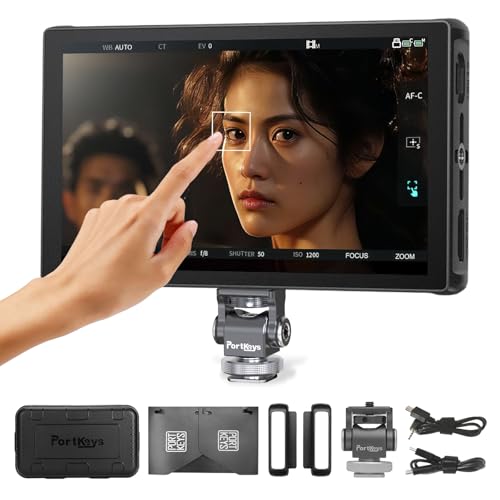
- Anamorphic de-squeeze with 10 presets and custom ratios
- Touchscreen control for supported Sony, Canon, and Panasonic cameras
- 800-nit IPS screen with sunshade and pro monitoring tools
Best For: Compact rigs that need anamorphic monitoring and camera control
Bright All-Rounder
FEELWORLD P6XL 6" Touchscreen Field Monitor
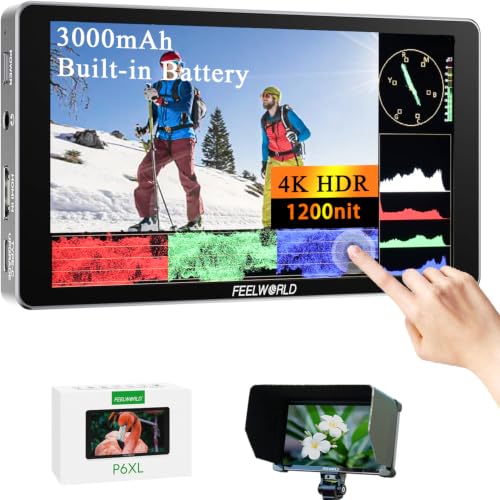
- 1200-nit 6-inch touchscreen for easier outdoor viewing
- Built-in battery and compact 17mm body for mobile use
- HDR, waveform, LUT, and overlay tools for monitoring
Best For: Run-and-gun shooters who want brightness and built-in power
High-Brightness Pro Choice
VILTROX DC-550 PRO II 5.5" Touchscreen Monitor

- 1400-nit IPS screen for strong outdoor visibility
- Direct camera control plus HDMI 2.0 4K@60 support
- Vertical UI, onion skin, and customizable scopes
Best For: Creators who need brightness, control, and vertical workflow support
Studio-Ready Brightness – VILTROX DC-X3 2000-Nit SDI/HDMI Monitor
If you need a camera monitor with anamorphic desqueeze for bright sets, the VILTROX DC-X3 is built around visibility and long-range signal handling. Its 2000-nit panel, SDI support, HDMI I/O, and 4K input/output make it a practical pick for live production, studio work, and daylight shooting where a clear image matters.
Best For: Filmmakers and live-production users who want a very bright 6-inch monitor with SDI, HDMI, and desqueeze support.
Pros:
- 2000-nit brightness is suited for direct sunlight and other high-ambient-light conditions.
- Supports SDI for stable long-distance transmission, plus HDMI input/output up to DCI/UHD 4K30.
- Includes anamorphic de-squeeze, along with touchscreen control for fast adjustments.
- Multiple power options, including USB-C adapter, DC cartridge, or Sony L-series batteries.
Cons:
- The supplied notes list a 1920 x 1080 display resolution, so it is not a 4K panel.
- Battery and some power accessories are not included in the notes.
Overall, the DC-X3 stands out when brightness and connectivity come first. If your workflow depends on anamorphic framing and you also want SDI for dependable monitoring, this is a strong all-around field option.
Wireless Control Specialist – Portkeys LH7P 7-Inch Anamorphic Monitor
The Portkeys LH7P is a strong camera monitor with anamorphic desqueeze if you want wireless camera control alongside a full set of monitoring tools. Its 7-inch touchscreen, 1000-nit brightness, 4K HDMI input, and built-in control support make it useful for solo operators and small crews that need more than a basic display.
Best For: Shooters who want wireless camera control, LUT support, and flexible anamorphic presets in one monitor.
Pros:
- Built-in wireless control works with a wide range of Sony, Canon, Panasonic, Nikon, and Blackmagic cameras.
- Anamorphic de-squeeze offers 10 presets and custom ratios from 0.25x to 4.00x.
- Includes custom 3D LUT support, waveform, vectorscope, histogram, peaking, zebra, and freeze frame.
- 4K HDMI input with 1080p60 output and real-time audio monitoring via 3.5mm jack.
Cons:
- NP-F battery is not included.
- At 1000 nits, it is bright but not as daylight-heavy as the 2000-nit models in this roundup.
For crews that value camera control as much as image monitoring, the LH7P is one of the most feature-dense choices here. The anamorphic tools are especially useful if you want flexible framing options without adding extra gear.
Ultra-Bright Value Pick – VILTROX DC-X2 6-Inch De-Squeeze Monitor
If your priority is a bright, compact camera monitor with anamorphic desqueeze, the VILTROX DC-X2 delivers a lot of field-monitoring features in a 6-inch package. Its 2000-nit display, 4K 30Hz input/loop output, 3D LUT support, and included sunshade make it geared toward outdoor shooting and practical run-and-gun use.
Best For: Budget-minded shooters who want a compact, very bright monitor with desqueeze and core exposure tools.
Pros:
- 2000-nit brightness helps the screen stay usable in direct sunlight.
- Supports up to 4K 30Hz input and loop output for simple on-set monitoring.
- Includes 3D LUT support, de-squeeze, peaking focus, waveform, vectorscope, and false color.
- Ships with a sunhood, battery, cables, ball head, and carry case in the notes.
Cons:
- The listed native resolution is 1920×1200, so it is not a 4K panel.
- It uses HDMI only, with no SDI support mentioned in the notes.
The DC-X2 is a practical choice when you want brightness and key monitoring tools without stepping into a more complex rig. For many creators, the included accessories make it especially easy to get shooting fast.
Compact Pro Monitor – Portkeys LH5C 5.4-Inch Anamorphic Monitor
The Portkeys LH5C is a compact camera monitor with anamorphic desqueeze for shooters who want a smaller on-camera display without losing core filmmaking tools. It combines 800-nit brightness, 4K30 input, 3D LUT support, and wireless camera control, making it a capable fit for controlled sets and lightweight rigs.
Best For: Filmmakers who want a small monitor with camera control, freeze-frame overlay, and flexible anamorphic settings.
Pros:
- Supports anamorphic de-squeeze with 10 presets plus custom ratios from 0.25x to 4.00x.
- Includes wireless camera control, freeze frame overlay, and up to 20 custom 3D LUTs.
- Offers waveform, histogram, audio meters, zebra, false color, and focus peaking.
- 4K30 input and 1080p60 output in a lightweight 5.4-inch form factor.
Cons:
- 800 nits is useful, but less visible in harsh daylight than the brightest monitors here.
- Battery is not included according to the notes.
The LH5C is the most compact option in this set, but it still covers a lot of serious production features. If you want a smaller monitor for anamorphic work and camera control, it’s an efficient fit.
Bright Outdoor Pro – FEELWORLD F5 Prox 5.5" 1600nit Field Monitor
If you need a camera monitor with anamorphic desqueeze for daylight shooting, the FEELWORLD F5 Prox is built around visibility and core exposure tools. Its 1600-nit panel is aimed at outdoor monitoring, while focus peaking, waveform, histogram, false color, and LUT preview help you judge focus and exposure more confidently on set.
Best For: Outdoor filmmakers, vloggers, and DSLR or mirrorless shooters who want a bright, compact monitoring aid with pro image tools.
Pros:
- 1600-nit brightness is designed for clearer viewing in direct sunlight.
- Includes waveform, histogram, false color, focus peaking, and LUT preview.
- Compatible with DSLR, mirrorless, and cinema-style rigs, cages, gimbals, and tripods.
- Comes as a complete kit with battery, bag, sunshade, tilt arm, and cable.
Cons:
- The notes do not list anamorphic desqueeze as a supported feature.
- At 5.5 inches, it is smaller than larger field monitors for on-set viewing.
- Brightness is excellent for outdoor use, but this is not the biggest screen in the group.
This is a practical choice if your priority is a bright, portable monitor with dependable exposure tools and a ready-to-shoot bundle. If anamorphic desqueeze is essential, verify that feature separately before buying.
Compact Anamorphic Utility – Portkeys PT6 5.2" Touchscreen Monitor
The Portkeys PT6 is the most directly relevant camera monitor with anamorphic desqueeze in this set, because its notes explicitly list anamorphic support alongside 3D LUT output and a wide set of monitoring tools. The 5.2-inch 1080p touchscreen is lightweight and slim, making it a practical option when you want a compact monitor for shooting, including vertical work.
Best For: Shooters who want anamorphic support in a small, lightweight monitor with lots of image-assist functions.
Pros:
- Notes explicitly list anamorphic support.
- Includes 3D LUT output, peaking, zebra, false color, histogram, and RGB/Luma waveform tools.
- 5.2-inch Full HD touchscreen with a slim, lightweight design.
- Supports multiple power options, including Sony NP-F and Canon LP-E6 batteries.
Cons:
- 600-nit brightness is lower than the brighter outdoor-focused monitors here.
- Battery is not included.
- The smaller screen may feel limited for users who prefer a larger on-camera display.
If anamorphic desqueeze is a must-have, this is the clearest match in the roundup. It pairs that feature with a strong set of monitoring tools, but it is best suited to controlled or moderate-light setups rather than harsh midday sun.
Large Bright Monitoring Rig – NEEWER F700 7" 2000nit Field Monitor
If you want a camera monitor with anamorphic desqueeze for a larger rig, the NEEWER F700 focuses on screen size, brightness, and broad monitoring features. Its 7-inch 2000-nit IPS touchscreen is built for bright environments, while tools like 3D LUT support, waveform, vectorscope, histogram, false color, and peak focus help you monitor exposure and framing more effectively.
Best For: Filmmakers and videographers who want a large, very bright monitor with a full set of assist tools.
Pros:
- 7-inch 2000-nit display is suited to outdoor and bright-location use.
- Includes 4K HDMI loop in/out for flexible camera and rig setups.
- Offers false color, zebras, histogram, waveform, vectorscope, HDR, and peak focus.
- Comes with two NP-F750 batteries and cable for immediate use.
Cons:
- The notes do not mention anamorphic desqueeze support.
- Larger size and included batteries make it heavier than compact monitors.
- Best suited to rigs where space and weight are less of a concern.
This is a strong pick when brightness and screen size matter most, especially for field production. However, buyers specifically looking for anamorphic desqueeze should confirm that feature before choosing it.
Compact Control Pick – Portkeys LH5C 5.4" Touchscreen Monitor
If you want a camera monitor with anamorphic desqueeze plus serious monitoring tools, the Portkeys LH5C is built for compact on-set work. It combines 4K HDMI input, touch-based camera control, and a full toolset that includes waveform, false color, focus peaking, 3D LUTs, and multiple desqueeze presets for more flexible framing.
Best For: Shooters who want camera control and anamorphic-friendly monitoring in a lightweight 5.4-inch display.
Pros:
- Includes anamorphic de-squeeze with 10 presets plus custom 0.25X-4.00X support
- Touchscreen camera control for supported Sony, Canon, and Panasonic models
- 800-nit IPS panel with included sunshade for outdoor use
- Extra monitoring aids like waveform, zebra, false color, and freeze-frame overlay
Cons:
- Smaller 5.4-inch screen may feel tight for detailed framing
- Battery is not included
- Some features, like focus tracking frame support, are limited by camera brand or firmware
Overall, the LH5C is a strong fit for filmmakers who need monitoring tools and anamorphic desqueeze in a compact body without giving up camera control. It leans more toward practical production use than oversized desktop-style viewing.
Bright All-Rounder – FEELWORLD P6XL 6" Touchscreen Field Monitor
The FEELWORLD P6XL is a practical camera monitor with anamorphic desqueeze support for shooters who want a bright, easy-to-use display. Its 1200-nit 6-inch touchscreen, HDR monitoring, waveform tools, and custom 3D LUT loading make it a useful on-camera companion for both run-and-gun work and more controlled setups.
Best For: Creators who want a bright touchscreen monitor with built-in power and basic anamorphic viewing support.
Pros:
- 1200-nit 6-inch IPS touchscreen is easier to see in bright conditions
- Built-in 3000mAh battery adds portable runtime without external power
- Supports HDR monitoring, waveform, vector scope, histogram, and custom 3D LUTs
- Includes screenshot and image overlay for composition comparison
Cons:
- Battery runtime is listed at about 2 hours at full brightness
- Heavier than some compact monitors at 332g
- Monitoring features are strong, but camera-control functions are not part of the listed specs
For buyers who care about visibility and convenience first, the P6XL is a solid value-oriented monitor. It pairs a bright display with practical tools that help when checking framing, exposure, and anamorphic composition on set.
High-Brightness Pro Choice – VILTROX DC-550 PRO II 5.5" Touchscreen Monitor
The VILTROX DC-550 PRO II is a feature-heavy camera monitor with anamorphic desqueeze-style framing flexibility, plus direct camera control and 4K@60 HDMI 2.0 support. It stands out if you want a bright 1400-nit display, adjustable scopes, vertical UI options, and on-screen tools that can help with stop-motion, social video, and detailed composition work.
Best For: Shooters who want a very bright monitor with camera control, vertical shooting support, and advanced framing tools.
Pros:
- 1400-nit 5.5-inch IPS touchscreen is well suited to bright outdoor use
- Direct camera control via USB-C or Wi-Fi for supported settings
- HDMI 2.0 input/loop-out supports up to 4K@60 for smoother transmission
- Onion Skin, vertical UI, and customizable scopes add creative flexibility
Cons:
- Heavier than typical compact monitors at 2.2 pounds
- Some advanced control features depend on supported camera connections
- Framing tools are broad, but the product notes do not list dedicated desqueeze presets
As a monitoring package, the DC-550 PRO II is aimed at creators who want brightness, workflow flexibility, and control in one unit. It is especially appealing if you frequently shoot vertical content or need a monitor that handles more than basic focus and exposure checks.
How We Picked the Best Camera Monitor with Anamorphic Desqueeze
For this roundup, we prioritized monitors that make on-set framing easier and more reliable. That means solid brightness for daylight use, dependable 4K HDMI support, touchscreen operation, accurate monitoring tools, and clear anamorphic desqueeze options where available. We also looked at screen size, portability, and whether the monitor fits solo shooters or larger rigs.
Quick Comparison
Smaller 5-inch models are best when you want a compact, lightweight rig. 5.5- to 6-inch monitors usually strike the best balance between portability and visibility. 7-inch monitors are easier to read outdoors and better for focus pulling, but they add bulk and weight. If you shoot handheld or travel often, compactness matters; if you work on tripods, gimbals, or narrative sets, screen size and brightness may matter more.
Key Buying Factors for a Camera Monitor with Anamorphic Desqueeze
Desqueeze Support and Aspect Ratios
Check that the monitor supports the anamorphic stretch ratios you actually use, such as 1.33x, 1.5x, 1.8x, or 2.0x. Some monitors handle this through a menu option or custom tool set, while others may only support basic aspect display. Make sure the feature is easy to access during a shoot.
Brightness and Outdoor Usability
If you shoot in daylight, brightness is critical. A 1,000-nit screen is often workable with shade, but 1,600 to 2,000 nits is much more comfortable outdoors. High brightness matters even more when shooting anamorphic because you are often composing carefully and need to see edge detail clearly.
Monitoring Tools
Focus peaking, false color, waveform, zebras, 3D LUT support, and touch-to-focus can save time on set. These tools do not replace a camera’s internal image, but they make exposure and sharpness checks faster. For a Camera Monitor with Anamorphic Desqueeze, overlays and assist tools are especially useful when framing wider compositions.
Inputs, Outputs, and Camera Control
Look for the connection type your camera actually uses, usually HDMI, with loop-through if you need to send the signal onward. If you own a supported camera system, camera-control features can be a major convenience. Otherwise, prioritize stable signal handling over extra control features.
Who Should Buy Which Camera Monitor with Anamorphic Desqueeze?
Choose a 5-inch or 5.4-inch model if you want the lightest setup for mirrorless bodies, gimbals, or travel kits. Pick a 5.5- to 6-inch monitor if you want the best all-around balance for most creators. Go with a 7-inch monitor if you need easier framing, stronger outdoor visibility, or a more serious production monitor for narrative work.
If anamorphic shooting is a core part of your workflow, focus first on desqueeze support, brightness, and usability rather than brand name alone. The best monitor is the one that lets you compose accurately, see clearly, and move quickly when the shot is live.