
Jewelry photography demands exact framing, repeatable focus adjustments, and enough stability to preserve fine details such as pavé settings, gemstone facets, and polished edges. The right macro rail can make those adjustments far more controlled than moving a tripod or camera by hand.
This roundup compares 10 camera macro rails for jewelry photography, including compact two-way sliders, versatile four-way designs, and precision-focused models for stacking and close-up work.
Best 10 Camera Macro Rails for Jewelry Photography Picks for 2026
Best All-Around 4-Way Rail
NEEWER 4-Way Macro Focusing Rail

- Four-way movement with numeric scales
- Supports cameras up to 5.5 pounds
- Quick-release plate and tripod sockets
Best For: Versatile jewelry close-ups and product photography
Best Premium-Ready Precision Rail
SIRUI MS18 Macro Focusing Rail

- 360-degree rotating head for angle control
- Arca-compatible quick-release mounting
- Detachable feet for tabletop or tripod use
Best For: Flexible jewelry and product-shooting setups
Best for Focus Stacking
Haoge FM-160 Wormdrive Macro Rail

- 115 mm of front-to-back travel
- 1 mm reference scales on both sides
- Fine screw provides controlled incremental movement
Best For: Precise jewelry focus stacking and alignment
Best Value 4-Way Slider
VEETALEE Aluminum Macro Focusing Rail

- Four-way movement on two six-inch slides
- Rack-and-pinion design for fine positioning
- Quick-release plate with 2.5 kg capacity
Best For: Straightforward tabletop jewelry photography
Best Precision Pick
NEEWER GM-MP2 Macro Focusing Rail

- Dual lead-screw sliders for controlled movement
- 360° rotation with four-direction locking
- Retractable feet and Arca-type quick release
Best For: Precise tabletop jewelry close-ups
Best Lightweight Slide
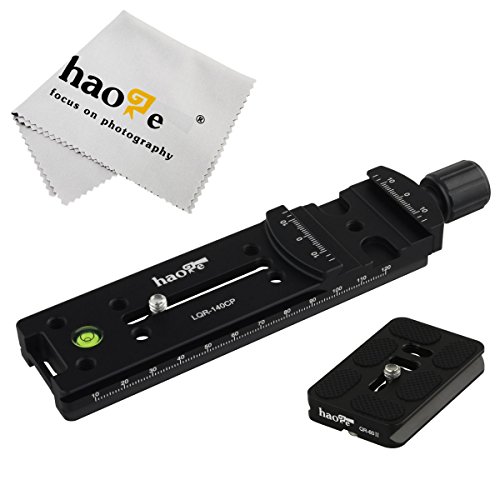
- 1mm engraved scale on both sides
- Includes 60mm quick-release plate
- Extremely light at about 50 grams
Best For: Lightweight Arca-type close-up setups
Best Fast-Adjusting Rail
Fotopro FT-100PRO Macro Slider

- 14mm movement per threaded turn
- 360° rotating top with locking knob
- Removable feet for desktop shooting
Best For: Fast, flexible tabletop macro composition
Best with Extra Features
NiSi NM-180S Macro Focusing Rail

- 1.25mm movement per rotation with a 160mm range
- 360-degree rotating clamp and Arca-Swiss-style mounting
- CNC-machined aluminum with detachable feet
Best For: Detailed macro setups requiring precise, flexible positioning
Budget Positioning Pick

- Two-way geared movement for close-up positioning
- 80mm left-right adjustment with locking controls
- Standard 1/4-inch mounting and flash-bracket capability
Best For: Lightweight tabletop jewelry photography setups
Extended-Range Pick
NiSi NM-200S Macro Focusing Rail

- 1mm movement per rotation with an 180mm range
- Quick-position button for faster large adjustments
- 360-degree rotation and versatile tripod mounting
Best For: Macro setups needing extended travel and quick repositioning
Best All-Around 4-Way Rail – NEEWER 4-Way Macro Focusing Rail
For photographers comparing camera macro rails for jewelry photography, the NEEWER 4-Way Macro Focusing Rail offers broad positioning control in a durable, tripod-ready design. Its four-direction movement and numeric scales help fine-tune camera placement for detailed close-ups.
Best For: Jewelry photographers who need versatile left-right and forward-backward camera adjustment for close-up and product work.
Pros:
- Four-way movement supports precise positioning along multiple axes.
- Large adjustment knobs and numeric scales help with repeatable framing.
- Aluminum construction supports cameras up to 5.5 pounds while weighing 1.3 pounds.
- Quick-release plate and two tripod-connection options simplify setup.
Cons:
- The horizontal adjustment knob should be secured when adjusting vertically, and vice versa.
- It is not water resistant.
The NEEWER is a strong general-purpose choice when jewelry photography requires both lateral and depth adjustments. Its relatively high weight capacity also gives it flexibility for larger DSLR or mirrorless setups.
Best Premium-Ready Precision Rail – SIRUI MS18 Macro Focusing Rail
The SIRUI MS18 is a refined option among camera macro rails for jewelry photography, combining precise adjustment with a rotating head and Arca-compatible mounting. Its quick-adjustment control can help streamline repeated composition changes during close-up shoots.
Best For: Jewelry and product photographers who value flexible angles, Arca-Swiss compatibility, and a high stated load recommendation.
Pros:
- Quick adjustment button supports faster positioning changes.
- 360-degree rotating head enables varied camera angles.
- Arca-style quick-release plate and rail support flexible mounting.
- Detachable feet allow tabletop use or direct tripod mounting.
Cons:
- Four-way adjustment requires stacking two macro rails.
- It is not water resistant.
With its rotating head, removable feet, and 10 kg maximum weight recommendation, the MS18 is particularly adaptable for controlled jewelry setups. It is a compelling fit when mounting flexibility matters as much as fine positioning.
Best for Focus Stacking – Haoge FM-160 Wormdrive Macro Rail
The Haoge FM-160 stands out among camera macro rails for jewelry photography when incremental focus-stacking adjustments are the priority. Its wormdrive-style fine adjustment, reference scales, and damping controls are designed for controlled camera movement during detailed close-ups.
Best For: Jewelry photographers making precise front-to-back adjustments for focus stacking and close-up alignment.
Pros:
- 115 mm of front-to-back travel provides useful focusing range.
- One full fine-adjustment rotation moves the rail by 4 mm.
- Laser-engraved 1 mm scales support repeatable positioning.
- Arca-type clamp and 1/4-inch-20 tripod threads offer mounting flexibility.
Cons:
- The listed maximum weight recommendation is 14.1 ounces.
- Its primary movement is front-to-back rather than four-way adjustment.
- It is not water resistant.
The FM-160 is a focused tool for photographers who prioritize measured, incremental movement over broad positioning versatility. Its scales and fine screw control make it well suited to repeatable jewelry focus-stacking workflows.
Best Value 4-Way Slider – VEETALEE Aluminum Macro Focusing Rail
The VEETALEE Aluminum 4-Way Macro Focusing Rail is a straightforward option for photographers shopping camera macro rails for jewelry photography. Its two six-inch slides provide forward, backward, left, and right adjustment, while the rack-and-pinion design is intended for smooth, fine positioning.
Best For: Jewelry and product photographers seeking basic four-way camera placement with quick mounting.
Pros:
- Four-way adjustment helps control camera distance and framing.
- Gear-train and rack-and-pinion movement support fine adjustments.
- Quick-release plate enables fast camera mounting.
- 1/4-inch screw and 2.5 kg maximum load suit many DSLR and mirrorless setups.
Cons:
- The 600 g weight is higher than some compact macro rails.
- The supplied notes do not specify numeric scales or Arca compatibility.
- It is not water resistant.
The VEETALEE offers the core four-way control needed for detailed jewelry compositions without adding specialized features such as a rotating head. It is a practical fit for tabletop product work where controlled camera distance and lateral positioning are the main requirements.
Best Precision Pick – NEEWER GM-MP2 Macro Focusing Rail
For photographers comparing camera macro rails for jewelry photography, the NEEWER GM-MP2 offers controlled positioning in a compact, desktop-friendly design. Its lead-screw sliders, 140mm range, and four-direction locking can help with careful close-up composition.
Best For: Jewelry photographers who want precise, repeatable camera adjustments for close-ups and tabletop work.
Pros:
- Dual lead-screw sliders distribute the load for smooth, precise movement.
- 360° rotation with 90° locking in four directions supports flexible positioning.
- Retractable feet allow stable desktop use and fold flat for storage.
- Supports up to 5.5 pounds while weighing about 1.1 pounds.
Cons:
- Camera stabilization requires pushing down the positioning lock.
- Its 140mm travel may be limiting for setups needing longer movement.
- Not water resistant.
The GM-MP2 is a strong choice when fine control matters more than maximum travel. Arca compatibility and included thread support make it adaptable to several tripod setups.
Best Lightweight Slide – Haoge 140mm Nodal Slide Rail
The Haoge 140mm rail is a lightweight option for photographers seeking camera macro rails for jewelry photography. Its engraved 1mm scale and double-dovetail design make it useful for measured adjustments during close-up or panoramic shooting.
Best For: Lightweight camera setups that benefit from a visible reference scale and Arca-type mounting.
Pros:
- Laser-engraved 1mm reference scales appear on both sides.
- Includes a 60mm slide-in quick-release plate with a 1/4-inch-20 screw.
- Safety stop screws help secure the camera plate.
- Very light at approximately 50 grams.
Cons:
- The listed maximum weight recommendation is only 50 grams.
- It cannot fit the level-release systems named from RRS, Markins, Vanguard, and other brands.
- The supplied notes do not mention retractable feet or independent desktop support.
Choose the Haoge when low weight and repeatable scale-based positioning are priorities. Check your camera and clamp compatibility carefully, especially if your support system is not Arca-type.
Best Fast-Adjusting Rail – Fotopro FT-100PRO Macro Slider
The Fotopro FT-100PRO combines a 7.4-inch rail with a fast threaded adjustment system, making it a practical candidate among camera macro rails for jewelry photography. Its rotating top module, level, and removable feet support flexible tabletop composition.
Best For: Close-up photographers who want quick focusing adjustments and a stable desktop-capable rail.
Pros:
- Multi-headed threaded screw moves 14mm per turn for faster adjustments.
- 360° rotating top module includes damping and a locking knob.
- Removable non-slip feet allow independent desktop use.
- Two bottom 1/4-inch interfaces support additional heads or equipment.
Cons:
- At about 0.41kg, it is heavier than the Haoge rail.
- The supplied notes do not specify a travel distance beyond the 7.4-inch folded size.
- Not water resistant.
The FT-100PRO suits jewelry setups where speed, angle changes, and stable tabletop positioning are valuable. Its universal dovetail slot and multiple interfaces also leave room for expanding a close-up rig.
Best with Extra Features – NiSi NM-180S Macro Focusing Rail
For photographers comparing camera macro rails for jewelry photography, the NiSi NM-180S offers controlled, repeatable positioning in a durable aluminum design. Its 1.25mm movement per rotation and 160mm adjustment range help fine-tune composition and focus for close-up jewelry images.
Best For: Macro photographers who want precise positioning, broad mounting compatibility, and easy camera-orientation changes.
Pros:
- Provides 1.25mm movements per rotation across a 160mm range.
- Includes an Arca-Swiss-style clamp, long quick-release plate, and 360-degree rotating clamp.
- Supports 1/4-inch and 3/8-inch screw mounting and includes detachable feet.
- CNC-machined aluminum construction has a corrosion-resistant, scratch-resistant finish.
Cons:
- The feature set may be more than needed for simple, occasional close-up work.
- Arca-Swiss-style mounting may require checking compatibility with existing equipment.
The NM-180S is a versatile choice when jewelry photography demands precise focus adjustments and flexible camera positioning. Its multiple mounting options and sturdy construction also suit more involved macro setups.
Budget Positioning Pick – EXMAX 16cm 2-Way Macro Rail
The EXMAX 16cm rail is a practical option for photographers seeking camera macro rails for jewelry photography without a complex setup. Its geared drive system and two-way movement provide controlled left-right positioning for close-up compositions.
Best For: DSLR and digital-camera users who need an affordable two-way rail with standard 1/4-inch mounting.
Pros:
- Rack-and-pinion movement supports fine focusing adjustments.
- Offers 80mm of left-right movement in two directions.
- Rubber top surface helps protect the camera underside and reduce slipping.
- Can function as a flash bracket, and two units can be combined into a four-direction slider.
Cons:
- Its maximum weight recommendation is 7.04 ounces, limiting heavier camera setups.
- It lacks the 360-degree rotating clamp and broader mounting options found on more advanced rails.
- The unit is not water resistant.
With a compact folded size and straightforward geared adjustment, the EXMAX suits tabletop jewelry work and lightweight cameras. Check your camera and accessory weight before choosing it for a larger macro rig.
Extended-Range Pick – NiSi NM-200S Macro Focusing Rail
For camera macro rails for jewelry photography that need extra travel, the NiSi NM-200S combines an 180mm adjustment range with 1mm movement per rotation. A quick-position button also makes larger setup changes faster before fine-tuning the shot.
Best For: Jewelry and macro photographers who value extended rail travel, quick repositioning, and flexible tripod mounting.
Pros:
- Provides 1mm movements per rotation across an 180mm adjustment range.
- Quick-position button enables rapid larger adjustments.
- Includes a 360-degree rotating clamp and Arca-Swiss-style quick-release mounting.
- Accepts 1/4-inch and 3/8-inch screw connections and includes detachable feet.
Cons:
- The longer adjustment range may be unnecessary for compact, fixed-distance setups.
- Users should verify Arca-Swiss-style compatibility with their camera and tripod system.
The NM-200S is the strongest fit of these options when extra travel and faster repositioning matter. Its rotating clamp and multiple mounting points make it adaptable for detailed, repeatable jewelry compositions.
How We Picked the Best Camera Macro Rails for Jewelry Photography
We selected rails based on the features that matter most for small-product and jewelry setups: adjustment precision, travel range, mounting flexibility, platform stability, quick-release compatibility, and ease of use on a tripod or copy stand. We also included both two-way and four-way designs so photographers can match the rail to their workflow and budget.
For jewelry, a rail should support repeatable front-to-back focus changes without introducing unnecessary camera movement. Features such as worm-drive adjustment, locking controls, Arca-Swiss compatibility, rotating clamps, and multiple mounting threads can be especially useful when working with focus stacking or tightly composed product scenes.
Quick Comparison
- Best for versatile positioning: Four-way rails allow forward, backward, left, and right adjustment, which is useful when centering small jewelry pieces precisely.
- Best for controlled focus stacking: Worm-drive or precision-slider designs generally offer smoother, more repeatable movement than basic friction slides.
- Best for compact setups: Two-way rails take up less space and can be sufficient when the camera only needs front-to-back movement.
- Best for flexible mounting: Models with Arca-type plates, 1/4-inch and 3/8-inch threads, or universal tripod mounting can adapt more easily to different supports.
Key Buying Factors for Camera Macro Rails for Jewelry Photography
Adjustment Precision
Small movements become significant at macro magnifications. Look for a geared or worm-drive mechanism when you need predictable, incremental changes for focus stacking. A basic slider may be adequate for positioning, but it can be less precise for repeated micro-adjustments.
Travel and Directional Control
Check the rail’s usable travel length and whether it moves in two or four directions. Longer travel can help with working-distance changes, while four-way control makes it easier to center rings, earrings, stones, and other small subjects without repositioning the tripod.
Stability and Load Support
Jewelry photography often uses heavy macro lenses, flashes, or focus rails mounted together. Choose a rigid rail with secure locking controls and a platform that does not flex noticeably when the camera is moved. Retractable feet may help with tabletop positioning, but a sturdy tripod connection remains important.
Mounting Compatibility
Confirm the plate and screw standards before buying. Arca-Swiss-style plates can speed up setup with compatible heads, while 1/4-inch and 3/8-inch threads provide broader tripod and accessory compatibility. A rotating clamp can also help when switching between horizontal and vertical compositions.
Who Should Buy Which Camera Macro Rails for Jewelry Photography?
Choose a four-way rail if you frequently fine-tune composition around tiny subjects or want one tool for both framing and focus adjustments. Choose a precision worm-drive rail if focus stacking and repeatability are your top priorities. A longer 140mm-to-200mm rail suits photographers who need more working-distance flexibility, while a compact rail is easier to fit into a small tabletop studio.
If you are building a flexible system around several tripods, heads, or cameras, prioritize interchangeable quick-release plates and multiple thread sizes. For occasional close-ups, a simpler two-way model may deliver the necessary control without the added size or cost of a more elaborate rail.