
Landscape photography often depends on precise timing: holding a shutter open for minutes, capturing a sequence of frames, or avoiding camera shake during a sunrise or night-sky exposure. A capable intervalometer makes those tasks easier while giving you more control than a basic shutter release.
This roundup compares 10 wired and wireless timer remotes, including Canon- and Nikon-compatible options, rechargeable models, and versatile controllers for time-lapse and astrophotography workflows.
Best 10 Camera Intervalometers for Landscape Photography Picks for 2026
Best Wireless Nikon Intervalometer

- 80m+ wireless range and 30 channels
- Supports BULB, delay, and scheduled shooting
- LCD transmitter and receiver
Best For: Nikon landscape photographers needing wireless control
Best Advanced Time-Lapse Intervalometer
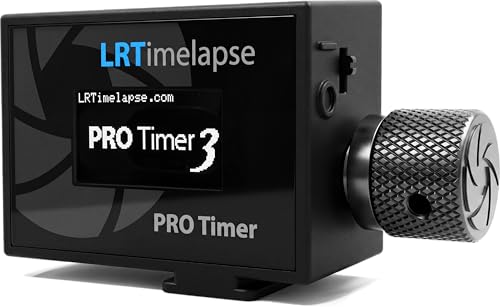
- 0.1-second interval adjustments
- Interval ramping for smoother time-lapses
- Rechargeable battery and OLED display
Best For: Advanced time-lapse and astrophotography users
Best Multi-Brand Wireless Intervalometer

- Works with many Canon, Fuji, Pentax, and Olympus models
- 80m/300ft wireless range with 30 channels
- Supports long exposure and repeat schedules
Best For: Multi-brand camera owners seeking wireless flexibility
Best Backlit Multi-System Intervalometer

- Backlit controller for low-light setup
- Supports long exposure and repeat timers
- Shot counts up to 999 with unlimited repeat option
Best For: Multi-system users shooting extended landscape sequences
Compact Canon Control
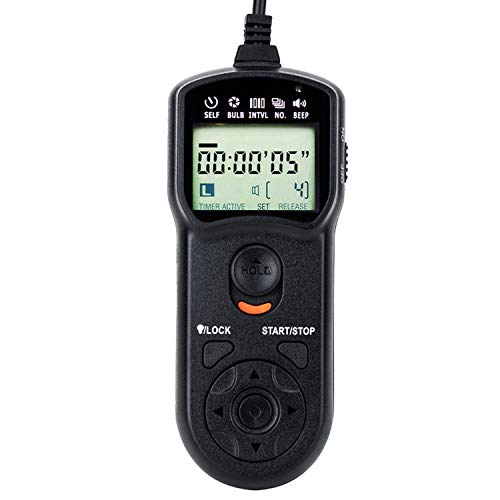
- Wired Canon remote with interval and long-exposure modes
- Timing range from 1 second to nearly 100 hours
- Backlit LCD and compact 76 g design
Best For: Canon landscape photographers working close to the camera
Long-Range Wireless Control
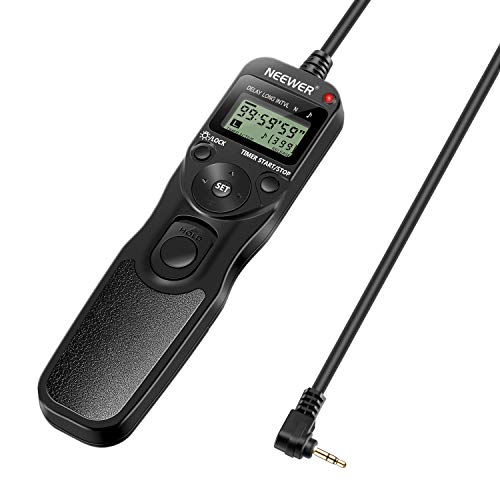
- Radio-frequency control with up to 10 m range
- One-second delay increments up to nearly 100 hours
- Compatible with selected Canon and Pentax cameras
Best For: Canon or Pentax users needing wireless camera triggering
Rechargeable Sony Versatility

- Multiple interval, bulb, delay, and shooting modes
- USB-C rechargeable battery with LCD status display
- Supports Sony cameras across 1-second timing intervals
Best For: Sony users shooting star trails, long exposures, and time-lapses
Best Wired Canon Pick
JINTU Intervalometer Timer Remote

- Wide Canon DSLR compatibility
- Delay, interval, bulb, and shot-count controls
- Backlit LCD with compact wired design
Best For: Canon landscape, long-exposure, and time-lapse shooting
Best Wireless Nikon Pick
Rechargeable Nikon Timer Remote

- Wireless control up to approximately 60 meters
- USB-C rechargeable built-in battery
- Bulb, interval, delay, and long-exposure modes
Best For: Remote Nikon landscape and astrophotography sessions
Best Multi-Brand Wireless Pick

- Broad Canon, Olympus, Fujifilm, and Pentax support
- Wireless range of approximately 60 meters
- Rechargeable USB-C transmitter and receiver
Best For: Photographers using multiple compatible camera systems
Best Wireless Nikon Intervalometer – Pixel TW-283 DC2
For photographers comparing camera intervalometers for landscape photography, the Pixel TW-283 DC2 offers wireless control for a broad range of Nikon cameras. Its programmable delay, exposure, interval, shot count, and repeat settings are useful for sunrise, sunset, and other hands-off sequences.
Best For: Nikon shooters who want long-range wireless interval shooting with a display-based controller.
Pros:
- Wireless range of more than 80 meters with 30 selectable channels.
- Supports single, continuous, BULB, delay, and timer-schedule shooting.
- Programmable delays from 1–59 seconds and timer schedules up to 99 hours, 59 minutes, and 59 seconds.
- LCD screens on the transmitter and receiver simplify setup.
Cons:
- This DC2 version is intended for the listed Nikon-compatible cameras and uses a dedicated connecting cable.
- Requires two AAA batteries.
The TW-283 DC2 is a practical option when wireless reach matters in the field. Verify your exact Nikon model and connector before ordering.
Best Advanced Time-Lapse Intervalometer – LRT PRO 3.5
LRTimelapse PRO Timer 3.5 Camera Interval Timer for Time-Lapse and Astrophotography
Check Price On AmazonThe LRT PRO 3.5 is a feature-rich choice among camera intervalometers for landscape photography, especially for demanding time-lapse and astrophotography work. It provides fine interval control, ramping, dual-camera operation, and a readable OLED interface.
Best For: Advanced time-lapse and astro photographers who need precise interval control and ramping.
Pros:
- Intervals adjust in 0.1-second steps, with interval ramping for smoother transitions.
- Can operate two cameras at once and supports a dedicated mirrorless-camera setting.
- High-contrast OLED display and rotary control are designed for easy operation with gloves.
- Rechargeable USB Li-Ion battery and two hot-shoe mounting options.
Cons:
- The required camera release cable is not included.
- Its advanced feature set may be more than casual interval shooters need.
With precise timing and interval ramping, the LRT PRO 3.5 is geared toward controlled, repeatable sequences rather than simple remote triggering. Budget separately for the correct release cable.
Best Multi-Brand Wireless Intervalometer – Pixel TW-283 E3
The Pixel TW-283 E3 is a versatile wireless option for camera intervalometers for landscape photography, with compatibility spanning selected Canon, Fujifilm, Pentax, and Olympus cameras. It supports programmed delays, long exposures, repeat schedules, and wireless operation up to about 80 meters.
Best For: Photographers using compatible Canon, Fujifilm, Pentax, or Olympus bodies who want one feature-rich wireless remote.
Pros:
- Supports autofocus, single, continuous, BULB, delay, and timer-schedule shooting.
- Offers long-exposure and interval-timer functions, with repeat times from 1 to 99.
- Wireless range is listed at 300 feet, with 30 channels for interference avoidance.
- Broad compatibility across numerous camera families and models.
Cons:
- Compatibility depends on the exact camera model and connection interface.
- Requires two AAA batteries.
- The extensive model list should be checked carefully before purchase.
This TW-283 E3 makes sense for multi-brand households or photographers who value wireless flexibility. Confirm the camera’s remote port, particularly on models where it may sit beside the lens.
Best Backlit Multi-System Intervalometer – Pixel TW283-E3
For landscape photographers comparing camera intervalometers for landscape photography across several systems, the Pixel TW283-E3 combines wireless triggering with a backlit controller. It supports compatible Canon, Fujifilm, Olympus, Pentax, Samsung, Contax, and Sigma cameras, along with extensive scheduling controls.
Best For: Users of compatible Canon, Fujifilm, Olympus, Pentax, and other listed systems who prefer a backlit wireless remote.
Pros:
- Backlit LCD-style remote is useful for configuring settings in darker conditions.
- Supports interval, long-exposure, delay, and repeat timer functions.
- Shot count can be set from 1 to 999, with repeat times from 1 to 99 or unlimited.
- Wireless range exceeds 80 meters and includes 30 channels to reduce interference.
Cons:
- Requires four AAA batteries.
- Compatibility varies by camera model and system, so the supplied list should be checked.
- Wireless control requires the appropriate camera connection.
The TW283-E3 stands out for its backlit interface and unusually broad scheduling controls. It is a strong fit for long landscape sequences, provided your camera and connector are supported.
Compact Canon Control – JJC TM-F2 Intervalometer
For photographers comparing camera intervalometers for landscape photography, the JJC TM-F2 is a compact wired option for compatible Canon cameras. It provides self-timer, interval, long-exposure, and exposure-count controls, with timing from 1 second to 99 hours, 59 minutes, and 59 seconds.
Best For: Canon users who want a straightforward wired remote for long exposures, time-lapse sequences, and shake-free landscape shots.
Pros:
- Supports self-timer, interval timer, long-exposure timer, and exposure-count settings.
- Offers precise timing from 1 second to nearly 100 hours.
- Compact 76 g design with a backlit LCD for use in darkness.
- Runs on two AAA alkaline batteries.
Cons:
- Wired connection limits operating range to about 0.9 meters.
- Compatibility is centered on supported Canon camera models.
The JJC is a practical, lightweight choice when you normally work close to the camera and prefer simple physical controls over a more elaborate setup. Confirm the connector and camera compatibility before buying.
Long-Range Wireless Control – Neewer TC-2 Timer Remote
The Neewer TC-2 is a wireless option among camera intervalometers for landscape photography, offering timer-delay control for compatible Canon and Pentax cameras. Its delay can be set from 0 seconds to 99 hours, 59 minutes, and 59 seconds in one-second increments.
Best For: Canon or Pentax users who value wireless triggering and need flexible delay timing for landscape or time-lapse setups.
Pros:
- Uses radio-frequency connectivity with a listed range of up to 10 meters.
- Provides one-second timing increments across a broad delay range.
- Supports a wide selection of older Canon and Pentax models.
- Includes a one-year manufacturer warranty.
Cons:
- Compatibility is limited to the listed camera models and systems.
- Requires two AAA batteries.
- The supplied notes specify timer-delay control but do not list the broader mode set of some intervalometers.
If stepping away from the camera matters, the TC-2’s radio connection is its main advantage over a short wired remote. Check the model list carefully, particularly if you use a newer camera body.
Rechargeable Sony Versatility – AODELAN LCD Intervalometer
The AODELAN rechargeable remote is a feature-rich choice for camera intervalometers for landscape photography, especially with compatible Sony cameras. It combines interval shooting, bulb exposure, continuous shooting, delay modes, and exposure-count control with one-second programming and a clear LCD.
Best For: Sony photographers planning star trails, long exposures, time-lapses, and other extended sequences who prefer rechargeable power.
Pros:
- Supports delay, long-exposure, interval, shot-count, single, continuous, bulb, and two-second delay modes.
- Programs delays and exposures from 0 seconds to nearly 100 hours, with intervals as short as 1 second.
- Rechargeable battery uses USB-C charging and offers up to 60 days of standby time.
- LCD displays battery level, shooting mode, and timer settings.
Cons:
- Designed for compatible Sony cameras rather than a broad range of brands.
- Requires the correct included connecting cable for the camera in use.
- Its many settings may be more than needed for simple remote shutter release.
For Sony users working on complex landscape sequences, the AODELAN offers the broadest control set in this group and avoids disposable batteries. Verify your exact camera model and cable connection before ordering.
Best Wired Canon Pick – JINTU Intervalometer Timer Remote
For photographers seeking camera intervalometers for landscape photography with a Canon DSLR, the JINTU wired timer remote offers essential interval, delay, long-exposure, and shot-count controls in a compact design. Its backlit LCD is useful for low-light setup, while the wired connection helps avoid camera shake.
Best For: Canon DSLR landscape, time-lapse, macro, and long-exposure shooting where a wired connection is suitable.
Pros:
- Supports delay and interval settings from 1 second to 99 hours, 59 minutes, and 59 seconds.
- Includes self-timer, long-exposure, continuous, and exposure-count functions.
- Backlit LCD supports operation in dark conditions.
- Compact wired design and broad Canon compatibility.
Cons:
- Requires two AAA alkaline batteries, which are not included.
- Wired operation offers less freedom than a wireless remote.
- Compatibility is focused on Canon cameras.
Choose this model if you want straightforward intervalometer controls for a compatible Canon body and do not need wireless triggering. It is a practical, budget-oriented option for landscape sequences, long exposures, and time-lapse work.
Best Wireless Nikon Pick – Rechargeable Nikon Timer Remote
Among camera intervalometers for landscape photography, this rechargeable Nikon remote stands out for photographers who want wireless control and extended outdoor operation. Its 2.4GHz connection reaches approximately 60 meters, while the timer supports interval, delay, bulb, long-exposure, and count settings.
Best For: Nikon photographers shooting landscapes, astrophotography, time-lapses, and long exposures from a distance.
Pros:
- Wireless range is rated at approximately 60 meters or 200 feet.
- Built-in rechargeable battery with USB-C charging avoids frequent battery replacement.
- Supports bulb, delay, long exposure, interval, and count settings.
- Backlit LCD and compact construction suit day or night use.
Cons:
- Designed around Nikon camera compatibility.
- Requires the receiver and connecting cable to be set up with the camera.
- The supplied notes specify support for one camera device at a time.
This is a strong fit when you need to trigger a compatible Nikon camera without standing beside the tripod. Rechargeable power, long wireless range, and dedicated intervalometer functions make it especially useful for remote landscape and night-sky sessions.
Best Multi-Brand Wireless Pick – AODELAN Rechargeable Timer
For photographers comparing camera intervalometers for landscape photography across multiple camera systems, the AODELAN rechargeable timer offers broad compatibility and wireless control. It supports several Canon, Olympus, Fujifilm, and Pentax models, with interval, delay, bulb, long-exposure, and shot-count functions.
Best For: Multi-camera households or photographers using compatible Canon, Olympus, Fujifilm, or Pentax bodies.
Pros:
- Supports a wide selection of Canon, Olympus, Fujifilm, and Pentax cameras.
- 2.4GHz wireless operation reaches approximately 60 meters or 200 feet.
- Built-in rechargeable transmitter and receiver batteries charge through USB-C.
- LCD display helps show timer settings in bright or dark conditions.
Cons:
- Camera compatibility depends on using the appropriate connecting cable.
- The supplied notes specify support for one camera device at a time.
- Wireless operation requires both transmitter and receiver.
The AODELAN is the most flexible choice here for photographers who rotate among supported camera brands. Its rechargeable design and 60-meter wireless range are convenient for remote landscape compositions, while its timer modes cover long exposures and time-lapse projects.
How We Picked These Camera Intervalometers for Landscape Photography
We focused on the features that matter outdoors: camera compatibility, interval timing, long-exposure control, wireless or wired operation, display readability, power design, and ease of programming. The selected models cover common Canon and Nikon connections as well as multi-function remotes intended for time-lapse and astrophotography.
Because connector compatibility varies by camera, verify your exact body and port before ordering. A remote that fits one EOS or Nikon generation may not work with another, even when the product name lists a similar camera family.
Quick Comparison
| Type | Best For | What to Check |
|---|---|---|
| Wireless intervalometer | Remote triggering and reduced camera disturbance | Range, receiver design, and camera compatibility |
| Wired timer remote | Reliable long exposures and travel use | Connector type, cable length, and battery life |
| Rechargeable model | Frequent outdoor shooting | Charging method, runtime, and replacement options |
| Multi-function timer | Time-lapse and astrophotography | Delay, exposure, interval, and frame-count controls |
Key Buying Factors
Camera and Connector Compatibility
Start with the exact camera model, not just the brand. Canon EOS, Rebel, Nikon DSLR, and mirrorless cameras can use different remote sockets. Check whether the listing specifies your body and whether the included cable is permanently attached or replaceable.
Timer Controls
For landscape work, look for programmable delay, exposure length, interval, and number of shots. These controls support bracketing sequences, repeated sunrise frames, star trails, and time-lapse capture without repeatedly touching the camera.
Wireless Range and Reliability
Wireless remotes are useful when the camera is positioned near water, on unstable terrain, or well away from the photographer. Wired units are generally simpler and do not depend on a separate radio receiver, so choose based on shooting distance and operating conditions.
Power, Display, and Weather Practicality
A backlit LCD can be valuable before dawn or after dark, while rechargeable designs reduce disposable battery use. For cold or damp locations, protect the controller and cable connections; most consumer intervalometers are not fully weatherproof.
Who Should Buy Which Camera Intervalometers for Landscape Photography?
Choose a wireless Pixel TW-283-style controller if you want distance and flexible triggering, provided the listed connector matches your camera. A PRO Timer 3.5 or another advanced timer is better suited to photographers planning structured time-lapses, astrophotography, or long star-trail sequences.
Canon owners should compare the JJC, Neewer, JINTU, AODELAN, and Pixel E3-compatible options by exact camera model and preferred power system. Nikon users should prioritize the DC2-compatible Pixel model or the Nikon rechargeable option when their camera uses that connection. If you mainly need hands-free long exposures, choose the simplest compatible wired remote; if you shoot frequently outdoors, a rechargeable or backlit model may justify the added convenience.