
If you’re just starting out in videography, finding the right gimbal can make all the difference. A good gimbal helps you capture smooth, professional-looking footage without the hassle of shaky shots. From lightweight designs to user-friendly controls, there are plenty of options to choose from. But how do you know which one fits your needs best? Let’s explore the top contenders and see what each has to offer.
DJI RS 3 Mini 3-Axis Gimbal Stabilizer for Cameras
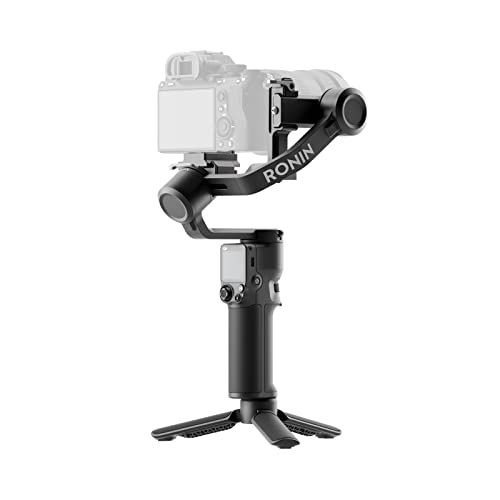
If you’re a budding filmmaker or content creator looking for a reliable stabilizer, the DJI RS 3 Mini 3-Axis Gimbal is an exceptional choice. Weighing just 795 g, it’s lightweight and portable, making it perfect for on-the-go shoots. Its impressive compatibility with major camera brands allows you to use your preferred gear. The intuitive 1.4-inch touchscreen simplifies access to settings, while Bluetooth shutter control makes capturing moments effortless. With the advanced 3rd-Gen RS Stabilization Algorithm, your footage will be smooth, even in low-angle shots. Whether you’re shooting for social media or professional projects, this gimbal won’t disappoint.
Best For: Budding filmmakers and content creators who need a lightweight and portable stabilizer for their camera gear.
Pros:
- Lightweight and Portable: At just 795 g, it’s easy to carry for on-the-go shooting.
- Wide Compatibility: Supports various camera brands like Canon, Sony, Panasonic, Nikon, and Fujifilm.
- Intuitive Touchscreen: The 1.4-inch full-color touchscreen provides quick access to settings for hassle-free operation.
Cons:
- Limited Payload: Tested payload of 2 kg may not support heavier camera setups.
- App Availability: The DJI Ronin App is not available on Google Play, requiring a download from the official website.
- Bluetooth Range: The Bluetooth shutter control may have limitations in connectivity range for some users.
Xtra Muse Vlogging Camera with 4K Video and Gimbal Stabilizer

The Xtra Muse Vlogging Camera is perfect for aspiring content creators who want to capture stunning 4K videos with ease. With its 1-inch CMOS sensor, you’ll record crisp footage at 120fps, showcasing true 10-bit X-Log color for vibrant visuals. The 3-axis gimbal stabilizer guarantees ultra-smooth shots, whether you’re dancing or hiking. A 2-inch touch screen makes framing effortless, and you can easily switch between horizontal and vertical modes. Plus, Master Follow technology keeps your subjects in focus during dynamic scenes. The included pocket gimbal and carrying bag make it easy to take your creativity on the go.
Best For: Aspiring content creators looking to capture high-quality 4K videos with advanced stabilization features.
Pros:
- High-resolution recording: Captures stunning 4K videos at 120fps for crisp, vibrant footage.
- Gimbal stabilization: The 3-axis gimbal ensures ultra-smooth shots during dynamic activities like dancing or hiking.
- User-friendly interface: The 2-inch touch screen and easy mode switching enhance usability for creators on the go.
Cons:
- Size and weight: The camera may be bulkier compared to other vlogging options, making it less portable for some users.
- Learning curve: Advanced features like Master Follow technology may require some practice for optimal use.
- Battery life: Extended recording sessions in high resolution may drain the battery quickly, necessitating extra power sources.
DJI Osmo Mobile 7 Gimbal Stabilizer for iPhone and Android

For those seeking a user-friendly solution for capturing smooth, professional-looking videos, the DJI Osmo Mobile 7 Gimbal Stabilizer stands out as an excellent choice. Weighing just 300 grams, its portable design includes a built-in tripod and ergonomic, anti-slip handle for comfort. With 3-axis stabilization, you’ll enjoy seamless footage, while the ActiveTrack 7.0 feature guarantees your subjects stay in focus. The gimbal also offers up to 10 hours of operating time and USB-C charging for your phone. Remember to download the latest DJI Mimo app from the official website for the best experience with this versatile tool.
Best For: The DJI Osmo Mobile 7 Gimbal Stabilizer is best for content creators and videographers looking for a portable, user-friendly solution to capture smooth, stable footage with ease.
Pros:
- Compact and lightweight design makes it easy to carry and store.
- ActiveTrack 7.0 feature ensures subjects remain in focus during movement.
- Long battery life of up to 10 hours, with USB-C charging capability for phones.
Cons:
- DJI Mimo app compatibility issues may require users to download from the official website instead of Google Play.
- The additional purchase of the DJI OM 7 Series Tracking Kit may be necessary for enhanced tracking capabilities.
- Limited to smartphones, which may not meet the needs of all professional videographers.
DJI Osmo Mobile 8 Gimbal Stabilizer for Phone

Looking for a user-friendly option to elevate your mobile videography? The DJI Osmo Mobile 8 Gimbal Stabilizer is perfect for you. With AI native tracking and a robust 3-axis stabilization system, it delivers smooth, professional footage. The 360° pan rotation and built-in extension rod let you capture immersive shots from various angles. Plus, you can charge your phone while filming, making it great for events. Its portable design and easy setup guarantee you’re ready to shoot in no time. With a 4.6-star rating and extensive tutorials, this gimbal supports your creative journey effortlessly.
Best For: Mobile videographers and content creators looking for an easy-to-use stabilizer that enhances footage quality and portability.
Pros:
- Robust 3-axis stabilization ensures smooth and professional-looking videos.
- Built-in extension rod and tripod provide flexibility for capturing unique angles.
- Long 10-hour battery life allows for extended shooting sessions, perfect for events.
Cons:
- Potential compatibility issues with the DJI Mimo app may affect usability.
- Requires a direct phone connection, which may not be ideal for all users.
- The initial setup might take some time for first-time users.
DJI Osmo Mobile 7P Gimbal Stabilizer for iPhone and Android

Designed with content creators in mind, the DJI Osmo Mobile 7P Gimbal Stabilizer elevates your smartphone videography to new heights. Weighing just 368 grams, it’s compatible with both iPhone and Android devices, featuring 3-axis stabilization for smooth, cinema-like footage. The quick-launch function and magnetic design make setup a breeze, while the DJI Mimo app provides instant filming and editing options. With a maximum operating time of 10 hours, you’ll capture everything without interruptions. The multifunctional module enhances your creative flexibility, letting you focus on what matters most—telling your story beautifully.
Best For: Content creators looking for advanced features to enhance their storytelling through smartphone videography.
Pros:
- 3-axis stabilization ensures smooth, professional-quality footage.
- Quick-launch function and magnetic design allow for easy and fast setup.
- Multifunctional module adds intelligent tracking, audio reception, and lighting for enhanced content creation.
Cons:
- Maximum weight recommendation of 300 grams may limit compatibility with some larger smartphones.
- Learning curve may be required for users unfamiliar with gimbals or the DJI Mimo app.
- Price point may be higher compared to basic smartphone stabilizers.
DJI RS 4 Gimbal Stabilizer for DSLR and Mirrorless Cameras

The DJI RS 4 Gimbal Stabilizer is perfect for aspiring filmmakers and content creators who want to enhance the quality of their shots. This 3-axis gimbal supports DSLR and mirrorless cameras, including models from Canon, Sony, and Nikon. With its innovative vertical shooting mode, you can easily switch orientations without extra gear. Enjoy smooth balancing thanks to Teflon-coated arms, and take advantage of extended battery life—up to 29.5 hours with the BG70 grip. The included DJI Ronin app guarantees you get the most from your gimbal, letting you capture stunning footage effortlessly.
Best For: Aspiring filmmakers and content creators looking to enhance the quality of their shots with a reliable gimbal stabilizer.
Pros:
- Supports a wide range of DSLR and mirrorless cameras, enhancing versatility for users.
- Innovative vertical shooting mode allows for easy transition without additional gear.
- Extended battery life of up to 29.5 hours with the optional BG70 grip, providing ample shooting time.
Cons:
- The DJI Ronin app is required for activation but is no longer available on Google Play, requiring users to download it from the official website.
- The BG70 battery grip is sold separately, adding to the overall cost.
- Some users may find the weight of 1.55 kg to be on the heavier side for extended use.
hohem iSteady X3 SE Gimbal Stabilizer for iPhone & Android

If you’re just starting out with video production and want a user-friendly stabilizer, the hohem iSteady X3 SE Gimbal Stabilizer is an excellent choice. Weighing only 0.79 lbs, it’s lightweight and portable, perfect for travel. With advanced iSteady 8.0 technology, it delivers smooth footage even during action-packed scenes. The detachable remote lets you capture selfies and videos from up to 32.81 feet away. Plus, the Hohem Joy app offers creative shooting modes like AI tracking and gesture control. Its impressive battery life of 11 hours guarantees you’re ready for long shoots, making it ideal for beginners.
Best For: The hohem iSteady X3 SE Gimbal Stabilizer is best for beginner videographers and content creators looking for a lightweight and user-friendly stabilizer for mobile devices.
Pros:
- Lightweight and Portable: Weighs only 0.79 lbs, making it easy to carry for travel and outdoor shoots.
- Advanced Stabilization: Features iSteady 8.0 technology for smooth, professional-quality footage during dynamic activities.
- Long Battery Life: Offers 11 hours of continuous operation on a 2-hour charge, ideal for extended shooting sessions.
Cons:
- Limited Payload Capacity: Can only handle devices weighing up to 0.66 lbs (300 grams), which may restrict some heavier smartphones.
- Learning Curve for Features: Although beginner-friendly, some creative features may require time to master for optimal use.
- Dependence on App: Certain functions are reliant on the Hohem Joy app, which may not suit all users or devices.
FeiyuTech SCORP Mini-3-Pro Gimbal Stabilizer for Cameras

For aspiring filmmakers and content creators, the FeiyuTech SCORP Mini-3-Pro Gimbal Stabilizer stands out with its versatile four-in-one design, accommodating everything from mirrorless cameras to smartphones. Weighing just 1 kg, it supports a payload of up to 2 kg, making it incredibly adaptable. Its AI Tracking 4.0 guarantees smooth, 360° infinite tracking, while advanced stabilization technology keeps your footage steady, even during action shots. The ergonomic grip enhances comfort, and the detachable handle doubles as a remote control. With a solid 4.4-star rating and useful accessories, this gimbal is a fantastic choice for enhancing your filming experience.
Best For: Aspiring filmmakers and content creators looking for a versatile and lightweight gimbal stabilizer to enhance their shooting experience.
Pros:
- Supports a wide range of devices, including mirrorless cameras, smartphones, and action cameras with a 2 kg payload capacity.
- Features advanced AI Tracking 4.0 for smooth, 360° infinite tracking and superior stabilization technology for steady footage during motion.
- Ergonomic grip handle and detachable remote control enhance usability, especially for solo creators.
Cons:
- Weighs 1 kg, which may be considered heavy for some users during extended use.
- Limited to a maximum tracking distance of 18 meters, which might not be sufficient for some filming scenarios.
- Customer rating of 4.4 stars suggests there may be some areas for improvement based on user experiences.
Hohem iSteady MT3 Pro 3-Axis Gimbal Stabilizer for Camera

Designed with versatility in mind, the Hohem iSteady MT3 Pro 3-Axis Gimbal Stabilizer is perfect for aspiring filmmakers and content creators. Weighing only 1.5 lbs, it supports up to 5.51 lbs of gear, making it compatible with smartphones, compact cameras, and full-frame mirrorless models from major brands. The AI tracker allows for effortless gesture control, while the adjustable RGB fill light enhances your shots in low-light settings. With an impressive 20-hour battery life and multiple shooting modes, including vertical shooting for social media, this gimbal guarantees you capture smooth, professional-quality footage every time.
Best For: Aspiring filmmakers and content creators looking for a lightweight and versatile gimbal stabilizer to enhance their shooting experience.
Pros:
- AI Tracker: Independent gesture control for easy operation without needing an app or Bluetooth.
- Long Battery Life: Offers 20 hours of continuous use and can also charge other devices.
- Multiple Shooting Modes: Includes various modes like time-lapse and vertical shooting for creative flexibility.
Cons:
- Weight Capacity Limit: While it supports up to 5.51 lbs, heavier gear may exceed its payload limit.
- Learning Curve: New users may need time to fully understand all features and modes.
- No Included App: Lacks an accompanying app for advanced controls, which some users may expect.
FeiyuTech SCORP 2 Gimbal Stabilizer for DSLR and Mirrorless Cameras

The FeiyuTech SCORP 2 Gimbal Stabilizer stands out as an ideal choice for beginners who want to enhance their filmmaking skills with DSLR and mirrorless cameras. Weighing just 1070 grams and compatible with various brands like Sony and Canon, it supports up to 2.5 kg of equipment. The gimbal features an AI sensor for intelligent tracking, gesture control, and a user-friendly 1.3-inch touchscreen. You’ll appreciate the quick vertical filming setup and seamless app connectivity for advanced adjustments. With a solid customer rating and a one-year warranty, this gimbal is a reliable companion for your creative journey.
Best For: Beginners looking to enhance their filmmaking skills with DSLR and mirrorless cameras.
Pros:
- Versatile compatibility with popular camera brands such as Sony, Canon, Panasonic, and Nikon.
- Intelligent features like AI tracking and gesture control make it easy to use for novice filmmakers.
- Compact and lightweight design allows for easy portability and convenient vertical filming setup.
Cons:
- Payload capacity of 2.5 kg may limit the use with heavier camera setups.
- Some users may find the 1.3-inch touchscreen small for making detailed adjustments.
- The reliance on app connectivity for advanced features might not appeal to all users.
Factors to Consider When Choosing a Camera Gimbal for Beginners
When you’re choosing a camera gimbal, there are several important factors to keep in mind. Consider the weight and portability for ease of use, along with how well it’s compatible with your camera. You’ll also want to evaluate the stabilization technology, battery life, and user interface to guarantee it meets your needs.
Weight and Portability
Selecting the right camera gimbal involves weighing factors like weight and portability, especially for beginners. Lighter models enhance your ability to film for extended periods without fatigue, making gimbals that weigh as little as 300 grams a smart choice. Compact designs are essential for travel; some gimbals fold down to sizes as small as 32.3 cm x 19.5 cm x 9.8 cm, easily fitting in your backpack. Pay attention to maximum payload capacity, as gimbals supporting up to 2 kg (4.4 lbs) can accommodate most beginner setups without compromising stability. Additionally, look for portable features like detachable handles or built-in tripods, which make transportation and setup much easier, allowing you to focus more on your filming experience.
Compatibility With Cameras
Finding a gimbal that’s compatible with your camera gear is essential for beginners. Look for a gimbal that supports various brands like Canon, Sony, Panasonic, Nikon, and Fujifilm to guarantee it fits your equipment. Pay attention to the payload capacity; it should handle your camera and lens without sacrificing stability. You’ll also want to check the mounting options, such as quick-release plates and the ability to switch between horizontal and vertical shooting modes. Additionally, consider gimbals with updatable firmware and camera control features, like Bluetooth shutter control, which enhance integration with your setup. This compatibility will make your filming experience smoother and more enjoyable as you start your journey in videography.
Stabilization Technology Quality
Stabilization technology is essential for capturing smooth, professional-looking footage, especially for beginners. A high-quality 3-axis gimbal minimizes vibrations, ensuring stable shots even during rapid movements. Look for models incorporating advanced algorithms that predict and counteract camera movements in real-time for enhanced stabilization. Specialized modes like PF, PTF, and FPV allow you to tailor settings for different shooting scenarios, boosting your versatility. Pay attention to the gimbal’s payload capacity; higher capacities usually mean stronger motors and better stabilization performance. Additionally, consider gimbals with features like AI tracking and gesture control, which can improve your shooting experience and help you capture dynamic shots effortlessly. Investing in solid stabilization technology will greatly elevate your filming game.
Battery Life Duration
When you’re diving into the world of camera gimbals, battery life is a crucial factor that can make or break your shooting experience. You’ll want a gimbal that offers a battery life between 10 to 20 hours to guarantee you can capture everything without interruptions. If you’re considering more advanced models, look for those with high-capacity battery grips that can extend runtime to an impressive 29.5 hours, perfect for professional use. Also, think about the charging options; gimbals that support USB-C charging while in use can be a lifesaver during long shoots. Additionally, some gimbals can double as a power bank to charge your camera or smartphone, which adds convenience for outdoor shoots or travels.
User Interface Design
A user-friendly interface is essential for beginners maneuvering camera gimbals. Look for models with a touch screen or simple button layout, as these allow you to quickly access settings without needing extensive prior knowledge. Intuitive features like gesture control or one-tap editing can make capturing quality footage much easier. It’s also important that the gimbal displays critical information, such as battery life and mode settings, on a clear screen, helping you stay informed during filming. Customizable settings and shortcuts let you tailor the gimbal’s functionality to your needs, enhancing usability and comfort. Finally, check for tutorials or guided modes within the interface; they can greatly boost your learning curve and filming skills as a novice.
Shooting Modes Available
Choosing the right shooting modes can greatly enhance your filming experience with a camera gimbal. Different gimbals offer modes like PF (Pan Follow), PTF (Pan and Tilt Follow), and FPV (First Person View), each catering to various filming styles. Some models provide advanced features such as motion-lapse, slow-motion, and time-lapse modes, perfect for creative storytelling. If you’re creating social media content, look for gimbals with vertical shooting modes that allow easy portrait orientation. AI tracking modes automatically follow moving subjects, making it simpler to capture dynamic shots. Additionally, customizable shooting modes let you adapt your techniques to suit specific scenes or subjects, ensuring you get the perfect shot every time.
Price and Budget Considerations
Understanding your budget is essential for selecting the right camera gimbal as a beginner. Aim for a budget range of $100 to $500, as many affordable options offer key features for stabilizing your footage without breaking the bank. Don’t forget to account for additional accessories, like tripods or carrying cases, which can increase your overall costs. Remember, price variations often reflect weight capacity and build quality; investing in a more expensive gimbal can be worth it if it supports heavier cameras or uses durable materials. Look for a good balance of price and features—spending a bit more on a reliable model with user-friendly controls and solid battery life can greatly enhance your filming experience. Financing options can also make a quality gimbal more accessible.