
The best camera external recorders for DSLR cameras can improve more than image quality. They can provide a larger, brighter monitoring surface, better exposure tools, higher-quality codecs, and a faster path from shoot to edit.
This roundup compares 10 monitor-recorders and field monitors across HDMI and SDI workflows, including compact Atomos Ninja models and budget-friendly FEELWORLD and VILTROX options.
Best 10 Camera External Recorders for Dslr Cameras Picks for 2026
Best All-Around Recorder
Atomos Ninja 5.2-inch 4K Recording Monitor

- Records up to 4Kp60 in several codecs
- Includes a 240GB SSD
- Portable HDMI monitor-recorder design
Best For: DSLR users seeking a complete monitoring and recording bundle
Best Bright-Daylight Monitor
VILTROX DC-550 5.5-inch HDMI Monitor

- Bright 1200-nit 1080p display
- Includes extensive exposure and focus tools
- Supports custom 3D LUTs
Best For: Daylight shooting and precise on-camera monitoring
Best Advanced RAW Option
Atomos Ninja Ultra 5.2-inch Recorder

- Records ProRes RAW up to 8K 30P
- Supports multiple recording codecs
- Offers simultaneous RAW and H.265 capture
Best For: Compatible cameras requiring high-resolution RAW recording
Best SDI Hybrid Recorder
FEELWORLD CUT6S 6-inch Field Monitor

- Records 1080p30 MP4 to a USB drive
- Includes 3G-SDI and HDMI inputs and outputs
- Provides a large touchscreen with monitoring tools
Best For: SDI-equipped rigs and multi-person monitoring setups
Professional RAW Control

- 1500-nit 5.2-inch HDR touchscreen
- Records ProRes and ProRes RAW
- Camera control with professional monitoring tools
Best For: Professional HDMI or USB-C camera workflows needing RAW recording
Budget Touch Recording

- Records up to 1080p30 in MP4
- 6-inch 1080p touchscreen
- Includes scopes, focus, and exposure tools
Best For: Creators seeking simple USB recording and field monitoring
Versatile 4K HDMI Recording
Atomos Ninja 4K Monitor-Recorder
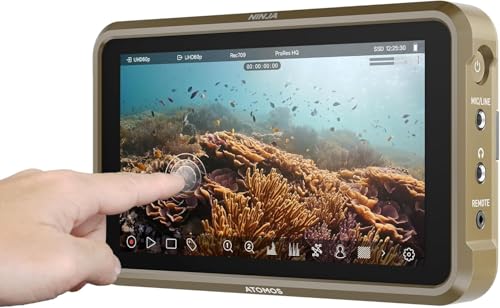
- Records 4Kp60 in multiple codecs
- Supports up to 6Kp30 ProRes RAW
- Lightweight 210 g monitor-recorder
Best For: Creators needing flexible 4K HDMI recording and monitoring
Professional 8K Workflow

- 8K30 ProRes RAW recording
- 1500-nit touchscreen display
- 12G-SDI, HDMI, Wi-Fi 6, and CFexpress support
Best For: Advanced DSLR video production and camera-to-cloud workflows
Connected Creator Bundle
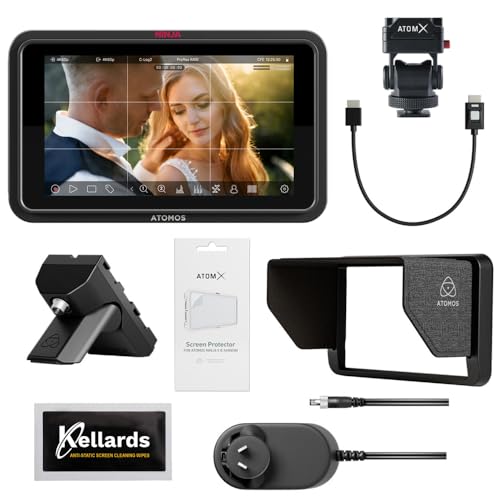
- Up to 6K RAW recording
- HDMI, Wi-Fi 6E, and NDI support
- Includes creator accessory kit and cleaning wipes
Best For: Creators building an HDMI-based recording and upload workflow
Portable HDMI RAW Recorder

- Captures up to 6K RAW
- 1500-nit HDR touchscreen
- HDMI, Wi-Fi 6E, NDI, and USB-C support
Best For: Portable DSLR monitoring and external RAW recording
Best All-Around Recorder – Atomos Ninja 5.2-inch 4K Recording Monitor
For camera external recorders for DSLR cameras, the Atomos Ninja combines a 5.2-inch monitoring screen with HDMI recording and a 240GB SSD bundle. It supports recording up to 4Kp60 in ProRes, DNxHD, and H.265, making it a versatile option for DSLR, cinema, and mirrorless workflows.
Best For: Shooters who want an included SSD, broad codec support, and a portable on-camera recorder.
Pros:
- Records up to 4Kp60 in multiple codecs, including ProRes and H.265.
- Includes a 240GB 2.5-inch SSD for recording.
- Supports cameras with HDMI output and offers a modern AtomOS 11 interface.
- Includes RecordAssist and PlayBackAssist tools.
Cons:
- Limited to HDMI video input.
- Manufacturer software-update status is unspecified.
- Only a one-year limited manufacturer warranty is listed.
The included SSD and wide codec selection make this a practical starting point for DSLR users who want both monitoring and external recording without assembling a separate storage setup.
Best Bright-Daylight Monitor – VILTROX DC-550 5.5-inch HDMI Monitor
Among camera external recorders for DSLR cameras, the VILTROX DC-550 is primarily a daylight-viewable HDMI monitor rather than a built-in recorder. Its 1200-nit display, exposure tools, and LUT support help with framing, focus, and color monitoring in demanding shooting conditions.
Best For: DSLR operators who need a bright on-camera monitor with professional monitoring aids.
Pros:
- 1200-nit screen is designed for visibility in intense lighting.
- Includes waveform, vectorscope, histogram, zebra, false color, and focus peaking tools.
- Supports custom 3D LUTs through its SD card slot.
- Includes HDMI cables, an NP-F550 battery, sunshade, and mounting adapter.
Cons:
- The supplied notes describe monitoring features but do not specify video recording.
- Has one HDMI port.
- Its native resolution is 1920×1080 rather than 4K.
This is a strong choice when accurate on-set viewing matters more than recording internally. Pair it with a separate recorder if your DSLR workflow requires captured external files.
Best Advanced RAW Option – Atomos Ninja Ultra 5.2-inch Recorder
For compatible camera external recorders for DSLR cameras, the Atomos Ninja Ultra offers advanced HDMI recording in a compact 5.2-inch monitor. It supports ProRes RAW up to 8K 30P, 6K 60P, and 4K 120P, along with ProRes, DNxHD, and H.265 recording options.
Best For: Users with compatible cameras who need high-resolution RAW recording and flexible codec choices.
Pros:
- Captures ProRes RAW up to 8K 30P, 6K 60P, and 4K 120P.
- Supports ProRes, DNxHD, and H.265 in addition to ProRes RAW.
- Can record 4Kp60 ProRes RAW and H.265 simultaneously for supported workflows.
- Weighs 360 grams and includes HDMI and USB video input connectivity.
Cons:
- Storage capacity is listed as 1GB, so separate recording media may be needed.
- Compatibility depends on the connected camera and its HDMI output.
- The supplied notes do not specify a warranty.
The Ninja Ultra is the performance-oriented pick in this group. Its high-resolution RAW capabilities are compelling, but camera compatibility and storage planning should be confirmed before purchase.
Best SDI Hybrid Recorder – FEELWORLD CUT6S 6-inch Field Monitor
The FEELWORLD CUT6S is a useful hybrid choice for camera external recorders for DSLR cameras, combining USB recording with HDMI and 3G-SDI monitoring. It records compatible video up to 1080p30 in MP4 to a FAT32 USB flash drive and also provides waveform, histogram, parade, and other monitoring tools.
Best For: DSLR and multi-camera users who need basic MP4 recording plus SDI-to-HDMI signal flexibility.
Pros:
- Records up to 1080p30 to a compatible FAT32 USB flash drive.
- Provides 3G-SDI input and output plus HDMI connectivity.
- Offers a 6-inch 1920×1080 touchscreen with exposure and focus tools.
- Can output HDMI and SDI simultaneously for multi-person monitoring.
Cons:
- NP-F battery is not included in this package.
- USB recording is limited to 1080p30 and MP4.
- The monitor weighs 1.28 pounds, making it less compact than smaller options.
Choose the CUT6S when SDI connectivity and a larger screen are priorities. It provides useful recording and routing features, but users seeking 4K recording or a bundled battery will need another solution.
Professional RAW Control – Atomos Ninja RAW
For camera external recorders for DSLR cameras, the Atomos Ninja RAW combines a bright HDR monitor with advanced recording and camera-control features. It records ProRes and ProRes RAW to CFexpress Type B media or external USB-C storage, while its monitoring tools support more precise exposure and focus decisions.
Best For: Filmmakers and production crews using HDMI or USB-C-compatible cameras who need ProRes RAW recording, camera control, and professional on-set monitoring.
Pros:
- 1500-nit, 5.2-inch HDR touchscreen for bright, detailed viewing.
- Records ProRes, ProRes RAW, ProRes LT, and ProRes 422 formats.
- Includes camera control plus waveform, false color, focus peaking, and other monitoring tools.
- Supports NP-F batteries, USB-C power banks, and a DC adapter.
Cons:
- Media and some network accessories are sold separately.
- At 400 g, it is heavier than the standard Atomos Ninja model.
- Its advanced RAW workflow may be more than casual DSLR users need.
The Ninja RAW is a strong choice when recording flexibility and production-grade monitoring matter more than keeping a compact setup as simple as possible. Its camera-control features and multiple power options also suit mobile professional shoots.
Budget Touch Recording – FEELWORLD CUT6 Field Monitor
The FEELWORLD CUT6 is a practical option among camera external recorders for DSLR cameras, especially if you want straightforward 1080p recording to a USB flash drive. Its 6-inch touchscreen also provides a larger viewing area and a useful set of exposure, focus, and framing tools.
Best For: DSLR and mirrorless users who want an affordable field monitor with USB recording, LUT support, and essential production scopes.
Pros:
- Records compatible HDMI video up to 1080p30 in MP4 format to a FAT32 USB flash drive.
- 6-inch 1920×1080 touchscreen offers a larger monitoring view.
- HDMI input supports 4K 60Hz signals, with output up to 1080p60.
- Includes waveform, vectorscope, histograms, focus peaking, zebra, and false color tools.
Cons:
- USB recording is limited to 1080p30.
- Recording requires a compatible FAT32 USB flash drive.
- Its 450-nit display is less bright than the Atomos Ninja RAW’s screen.
The CUT6 offers a useful balance for creators who need recording and monitoring without moving to a more specialized RAW workflow. Check your camera’s HDMI output and recording compatibility before buying.
Versatile 4K HDMI Recording – Atomos Ninja 4K Monitor-Recorder
The Atomos Ninja is a versatile choice for camera external recorders for DSLR cameras, supporting a broad range of HDMI-output cameras. It records up to 4Kp60 in ProRes, DNxHD, and H.265, while compatible cameras can produce up to 6Kp30 in ProRes RAW.
Best For: Video creators who want a lightweight 5.2-inch monitor-recorder with 4K capture, multiple codec options, and modern remote-sharing features.
Pros:
- Records up to 4Kp60 in Apple ProRes, Avid DNxHD, and H.265.
- Supports up to 6Kp30 Apple ProRes RAW with compatible cameras.
- Lightweight 210 g design with a matte display finish.
- AtomOS 11 adds improved responsiveness, RecordAssist, and PlayBackAssist.
Cons:
- ProRes RAW recording depends on camera compatibility.
- The display’s native resolution is 1920×1080 despite supporting higher-resolution input and recording.
- RemoteView features require compatible Atomos devices or supported platforms.
The Ninja is a well-rounded middle ground for users who want more recording choices than a basic field monitor provides without stepping up to the larger feature set of the Ninja RAW. Its low weight is helpful for camera-mounted setups.
Professional 8K Workflow – Ninja TX 5.2
The Atomos Ninja TX is a feature-rich option among camera external recorders for DSLR cameras, combining a bright touchscreen monitor with professional recording, connectivity, and camera-to-cloud tools. It supports 8K30 ProRes RAW recording, 4K60 input/output, and multiple recording codecs.
Best For: Filmmakers who need high-resolution RAW recording, SDI and HDMI flexibility, and integrated wireless workflow features.
Pros:
- Records 8K30 ProRes RAW and supports ProRes, Avid DNx, H.265, and H.264.
- Bright 1500-nit 5.2-inch touchscreen for monitoring in challenging lighting.
- Includes locking 12G-SDI and HDMI 2.0 input/output, Wi-Fi 6, and timecode sync.
- Records to CFexpress Type B media and supports USB-C power and data.
Cons:
- Its advanced SDI, RAW, and cloud features may be more than casual DSLR users need.
- CFexpress Type B media is required for its dedicated recording slot.
With broad connectivity and powerful recording options, the Ninja TX is best suited to demanding production setups rather than simple on-camera monitoring.
Connected Creator Bundle – Ninja TX GO with Accessories
This Ninja TX GO bundle pairs a 5-inch HDR monitor-recorder with an Atomos creator accessory kit, making it a convenient choice among camera external recorders for DSLR cameras. It records to CFexpress Type B or compatible USB-C storage and includes wireless workflow features.
Best For: Content creators who want a ready-to-use HDMI recorder with monitoring tools, cloud upload options, and basic accessory support.
Pros:
- 1500-nit touchscreen supports camera control, touch-to-focus, and professional monitoring tools.
- Records ProRes, ProRes RAW, Avid DNx, H.265, and H.264, with capture up to 6K RAW.
- Supports HDMI, Wi-Fi 6E, NDI streaming, and direct uploads to ATOMOSphere.
- Can run from USB-C, an NP-F battery, or an AC adapter.
Cons:
- Some cloud services and accessories, including Frame.io and Dropbox access, may require separate purchases or subscriptions.
- USB-C storage, network adapters, and calibration probes are not included as standard accessories.
The bundle is a practical entry into connected Atomos workflows, especially if you value included cleaning supplies and a flexible choice of recording media.
Portable HDMI RAW Recorder – Ninja TX GO
Atomos Ninja TX GO 5-inch Camera Monitor-Recorder, HDMI CFexpress Wi-Fi HDR Touchscreen ProRes RAW
Check Price On AmazonThe Atomos Ninja TX GO is a compact HDMI monitor-recorder for DSLR users who want external recording and a brighter viewing screen. It captures up to 6K RAW to CFexpress Type B or compatible USB-C storage and supports a wide range of editing-friendly codecs.
Best For: DSLR videographers seeking portable HDMI monitoring, RAW capture, and flexible power options without the bundled accessory kit.
Pros:
- Super-bright 1500-nit 5-inch touchscreen with touch-to-focus and camera control.
- Records ProRes, ProRes RAW, Avid DNx, H.265, and H.264, with up to 6K RAW capture.
- Offers HDMI input/output, Wi-Fi 6E, NDI streaming, and two USB-C connections.
- Works with USB-C power, NP-F batteries, or an AC adapter.
Cons:
- USB-C storage and optional network or calibration accessories are sold separately.
- Its advanced RAW and networking capabilities may be unnecessary for basic recording needs.
For users who already have compatible media and accessories, this standalone Ninja TX GO delivers a capable external HDMI recording and monitoring setup in a compact format.
How We Picked the Best Camera External Recorders for Dslr Cameras
We evaluated these models by focusing on the features that matter during real-world DSLR video production: supported input and recording formats, monitor brightness and size, storage compatibility, camera-control options, portability, and workflow flexibility. We also considered whether each device is best suited to basic monitoring, high-quality recording, RAW capture, multi-camera production, or cloud-connected delivery.
Compatibility remains essential. Check your DSLR’s output resolution, frame rates, HDMI connector type, and whether it sends a clean HDMI signal. A recorder may support 4K input, for example, but your camera, cable, or chosen recording format can still limit the final result.
Quick Comparison
| Best For | Look For | Models to Consider |
|---|---|---|
| Affordable monitoring | Large screen, focus tools, HDMI input | VILTROX 5.5-inch, FEELWORLD CUT6, FEELWORLD CUT6S |
| Portable 4K recording | HDMI recording, SSD support, HDR display | Atomos Ninja, Ninja Ultra |
| RAW workflows | ProRes RAW support and compatible camera output | Atomos Ninja RAW, Ninja TX GO |
| Cloud-connected production | Wi-Fi, Camera to Cloud features, workflow tools | Atomos Ninja TX, Ninja TX GO |
| SDI-based setups | 3G-SDI connectivity and field durability | FEELWORLD CUT6S |
Key Buying Factors
Input, Resolution, and Recording Format
Start with the camera connection. HDMI is common on DSLRs and mirrorless cameras, while SDI is more prevalent in professional and longer-cable setups. If you want to preserve more grading latitude, look for ProRes or ProRes RAW support, but confirm that your camera can output a compatible RAW signal. Standard ProRes recording may be the more practical choice for many DSLR users.
Screen Brightness and Monitoring Tools
A bright display is valuable for outdoor shooting, while a larger screen helps with framing and manual focus. Useful tools include waveform or histogram displays, false color, zebras, peaking, magnification, and LUT preview. A touchscreen can speed up operation, but physical controls may be preferable when working with gloves or under pressure.
Storage, Power, and Portability
Check whether the recorder uses 2.5-inch SSDs, CFexpress media, or another storage format, and price the required media before buying. Battery compatibility also affects total cost and shooting time. A compact monitor is easier to mount on a DSLR rig, but larger screens and internal features can add weight.
Camera Control and Connectivity
Camera-control support varies by camera brand and connection. Wi-Fi and cloud tools can streamline review, backup, and client delivery, but they are most useful for productions with reliable networks and a defined remote workflow.
Who Should Buy Which Camera External Recorders for Dslr Cameras?
Choose a VILTROX or FEELWORLD model if your priority is a larger on-camera display with exposure and focus assistance at a lower cost. Pick an Atomos Ninja or Ninja Ultra when you need dependable 4K recording, professional monitoring, and an established SSD-based workflow.
For filmmakers whose cameras support external RAW output, the Atomos Ninja RAW or Ninja TX GO offers a stronger path to ProRes RAW capture. Choose the Ninja TX when Camera to Cloud and connected production tools are more important than a basic field-monitor setup. If your system relies on SDI, the FEELWORLD CUT6S is the most relevant option in this selection.