
Choosing a 3D scanner for miniatures is all about capturing fine surface detail, stable tracking, and reliable results on small objects. The best options balance resolution, speed, and software support without making the workflow too complicated.
Below, we’ve rounded up 10 strong picks for hobbyists, makers, and 3D printing users who want cleaner scans of figurines, collectibles, and other small models.
Best 10 3d Scanner for Miniatures Picks for 2026
Miniature Detail Specialist
Revopoint MINI 2 3D Scanner, Full Color Scan
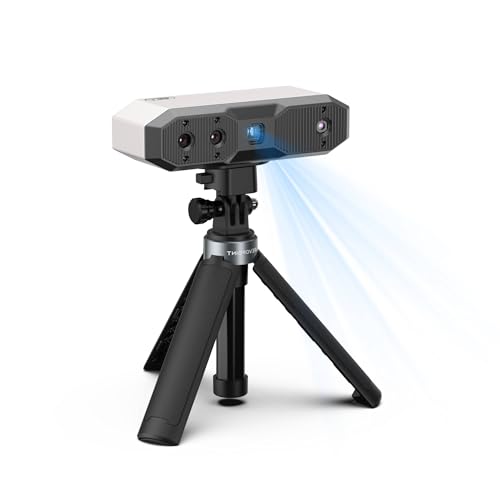
- 0.02 mm single-frame precision
- USB or Wi-Fi 6 connectivity
- Supports small objects from 10 mm upward
Best For: detail-focused miniature and small-part scanning
Wireless All-Rounder
Creality Pika 3D Scanner, Portable 0.03 mm Accuracy

- 0.03 mm accuracy with blue laser
- Wireless Wi-Fi 6 and dual batteries
- AI cleanup tools reduce post-processing
Best For: wireless scanning across miniatures and larger objects
Quiet Precision Pick
3DMakerpro Moose Lite 3D Scanner
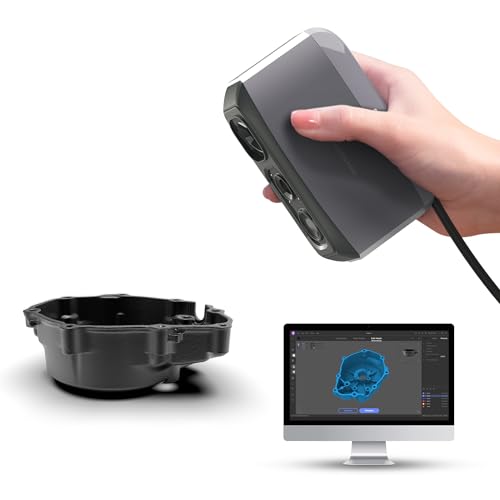
- 0.05 mm accuracy for detailed scans
- Lightweight 250 g body with no fan noise
- JMStudio handles scanning and editing
Best For: quiet, detailed scanning of miniatures and tabletop models
Portable Detail Scanner
Creality Pika 3D Scanner, AI Blue Laser & NIR

- 0.03 mm precision for small objects
- Blue laser and NIR dual-mode scanning
- Built-in screen with Wi-Fi 6 portability
Best For: portable miniature scanning with detail and color flexibility
Entry-Level Desktop Scanner
3DMakerpro Fox for Small Objects
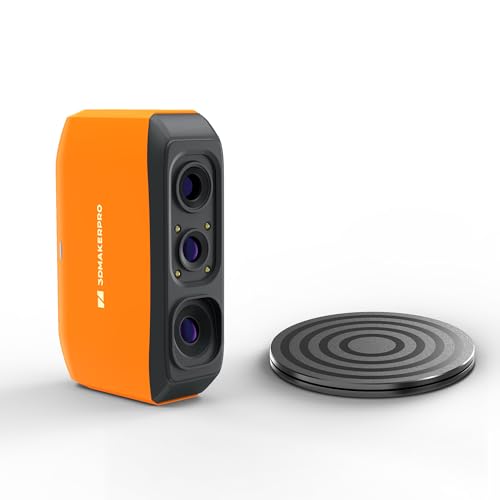
- 0.07mm accuracy for fine details
- Markerless tracking with anti-shake
- Good for miniatures and small parts
Best For: Beginners scanning miniatures and small desktop objects
Large-Object Color Scanner
Revopoint RANGE for Bigger Scenes

- 0.1mm precision with fast 18fps scanning
- Full-color RGB output
- Built for large objects and people
Best For: Large-object scanning with color and fast capture
Portable Wireless Scanner
Creality Ferret Pro for Easy Scans

- 0.1mm accuracy with full-color capture
- WiFi6 wireless scanning
- Lightweight 105g portable design
Best For: Beginners wanting portable wireless scanning
Mini-Detail Pro

- 0.02 mm precision for tiny details
- Blue light improves small-object capture
- Wi-Fi 6 and USB-C for flexible scanning
Best For: Small miniatures and detailed tabletop models
Speed Capture

- 30 FPS capture with fast ASIC processing
- 0.1 mm accuracy in high-accuracy mode
- Built-in color camera for realistic textures
Best For: Portable scanning with fast, color-rich results
Outdoor Detail
Revopoint INSPIRE 2 3D Scanner

- 0.05 mm accuracy for detailed scans
- Handles dark or reflective surfaces without spray
- Works outdoors in up to 20,000 lux
Best For: Portable miniature scanning in mixed lighting and surfaces
Miniature Detail Specialist – Revopoint MINI 2 3D Scanner, Full Color Scan
If you want a 3d scanner for miniatures that focuses on very fine surface detail, the Revopoint MINI 2 is built for small objects and precise captures. Its blue-light system, 0.02 mm single-frame precision, and improved tracking make it a strong fit for tiny figures, parts, and texture-rich pieces when you need clean data for 3D printing.
Best For: hobbyists and makers scanning miniatures, small parts, and detailed models for printing or CAD prep.
Pros:
- Up to 0.02 mm single-frame precision for capturing tiny details
- Class 1 blue light helps filter ambient interference for better accuracy
- RGB camera and flash LEDs improve texture, color, and marker recognition
- Lightweight 175 g body with USB or Wi-Fi 6 connection options
Cons:
- Scanning results can vary by material and color
- Scanning spray is recommended for better results on some objects
- Best suited to small items, not very large or extremely tiny objects
Overall, the MINI 2 is a practical choice if your priority is detail-first scanning for miniatures and other compact objects. It balances precision, portability, and straightforward export options, though it works best when the object size and surface type fall within its ideal range.
Wireless All-Rounder – Creality Pika 3D Scanner, Portable 0.03 mm Accuracy
The Creality Pika is a flexible 3d scanner for miniatures and much larger subjects, combining blue laser detail capture with infrared structured light for broader scan coverage. If you want one scanner that can handle small components, figurines, and bigger objects without a cable tether, its wireless design and AI-assisted processing make the workflow feel fast and modern.
Best For: users who want a wireless scanner that can handle miniatures, parts, and larger objects in one device.
Pros:
- 0.03 mm accuracy with 7-parallel blue laser detail capture
- Infrared structured light supports fast full-object scanning
- AI retexturing, body completion, and hole-filling streamline cleanup
- Wireless Wi-Fi 6 design with hot-swappable dual batteries
Cons:
- Recommended phone and PC specs are relatively demanding
- Best results may depend on using the right device configuration
- Wireless convenience may not suit users who prefer a simple USB setup
For buyers who value portability as much as detail, the Pika stands out as an adaptable option. It is especially appealing if you want to scan miniatures and also keep the flexibility to move up to larger models, all while staying cable-free.
Quiet Precision Pick – 3DMakerpro Moose Lite 3D Scanner
If you need a 3d scanner for miniatures with a strong balance of precision and ease of use, the Moose Lite is designed for detailed scans at a manageable pace. Its 0.05 mm accuracy, AI tracking, and marker-free workflow are aimed at clean results on small printed models, display pieces, and other detail-oriented projects.
Best For: makers who want a lightweight, quiet scanner for detailed miniatures and tabletop-scale models.
Pros:
- 0.05 mm accuracy and 0.1 mm resolution for fine detail
- AI tracking and point cloud algorithms help stabilize scanning
- Lightweight 250 g design with no fan noise
- JMStudio combines scanning, editing, and optimization in one workflow
Cons:
- 10 FPS scanning speed is slower than some competitors
- Smart Grip smartphone accessory is sold separately
- Windows and Mac support only, with no mobile support built in
The Moose Lite makes sense if you want a quieter, lighter scanner that still focuses on detail. It is not the fastest option here, but its software integration and marker-free surface detection can simplify the scan-to-model process for miniature work.
Portable Detail Scanner – Creality Pika 3D Scanner, AI Blue Laser & NIR
The Creality Pika is a strong 3d scanner for miniatures if you want fine detail capture plus true-color workflows in a compact, go-anywhere package. Its 7-parallel blue laser mode is built for small objects like models, parts, and figurines, while NIR structured light adds body scanning and color capture for broader use.
Best For: creators who want a compact scanner for miniatures, figurines, and mixed-detail projects.
Pros:
- 0.03 mm ultra-fine precision for coins, parts, and miniature details
- Blue laser mode does not require label stickers
- Detachable infrared filter helps with bright outdoor scanning
- Built-in touch screen and Wi-Fi 6 improve on-the-go use
Cons:
- Some advanced features depend on compatible devices and software
- Performance varies between laser and infrared scan modes
- Outdoor use is supported, but bright-light conditions still require setup care
This version of the Pika is aimed at users who want detail, portability, and practical scanning flexibility in one unit. For miniature work, the laser mode is the key advantage, especially when you want to capture small features without relying on stickers or heavy prep.
Entry-Level Desktop Scanner – 3DMakerpro Fox for Small Objects
If you want a 3d scanner for miniatures and other small objects, the 3DMakerpro Fox is a budget-friendly entry point with up to 0.07mm accuracy and markerless tracking. It is built for items roughly 40mm to 1200mm, so it can handle desktop miniatures, prototypes, and small parts, but it does come with a learning curve that rewards patience and some CAD or 3D modeling experience.
Best For: Beginners who want a compact scanner for miniatures, small props, and desktop 3D printing projects.
Pros:
- Up to 0.07mm accuracy for capturing fine structural detail.
- Markerless tracking and anti-shake help simplify setup.
- Works well for small-to-medium objects, including desktop miniatures.
- JMStudio supports scanning, editing, fusion, and export to OBJ, STL, PLY, and ASC.
Cons:
- Results require practice and a real learning curve.
- Best outcomes may need basic CAD or mesh refinement knowledge.
- Requires a capable PC, with a dedicated GPU strongly recommended.
The Fox makes sense if you want an accessible scanner for miniatures and are willing to spend time dialing in the workflow. It is more of a hands-on learning tool than a plug-and-play solution, but the specs are promising for detailed desktop scanning.
Large-Object Color Scanner – Revopoint RANGE for Bigger Scenes
The Revopoint RANGE is not the first pick for a 3d scanner for miniatures, but it is a strong option if your projects extend into larger models and full-color capture. With up to 0.1mm single-frame precision, a wide capture range, and up to 18fps scanning speed, it is designed more for large objects like furniture, cars, and people than tiny tabletop figures.
Best For: Users who need a handheld scanner for large objects, color scans, and flexible cross-platform use.
Pros:
- Up to 0.1mm single-frame precision.
- Wide capture range and up to 18fps scanning speed.
- Full-color RGB scanning for more lifelike models.
- Works with Windows, macOS, iOS, and Android.
Cons:
- Optimized for large objects, not tiny miniatures.
- Needs more space to take advantage of its larger capture range.
- Best fit is broad-object scanning rather than fine tabletop detail.
RANGE is a practical choice when your scanning needs are bigger than miniatures and you want color plus speed. For very small figures, however, its design focus makes it a less targeted match than a dedicated small-object scanner.
Portable Wireless Scanner – Creality Ferret Pro for Easy Scans
The Creality CR-Scan Ferret Pro is a lightweight 3d scanner for miniatures in the broad sense of tabletop and small-object digitizing, though it is best suited to slightly larger subjects than precision jewelry or highly detailed parts. With up to 0.1mm accuracy, wireless scanning, and full-color capture, it is a flexible pick for beginners who want simple setup and mobile convenience.
Best For: Entry-level users who want a portable wireless scanner for general small-object scanning and full-color models.
Pros:
- Up to 0.1mm accuracy with full-color 24-bit scanning.
- WiFi6 wireless scanning adds convenience and flexibility.
- Very lightweight at 105g for easy travel and handheld use.
- Supports Windows, macOS, Android, and iOS.
Cons:
- Not suitable for very small or highly detailed items like jewelry.
- Works best when you avoid reflective, transparent, or very dark surfaces.
- Performance depends on meeting the stated device requirements.
Ferret Pro stands out for portability and wireless ease more than ultra-fine miniature detail. If your priority is a simple, color-capable scanner that can move between devices and locations, it is a well-rounded option.
Mini-Detail Pro – Revopoint MINI 2 3D Scanner
If you need a 3d scanner for miniatures, the Revopoint MINI 2 is built around tiny-detail capture with industrial-grade blue light, fast scanning, and a compact handheld design. It is aimed at small objects, and the larger capture range plus RGB texture support can help when you want cleaner geometry and usable color data for 3D printing or modeling.
Best For: Hobbyists and makers scanning miniatures, small figurines, and other compact objects for printing or CAD work.
Pros:
- Up to 0.02 mm single-frame precision for intricate small details
- Blue light technology helps filter ambient light interference for better accuracy
- RGB camera and 6 flash LEDs improve texture capture and marker recognition
- Type-C USB and Wi-Fi 6 options for flexible, stable connection choices
Cons:
- Scanning results can vary by material and color; spray may be needed for best results
- Best suited to objects within its 10 mm to 0.5 m scanning range
- Revo Design scan-to-CAD software is paid and Windows-only
Overall, the MINI 2 is a strong pick when your priority is fine detail on small models rather than broad, large-format scanning. Its handheld design and software support make it practical, but it works best when you stay within its intended size range.
Speed Capture – Creality CR-Scan Ferret
The Creality CR-Scan Ferret is a practical 3d scanner for miniatures if you want fast capture, full-color textures, and support for both small-detail and wider-area scanning. Its high-accuracy mode is designed for finer results, while the built-in RGB camera and portable power options make it easier to scan at a desk or on the go.
Best For: Makers who want a lightweight scanner with fast processing and flexible device support for small models.
Pros:
- Up to 30 FPS point cloud capture and 60 FPS image processing for smoother workflow
- High-accuracy mode delivers up to 0.1 mm precision and 0.16 mm resolution
- Built-in RGB camera captures full-color textures for realistic models
- Can run from a 5V power bank or compatible Android devices for portable scanning
Cons:
- Requires fairly specific system requirements for Windows, macOS, Android, or iOS use
- Accuracy is lower than some ultra-fine scanners when chasing the smallest details
- Mobile support depends on model and version compatibility
For users who value speed, portability, and color capture, the Ferret is easy to consider. It is especially appealing if you want a scanner that can handle miniature-sized subjects without feeling overly specialized or cumbersome.
Outdoor Detail – Revopoint INSPIRE 2 3D Scanner
The Revopoint INSPIRE 2 is a strong 3d scanner for miniatures if you want detailed scans, better handling of challenging surfaces, and the flexibility to work beyond a studio setup. Its infrared structured light and multi-line laser modes, along with WiFi 6 and a lightweight body, make it a versatile option for small models and textured objects.
Best For: Users who want a portable scanner that can handle miniatures, mixed surfaces, and even outdoor or brighter environments.
Pros:
- Up to 0.05 mm accuracy and 0.03 mm precision for detailed models
- 11 infrared laser lines help capture reflective or dark surfaces without spray
- Works in outdoor lighting up to 20,000 lux in shaded or semi-bright conditions
- Lightweight 190 g design with WiFi 6 and USB-C connectivity
Cons:
- Best results may require higher-end system hardware, especially on Windows
- Revo Design scan-to-CAD software is paid and Windows-only
- Full workflow can be more involved than a simpler entry-level scanner
INSPIRE 2 stands out if your miniature scanning needs include tricky materials, mobile use, or occasional outdoor work. It brings strong detail capture and a broader feature set, though it asks for more capable hardware to get the most from it.
How We Picked the Best 3d Scanner for Miniatures
For miniatures, the most important factors are close-range detail, accuracy, scan stability, and how well the scanner handles small, often reflective or textured surfaces. We prioritized models that are designed for fine-object scanning, offer practical software tools, and have enough speed to reduce motion blur and alignment issues.
We also favored scanners with a clear path to 3D printing workflows, since many buyers want to repair, duplicate, or modify miniature models after scanning.
Quick Comparison: What Matters Most
If you want the cleanest detail, look first at accuracy and minimum point spacing. If you want fewer headaches, prioritize tracking reliability and anti-shake features. If you plan to scan larger figures or mixed-size objects, a more flexible scanner may be a better fit than a strict macro-focused model.
Best for Ultra-Fine Detail
Choose a higher-precision scanner when your goal is to capture small edges, facial features, and sharp surface textures on minis.
Best for Easier Workflow
If you’re new to scanning, look for simple setup, wireless options, and software that guides alignment and cleanup.
Key Buying Factors for a 3d Scanner for Miniatures
Accuracy and resolution: Higher accuracy helps preserve crisp details, while good resolution improves the final mesh on small objects.
Minimum scan size: Some scanners perform best on tiny objects, while others are better suited to larger models and may struggle with very small minis.
Color capture: Full-color scanning is useful for reference, archiving, and display models, though it is less important than geometry for 3D printing.
Lighting and surface handling: Miniatures with glossy paint, dark plastic, or metallic finishes may require prep work such as matting spray or better lighting.
Speed and tracking: Faster scanning can reduce errors, but only if tracking remains stable as you move around the object.
Software and export options: Make sure the scanner supports the formats and cleanup tools you need for your printer or modeling software.
Who Should Buy Which 3d Scanner for Miniatures?
Pick a precision-first model if you scan tiny figures, game pieces, or display minis and need the cleanest geometry possible.
Pick an easier handheld scanner if you’re a beginner, scan mixed object sizes, or want a more forgiving setup for occasional use.
Pick a more versatile color scanner if you also want to document collectibles, statues, or character models beyond just 3D printing.
In short, the best 3d Scanner for Miniatures is the one that matches your object size, detail needs, and workflow. If your top priority is crisp miniature capture, focus on precision and tracking first, then compare software and convenience features.