
As you explore the world of documentary filmmaking, choosing the right camera can make a significant difference in your storytelling. In 2026, Canon’s Cinema EOS lineup offers some compelling options tailored for various needs. Whether you’re drawn to the impressive image quality of the C80 or the versatile capabilities of the R5 C, there’s a model that fits your vision. Let’s take a closer look at what each of these top contenders brings to the table.
Canon EOS C80 Cinema Camera with Adapter and Memory Card
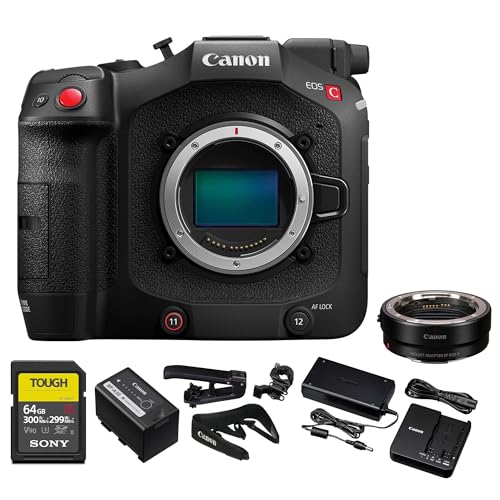
The Canon EOS C80 Cinema Camera is an ideal choice for documentary filmmakers who demand outstanding image quality without sacrificing portability. With its full-frame 6K RF-mount and advanced backside-illuminated sensor, you’ll capture stunning visuals with rich dynamic range. The built-in ND filters and C-Log 2/3 enhance your color grading capabilities, giving you professional-level results. Plus, the dual pixel autofocus guarantees sharp focus, even in challenging conditions. This package includes a Canon adapter and a 64GB memory card, making it easy to use your favorite EF or RF lenses. Whether you’re a solo shooter or part of a team, this camera fits your needs perfectly.
Best For: Documentary filmmakers seeking outstanding image quality in a portable camera system.
Pros:
- Advanced backside-illuminated sensor provides stunning resolution and rich dynamic range.
- Built-in ND filters and C-Log 2/3 enhance color grading flexibility for professional results.
- Dual XLR audio inputs cater to both solo shooters and production teams, ensuring high-quality audio capture.
Cons:
- Full-frame 6K capability may require higher storage and processing power for post-production.
- The RF mount may limit compatibility with non-Canon lenses without the appropriate adapter.
- Lightweight design may compromise durability in rugged shooting environments.
Canon EOS R5 C Mirrorless Cinema Camera Kit with RF 24-70mm Lens
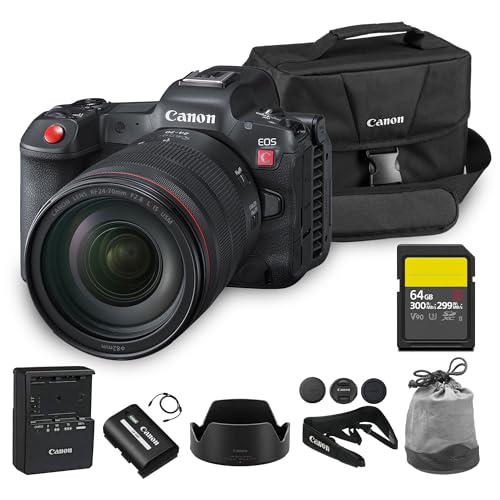
For filmmakers seeking a versatile tool in documentary storytelling, the Canon EOS R5 C Mirrorless Cinema Camera Kit with the RF 24-70mm lens stands out with its impressive 8K RAW video recording capability. This camera features a 45MP full-frame sensor, allowing for stunning high-resolution images and detailed video. The dual pixel autofocus guarantees reliable focus, while the lightweight, rugged design makes it perfect for professional use. With slow motion options at 4K/120p and exceptional post-production flexibility through 12-bit Cinema RAW Light, you’ll capture your vision effortlessly. Plus, the included accessories enhance your shooting experience, making it a perfect choice for any project.
Best For: Filmmakers and content creators looking for a high-performance camera that excels in both video and photography.
Pros:
- Impressive 8K RAW video recording capabilities for high-quality cinematic content.
- Lightweight and rugged design ensures portability and durability for professional settings.
- Versatile RF 24-70mm lens offers wide-to-telephoto coverage with optical image stabilization.
Cons:
- Higher price point may be a barrier for amateur filmmakers or hobbyists.
- Limited battery life may require additional batteries for extended shoots.
- Complex menu system can be challenging for beginners to navigate.
Canon EOS C70 Cinema Camera (Body Only)

Designed with documentary filmmakers in mind, the Canon EOS C70 Cinema Camera stands out thanks to its 4K Super 35mm Dual Gain Output (DGO) sensor. With a dynamic range of over 16 stops, you’ll capture stunning visuals in various lighting conditions. The Dual Pixel CMOS AF technology guarantees precise focusing with 255 autofocus points. You can record in 4K and HD formats, utilizing dual SD card slots for simultaneous recording. The fully rotatable 3.5-inch touch screen offers intuitive control, while enhanced image stabilization delivers smooth footage. Plus, it’s Netflix-approved, making it a reliable choice for professional productions.
Best For: Documentary filmmakers and professionals seeking high-quality 4K video capture with robust autofocus capabilities and extensive dynamic range.
Pros:
- Exceptional low-noise performance in various lighting conditions.
- Dual SD card slots allow for simultaneous recording in different formats.
- Fully rotatable 3.5-inch touch screen for intuitive control and quick access to settings.
Cons:
- Customer reviews indicate mixed satisfaction, averaging only 3.2 out of 5 stars.
- Relatively high price point may not be suitable for amateur filmmakers.
- Limited to specific lens compatibility without an adapter for EF lenses.
Canon EOS C80 Cinema Camera (6389C002)

With its full-frame 6K BSI sensor, the Canon EOS C80 Cinema Camera (6389C002) elevates documentary filmmaking to new heights, delivering stunning image quality and rich dynamic range. You’ll appreciate the versatility of C-Log 2 and 3 for smooth post-production color grading. Built-in ND filters and dual XLR audio inputs make this camera perfect for both solo shooters and production teams. You can easily adapt lenses with the RF mount and supported adapters for EF or PL mounts. Plus, it comes with a 64GB SF-G TOUGH Series memory card, ensuring you’re ready to capture every moment without delay.
Best For: The Canon EOS C80 Cinema Camera is best for documentary filmmakers and production teams seeking high-quality, versatile imaging solutions.
Pros:
- Stunning image quality with a full-frame 6K BSI sensor and rich dynamic range.
- Versatile color grading options with C-Log 2 and 3, ideal for post-production workflows.
- Built-in ND filters and dual XLR audio inputs enhance usability for both solo shooters and production teams.
Cons:
- Higher price point compared to entry-level cameras, which may not suit all budgets.
- Weight and size may be cumbersome for some users, especially if portability is a concern.
- Learning curve for those unfamiliar with advanced video camera features and settings.
Canon EOS C80 6K Cinema Camera Kit (6389C010)

The Canon EOS C80 6K Cinema Camera Kit (6389C010) stands out as an exceptional choice for documentary filmmakers seeking high-quality visuals and versatility. With its full-frame 6K sensor, you’ll achieve stunning resolution, rich tonal range, and natural color reproduction. Its triple base ISO of 800, 3200, and 12800 guarantees excellent performance in various lighting conditions while minimizing noise. You can record in multiple formats like Cinema RAW Light and XF-AVC, providing flexibility for your production needs. The included RF 24-70mm f/2.8 lens covers essential focal lengths, making it perfect for any documentary project. Plus, a 64GB UHS-II SDXC memory card is included!
Best For: Documentary filmmakers seeking high-quality visuals and versatility in various lighting conditions.
Pros:
- Exceptional 6K resolution for professional cinema-quality images.
- Triple base ISO performance that minimizes noise in diverse lighting scenarios.
- Includes versatile RF 24-70mm f/2.8 lens perfect for a range of filmmaking styles.
Cons:
- Higher price point compared to entry-level cameras may be a barrier for beginners.
- Learning curve for those new to professional cinema cameras.
- Limited battery life may require additional batteries for extended shooting sessions.
Canon EOS R5 C Mirrorless Camera (Body Only)

For documentary filmmakers seeking top-tier performance, the Canon EOS R5 C Mirrorless Camera stands out with its impressive 8K/60P internal RAW recording capabilities. This full-frame camera features a 45-megapixel CMOS sensor and a wide ISO range of 100-51200, ensuring stunning image quality in various lighting conditions. With dual pixel autofocus and 1,053 AF zones, capturing sharp subjects is effortless. The lightweight design and customizable controls enhance your shooting experience. Plus, with the ability to record in multiple formats and simultaneous files, this camera meets diverse production needs. Overall, the EOS R5 C is a powerful tool for any documentary filmmaker.
Best For: Documentary filmmakers seeking high-performance video capabilities and exceptional image quality.
Pros:
- Impressive 8K/60P internal RAW recording allows for high-resolution video production.
- Lightweight and ergonomic design makes it easy to handle during long shooting sessions.
- Extensive autofocus system with 1,053 AF zones ensures precise subject tracking.
Cons:
- Professional skill level required may not be suitable for beginners.
- Higher price point compared to entry-level mirrorless cameras.
- Limited battery life may require additional batteries for extended shoots.
Canon EOS R5 C Mirrorless Cinema Camera Kit (5077C024)

If you’re a serious filmmaker looking for a versatile camera that excels in both video and photography, the Canon EOS R5 C Mirrorless Cinema Camera Kit is a top contender. With its 45MP full-frame sensor and the ability to record 8K RAW video at up to 60p, it’s perfect for capturing stunning visuals. The included RF 24-70mm f/2.8 lens offers wide-to-telephoto coverage, while optical stabilization guarantees sharp shots. Lightweight yet rugged, this camera kit features dual card slots and advanced connectivity, making it ideal for filmmakers and hybrid storytellers who demand high-quality performance in various settings.
Best For: The Canon EOS R5 C Mirrorless Cinema Camera Kit is best for serious filmmakers, photographers, and hybrid storytellers seeking high-quality imaging and video capabilities.
Pros:
- Exceptional 45MP full-frame sensor for stunning image quality.
- Capable of recording 8K RAW video at up to 60p, perfect for high-resolution projects.
- Lightweight and rugged design allows for easy transport and durability in various shooting environments.
Cons:
- Higher price point may not be suitable for casual users or beginners.
- Limited battery life when shooting in high-performance modes, requiring extra batteries for longer sessions.
- The advanced features may have a steep learning curve for those unfamiliar with professional cinema cameras.
Canon EOS C200 EF Cinema Camera #2215C002 Body Only

Equipped with a Super 35mm CMOS sensor, the Canon EOS C200 EF Cinema Camera #2215C002 is an outstanding choice for documentary filmmakers seeking high-quality imagery. With Dual Pixel CMOS AF technology and Dual DIGIC DV 6 processors, you’ll capture stunning 4K DCI and UHD video. The camera’s 4-inch rotating LCD monitor and integrated EVF enhance your shooting experience, while the ergonomic grip provides comfort during long shoots. You’ll have versatile recording options, including Canon RAW Light and MP4 formats. Plus, with multiple audio inputs and card slots, it offers excellent connectivity to suit your documentary needs.
Best For: Documentary filmmakers seeking high-quality imagery and versatile recording options.
Pros:
- High-quality 4K DCI and UHD video recording capabilities.
- Ergonomic design with a comfortable grip for extended shooting sessions.
- Multiple audio inputs and card slots for enhanced connectivity and flexibility.
Cons:
- Body only configuration may require additional purchases for lenses and accessories.
- Higher price point compared to entry-level cameras.
- Limited low-light performance compared to some other cinema cameras.
Canon EOS R6 Mark III Body
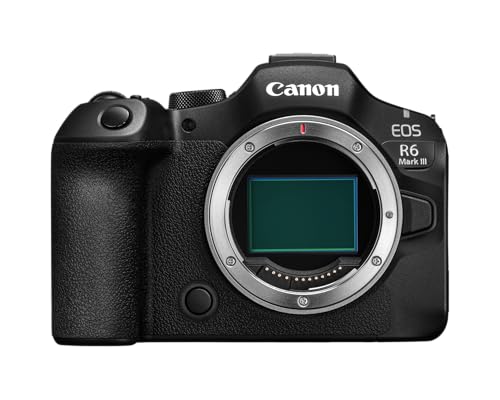
The Canon EOS R6 Mark III Body stands out for documentary filmmakers who need both speed and precision in their shooting. With a 32.5MP full-frame CMOS sensor and DIGIC X processor, you’ll capture stunning images effortlessly. Its impressive 40-fps photo shooting and 20-frame pre-continuous shooting allow you to seize fleeting moments without missing a beat. Plus, the in-body image stabilization offers up to 8.5 stops of correction, ensuring smooth footage even in challenging conditions. The advanced Dual Pixel CMOS AF II system prioritizes detecting people and animals, making it perfect for dynamic storytelling. Dual card slots offer versatile storage options.
Best For: Documentary filmmakers seeking speed, precision, and advanced autofocus capabilities in their shooting.
Pros:
- High-speed shooting with up to 40-fps capabilities allows for capturing fast-paced action seamlessly.
- In-body image stabilization of up to 8.5 stops ensures smooth footage even in challenging shooting conditions.
- Dual Pixel CMOS AF II system offers reliable detection for people and animals, enhancing storytelling dynamics.
Cons:
- The high price point may be a barrier for amateur photographers or hobbyists.
- The CFexpress Type B card may require additional investment for storage compared to more common formats.
- Size and weight might be cumbersome for some users, especially during long shooting sessions.
Canon EOS R6 Mark II Mirrorless Camera Kit

For documentary filmmakers seeking versatility and performance, the Canon EOS R6 Mark II Mirrorless Camera Kit stands out with its impressive 4K video capabilities and fast autofocus system. With a 24.2 Megapixel full-frame sensor and DIGIC X image processor, you’ll capture stunning visuals even in low light. The camera’s Dual Pixel CMOS AF II covers the entire frame, ensuring precise focus on your subjects. Plus, with up to 40 fps continuous shooting, you won’t miss any action. The RF24-105mm lens offers great flexibility, while the compact design makes it easy to carry. Overall, it’s a powerful tool for any documentary project.
Best For: Documentary filmmakers and professional photographers seeking a versatile and high-performance mirrorless camera for capturing stunning visuals.
Pros:
- Impressive 4K video capabilities for high-quality filmmaking.
- Fast autofocus system with Dual Pixel CMOS AF II covering the entire frame.
- Compact and lightweight design, making it easy to transport for on-the-go shoots.
Cons:
- Maximum aperture range of f/4-7.1 may limit performance in very low light conditions.
- Higher price point may not be suitable for entry-level users.
- Limited battery life during high-speed continuous shooting modes.
Factors to Consider When Choosing a Canon Cinema EOS Camera for Documentary
When choosing a Canon Cinema EOS camera for your documentary, think about your image quality needs and how they’ll affect your storytelling. You’ll also want to take into account audio input options and lens compatibility to guarantee you capture the best sound and visuals. Finally, don’t overlook recording formats and the camera’s portability, as these factors can greatly influence your shooting experience.
Image Quality Requirements
Choosing the right Canon Cinema EOS camera for documentary filmmaking hinges on understanding your image quality needs. A full-frame sensor is crucial, delivering superior resolution and depth of field that captures detailed, immersive footage. Look for cameras with high dynamic range capabilities; they retain details in shadows and highlights, essential for the varied lighting conditions you’ll encounter. Advanced image processing, like Dual Pixel AF, enhances autofocus performance, ensuring sharp focus on your subjects, even in dynamic environments. Additionally, color grading options, such as C-Log profiles, provide flexibility in post-production, allowing you to achieve the desired aesthetic. Finally, consider cameras that support high-resolution recording formats like 4K or 6K for professional-level quality suitable for distribution and streaming.
Audio Input Options
Audio input options play an essential role in achieving high-quality sound for your documentary. When choosing a Canon Cinema EOS camera, look for models with dual XLR audio inputs. This feature allows you to connect professional-grade external microphones, ensuring superior audio capture. Many of these cameras support multiple audio channels, letting you record dialogue and ambient sounds simultaneously, which enhances production quality. Built-in preamps and phantom power are vital for powering condenser microphones, common in documentary work. Additionally, the ability to monitor audio levels through on-screen displays or dedicated meters helps you maintain clear sound. Finally, advanced audio controls for customizing gain and input levels can greatly improve sound quality in various environments, making your documentary more impactful.
Lens Compatibility
Understanding lens compatibility is essential for getting the most out of your Canon Cinema EOS camera in documentary filmmaking. When choosing your camera, check the lens mount compatibility; different models support RF, EF, or PL mounts, which directly affects your lens options. RF lenses provide advanced features like optical image stabilization and fast autofocus, vital for dynamic shooting environments. If you opt for a model that supports EF lenses, using an adapter can greatly broaden your choices, allowing access to specialized lenses. Also, consider the weight and size of your lenses—lightweight options enhance mobility during shoots. Finally, look for versatile focal ranges, like 24-70mm or 24-105mm, to capture everything from intimate close-ups to expansive wide shots.
Recording Formats
When it comes to capturing compelling documentary footage, the recording formats supported by your Canon Cinema EOS camera play a pivotal role in your workflow. Many models offer multiple formats like Cinema RAW Light, XF-AVC, and MP4, allowing you to adapt to different production needs. RAW formats provide superior quality and flexibility for color grading, whereas compressed formats may limit your options. Look for cameras with high bit rates and 10-bit recording to enhance image quality and color reproduction. Some models also feature simultaneous recording, enabling you to capture different formats at once, which can simplify editing. Additionally, cameras with dual card slots are invaluable for extended shoots, offering redundancy and peace of mind during long documentary sessions.
Portability and Design
Portability and design are essential factors to evaluate when selecting a Canon Cinema EOS camera for documentary filmmaking, as you’ll often need to maneuver through various environments and capture spontaneous moments. A lightweight and compact camera makes it easier to handle and move swiftly during shoots. Look for a rugged design that can withstand challenging conditions, ensuring your gear remains reliable. Ergonomic features like customizable buttons and touch screens enhance user experience, allowing quick adjustments when needed. A fully rotatable LCD screen offers greater flexibility for shooting from different angles, especially in tight spaces. Additionally, consider weight distribution and grip design to reduce fatigue during long sessions, enabling you to work comfortably without discomfort.