
If you’re looking to elevate your live streaming game in 2026, you’re in the right place. The advancements in 4K live streaming encoders have transformed how content creators and broadcasters connect with their audiences. With so many options available, it’s essential to understand what sets these encoders apart. Let’s explore the top contenders that promise to enhance your streaming experience and make your content truly stand out.
Blackmagic Design Streaming Decoder 4K

The Blackmagic Design Streaming Decoder 4K is perfect for professionals seeking high-quality video in their live broadcasts. It supports up to 2160p60 Ultra HD and 4K DCI via HDMI and 12G-SDI, ensuring crystal-clear image quality. Its Ethernet connectivity provides stable streaming and easy configuration, while dual SDI Reference Inputs/Outputs allow seamless synchronization. Designed for minimal latency, you can confidently deliver real-time broadcasts. The compact form factor fits into existing setups, and the intuitive control panel with a 2.2-inch color display makes operation a breeze. Plus, external control via REST API enhances your streaming experience even further.
Best For: Professionals in live broadcasting and streaming who require high-quality video output and reliable performance.
Pros:
- Supports up to 2160p60 Ultra HD and 4K DCI for exceptional image clarity.
- Compact design allows easy integration into existing rack setups.
- Minimal latency ensures real-time broadcasting capabilities.
Cons:
- May require additional hardware for complete setup and functionality.
- Limited to specific streaming protocols (RTMP and SRT) which may not suit all users’ needs.
- The control panel may have a learning curve for new users unfamiliar with the interface.
ZowieBox 4K HDMI Video Encoder/Decoder (NDI HX3 Certified)

For content creators and gamers seeking high-quality live streaming solutions, the ZowieBox 4K HDMI Video Encoder/Decoder (NDI HX3 Certified) stands out with its impressive ability to stream console gameplay at 4K resolution without any lag. Its compact design and integrated tally light make it easy to monitor your streaming status. You can easily switch between encoder and decoder modes, and it supports various streaming protocols like SRT and RTMP. The web UI allows you to control video settings effortlessly, while Power over Ethernet guarantees reliable connectivity. With compatibility for OBS, you’ll enjoy a seamless streaming experience.
Best For: Content creators and gamers looking for a high-quality, low-latency live streaming solution.
Pros:
- Supports 4K resolution streaming with zero-lag passthrough, ideal for console gameplay.
- Compact design with an integrated tally light and LCD screen for easy status monitoring.
- Seamless integration with OBS for efficient configuration and control.
Cons:
- Cannot function as both an encoder and decoder simultaneously; requires mode switching.
- USB capture card functionality is not supported.
- Limited to resolutions of 4K@30fps and 1080p@60fps for UVC to HDMI output.
Zowietek 4K Video Encoder/Decoder

Looking for a reliable way to stream high-quality content? The Zowietek 4K Video Encoder/Decoder, or ZowieBox, has you covered. It supports SRT, RTMP(S), and RTSP formats, making it perfect for streaming to platforms like YouTube, Twitch, and Facebook Live. With HDMI input, it guarantees low-latency broadcasts for events and conferences. This compact device easily converts HDMI signals for live streaming and vice versa, while its adjustable web UI lets you control various features. Plus, it’s designed for hassle-free use, allowing you to plug and play for seamless gameplay streaming at 4K without interrupting your experience.
Best For: Streamers and event organizers looking for a reliable, low-latency solution for high-quality live streaming.
Pros:
- Supports multiple streaming formats (SRT, RTMP(S), RTSP) for versatile broadcasting options.
- Compact and portable design, making it easy to transport and set up for events.
- User-friendly web UI allows for easy control and configuration of streaming settings.
Cons:
- Cannot function as both an encoder and decoder simultaneously, requiring mode switching.
- Limited to HDMI input/output, which may restrict compatibility with some devices.
- While compact, the device may still be larger than some handheld streaming solutions.
Magewell Ultra Encode AIO 4K Encoder

Designed for content creators and broadcasters seeking high-quality output, the Magewell Ultra Encode AIO 4K Encoder stands out with its ability to stream to multiple destinations simultaneously. You can connect HDMI and SDI inputs, supporting resolutions up to 4096×2160p60 for HDMI and 4096×2160p30 for SDI. With H.264 or HEVC compression, you get broadcast-quality encoding. The encoder allows for onboard video processing and up to eight overlays, enhancing your live production. Plus, you can record while streaming, utilizing SD cards or USB storage. Its flexible network options and intuitive control interface make it perfect for any streaming setup.
Best For: Content creators and broadcasters looking for a versatile and high-quality streaming solution that supports multiple inputs and destinations.
Pros:
- High-resolution encoding with support for 4K video and advanced compression formats (H.264 and HEVC).
- Multi-destination streaming allows simultaneous broadcasting to various platforms, enhancing reach and flexibility.
- Onboard video processing features and overlay capabilities improve live production quality.
Cons:
- Higher price point compared to basic encoders, which may not be suitable for budget-conscious users.
- Complex setup may require a learning curve for those unfamiliar with advanced streaming technology.
- Limited SDI input resolution compared to HDMI, which may restrict some professional applications.
HEVC H265 H264 HDMI to Ethernet Video Audio Encoder for Live Streaming
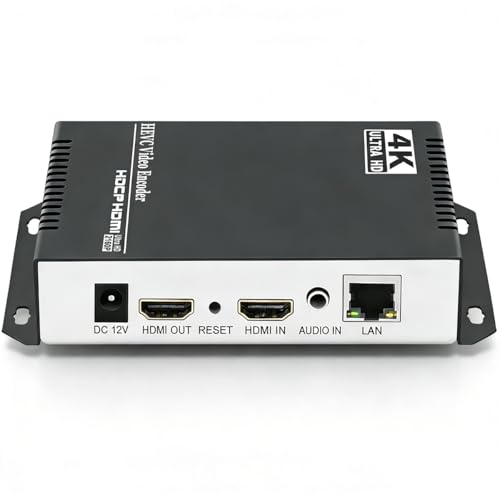
The HEVC H265 H264 HDMI to Ethernet Video Audio Encoder is ideal for content creators who demand high-quality streaming without complexity. With its advanced dual encoding chip, it supports 4K UHD video input at up to 30fps and lower resolutions at 120fps. You can easily stream to multiple platforms like YouTube and Twitch, thanks to its diverse protocol compatibility. Customize your streams with features like static text and brand logos. The intuitive interface guarantees quick setup, while HDMI to Ethernet technology provides stable, low-latency transmission. Plus, enjoy lifetime support and technical assistance for a seamless streaming experience.
Best For: Content creators and live streamers who seek high-quality video streaming with easy setup and customization options.
Pros:
- Supports high-resolution video with 4K UHD input and multiple lower resolutions at high frame rates.
- Wide compatibility with various streaming protocols and platforms, enabling versatile live streaming options.
- Customizable features allow users to add text, logos, and adjust video settings for a personalized streaming experience.
Cons:
- May require a stable internet connection to ensure low-latency transmission for optimal streaming quality.
- Potential learning curve for users unfamiliar with video encoding and streaming technology despite the intuitive interface.
- Limited maximum frame rate at 30fps for 4K video, which may not meet the needs of all high-frame-rate content creators.
4 Channel 4K HDMI Video Encoder for Live Broadcast

For content creators and broadcasters seeking high-quality live streaming solutions, the 4 Channel 4K HDMI Video Encoder stands out with its ability to simultaneously broadcast to up to 16 platforms. With 4 HDMI input interfaces and external audio jacks, it supports real 4K@30Hz encoding, ensuring stunning visuals. You can easily stream to platforms like YouTube, Facebook Live, and Twitch using various protocols like RTMP and HLS. Plus, the LCD screen allows for real-time monitoring. Backed by a 3-year warranty and responsive customer support, this encoder is your go-to tool for professional live broadcasting. Elevate your streaming game today!
Best For: Content creators and broadcasters seeking a reliable solution for high-quality live streaming across multiple platforms.
Pros:
- Simultaneous Broadcasting: Can stream to up to 16 platforms at once, maximizing reach.
- High-Quality Encoding: Supports real 4K@30Hz encoding for stunning visuals in live broadcasts.
- User-Friendly Features: Includes an LCD screen for real-time monitoring and customizable OSD settings.
Cons:
- Limited 4K Channels: Only 2 out of 4 channels can be used at 4K@30Hz, which may restrict certain setups.
- Potential Compatibility Issues: While it supports multiple protocols, some specific platforms may require additional configuration.
- Price Point: The advanced features may come at a higher cost compared to simpler encoders.
Tenveo 4K HDMI Video Switcher Mixer

Engineered for content creators and live event producers, the Tenveo 4K HDMI Video Switcher Mixer stands out with its robust multi-camera management capabilities. You can seamlessly switch between four PTZ cameras, making live streaming a breeze. With dual live streaming support, you’ll connect effortlessly to major platforms like YouTube and Twitch. Its 5.5-inch FHD screen provides a user-friendly interface, while advanced audio processing guarantees first-rate sound quality. Plus, with recording options via USB and SD card, you can capture every moment in stunning detail. Enjoy peace of mind with a 3-year warranty and lifetime technical support.
Best For: Content creators and live event producers looking for a versatile and reliable video switching solution.
Pros:
- Supports dual live streaming to major platforms like YouTube, Facebook, and Twitch.
- Advanced audio processing with multiple channels and customizable settings for optimal sound quality.
- User-friendly interface with a 5.5-inch FHD screen and ergonomic control panel for easy operation.
Cons:
- May require a learning curve for users unfamiliar with video switchers and live streaming technology.
- Limited to 4 HDMI and 4 SDI inputs, potentially restricting larger setups.
- Higher price point compared to simpler video switcher models on the market.
HD HEVC H.265 Video Streaming Encoder for HDMI

Offering unparalleled video quality, the HD HEVC H.265 Video Streaming Encoder for HDMI is perfect for content creators and broadcasters looking to deliver stunning 4K UHD streams. With support for 4K input/output at 30fps and advanced dual encoding technology, you’ll experience superior performance. It seamlessly integrates with popular streaming platforms like YouTube and Twitch, allowing you to output four video streams simultaneously. Plus, you can customize your content with static text, logos, and more. Enjoy stable, low-latency transmission through HDMI to Ethernet technology, ensuring your audience receives an exceptional viewing experience. Lifetime technical support guarantees peace of mind.
Best For: Content creators and broadcasters seeking to deliver high-quality 4K UHD video streams with customizable features.
Pros:
- Supports simultaneous output of four video streams to various platforms.
- Advanced dual encoding technology ensures superior video quality and performance.
- Customization options allow for adding logos, captions, and adjusting video parameters.
Cons:
- Higher initial investment compared to basic encoders.
- May require technical knowledge for advanced customization and setup.
- Limited frame rate at 4K (30fps) may not satisfy all high-motion content needs.
Multi-channel 4K HD HDMI to IP Network Video Stream Encoder
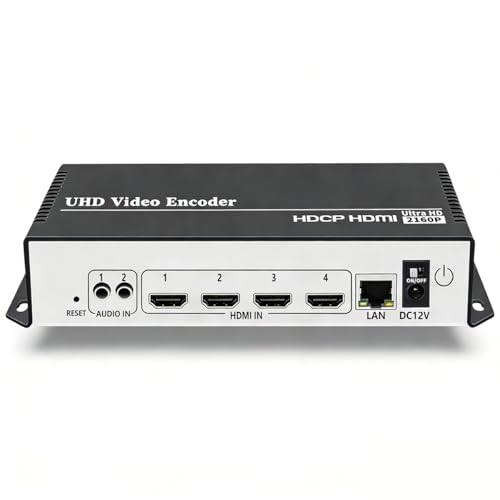
If you’re looking to elevate your live streaming capabilities, the Multi-channel 4K HD HDMI to IP Network Video Stream Encoder stands out with its advanced H.265/H.264 dual encoding chip. It supports 4K UHD video input and offers a maximum frame rate of 30fps, ensuring high-quality streams. You can simultaneously output four video streams across various platforms like YouTube and Facebook Live without extra equipment. Customize your streams with static text, logos, and adjustable parameters. With reliable HDMI to Ethernet technology, expect low latency and a user-friendly interface, making it perfect for both beginners and seasoned streamers.
Best For: This product is best for content creators and live streamers looking for high-quality, multi-platform streaming capabilities without the need for additional equipment.
Pros:
- Supports 4K UHD video input/output with high-quality streaming at a maximum frame rate of 30fps.
- Simultaneous output of four video streams across various platforms, simplifying multi-channel streaming.
- User-friendly interface allows quick setup and management, making it accessible for users with different technical backgrounds.
Cons:
- Limited frame rate of 30fps at 4K may not meet the needs of users requiring higher frame rates for fast-paced content.
- Customization options may require additional time to fully explore and utilize for optimal results.
- Dependency on a stable network connection for low latency and reliable streaming may be a concern in varying environments.
HEVC MPEG4 HDMI to IP Network Video Encoder

For content creators looking to elevate their live streaming capabilities, the HEVC MPEG4 HDMI to IP Network Video Encoder stands out with its advanced dual encoding chip that supports both H.265 and H.264 formats. It delivers stunning 1080P HD video at 60fps, ensuring high-quality streams across platforms like YouTube, Facebook, and Twitch. You can customize streaming parameters, add logos, and even adjust audio settings easily. With multiple streaming protocols supported, you won’t need extra gear. Plus, enjoy lifetime technical support and user-friendly setup, making this encoder a reliable choice for your live streaming needs.
Best For: Content creators and live streamers seeking a reliable and high-quality encoding solution for platforms like YouTube, Facebook, and Twitch.
Pros:
- Supports dual encoding with H.265 and H.264 for optimal video quality.
- Easy customization of streaming parameters and audio settings enhances user control.
- Lifetime technical support provides peace of mind for users.
Cons:
- May require additional setup time for those unfamiliar with video streaming technology.
- Limited to 1080P resolution, which may not satisfy users needing higher resolutions.
- Customer reviews indicate some users experienced minor setup issues.
Factors to Consider When Choosing a Live Streaming Encoder With 4K
When choosing a 4K live streaming encoder, you’ll want to take into account several key factors that impact your streaming experience. Video quality standards, supported streaming protocols, and connectivity options can all affect how well your content reaches your audience. Additionally, pay attention to latency, performance, and the user interface design to guarantee a smooth and efficient workflow.
Video Quality Standards
Choosing a live streaming encoder that meets video quality standards is vital for delivering an exceptional viewing experience, especially in 4K. You should make sure the encoder supports 4K UHD (3840×2160) at a minimum frame rate of 30fps for peak playback. Look for encoders that utilize advanced compression technologies like H.264 and HEVC (H.265) to maintain high video quality while managing bandwidth effectively. It’s also important that the encoder can process high-resolution inputs, ideally supporting up to 4096×2160. Additionally, consider encoders with onboard video processing features like de-interlacing and scaling to enhance your content’s quality. Prioritizing these factors will help you deliver stunning visuals that captivate your audience.
Streaming Protocols Supported
Understanding the streaming protocols your live streaming encoder supports is vital for guaranteeing seamless broadcasts. Look for support for multiple protocols like RTMP, RTMPS, SRT, and HLS. This compatibility allows you to reach various platforms effectively. Plus, the ability to output multiple video streams using different protocols enhances your broadcasting flexibility. Advanced protocols such as SRT provide secure, low-latency transmission, especially over unstable networks, which is essential for maintaining quality. Also, verify compatibility with popular platforms like YouTube, Facebook Live, and Twitch to widen your audience reach. Finally, opt for encoders that integrate easily with existing streaming software like OBS or vMix, making your setup process smoother and more efficient.
Input/Output Connectivity Options
The input and output connectivity options available on a 4K live streaming encoder can greatly impact your streaming experience. First, consider the types of input ports like HDMI and SDI, which allow you to connect various video sources, including cameras. It’s essential to confirm the encoder supports 4K video input and output to maintain high-resolution quality. Look for multiple output options—HDMI, Ethernet, and USB—to create versatile streaming setups. Also, check if the encoder can handle simultaneous outputs across protocols like RTMP, SRT, and HLS for flexibility. Finally, evaluate the encoder’s ability to support audio inputs, such as embedded audio through HDMI or separate line-in options, guaranteeing thorough audio management during your broadcasts.
Latency and Performance
When it comes to live streaming, latency can make or break your viewer experience, so it’s vital to contemplate how different encoders handle it. Low latency is fundamental, especially for fast-paced environments like sports or gaming, where delays can disrupt real-time interactions. Look for encoders designed for minimal signal processing delay and those that support streaming protocols like RTMP and SRT for lower latency and high-quality video. Aim for encoders that handle high frame rates, ideally 60fps or higher at 4K resolution, to guarantee smooth playback. Finally, consider network stability; encoders with features like Power over Ethernet (PoE) and robust network protocols can greatly enhance performance, making your streaming more reliable under varied conditions.
User Interface Design
A user-friendly interface greatly enhances your experience when choosing a 4K live streaming encoder. You’ll want an encoder that allows you to navigate settings easily, even if you lack extensive technical knowledge. Many options feature web-based interfaces, letting you control your stream from devices like PCs, smartphones, or tablets. Look for customizable dashboards that provide real-time video previews, giving you instant feedback on your stream’s quality. Intuitive controls for adjusting video resolution, bitrate, and streaming protocols can streamline your setup process. Additionally, built-in features like static text overlays, scrolling captions, and logo insertion simplify live production, making it easier for you to create engaging content. A well-designed interface can greatly enhance your overall streaming experience.
Power and Portability
Choosing the right 4K live streaming encoder goes beyond just a user-friendly interface; power and portability play significant roles in your overall experience. Look for encoders that support Power over Ethernet (PoE), simplifying setup by reducing cable clutter while guaranteeing reliable power and data transmission. A compact design enhances portability, making it easy to transport and set up in tight spaces. Versatile power sources like USB-C or battery packs offer flexibility in different environments, especially where AC power isn’t available. Lightweight construction is essential for mobility without sacrificing features. Finally, assess the encoder’s heat management and cooling solutions, as effective thermal performance guarantees reliability during extended streaming sessions, allowing you to focus on delivering great content.
Customization Features Available
Customization features in 4K live streaming encoders can markedly enhance your broadcast quality and viewer engagement. You can add static text, scrolling captions, brand logos, and timestamps, which boost branding and keep your audience informed. Adjustable parameters like video resolution, frame rate, and bitrate let you optimize streaming quality based on your needs and network conditions. Personalized editing functions, such as cropping, rotation, and mirroring, provide flexibility for different platforms. Additionally, some encoders support dual input for HDMI embedded audio and line-in audio, allowing you to adjust sound quality as needed. Most advanced encoders also feature user-friendly interfaces, making it easy to monitor your stream’s status and configure settings swiftly.