
When it comes to finding the right modular cinema camera system, you have plenty of choices tailored to your unique filmmaking style. From the versatile Canon EOS C700 series to the innovative Sony FX6, each option boasts impressive features and adaptability. But with so many systems available, how do you determine which one fits your creative vision? Let’s explore some of the top contenders that might just elevate your projects to new heights.
Canon EOS C700 Cinema Camera Bundle (1454C002)

The Canon EOS C700 Cinema Camera Bundle (1454C002) is perfect for filmmakers seeking high-end performance and versatility in their productions. With a 4.5K CMOS sensor that exceeds DCI 4K resolution, you’ll capture stunning visuals with up to 15 stops of dynamic range. Enjoy internal 4K recording at 60p and high-speed options, including 240 fps in 2K. The Dual Pixel CMOS AF guarantees smooth autofocus, making it easy to track subjects. Plus, extensive I/O options enhance connectivity. This modular system, featuring a lightweight design and adjustable focus features, is tailored to meet the demands of modern filmmaking and post-production workflows.
Best For: Filmmakers and content creators seeking high-end cinema performance with versatile recording capabilities for professional productions.
Pros:
- Exceptional Image Quality: The 4.5K CMOS sensor delivers stunning visuals with a dynamic range of up to 15 stops.
- Versatile Recording Options: Supports internal 4K recording at 60p and high-speed 2K recording up to 240 fps for creative flexibility.
- Advanced Autofocus System: Dual Pixel CMOS AF provides smooth and accurate focus tracking, enhancing the shooting experience.
Cons:
- Weight: At 8 pounds, the camera may be heavier than some counterparts, making it less portable for certain shoots.
- Price Point: As a high-end cinema camera, it may be outside the budget range for amateur filmmakers.
- Complexity: The extensive features and settings may require a learning curve for those new to professional filmmaking.
Canon EOS C700 Full-Frame Cinema Camera Bundle

For filmmakers seeking exceptional image quality and versatility, the Canon EOS C700 Full-Frame Cinema Camera Bundle stands out with its impressive full-frame 5.9K CMOS sensor. With around 15 stops of dynamic range and triple DIGIC DV 5 processors, you’ll capture stunning visuals. This camera supports full-frame capture up to 30p and high-speed performance, reaching 72 fps in 4K Super35. Its modular design includes built-in motorized ND filters and a robust body for various mounting options. With dual CFast 2.0 slots and ProRes recording capabilities, this bundle is perfect for cinematic and high-end production workflows.
Best For: Filmmakers and content creators looking for high-quality imaging and versatile recording options for cinematic and broadcast productions.
Pros:
- Exceptional image quality with a full-frame 5.9K CMOS sensor and around 15 stops of dynamic range.
- High-speed recording capabilities up to 72 fps in 4K Super35 and robust dual CFast 2.0 slots for flexible storage options.
- Modular design with built-in motorized ND filters and extensive I/O options for various mounting configurations.
Cons:
- Higher price point may not be suitable for amateur filmmakers or those on a tight budget.
- The camera’s weight and size may make it less portable for on-the-go shooting.
- Learning curve for new users due to advanced features and professional-grade controls.
Canon EOS C700 Cinema Camera Bundle (1454C002)

Designed with professional filmmakers in mind, the Canon EOS C700 Cinema Camera Bundle (1454C002) combines ruggedness with advanced imaging capabilities. You’ll appreciate its 4.5K CMOS sensor that exceeds DCI 4K resolution and offers up to 15 stops of dynamic range, perfect for HDR workflows. With internal 4K recording up to 60p and proxy recording for easy editing, your projects will shine. The bundle includes a powerful EF 70-200mm f/2.8L IS III USM lens, a 64GB memory card, and a camera bag. Plus, its extensive I/O options and Dual Pixel autofocus guarantee you capture every moment flawlessly.
Best For: Professional filmmakers and videographers seeking a high-quality camera system for cinema and broadcast applications.
Pros:
- Exceptional Imaging: 4.5K CMOS sensor with up to 15 stops of dynamic range for stunning HDR content.
- Versatile Recording Options: Supports multiple recording formats, including 4K at 60p and 2K at 240 fps.
- Robust Build Quality: Rugged, modular design ideal for demanding shooting environments.
Cons:
- Weighty Equipment: At 8 pounds, it may be cumbersome for handheld shooting.
- Higher Price Point: The bundle is an investment and may not fit all budgets.
- Complexity for Beginners: Advanced features may be overwhelming for novice users.
Canon EOS C700 Cinema Camera Bundle (1454C002)

Offering exceptional flexibility and performance, the Canon EOS C700 Cinema Camera Bundle (1454C002) is perfect for filmmakers seeking high-quality results. With its 4.5K CMOS sensor, you’ll enjoy stunning resolution and up to 15 stops of dynamic range. Capture internal 4K at 60p or high-speed 2K at 240 fps. The Dual Pixel CMOS AF guarantees smooth autofocus, while manual focus options enhance precision. Designed for modularity, it features extensive I/O connectivity and dual motorized ND filters. The bundle includes a Canon EF 75-300mm lens, a 64GB memory card, and a camera bag, making it ideal for any production environment.
Best For: Filmmakers and production teams seeking high-quality, versatile camera solutions for cinema, broadcast, and HDR workflows.
Pros:
- Exceptional 4.5K resolution with up to 15 stops of dynamic range for stunning image quality.
- Dual Pixel CMOS AF for smooth autofocus and enhanced manual focus controls for precision.
- Modular design with extensive I/O connectivity options, making it adaptable to various production needs.
Cons:
- Higher price point may not be suitable for budget-conscious filmmakers.
- Requires additional accessories for optimal performance, such as external recorders for full sensor RAW recording.
- Bulkier design compared to smaller, more portable camera options, which may limit mobility in certain shooting scenarios.
Sony FX6 Cinema Line Camera Kit (ILME-FX6VK)

The Sony FX6 Cinema Line Camera Kit (ILME-FX6VK) stands out as an exceptional choice for filmmakers seeking a lightweight and versatile camera system. With a full-frame 10.2MP back-illuminated Exmor R CMOS sensor and 4K recording up to 120p, you’ll achieve stunning visuals effortlessly. The kit includes essential gear like a 24-105mm lens, 70-200mm lens, and a robust memory card, ensuring you’re ready for any shoot. Its rugged design and modular capabilities, paired with features like fast hybrid autofocus and built-in ND filters, make it perfect for professional workflows in diverse conditions. Embrace creativity with this powerful setup!
Best For: The Sony FX6 Cinema Line Camera Kit is best for professional filmmakers and content creators looking for a lightweight, high-performance camera that excels in various shooting environments.
Pros:
- Stunning 4K video recording capabilities up to 120p for high-quality visuals.
- Lightweight and rugged design ensures durability and easy handling in diverse shooting conditions.
- Advanced autofocus features including Real-Time Eye AF and Face Detection for sharp focus on subjects.
Cons:
- Higher price point may not be suitable for amateur filmmakers or casual users.
- Weight of the complete kit (18.96 pounds) can be cumbersome for extended handheld use.
- Limited internal storage with only dual CFexpress Type A/SD card slots, requiring additional investment in memory.
Canon EOS C700 Cinema Camera Bundle (1454C002)

If you’re a filmmaker looking for a powerful tool to elevate your production quality, the Canon EOS C700 Cinema Camera Bundle (1454C002) might be exactly what you need. With its 4.5K CMOS sensor and 15 stops of dynamic range, you’ll capture stunning visuals for any project. Record in 4K at 60p and enjoy high-speed 2K capture up to 240 fps. The included EF 50mm lens and advanced autofocus system guarantee smooth focus shifts, while the modular design offers extensive connectivity options. Plus, with ACES compatibility and a range of accessories, this bundle is perfect for both high-budget cinema and ENG work.
Best For: Filmmakers seeking a high-performance camera that excels in both cinema and broadcast environments.
Pros:
- Exceptional 4.5K resolution with 15 stops of dynamic range for high-quality visuals.
- Versatile recording options, including 4K at 60p and high-speed 2K capture up to 240 fps.
- Extensive connectivity options and modular design for flexible production setups.
Cons:
- The camera’s advanced features may have a steep learning curve for beginners.
- Higher price point compared to entry-level cinema cameras, potentially limiting accessibility.
- Requires additional equipment like a Codex Digital Recorder for full-sensor RAW recording, increasing overall cost.
SIRUI SVS Series Carbon Fiber Travel Tripod (SVS75+SVH15)
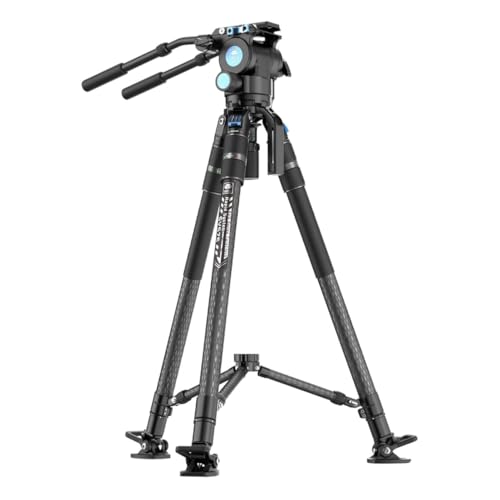
For filmmakers on the go, the SIRUI SVS Series Carbon Fiber Travel Tripod (SVS75+SVH15) stands out with its modular design, making it an ideal choice for versatile shooting situations. Weighing just 3.15 lbs, it’s lightweight yet sturdy, perfect for travel. Its one-step twist-lock system lets you adjust heights quickly, while the option to convert it into a monopod or mini tripod adds flexibility. With a height range from 10 to 60 inches and a built-in bowl for precise leveling, you can tackle various terrains effortlessly. Plus, its compact size guarantees it fits easily in your gear bag.
Best For: The SIRUI SVS Series Carbon Fiber Travel Tripod is best for filmmakers and photographers seeking a lightweight, versatile tripod for travel and outdoor photography.
Pros:
- Lightweight and Portable: Weighs only 3.15 lbs, making it easy to carry during travel.
- Modular Design: Can be converted into a monopod or mini tripod for added versatility.
- Quick Height Adjustment: One-step twist-lock system allows for fast and efficient height changes.
Cons:
- Price Competitiveness: May not be the most budget-friendly option for casual users.
- Limited Customer Reviews: Only 6 reviews, which may not provide a comprehensive user experience.
- Weight Capacity Not Specified: Users may want to know the maximum weight it can support for various equipment.
Sony FX6 Full-Frame Cinema Camera (ILME-FX6V)

Designed with filmmakers in mind, the Sony FX6 Full-Frame Cinema Camera (ILME-FX6V) excels in versatility and performance. Its compact design makes it perfect for narrative films, documentaries, and broadcasts. The 10.2MP back-illuminated sensor, powered by the BIONZ XR processor, delivers over 15 stops of dynamic range and 4K oversampling up to 120p. You’ll appreciate the fast Hybrid AF with 627 phase-detection points. Plus, the built-in electronic variable ND filter guarantees smooth exposure shifts. With a durable magnesium alloy body and modular design, the FX6 is ready for all-day shoots, making it an excellent choice for any filmmaker.
Best For: Filmmakers looking for a compact and versatile cinema camera that excels in narrative film, documentary, and broadcast production.
Pros:
- Exceptional 15+ stops of dynamic range for high-quality imaging.
- Fast Hybrid AF with 627 phase-detection points for precise focus tracking.
- Modular design with a durable magnesium alloy construction for flexibility and reliability.
Cons:
- Body only option may require additional investment for essential accessories.
- Limited internal recording options at higher frame rates may necessitate external recorders.
- Higher price point compared to entry-level cameras may be a barrier for beginners.
SmallRig Mini Matte Box Pro Flag Kit

The SmallRig Mini Matte Box Pro Flag Kit stands out for filmmakers seeking a lightweight yet robust solution for managing light and filters on set. Weighing just 13 ounces and measuring 3.15 x 3.15 x 3.94 inches, it’s made from carbon fiber, ensuring durability without adding bulk. It accommodates a variety of lens sizes, including 95mm cinema lenses, and features two 4 x 5.65 filter frames. The quick-release mechanism allows you to install or remove the filter frame and side flags in just one second. Rated 4.6 stars by customers, it’s a top choice for enhancing your cinematic setup.
Best For: Filmmakers and videographers looking for a lightweight, durable matte box solution to manage light and filters effectively on set.
Pros:
- Lightweight carbon fiber design makes it easy to handle without adding excess weight to your rig.
- Quick-release mechanism allows for fast installation and removal of filter frames and side flags, saving time during shoots.
- Compatible with a wide range of lens sizes and filter types, offering versatility for different filming scenarios.
Cons:
- Not compatible with 95mm micro lenses, which may limit options for some users.
- Limited to specific filter sizes, which might require additional purchases for those with different filter needs.
- Some users may find the size restrictive for larger setups or specific creative requirements.
Tilta Mirage Matte Box for Mirrorless and DSLR Cameras

Filmmakers seeking versatility and ease of use will find the Tilta Mirage Matte Box an ideal choice for mirrorless and DSLR cameras. This modern, modular system includes a matte box, a variable ND filter, and a motor, making it perfect for both solo operators and professional crews. With a 95mm clamp-on design, it adapts easily to classic cinema lenses and lighter configurations for gimbals or drones. The innovative cartridge filter design allows for quick changes, while the lightweight circular filters enhance portability. Its optional VND module, controlled wirelessly, adds to your shooting flexibility without the hassle.
Best For: Filmmakers looking for a versatile and user-friendly matte box system for mirrorless and DSLR cameras.
Pros:
- Modular design allows for easy adaptation to various lens types, including classic cinema lenses.
- Lightweight and compact, making it ideal for use with gimbals and drones.
- Quick filter changes with the innovative cartridge filter design enhance shooting efficiency.
Cons:
- The optional VND module is an additional cost, which may increase overall expenses.
- Requires careful management of power supplies to avoid operational issues with the motor.
- No standalone lithium batteries are included, necessitating separate purchases for power.
Factors to Consider When Choosing a Modular Cinema Camera System
When choosing a modular cinema camera system, you’ll want to contemplate several key factors. Sensor resolution, recording formats, and autofocus capabilities can greatly impact your production quality. Additionally, I/O connectivity and modular design flexibility will affect how well the system meets your unique filming needs.
Sensor Resolution Importance
Choosing the right sensor resolution can greatly impact the quality of your footage. Higher resolutions provide enhanced detail and clarity, making your visuals more stunning. For instance, a 4.5K sensor not only exceeds DCI 4K but also offers up to 15 stops of dynamic range, perfect for capturing intricate highlights and shadows in high-contrast scenes. Full-frame sensors, like those with 5.9K resolution, deliver a wider field-of-view and perform better in low-light conditions. Additionally, sensor resolution influences your recording capabilities; you might enjoy high-speed options, such as 240 fps at 2K, which adds creative flexibility in post-production. Ultimately, your choice also affects compatibility with various lenses and accessories, enhancing your modular cinema camera system’s versatility.
Recording Format Options
What recording format options do you need to take into account for your modular cinema camera system? First, consider the range of formats available, like ProRes and XF-AVC, which can align with your post-production workflow. High-end models often support internal 4K recording at various frame rates, including 60p, giving you flexibility for different scenes. If slow-motion effects are on your radar, look for systems that offer high-speed recording, capturing 2K at up to 240 fps. Additionally, RAW formats provide enhanced color grading options. Finally, the ability to generate proxy files during recording can make editing smoother, especially if you’re dealing with limited bandwidth or storage. Choosing the right formats is essential for achieving your desired results.
Autofocus Capabilities Evaluation
How can you guarantee your modular cinema camera system meets your autofocus needs? First, assess the autofocus coverage area; wider coverage improves tracking and focus accuracy across the frame. Look for cameras featuring Dual Pixel autofocus technology, which offers smooth, precise focusing, particularly in dynamic scenes. Pay attention to face detection and tracking capabilities, as these enhance focus reliability during portraits and interviews. Adjustable autofocus sensitivity is also key, letting you control focus shift speeds for cinematic pulls. Finally, consider systems with manual focus aids like focus guides or peaking, which can help you achieve precise focus in challenging lighting or when using manual lenses. These features ensure you maintain creative control over your shots.
I/O Connectivity Features
When evaluating a modular cinema camera system, prioritizing I/O connectivity features is crucial for seamless integration into your production setup. Look for extensive professional options like SDI, HDMI, XLR audio, timecode, and genlock to guarantee compatibility with various production equipment. Cameras with dual card slots are a smart choice for simultaneous recording, enhancing data redundancy and workflow efficiency. Built-in features like motorized ND filters and Ethernet connectivity offer improved control over exposure and networking. Additionally, check for support of modern standards such as ACES compatibility and anamorphic de-squeeze, essential for high-end color grading and specialized lenses. Finally, verify the design allows for easy attachment and detachment of accessories, providing you flexibility in different shooting scenarios.
Modular Design Flexibility
While searching for the right modular cinema camera system, you’ll want to contemplate its design flexibility, as this can make a notable difference in your production workflow. A modular design allows you to customize and adapt your setup for various shooting conditions, enhancing creativity and efficiency. You can interchange components like lenses, grips, and accessories to match your project needs or shooting style. Many systems also support advanced features such as motorized ND filters and modern I/O options, ensuring compatibility with today’s production standards. With a well-designed modular system, you can markedly reduce setup time, enabling quicker changes between different setups and empowering you to experiment with angles and techniques without extensive equipment changes.