
Preserving old film doesn’t have to mean mailing rolls out for scanning or settling for low-quality phone photos. The right setup can turn 35mm negatives into sharable digital images at home with far more control.
In this roundup, we focus on practical options for different budgets, workflows, and experience levels so you can choose a negative digitizing kit for 35mm film that fits your gear and your archive.
Best 10 Negative Digitizing Kit for 35mm Film Picks for 2026
Camera-Copy Film Digitizer Kit

- Works with 35mm strips and 120 negatives
- 10-level LED backlight with Type-C power
- Adjustable rail and multiple mounting options
Best For: Users who want to digitize negatives with their own camera and macro lens
All-in-One Desk Scanner
KODAK Slide N Scan 22MP Scanner

- Built-in 5-inch LCD for previewing edits
- Converts supported negatives to JPEG files
- Saves to SD card and connects by USB/HDMI
Best For: People who want a self-contained scanner with simple controls
Negative Holder Accessory
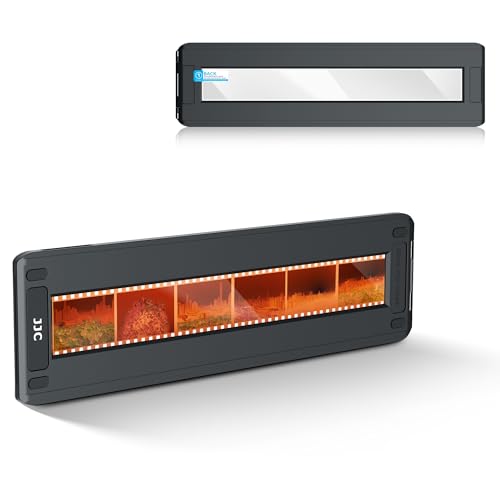
- Holds six 35mm negative frames at once
- Flattening sheet helps reduce curl and moiré
- Magnetic closure and silicone pads improve handling
Best For: Users who need a dedicated holder for 35mm negative strips
Macro Lens Film Digitizer
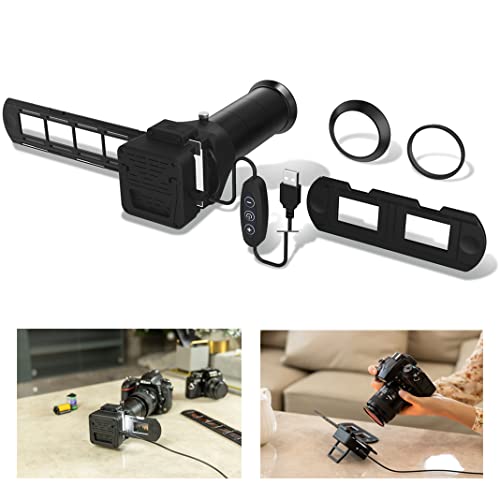
- Works with 35mm negatives and mounted slides
- Includes seven adapters for compatible lenses
- 6500K CRI 95+ backlight with 10 brightness levels
Best For: Photographers using a compatible camera and macro lens for film copying
Upgraded Rail Kit
Adjustable 35mm/120 Film Digitizer
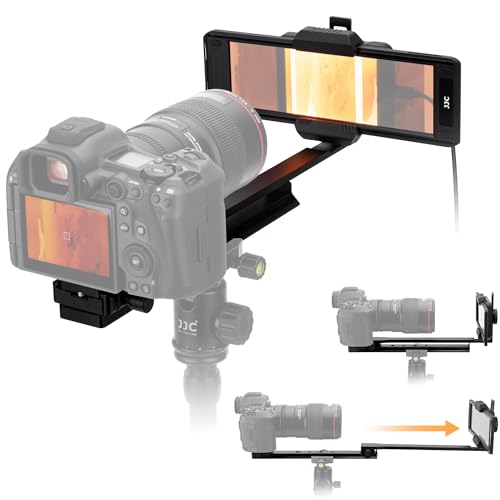
- Works with 35mm and 120 film
- Adjustable rail from 10.4" to 18.5"
- Includes holders, backlight, and mounts
Best For: Camera users who need a flexible film digitizing rig
LED Backlight Light
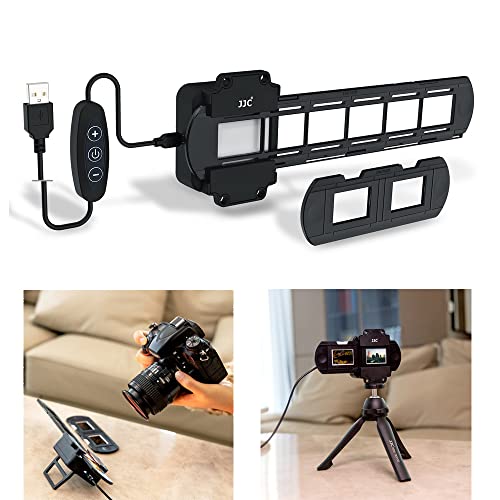
- 42 LEDs with CRI 95+
- 10 brightness levels for exposure control
- Includes strip and slide holders
Best For: Camera owners who want a dedicated backlight for 35mm film
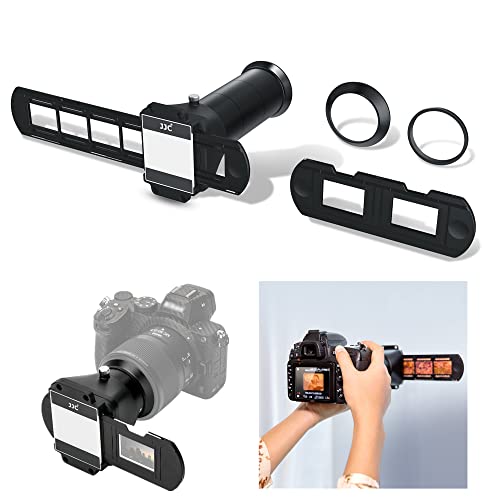
Adapter Set Kit
- Made for 35mm negatives and slides
- Includes 5 adapter rings for select lenses
- Comes with negative and slide holders
Best For: Photographers with compatible macro lenses
Precision LED Digitizing Kit
JJC 35mm Film Digitizer with 10-Level Backlight

- 10-level 6500K LED backlight with 95+ CRI
- Includes 7 adapter rings for select macro lenses
- Holds 35mm negatives and slides steady for copying
Best For: Users who want adjustable lighting and a stable macro-lens film digitizing setup
Soft-Light Copy Stand Kit
JJC Film Digitizing Adapter Set with LED

- 42-LED backlight with soft, even illumination
- 95+ CRI and 6500K color temperature
- Includes 5 adapter rings and slide/strip holders
Best For: Buyers who want a straightforward 35mm film digitizing kit with softer light
Basic Holder Digitizing Kit
JJC 35mm Film Copying Adapter Set

- Holder-based setup for 35mm negatives and slides
- Includes 7 adapter rings for major macro lenses
- Designed to work with your own high-CRI light source
Best For: People who already have lighting and want a simple film copying adapter
Camera-Copy Film Digitizer Kit – JJC 35mm & 120 Film Digitizer
If you want a negative digitizing kit for 35mm film that uses your existing camera instead of a standalone scanner, this JJC setup is built for that workflow. It combines a film holder, LED backlight, and adjustable rail so you can position a macro-lens camera rig for re-photographing 35mm strips or 120 negatives.
Best For: Camera-based digitizing of 35mm and 120 negatives with a macro lens.
Pros:
- Supports both 35mm film strips and 120 medium format negatives.
- Includes a 10-level brightness LED backlight with Type-C power.
- Adjustable slide rail helps dial in shooting distance and focus.
- Arca-Swiss base and threaded mounting options add setup flexibility.
Cons:
- Not intended for 35mm slide digitizing.
- Works best with a macro lens, which is not included.
- Requires a separate camera and lens to operate.
This is a practical choice if you already own a compatible camera system and want more control over the capture process. The included holders and light panel make it a strong foundation for a home film digitizing station.
All-in-One Desk Scanner – KODAK Slide N Scan 22MP Scanner
The KODAK Slide N Scan is a straightforward negative digitizing kit for 35mm film if you prefer an all-in-one device with its own screen. It converts color and black-and-white negatives, plus supported slides, into JPEG files and saves them directly to an SD card, making it a simple option for quick home scanning.
Best For: Users who want a self-contained scanner with an LCD preview screen.
Pros:
- 22MP output with a built-in 5-inch LCD display.
- Handles color and B&W negatives in 135, 110, and 126 formats.
- Easy-load film trays support faster continuous scanning.
- Saves directly to SD or SDHC card and can connect via USB or HDMI.
Cons:
- SD or SDHC card is not included.
- Uses fixed film formats, so it is less flexible than camera-based kits.
- Best suited to supported sizes rather than broader specialty formats.
If you want a simpler path with fewer accessories, this model is appealing because it bundles preview, conversion, and saving into one unit. It is especially convenient for casual archiving and sharing old film memories.
Negative Holder Accessory – JJC 35mm Film Strip Holder
If you already have a scanner or copying setup and need a negative digitizing kit for 35mm film that focuses on film stability, this JJC holder is a useful add-on. It holds a six-frame strip flat, uses a transparent PC sheet to help flatten curled film, and is designed to keep negatives steady during scanning.
Best For: Stabilizing 35mm negative strips in a compatible scanning setup.
Pros:
- Holds six 35mm negative frames in one strip.
- Transparent PC sheet helps flatten film and reduce moiré.
- Magnetic closure and silicone pads support easier handling.
- No assembly required before use.
Cons:
- Holder only; no light source or scanner is included.
- Works only with compatible film scanning equipment.
- Film must be placed correctly to avoid focus or alignment issues.
This is best viewed as a support accessory rather than a complete digitizing solution. It makes sense for users who already have a digitizer and want a cleaner, more stable way to scan 35mm strips.
Macro Lens Film Digitizer – JJC 35mm Slide & Negative Kit
This JJC negative digitizing kit for 35mm film is aimed at photographers who want to re-photograph negatives and slides with a compatible camera and macro lens. It includes a 6500K LED backlight, multiple lens adapters, and both slide and strip holders, so it is set up for a more complete camera-copy workflow.
Best For: Camera owners who want one kit for 35mm negatives and mounted slides.
Pros:
- Supports both 35mm film strips and mounted slides.
- Includes seven lens adapters for a wide range of compatible cameras and macro lenses.
- 6500K backlight has CRI 95+ and 10-level brightness control.
- View-angle adjustment ring helps fine-tune positioning.
Cons:
- Requires a compatible camera and macro lens.
- Manual focus is recommended, so setup is more hands-on.
- Not a standalone scanner with its own display.
For users comfortable with a camera-based digitizing workflow, this kit offers strong flexibility and a well-rounded accessory package. It is a better fit when you want control over lighting and alignment rather than an all-in-one desktop scanner.
Upgraded Rail Kit – Adjustable 35mm/120 Film Digitizer
If you want a negative digitizing kit for 35mm film that also works with 120 formats, this JJC adapter kit is built around a camera-and-lens workflow rather than a standalone scanner. The adjustable slide rail makes it easier to dial in the camera-to-film distance, while the backlit panel provides a dedicated light source for copy work.
Best For: Camera users who want a flexible 35mm and 120 film digitizing setup with adjustable positioning.
Pros:
- Supports both 35mm film and 120 medium format film.
- Adjustable aluminum slide rail lets you fine-tune distance from 10.4″ to 18.5″.
- Detachable backlight offers 11 brightness levels for copy work.
- Includes 35mm and 120 film holders plus tripod/Arca-Swiss mounting options.
Cons:
- Requires your own digital camera and lens to use.
- The backlight is not a standalone scanner.
This is a practical choice if you want an all-in-one support system for rephotographing negatives with a camera. The main advantage is flexibility: rail adjustment, multiple mounts, and included holders make it easier to set up a repeatable digitizing workflow.
LED Backlight Light – 35mm Negatives Scanning Light
This JJC backlight is a focused accessory for negative digitizing kit for 35mm film setups, especially if you already have a macro lens and just need a clean light source. It’s designed for re-photographing 35mm negatives and slides, with built-in film holders and adjustable LED brightness for easier exposure control.
Best For: Users who already own a camera and macro lens and want a simple backlit base for 35mm digitizing.
Pros:
- 42 LEDs with CRI 95+ for high color accuracy.
- 10 brightness levels let you tune the light output.
- Includes holders for 35mm film strips and mounted slides.
- Kickstand and 1/4″ screw hole make placement and mounting straightforward.
Cons:
- Designed mainly as a light source, not a full scanning system.
- Film should not be left in front of the light for a long time while on.
If you already have the camera side of the workflow covered, this is a simple way to improve consistency when copying film. Its strength is in the light quality and ease of mounting, though it does require you to bring the rest of the digitizing setup yourself.
Adapter Set Kit – Lens-Mounted 35mm Film Copier
If your goal is a negative digitizing kit for 35mm film that mounts directly to a macro lens, this JJC ES-2-style adapter set is aimed at that workflow. It’s designed to convert 35mm negatives and slides to digital files, with multiple adapter rings to fit select Canon, Nikon, and Sony macro lenses.
Best For: Photographers who want a lens-mounted 35mm digitizing adapter for supported macro lenses.
Pros:
- Designed for negative copying of 35mm film and slides.
- Includes 5 adapter rings for different compatible macro lenses.
- Simple setup: mount on the lens and insert the film holder.
- Includes both 35mm negative and slide holders.
Cons:
- Compatibility is limited to select camera and macro lens combinations.
- Works best only if you already have a compatible camera system.
This kit makes sense if you want a direct, lens-mounted approach instead of a separate rail or backlight system. Its main advantage is speed and simplicity for supported gear, especially for users who want to digitize negatives continuously with minimal setup.
Precision LED Digitizing Kit – JJC 35mm Film Digitizer with 10-Level Backlight
If you want a negative digitizing kit for 35mm film that supports a controlled, repeatable workflow, this JJC set is built for re-photographing 135 negatives and slides with a macro lens. The included 10-level, 6500K LED backlight with 95+ CRI helps you fine-tune exposure, while the holder design keeps frames steady instead of moving them forward and backward.
Best For: Photographers who want a stable, lens-based 35mm film digitizing setup with adjustable lighting.
Pros:
- 10-level LED backlight lets you adjust brightness for different film and shooting conditions
- Includes 7 adapter rings for compatibility with several Canon, Nikon, and Sony macro lenses
- Designed for continuous copying of 35mm negatives and slides without rotating the frame
- Can be used on a flat surface or mounted via the 1/4"-20 thread
Cons:
- Notes caution against long use of the light to avoid damaging film and holder
- Requires a compatible macro lens and camera setup
- Not a standalone scanner
This is a practical choice if you want precise control over lighting and a straightforward copy workflow. The adjustable backlight and broad lens compatibility make it a strong fit for users already shooting with a macro lens.
Soft-Light Copy Stand Kit – JJC Film Digitizing Adapter Set with LED
This negative digitizing kit for 35mm film is designed for easy re-photographing of slides and negatives with a macro lens. The included LED light uses 42 ultra-bright LEDs with a screen for soft, even illumination, and the 95+ CRI with 6500K color temperature is meant to keep colors accurate and details clear.
Best For: Users who want a simple film-to-digital setup with softer built-in lighting.
Pros:
- 42-LED light panel provides soft, even illumination for copying film
- 95+ CRI and 6500K output are intended to reduce color differences
- Includes 5 adapter rings for several Canon, Nikon, and Sony macro lenses
- Can be set on a flat surface or mounted with the bottom 1/4"-20 thread
Cons:
- Requires a compatible camera and macro lens
- Lens compatibility list is narrower than some other kits in this lineup
- Not intended as a dedicated standalone scanner
Compared with more basic holders, this set stands out for its soft, even lighting approach. It is a sensible option if you want a dependable copying tool and prefer a built-in light source that aims for consistent color and detail.
Basic Holder Digitizing Kit – JJC 35mm Film Copying Adapter Set
If you already have a suitable light source, this negative digitizing kit for 35mm film focuses on the essentials: a holder-based setup for copying 135 negatives and slides with select macro lenses. It keeps the process simple, with a flat-surface support and a 1/4"-20 thread for tripod or stand mounting.
Best For: Shoppers who want a simpler, less bundled film digitizing adapter and already have their own lighting.
Pros:
- Designed for re-photographing 35mm negatives and slides with macro lenses
- Includes 7 adapter rings for broad compatibility across major camera brands
- Supports use on a flat surface or on a tripod/stand via the 1/4"-20 thread
- Notes recommend natural light or a high-CRI fluorescent source for digitizing
Cons:
- Does not include the LED backlight found in the other JJC kit
- Depends on the quality of the user’s external light source
- Requires a compatible macro lens and camera body
This version makes sense if you want the adapter hardware without paying for a bundled light. It is the most stripped-down option here, so it suits users who want to control their own lighting and already have a clean digitizing workflow.
How We Picked the Best Negative Digitizing Kit for 35mm Film
We focused on kits that make digitizing 35mm negatives straightforward, with an emphasis on image quality, alignment stability, and overall ease of use. We also considered whether each option suits occasional family-photo projects or larger, more organized archiving jobs.
Because buyers have different gear and skill levels, the list includes both dedicated scanners and camera-based adapter systems. That gives you more flexibility whether you want an all-in-one solution or a setup built around a mirrorless or DSLR camera.
Quick Comparison
Dedicated scanners are usually the easiest path if you want a compact, self-contained workflow and don’t already own a camera setup. Camera-based adapters can deliver excellent detail and faster batch work, but they depend on your existing camera, lens, and light source. For many users, the best Negative Digitizing Kit for 35mm Film is the one that balances convenience with the level of quality they actually need.
Negative Digitizing Kit for 35mm Film: Key Buying Factors
Workflow: Decide whether you want a standalone scanner or a copy-style adapter that uses your camera. Standalone units are simpler; adapters often offer more control and potentially better image quality.
Film support: Some kits handle only 35mm strips, while others also support mounted slides or additional formats. Make sure the holder matches the kind of film you need to scan most often.
Light quality: A consistent LED backlight with good color rendering helps preserve tones and reduce correction work later. Even illumination matters more than raw brightness.
Alignment and focus: Stable film holders, adjustable rails, and focus-friendly designs reduce blur and keep frames square. That matters if you want clean results without repeated rescans.
Output needs: If you only want easy sharing and basic archiving, a simple scanner may be enough. If you plan to edit, enlarge, or restore images, a camera-based Negative Digitizing Kit for 35mm Film can give you more room to work.
Who Should Buy What
Beginners: Choose an all-in-one scanner if you want minimal setup and simple operation.
Hobbyists and family archivists: A midrange adapter kit is a strong fit if you want better results without a professional workflow.
High-volume users and detail-focused photographers: A camera-based system with a reliable light source and precise film holder is usually the best long-term choice, especially when scanning large photo archives.
In the end, the best option is the one that matches your film volume, your existing equipment, and how much editing you want to do after capture.