
Choosing the right thermal camera for electrical panel inspection can make it easier to spot overheating breakers, loose connections, and imbalanced loads before they become costly failures.
This roundup focuses on practical, inspection-ready options with the resolution, temperature range, and usability features buyers actually need in the field.
Best 10 Thermal Camera for Electrical Panel Inspection Picks for 2026
Commercial-Grade Pick
FLIR TG165-X for Electrical Panels

- MSX helps make thermal details easier to read
- Bullseye laser speeds up hotspot targeting
- Rugged IP54 design suits jobsite use
Best For: Electricians and inspectors needing a durable, easy-to-use screening tool
Long-Battery Mini
TOPDON TC004 Mini for Fast Checks

- 15-hour battery life supports longer inspections
- TISR boosts image detail up to 240x240
- High/low alerts help flag overheating fast
Best For: Portable electrical inspections that need long runtime and simple alerting
Ultra-Light Option

- 240g body is easy to carry and handle
- Thermal imaging plus thermometer mode adds flexibility
- High/low alarms help detect abnormal heat
Best For: Technicians wanting a lightweight dual-mode inspection camera
Analysis-Focused Choice
FOXWELL RT280 for Electrical Diagnostics

- 320x240 LCD with TISR improves thermal clarity
- Windows software supports detailed PC analysis
- 8GB storage holds over 20,000 images and videos
Best For: Users who need documentation and report-ready panel inspections
Pocketable FLIR Option
FLIR C5 Thermal Imaging Camera

- 160 x 120 thermal imaging with MSX detail enhancement
- -20 to 400°C range for electrical and mechanical checks
- Wi-Fi and Ignite cloud for easy image sharing
Best For: Technicians who want a compact thermal camera with simple reporting
Smart Dual-Camera Pick
HF96V Thermal Camera with Visual Camera
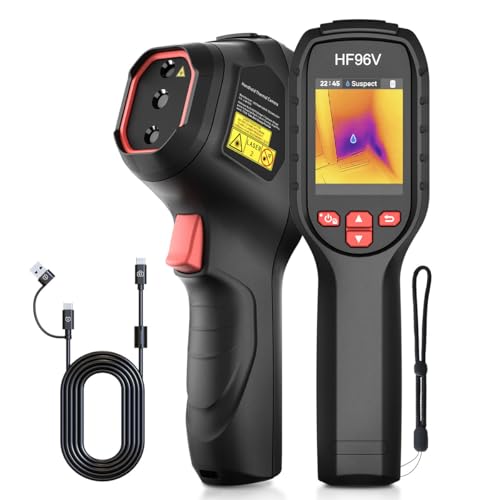
- Dual cameras with thermal, visual, and fusion image modes
- Super resolution displays thermal detail up to 240 x 240
- Laser pointer and tripod support make inspection easier
Best For: Users who want guided anomaly detection with visual context
High-Resolution Workhorse
GT24S Thermal Camera with Thermometer Mode

- Native 256 x 192 IR detector with 320 x 240 upscaling
- Thermometer mode plus thermal mode for flexible measurements
- 10-hour battery life supports full inspection days
Best For: Inspectors who want sharper native detail and all-day runtime
Pro Dual-Lens Pick
FOXWELL RT280 PRO 640x480 Thermal Camera

- Dual thermal + visible cameras with 5 image modes
- TISR boosts effective resolution to 512x384
- Windows PC analysis with report generation
Best For: Electrical inspections that benefit from dual-lens imaging and PC reporting
Smart Scene Detection Pick

- AI scene recognition for faster anomaly detection
- 240x240 live super resolution at 25Hz
- Up to 11 hours runtime with IP54 protection
Best For: Electrical and HVAC users who want AI-assisted scanning and long battery life
Value Fusion Pick
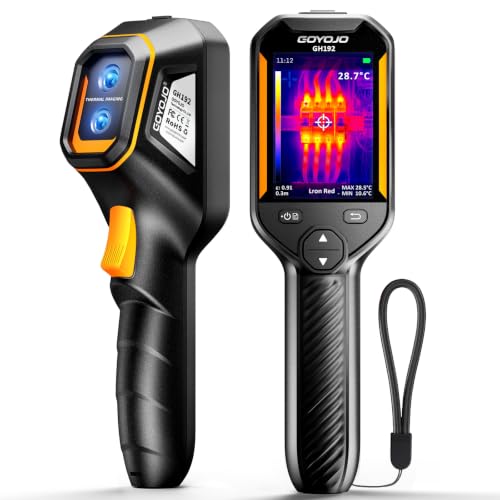
- Fusion, thermal, and conventional light modes
- Auto tracks center, high, and low temperatures
- Compact body with IP54 and 6.6ft drop resistance
Best For: Compact electrical and maintenance inspections on a budget-friendly feature set
Commercial-Grade Pick – FLIR TG165-X for Electrical Panels
If you want a thermal camera for electrical panel inspection that focuses on clear, easy-to-read images, the FLIR TG165-X is built for practical troubleshooting. Its 80×60 infrared sensor, MSX image enhancement, and bullseye laser help you spot and frame hot areas quickly, while the spot thermometer adds a straightforward temperature check.
Best For: Maintenance teams, electricians, and building inspectors who want a rugged, straightforward thermal camera for electrical panel inspection.
Pros:
- MSX enhancement adds visual detail to thermal images for easier interpretation.
- Bullseye laser helps indicate the measurement area for quicker targeting.
- Temperature range of -25°C to 300°C covers many electrical and building checks.
- IP54 enclosure and drop-tested design support jobsite use.
Cons:
- 80×60 IR resolution is modest compared with higher-resolution options.
- Designed more for practical screening than advanced analytics.
For panel checks where durability and simple hotspot detection matter more than advanced software, the TG165-X is a dependable field tool. It keeps the workflow straightforward and is well suited to fast, repeatable inspections.
Long-Battery Mini – TOPDON TC004 Mini for Fast Checks
The TOPDON TC004 Mini is a compact thermal camera for electrical panel inspection when you want a small tool with strong battery life and smart alerts. It starts with 128×128 thermal imaging and uses TISR to enhance detail up to 240×240, while the 25Hz refresh rate helps keep images smooth during inspections.
Best For: Users who want a pocket-friendly thermal camera for electrical panel inspection with long runtime and automatic alert features.
Pros:
- Up to 15 hours of battery life supports longer work sessions.
- High/low temperature alerts can warn you when readings exceed preset limits.
- Built-in storage can hold up to 8,000 photos for documentation.
- IP54 rating and 2-meter drop resistance add everyday durability.
Cons:
- Native 128×128 resolution is boosted by TISR, not a true high-res sensor.
- No charging head is included with the cable.
For quick electrical scans where portability and battery endurance matter, the TC004 Mini is easy to carry and easy to keep running. Its smart alerts and image capture features make it practical for routine fault-finding.
Ultra-Light Option – GT14S for Panel Spot Checks
The GT14S is a lightweight thermal camera for electrical panel inspection that pairs thermal imaging with a separate thermometer mode. Its 50mK sensitivity, adjustable emissivity, and wide temperature range make it useful when you need to spot subtle changes and also confirm exact readings.
Best For: Technicians who want a very light thermal camera for electrical panel inspection with both imaging and point temperature reading modes.
Pros:
- Weighs just 240g, making it easy to handle during longer use.
- Dual mode operation includes thermal imaging and thermometer mode.
- Wide -4°F to 1022°F range supports many inspection tasks.
- Custom high/low alarms can help flag abnormal temperatures quickly.
Cons:
- Focuses on core inspection functions rather than advanced reporting tools.
- No storage or PC analysis features are highlighted in the supplied notes.
If you want a compact inspector’s tool for quick panel checks, the GT14S keeps things simple while still offering useful temperature analysis. Its light weight and dual-mode design make it a practical everyday carry option.
Analysis-Focused Choice – FOXWELL RT280 for Electrical Diagnostics
The FOXWELL RT280 is a thermal camera for electrical panel inspection aimed at users who want more than a quick look. Its 320×240 LCD, TISR-enhanced thermal output, built-in laser, and PC analysis software make it a strong fit when you need to document and study hotspots in more detail.
Best For: Inspectors who need a thermal camera for electrical panel inspection with image capture, storage, and PC-based analysis.
Pros:
- 320×240 LCD and TISR support clearer thermal visuals.
- PC software offers point, line, and area analysis plus report generation.
- 8GB storage can hold over 20,000 images and videos.
- Laser pointer and LED light help in dark or tight spaces.
Cons:
- PC analysis is Windows-only and not compatible with Mac.
- More feature-rich than a basic point-and-shoot thermal tool.
For panel inspections that require records, measurements, and follow-up analysis, the RT280 brings a more professional workflow. It is especially appealing if you want to turn thermal data into organized reports.
Pocketable FLIR Option – FLIR C5 Thermal Imaging Camera
If you want a thermal camera for electrical panel inspection that’s easy to carry and fast to interpret, the FLIR C5 is built for practical troubleshooting. Its 160 x 120 thermal resolution, MSX image enhancement, and -20 to 400°C measurement range make it well suited for finding abnormal heat patterns in panels, motors, and other equipment.
Best For: Technicians who want a pocketable inspection camera with simple image sharing and clear thermal overlays.
Pros:
- 160 x 120 true thermal imaging with FLIR MSX for sharper-looking panel images
- Measures from -20 to 400°C, covering many electrical and mechanical inspection needs
- Wi-Fi and FLIR Ignite cloud support make it easy to upload and share reports
- Compact pocket design with included case, charger, and wrist strap
Cons:
- Lower thermal resolution than higher-end inspection cameras
- Fixed-focus design may be less flexible in tight inspection spaces
The C5 is a solid choice if you value portability and straightforward documentation more than advanced measurement features. For routine panel checks and quick fault hunting, it offers a balanced mix of usability and FLIR image quality.
Smart Dual-Camera Pick – HF96V Thermal Camera with Visual Camera
The HF96V is a practical thermal camera for electrical panel inspection when you want both thermal and visual context in one scan. With dual cameras, a 50° field of view, auto hot-spot tracking, and super-resolution output up to 240 x 240, it’s designed to help you spot abnormalities quickly and understand what you’re seeing.
Best For: Users who want a budget-friendly inspection tool with visual reference, laser aiming, and automated anomaly detection.
Pros:
- Dual-camera system combines 96 x 96 IR and 640 x 480 visible imaging
- Super resolution boosts thermal viewing from 96 x 96 to 240 x 240 in real time
- IntellFault scene recognition helps identify water leaks and insulation gaps
- Laser pointer, tripod hole, and Windows software add inspection convenience
Cons:
- Native IR resolution is still 96 x 96 before upscaling
- Scene-recognition features may require firmware updates and setup
If your priority is easier fault spotting rather than maximum native resolution, the HF96V brings a lot of useful tools to the job. It’s especially appealing for users who want visual confirmation, fast scanning, and guided detection features in one handheld unit.
High-Resolution Workhorse – GT24S Thermal Camera with Thermometer Mode
The GT24S is a strong thermal camera for electrical panel inspection if you want higher native image quality and precise temperature tracking. Its native 256 x 192 infrared detector, 25 Hz refresh rate, and thermometer mode give it the speed and detail needed to check overloaded panels, HVAC equipment, and other hot spots with confidence.
Best For: Inspectors who want a sharper native sensor, broad temperature range, and long battery life for full-day work.
Pros:
- Native 256 x 192 IR detector with real-time upscaling to 320 x 240
- Thermometer mode locks onto a single target for precise point readings
- -4°F to 1202°F range with ±2% accuracy covers many inspection tasks
- 10-hour battery life and 198 g weight support extended handheld use
Cons:
- No visible camera, so you lose visual reference in the image
- Some advanced display tuning still relies on manual setup like emissivity and level/span
For users who care most about native thermal detail and practical measurement range, the GT24S stands out. It’s a capable all-day inspection tool for panel checks, hot spot hunting, and other maintenance work where reliable thermal data matters.
Pro Dual-Lens Pick – FOXWELL RT280 PRO 640×480 Thermal Camera
If you need a thermal camera for electrical panel inspection, the FOXWELL RT280 PRO stands out for its dual-camera setup and higher-detail imaging workflow. It combines thermal and visible views, offers multiple fusion modes, and adds laser targeting plus PC analysis to help you pinpoint hotspots and document findings more clearly.
Best For: Electrical techs and inspectors who want dual-lens imaging, PC reporting, and clearer hotspot documentation.
Pros:
- Dual-lens design with thermal and 2MP visible-light cameras plus 5 viewing modes.
- TISR boosts effective thermal resolution to 512×384 for finer temperature detail.
- 9 color palettes, laser pointer, and LED light help in dark or cramped electrical spaces.
- Windows PC software supports point, line, and area analysis with report generation.
Cons:
- PC analysis is Windows-only and not compatible with Mac.
- Higher-end feature set may be more than casual users need.
For buyers who want a more inspection-focused tool, this model offers one of the strongest mixes of image clarity, viewing flexibility, and reporting support in the group. It is especially appealing when you need to compare thermal patterns against the real scene in an electrical panel.
Smart Scene Detection Pick – HF96 AI Thermal Camera
The HF96 is a practical thermal camera for electrical panel inspection if you want automatic scene recognition and straightforward hotspot tracking. Its live super-resolution output, laser pointer, and wide 50° field of view make it useful for scanning panels, tracing anomalies, and reading temperature differences with less guesswork.
Best For: Users who want AI-assisted detection, long runtime, and easy thermal scans in electrical and HVAC work.
Pros:
- AI scene recognition helps identify issues like leaks and insulation gaps faster.
- Live super resolution enhances images to 240×240 at 25Hz.
- Automatically tracks hot spot, cold spot, and center spot for quicker checks.
- Up to 11 hours of runtime, plus 4 GB storage and IP54 protection.
Cons:
- Notes specify no moisture readings.
- Best AI features require a firmware update and selecting the Scene mode.
Overall, the HF96 is a strong choice for buyers who want thermal inspection made simpler rather than more complex. It balances smart detection with long battery life and practical field features that suit routine electrical panel work.
Value Fusion Pick – GH192 240×240 Thermal Imager
The GH192 is a compact thermal camera for electrical panel inspection that covers the basics well, with fusion imaging, automatic temperature tracking, and high/low alarms. Its 2MP visible camera and 240×240 super IR resolution make it a practical option when you want clear enough thermal feedback without adding extra complexity.
Best For: Buyers who want a compact, straightforward thermal imager for electrical and maintenance checks.
Pros:
- Dual-light fusion imaging combines thermal and visible views for easier interpretation.
- Automatic center, high, and low temperature tracking helps flag abnormalities quickly.
- 2.8-inch IPS display and 25Hz refresh rate support responsive scanning.
- IP54 rating, 6.6ft drop resistance, and 8-hour runtime suit field use.
Cons:
- Accuracy is listed at ±2°C, which is less precise than some higher-end options.
- Fewer image modes than the other products in this roundup.
This model makes sense if you want a no-frills thermal imager that still includes the essentials for electrical troubleshooting. It is especially appealing for users who value portability, alarm alerts, and fused views more than advanced analysis tools.
How We Picked the Best Thermal Camera for Electrical Panel Inspection
We prioritized models that balance thermal resolution, screen visibility, temperature coverage, and field usability. For a Thermal Camera for Electrical Panel Inspection, the most useful tools are the ones that produce clear enough images to distinguish hot spots on terminals, breakers, and bus bars without slowing down the job.
We also looked at runtime, portability, measurement aids like laser pointers or on-screen temperature tools, and whether the camera is practical for both quick troubleshooting and routine maintenance checks.
Quick Comparison
In general, lower-cost compact cameras are best for basic spot checks, while higher-resolution dual-camera models are better when you need more detail or documentation. If you inspect panels regularly, a clearer display and stronger thermal resolution can save time by reducing guesswork.
Battery life matters too. A long-running handheld unit is often more valuable than extra features you will not use on most jobs. If you work in tight electrical rooms or service calls, lightweight designs are also easier to carry and aim accurately.
Key Buying Factors for Thermal Camera for Electrical Panel Inspection
Thermal Resolution and Image Clarity
Resolution is one of the most important factors because electrical faults often show up as small, localized hot spots. Higher native IR resolution generally helps you identify differences across closely packed components more confidently.
Temperature Range and Measurement Tools
Make sure the camera covers the temperatures you are likely to see in energized panels and supports useful spot measurement or alarm features. Temperature alarms can help highlight conditions that deserve immediate attention.
Battery Life and Portability
Long battery life is especially helpful during service routes, plant walkthroughs, and extended troubleshooting. A lightweight form factor also reduces fatigue when scanning multiple panels in a row.
Visual Aids and Workflow Features
Features like a visual camera, fusion imaging, laser pointer, or scene enhancement can make it easier to document findings and explain them to customers or facility teams. These tools are particularly useful when images must be shared in reports.
Who Should Buy Which Thermal Camera for Electrical Panel Inspection?
If you need a simple, budget-conscious option for occasional inspections, choose a compact model with decent thermal resolution and easy controls. If you perform frequent diagnostics or need clearer documentation, step up to a higher-resolution camera with dual imaging or better image processing.
For electricians, HVAC technicians, and maintenance teams working around panels daily, the best choice is usually the camera that combines dependable accuracy, fast startup, and enough runtime to handle a full shift without recharging.