
Choosing the right FLIR thermal imaging camera comes down to image clarity, ease of use, and how you plan to inspect. Some models are built for electricians and HVAC pros, while others are better for quick home diagnostics or smartphone-based convenience.
Below, we focus on the features that matter most so you can compare 10 strong options and choose the best fit for your workflow and budget.
Best 10 FLIR Thermal Imaging Camera Picks for 2026
Commercial Inspection Pick
FLIR E6 Pro Wifi Thermal Camera

- 240 x 180 thermal resolution with MSX
- FLIR Ignite cloud for storage and sharing
- Measures -20C to 550C
Best For: Commercial inspections and cloud-based reporting
High-Detail Handheld Pick

- 512 x 384 upgraded thermal resolution
- 3.5-inch IPS display with 2MP visible camera
- Up to 10.5 hours battery life
Best For: Users wanting high detail and long runtime
Compact Pro Pick
FLIR C8 Compact Thermal Camera

- 320 x 240 resolution with 76,800 pixels
- 35b0 HFOV and MSX image enhancement
- FLIR Ignite cloud for sharing reports
Best For: Everyday building, HVAC, and electrical diagnostics
Phone-Based Value Pick
FLIR One Pro USB-C Thermal Camera
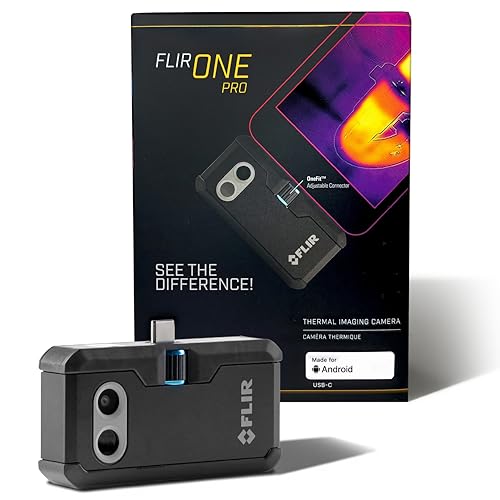
- USB-C phone compatibility for Android devices
- VividIR upsamples to 480 x 360
- App includes inspection guides
Best For: Portable home and on-the-go inspections
Rugged Entry Inspection Camera
FLIR TG165-X Thermal Imaging Camera

- 80 x 60 IR with spot thermometer
- MSX and Bullseye laser aid targeting
- IP54 rugged build for field use
Best For: Quick building, HVAC, and electrical spot checks
Wi-Fi Inspection Upgrade
FLIR E5 Pro WiFi Thermal Camera

- 160 x 120 thermal resolution
- Wi-Fi and Ignite Cloud support
- MSX for clearer inspection images
Best For: Commercial users who need cloud-connected reporting
Higher-Detail Inspection Camera
FLIR TG268 Thermal Imaging Camera
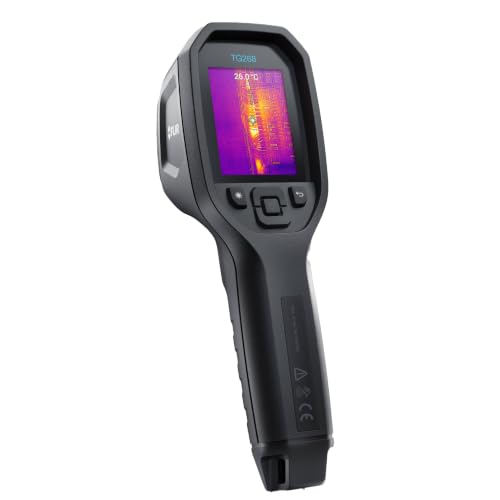
- Super Resolution upscales to 320 x 240
- 160 x 120 native IR with MSX support
- IP54 rugged build for field inspections
Best For: Users who want more image detail for inspection work
Pro-Grade Commercial Pick
FLIR E8 Pro WiFi Thermal Camera

- 320 x 240 thermal resolution
- MSX and FLIR Ignite cloud support
- -20 to 550°C measurement range
Best For: Commercial inspection and professional troubleshooting
Compact Budget-Friendly Pick
FLIR C3-X Pocket Thermal Imager
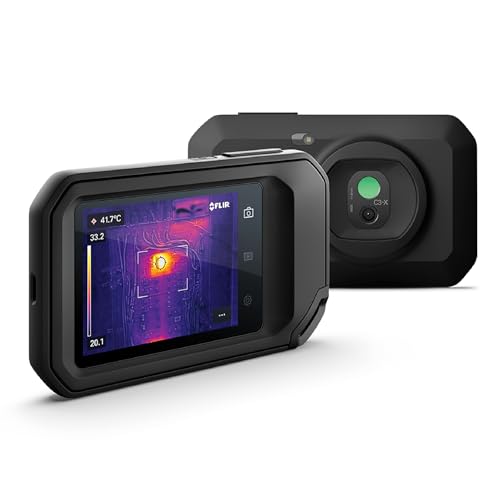
- 128 x 96 true thermal imaging
- WiFi with FLIR Ignite cloud
- Compact 6.72-ounce design
Best For: Portable inspections and basic thermal troubleshooting
Balanced Pocket Option
FLIR C5 Compact Thermal Camera

- 160 x 120 true thermal imaging
- -20 to 400°C temperature range
- WiFi and FLIR Ignite cloud
Best For: Everyday inspections needing a pocketable upgrade
Commercial Inspection Pick – FLIR E6 Pro Wifi Thermal Camera
If you want a FLIR thermal imaging camera for day-to-day commercial troubleshooting, the E6 Pro is built for fast, practical inspections. It combines 240 x 180 thermal resolution, MSX image enhancement, and FLIR Ignite cloud support, so you can capture, store, and share findings without extra friction.
Best For: Commercial inspection work, electrical checks, HVAC diagnostics, and teams that want cloud-connected reporting.
Pros:
- 240 x 180 thermal resolution with MSX for clearer, easier-to-read images
- FLIR Ignite cloud lets you store, edit, and share images quickly
- Measures from -20C to 550C for a wide range of inspection tasks
- Includes a 2-10 warranty with 10 years on the detector
Cons:
- 9Hz refresh rate is not as fast as some higher-end thermal cameras
- Resolution is solid for commercial use, but lower than premium models
The E6 Pro is a strong fit if you value FLIR’s software workflow and dependable inspection basics more than maximum thermal detail. Its practical feature set makes it a straightforward choice for professionals who need a commercial thermal imaging camera that is easy to use and easy to document with.
High-Detail Handheld Pick – Thermal Master Thor 002
For buyers comparing a FLIR thermal imaging camera alternative with more display and sensor detail, the Thor 002 stands out on specs. It pairs a 512 x 384 Xb3IR thermal resolution with a 2MP visible camera, a 3.5-inch 640 x 480 IPS screen, and 40mK sensitivity for more detailed on-site thermal work.
Best For: Professionals who want high thermal detail, longer battery life, and flexible field use.
Pros:
- Upgraded 512 x 384 Xb3IR resolution for finer thermal detail
- 3.5-inch 640 x 480 IPS screen with a 2MP visual camera
- 40mK sensitivity and b13.6b0F accuracy support precise measurements
- 5000mAh battery delivers up to 10.5 hours of runtime
Cons:
- Not a FLIR-branded unit, which may matter if you want the FLIR ecosystem
- Heavier than compact phone-based thermal cameras
The Thor 002 is aimed at users who prioritize resolution, battery life, and documentation tools over brand familiarity. If your workflow depends on detailed handheld thermal inspection with recording, wireless transfer, and rugged handling, it offers a lot of capability in one device.
Compact Pro Pick – FLIR C8 Compact Thermal Camera
The FLIR C8 is a compact FLIR thermal imaging camera designed for quick troubleshooting when portability matters. With 320 x 240 resolution, a 35b0 HFOV, and MSX enhancement, it gives you a sharper thermal view for building, electrical, and HVAC inspections.
Best For: Technicians who want a compact FLIR camera for everyday field diagnostics and reporting.
Pros:
- 320 x 240 thermal resolution with 76,800 pixels on target
- 35b0 horizontal field of view helps capture more of the scene
- MSX image enhancement makes thermal images easier to interpret
- FLIR Ignite cloud support simplifies uploading and sharing reports
Cons:
- Not water resistant
- 9 fps continuous shooting speed is modest for fast-moving capture needs
The C8 makes sense if you want a small FLIR unit that still delivers practical image clarity and a cleaner reporting workflow. It is especially appealing for users who need a compact camera for frequent inspections rather than a bulky, feature-heavy platform.
Phone-Based Value Pick – FLIR One Pro USB-C Thermal Camera
The FLIR One Pro is a compact FLIR thermal imaging camera that plugs into a USB-C Android phone, making it a convenient option for quick inspections on the go. It uses VividIR to upscale to 480 x 360 from 160 x 120 native IR, and MSX to merge thermal and visual detail in real time.
Best For: Android users who want a portable thermal camera for home inspections and field checks.
Pros:
- USB-C compatibility works with Android phones like Samsung Galaxy and Google Pixel
- VividIR upscales images to 480 x 360 for more detail
- MSX helps blend thermal and visual information for easier interpretation
- Step-by-step inspection guides in the app support common home checks
Cons:
- Native IR resolution is 160 x 120, so it depends on upscaling for detail
- Accuracy spec is limited to a specific temperature range and scene range
The One Pro is a smart choice if you want a lightweight, phone-connected thermal tool instead of a standalone handheld camera. It is especially useful for users who need portability, simple app guidance, and enough detail for common home or jobsite troubleshooting.
Rugged Entry Inspection Camera – FLIR TG165-X Thermal Imaging Camera
The FLIR thermal imaging camera in the TG165-X is built for fast, practical troubleshooting in building inspection, HVAC, and electrical work. Its 80 x 60 IR sensor, spot thermometer, and Bullseye laser make it a straightforward tool when you need to find hot or cold areas quickly, while MSX helps sharpen the image with visible detail.
Best For: Technicians and inspectors who want a rugged, easy-to-use FLIR thermal imaging camera for quick measurement checks.
Pros:
- 80 x 60 IR resolution with temperature measurement from -25°C to 300°C
- MSX and Bullseye laser make target areas easier to identify
- Rugged IP54 enclosure helps protect against dirt, dust, and oil
- Includes wrist strap, USB-C cable, and carry pouch
Cons:
- Lower IR resolution than higher-end FLIR models
- Temperature range is narrower than some other options in this roundup
This is a solid choice if you need a dependable inspection camera with simple controls and tough construction. It focuses on quick detection and clear interpretation rather than advanced imaging features.
Wi-Fi Inspection Upgrade – FLIR E5 Pro WiFi Thermal Camera
The FLIR thermal imaging camera in the E5 Pro is aimed at commercial inspection work where image clarity and workflow matter. It measures from -20°C to 400°C, uses a 160 x 120 thermal sensor with MSX, and adds FLIR Ignite Cloud plus Wi-Fi for saving, editing, sharing, and keeping the camera updated.
Best For: Inspectors and contractors who want a higher-resolution FLIR thermal imaging camera with cloud connectivity.
Pros:
- 160 x 120 thermal resolution for more detailed inspection images
- Wi-Fi and FLIR Ignite Cloud support image storage and sharing
- MSX helps thermal images look sharper and easier to read
- Measures temperatures from -20°C to 400°C
Cons:
- Only 9Hz refresh rate, which may feel less fluid than faster cameras
- Bulkier than compact spot-check style cameras
The E5 Pro makes sense when you want a more capable inspection camera with modern file handling built in. It is a practical step up for users who value resolution and cloud-based workflows.
Higher-Detail Inspection Camera – FLIR TG268 Thermal Imaging Camera
The FLIR thermal imaging camera in the TG268 is built for users who want more detail in a compact inspection tool. It starts with 160 x 120 native IR, then uses Super Resolution to upscale the image to 320 x 240, while the 640 x 480 visual camera supports MSX for clearer scene context and a Bullseye laser helps mark the measurement area.
Best For: Building, HVAC, and electrical professionals who want a FLIR thermal imaging camera with stronger image detail.
Pros:
- Super Resolution upscales thermal images to 320 x 240
- 160 x 120 native IR plus 640 x 480 visual camera with MSX
- Bullseye laser makes the measurement area easier to target
- IP54 enclosure and drop-tested design for tougher jobsites
Cons:
- Still based on 160 x 120 native IR, not true 320 x 240 sensor resolution
- No Wi-Fi or cloud workflow features listed
The TG268 stands out if image clarity is your priority and you want a more detailed view without moving to a larger platform. It keeps the practical inspection features while adding extra visual refinement.
Pro-Grade Commercial Pick – FLIR E8 Pro WiFi Thermal Camera
The FLIR thermal imaging camera in the E8 Pro is aimed at users who need clearer diagnostics and a wider temperature span for commercial inspection work. With 320 x 240 thermal resolution, MSX image enhancement, and WiFi plus FLIR Ignite cloud support, it is built to speed up fault finding and make it easier to store and share results.
Best For: Commercial inspectors, electricians, and HVAC pros who want higher-resolution thermal imaging with cloud workflow support.
Pros:
- 320 x 240 thermal resolution helps reveal hidden faults more clearly.
- MSX technology adds visible detail for easier-to-read images.
- FLIR Ignite cloud and WiFi simplify saving, editing, and sharing images.
- Wide -20 to 550°C measurement range suits demanding inspection jobs.
Cons:
- More camera than casual users likely need for basic home checks.
- 9Hz refresh rate is geared toward inspection use, not fast motion.
- Bulky compared with pocket-sized compact models.
This is the most capable option in this group if you want a serious inspection camera with stronger thermal resolution and a more professional workflow. The detector warranty coverage also adds peace of mind for long-term use.
Compact Budget-Friendly Pick – FLIR C3-X Pocket Thermal Imager
The FLIR thermal imaging camera in the C3-X format is a compact inspection tool for users who want a lightweight thermal imager with WiFi and cloud sharing. Its 128 x 96 true thermal imaging, MSX enhancement, and built-in visual camera make it a practical choice for electrical, mechanical, building, and HVAC checks.
Best For: Technicians and property professionals who want a small, easy-to-carry inspection camera with basic thermal imaging and cloud reporting.
Pros:
- Compact 6.72-ounce body is easy to carry on daily jobs.
- MSX plus 128 x 96 thermal imaging helps identify trouble spots.
- WiFi and FLIR Ignite cloud make image upload and report sharing straightforward.
- Built-in LED flashlight adds convenience in dark work areas.
Cons:
- Lower thermal resolution than the higher-end E8 Pro.
- Temperature range tops out at 300°C, which is less than the C5 and E8 Pro.
- Fixed focus and pocket-size design limit flexibility for some jobs.
The C3-X is a sensible entry point if you want FLIR workflow features in a very portable body. It gives up resolution and range, but keeps the essentials for quick inspections and documentation.
Balanced Pocket Option – FLIR C5 Compact Thermal Camera
The FLIR thermal imaging camera in the C5 gives you a compact body, WiFi, and a stronger thermal sensor than the C3-X. With 160 x 120 true thermal imaging, MSX, and FLIR Ignite cloud connectivity, it sits in a useful middle ground for inspection work where better detail and a broader temperature range matter.
Best For: Users who want a pocketable FLIR camera with better thermal resolution and wider temperature coverage than entry-level compact models.
Pros:
- 160 x 120 thermal imaging offers more detail than the C3-X.
- -20 to 400°C range covers a broad set of inspection tasks.
- MSX and FLIR Ignite cloud improve image clarity and reporting.
- Pocket-sized design keeps it easy to carry on service calls.
Cons:
- Not as high-resolution as the E8 Pro.
- Fixed focus may be limiting for certain close-up or specialized work.
- Still a compact camera, so it lacks the advanced feel of larger professional units.
The C5 is the most balanced choice here if you want a small FLIR camera with better thermal detail than the C3-X but without jumping to a larger pro model. It is a strong fit for everyday inspection and documentation tasks.
How We Picked the Best FLIR Thermal Imaging Camera
We focused on practical buying criteria: thermal resolution, screen quality, temperature range, connectivity, portability, and the features that make inspection work faster in the field. We also favored models that suit common use cases such as electrical troubleshooting, HVAC checks, moisture detection, and building surveys.
For a FLIR Thermal Imaging Camera, usability matters as much as raw specs. Models with MSX enhancement, cloud upload, Wi‑Fi, and clear onboard displays tend to be easier to trust and faster to document with.
Quick Comparison
In this roundup, compact cameras are the best match for everyday inspections and travel-friendly portability, while the E-series tools are better suited to users who want stronger thermal performance and more professional workflows. Smartphone-compatible options are convenient for occasional use, but dedicated handheld cameras usually offer a better inspection experience.
Key Buying Factors for a FLIR Thermal Imaging Camera
Thermal Resolution and Image Clarity
Higher thermal resolution generally improves the ability to spot small temperature differences and identify anomalies at a distance. If you inspect panels, equipment, or building envelopes regularly, prioritize sharper thermal output and image-enhancement features that improve detail.
Display, Ergonomics, and Portability
A bright display and a comfortable grip make long inspection sessions easier. Compact models are ideal for technicians who move between job sites, while larger professional units may be worth the tradeoff if you need better controls and a more robust feature set.
Connectivity and Reporting
Wi‑Fi, cloud storage, and app support can save time when documenting findings. If you send reports to clients or teams, choose a model that makes it simple to transfer images and organize inspection data.
Temperature Range and Use Case
Make sure the camera’s temperature range matches your work. HVAC, electrical, and industrial users often need a broader range and reliable spot-checking, while homeowners may care more about leak detection and insulation gaps than extreme heat measurements.
Who Should Buy Which FLIR Thermal Imaging Camera?
Buy a compact FLIR Thermal Imaging Camera if you want easy handling, quick startup, and simple inspections around the home or job site. Choose a mid- to higher-tier E-series model if you need better detail, more serious documentation, and a tool that fits professional workflows. Smartphone attachments are best for occasional users who want thermal access without carrying a separate device.
If you are inspecting electrical systems, HVAC equipment, or building components regularly, prioritize clarity, reliability, and reporting features over the lowest price. That balance usually delivers the best long-term value.