
Choosing a fisheye lens for astrophotography is about more than extreme width. The right option can help you fit more of the Milky Way, foreground, and night-sky drama into a single frame.
Below, we focus on lenses that balance field of view, aperture, mount compatibility, and manual-control usability for low-light shooting.
Best 10 Fisheye Lens for Astrophotography Picks for 2026
Budget Add-On Option

- Screw-on design fits 58mm threads
- 180° view for fisheye effects
- Detachable macro section adds close-up use
Best For: Photographers with 58mm lenses who want a low-cost fisheye add-on
Manual APS-C Fisheye

- 7.5mm prime with 180° view
- f/2 aperture helps in low light
- Manual focus keeps operation simple
Best For: Sony APS-C users wanting a dedicated manual fisheye for night scenes
Canon EF Fisheye Pick
- 180° view with removable hood
- Metal build with multi-layer coating
- Manual focus for Canon EF DSLRs
Best For: Canon DSLR owners who want a durable manual fisheye for wide night scenes
APS-C Night-Sky Fisheye
TTARTISAN 7.5mm F2.0 Z for Nikon Z

- F2.0 aperture suits low-light astrophotography
- 180° diagonal view on APS-C cameras
- Manual focus with ED elements to reduce fringing
Best For: Nikon Z APS-C shooters who want a bright manual fisheye for night skies
Full-Frame Circular Astro Fisheye

- 220° circular fisheye look on full-frame
- F2.8 aperture for low-light shooting
- Manual focus with durable all-metal body
Best For: Sony E-mount shooters who want a full-frame circular fisheye for dramatic astro and creative imagery
Fujifilm Silver Night-Sky Fisheye

- F2.0 aperture helps in low-light astrophotography
- 180° diagonal fisheye view on APS-C
- ED elements help reduce purple fringing
Best For: Fujifilm X-mount APS-C shooters who want a bright manual fisheye for night skies and creative wide-angle work
Canon APS-C Manual Fisheye

- 200° field of view for extreme fisheye framing
- EF-mount APS-C compatibility with manual focus
- 35cm minimum focus distance for close-up effects
Best For: Canon DSLR users who want a manual fisheye for dramatic wide scenes
Nikon Z Night-Sky Fisheye
- Fast f/2 aperture helps in low-light and night-sky scenes
- 180° diagonal angle of view on APS-C Nikon Z bodies
- ED elements help reduce purple fringing
Best For: Nikon Z photographers who want a brighter fisheye for astrophotography
Sony E Circular Fisheye

- 225° field of view for an extreme circular fisheye look
- Compact 201g body makes it easy to travel with
- f/2.8 aperture and 0.085m close focus
Best For: Sony E users who want a compact, highly dramatic fisheye for creative night scenes
Creative Fisheye Choice – TTArtisan 7.5mm F2 Sony E
If you want a fisheye lens for astrophotography with a strong creative look, the TTArtisan 7.5mm F2.0 brings a 180° field of view and a bright f/2 aperture. On APS-C Sony cameras it delivers an exaggerated diagonal fisheye effect, while full-frame bodies can use APS-C mode for a circular or cropped fisheye result.
Best For: APS-C Sony shooters who want an ultra-wide fisheye look for night skies, cityscapes, and playful close-focus effects.
Pros:
- Bright f/2 aperture supports low-light shooting and starry night skies
- 180° angle of view creates a dramatic fisheye perspective
- 5-inch minimum focus distance enables miniature-planet style images
- Works with many Sony APS-C E-mount bodies and APS-C mode on full-frame models
Cons:
- Manual focus only
- Full-frame use requires APS-C mode for the intended effect
- Specialty fisheye design is less versatile than a standard lens
This is a strong pick if you want a compact manual fisheye that prioritizes dramatic perspective and low-light brightness over general-purpose flexibility.
Budget Add-On Option – Altura 58mm 0.35x Fisheye
If you already own a compatible 58mm lens, this screw-on fisheye lens is a practical way to get a fisheye lens for astrophotography without replacing your main glass. It expands the field of view to 180° and includes a detachable macro portion for close-up work.
Best For: DSLR users with a 58mm front filter thread who want an inexpensive fisheye add-on for existing lenses.
Pros:
- Screws onto 58mm front filter threads for quick attachment
- 180° field of view adds a strong fisheye look
- Detachable macro portion adds close-up versatility
- Compatible with a long list of Canon, Nikon, Olympus, and Panasonic lenses
Cons:
- Only fits lenses with a 58mm thread size
- Dependent on the base lens it is attached to
- Less specialized than a dedicated fisheye prime
This is a flexible entry-level choice if you want fisheye effects on a budget, but the thread-size requirement makes compatibility checks essential before buying.
Manual APS-C Fisheye – TTArtisan 7.5mm F2 Sony E
For buyers seeking a fisheye lens for astrophotography on Sony APS-C bodies, this TTArtisan 7.5mm F2.0 offers a 180° angle of view in a compact manual-focus prime. Its f/2 aperture is a useful advantage when shooting in low light, including starry night scenes.
Best For: Sony E-mount APS-C shooters who want a dedicated manual fisheye with a bright aperture.
Pros:
- 7.5mm focal length delivers a full 180° fisheye view
- f/2 maximum aperture supports low-light shooting
- Manual prime design keeps the lens simple and focused on effect
- Compatible with many Sony APS-C E-mount cameras
Cons:
- Manual focus only
- Specialized fisheye look limits everyday versatility
- Full-frame use is not the primary setup for this lens
This lens is a straightforward choice if you want a dedicated fisheye for dramatic sky compositions and do not mind working manually.
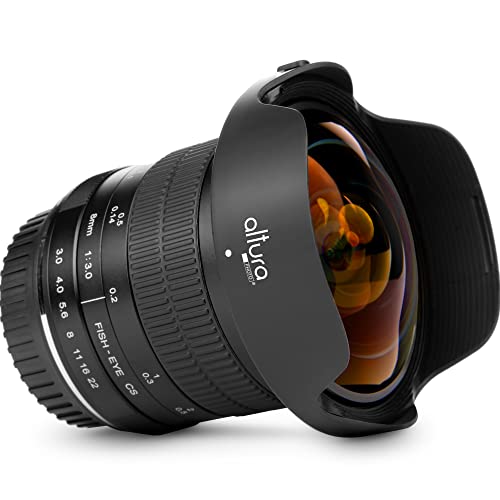
Canon EF Fisheye Pick – Altura 8mm f/3.0 Canon EF
If you need a fisheye lens for astrophotography on Canon DSLRs, this Altura Photo 8mm f/3.0 offers a manual-focus 180° view with an included removable hood. It is built for Canon EF APS-C bodies and can also be used on full-frame cameras, where it produces a more circular image with black vignette borders.
Best For: Canon DSLR shooters who want a manual fisheye with a solid metal build and a broad 180° field of view.
Pros:
- 180° view with included removable hood
- Compatible with Canon APS-C EF DSLR cameras
- Also works on full-frame cameras with circular vignette-style output
- Metal construction and multi-layer coating add durability
Cons:
- Manual focus only
- Not compatible with Canon R or M mirrorless cameras
- Full-frame use produces black vignette borders
This is a practical Canon EF option if you want the fisheye look and a more robust build, but you should confirm your camera mount before ordering.
APS-C Night-Sky Fisheye – TTARTISAN 7.5mm F2.0 Z for Nikon Z
If you want a fisheye lens for astrophotography on Nikon Z APS-C bodies, this TTARTISAN 7.5mm gives you a rare F2.0 aperture and a dramatic 180° diagonal view. That combination is useful when you want cleaner low-light shots of the night sky while still keeping the ultra-wide, heavily immersive fisheye look.
Best For: Nikon Z APS-C shooters who want a bright manual fisheye for night skies and creative wide-angle scenes.
Pros:
- F2.0 aperture is unusually bright for a fisheye lens and helps in low-light astrophotography.
- 180° diagonal field of view creates a very expansive, dramatic perspective on APS-C.
- Optical design includes 3 high-index elements and 2 ED elements to help keep the center sharp and reduce purple fringing.
- 0.125m close focus allows for strong near-subject fisheye compositions.
Cons:
- Manual focus only, so it is less convenient for quick shooting.
- APS-C lens means it is not the most straightforward choice if you want a standard full-frame framing.
- Strong fisheye distortion is part of the look, which may not suit every subject.
For Nikon Z photographers who want a fisheye lens for astrophotography without giving up too much brightness, this is a very practical option. It balances an extreme field of view with a fast aperture and corrective elements that make it easier to use for night scenes.
Full-Frame Circular Astro Fisheye – AstrHori 6mm F2.8 for E-Mount
This fisheye lens for astrophotography is aimed at Sony E-mount users who want an extreme circular look and a bright F2.8 aperture. With a 220° field of view and manual focus, it is built for photographers who want maximum visual impact in night skies, landscapes, and other creative wide-angle scenes.
Best For: Sony E-mount shooters who want a full-frame circular fisheye for dramatic astro and creative imagery.
Pros:
- 220° field of view creates a bold circular fisheye image with a very immersive look.
- F2.8 aperture is bright enough to support astrophotography and other low-light shooting.
- All-metal body makes it feel durable and travel-ready.
- Manual focus ring gives you precise control over focus placement.
Cons:
- Manual focus only, so it requires more hands-on operation.
- Circular fisheye rendering is intentionally extreme and not suited to every style.
- Its specialty design is less versatile than a standard ultra-wide lens.
If you want the most dramatic circular fisheye effect in a full-frame package, this AstrHori stands out. The bright aperture and extreme angle of view make it a strong pick for night scenes when the goal is impact rather than natural perspective.
Fujifilm Silver Night-Sky Fisheye – TTARTISAN 7.5mm F2 X-Mount
For Fujifilm APS-C owners looking for a fisheye lens for astrophotography, this TTARTISAN 7.5mm F2 brings the same fast aperture and 180° diagonal view as the Nikon Z version, but in an X-mount body. It is a straightforward manual prime for shooting cleaner night skies, star fields, and other creative ultra-wide scenes.
Best For: Fujifilm X-mount APS-C shooters who want a bright manual fisheye for night skies and creative wide-angle work.
Pros:
- Rare F2.0 aperture is well suited to low-light astrophotography.
- 180° diagonal angle of view delivers a classic wide fisheye perspective.
- 3 high-index elements and 2 ED elements help maintain center sharpness and reduce purple fringing.
- 0.125m close focus gives you room for dramatic near-subject compositions.
Cons:
- Manual focus only, which may slow down casual shooting.
- APS-C coverage keeps it focused on Fujifilm crop bodies rather than full-frame use.
- Strong fisheye distortion is intentional and may be too stylized for some users.
This version is a good fit if you want the TTARTISAN fisheye formula for Fujifilm X cameras. It combines a fast aperture with optical corrections that make it practical for night photography while still delivering the exaggerated fisheye look.
Canon APS-C Manual Fisheye – Meike 8mm f3.5 Ultra Wide
If you want a fisheye lens for astrophotography on Canon APS-C bodies, the Meike 8mm f3.5 is a straightforward manual-focus option with a very wide 200° field of view. Its f/3.5 aperture and 35cm minimum focus distance make it better suited to dramatic sky scenes and creative wide-angle framing than low-light specialty work.
Best For: Canon DSLR shooters who want a manual fisheye for wide, high-impact sky and landscape shots.
Pros:
- 200° field of view creates an extreme fisheye look
- Designed for EF-mount APS-C Canon cameras, with full-frame compatibility for circular vignette images
- Manual focus and manual exposure suit deliberate shooting
- 35cm minimum focus distance helps with close, exaggerated perspectives
Cons:
- f/3.5 is not as bright as faster fisheye options for astrophotography
- Manual focus requires more hands-on setup
- On full-frame cameras, the image becomes circular with black borders
Overall, this Meike lens is best viewed as a budget-friendly creative fisheye for Canon users who can work around manual controls. If your priority is maximum night-sky brightness, faster fisheye alternatives may be easier to use.
Nikon Z Night-Sky Fisheye – TTARTISAN 7.5mm F2.0 Silver Z
For anyone shopping for a fisheye lens for astrophotography on Nikon Z APS-C bodies, the TTARTISAN 7.5mm F2.0 stands out for its rare f/2 aperture. That faster opening is a practical advantage in low-light scenes, and the 180° angle of view gives you a dramatic sky-dominating perspective without moving into a full circular fisheye design on APS-C.
Best For: Nikon Z shooters who want a brighter manual fisheye for night skies and other low-light wide-angle scenes.
Pros:
- Rare f/2 aperture is well suited to astrophotography and other low-light work
- 180° diagonal angle of view on APS-C cameras
- 8-group, 11-element design includes 2 ED elements to reduce purple fringing
- 0.125m close focus allows very dramatic near-subject fisheye shots
Cons:
- Manual focus only, so it takes more practice to use well at night
- APS-C lens format limits it to Nikon Z crop bodies for the intended use
- Full-frame use produces a circular fisheye effect rather than a standard wide frame
This is the strongest choice in the group for low-light sky shooting because of its faster aperture and optical corrections. If you need a Nikon Z fisheye that leans toward astrophotography practicality, this one is easy to justify.
Sony E Circular Fisheye – 7Artisans 4mm F2.8 Compact
If you want a fisheye lens for astrophotography with a bold circular look, the 7Artisans 4mm F2.8 is the most extreme option here. Its 225° angle of view, compact 201g build, and f/2.8 aperture make it a distinctive manual lens for Sony E users who want maximum distortion and a very compact package.
Best For: Sony E-mount shooters who want a lightweight circular fisheye for creative ultra-wide night scenes.
Pros:
- 225° ultra-wide field of view creates a strong circular fisheye effect
- f/2.8 aperture is workable for low-light creative shooting
- Very compact at 201g, making it easy to carry on trips
- 0.085m minimum focus distance supports dramatic near-subject compositions
Cons:
- Manual focus only, which demands careful setup
- Extreme 4mm design is more specialized than a standard fisheye
- Best suited to APS-C Sony E bodies for its intended framing
This lens is all about impact rather than versatility. For astrophotography, it makes sense if you specifically want a striking circular fisheye aesthetic and don’t mind working around the manual controls.
How We Picked the Best Fisheye Lens for Astrophotography
We looked for lenses that make sense for night-sky work: wide coverage, bright apertures, manual focusing control, and options for popular mirrorless and DSLR mounts. For a Fisheye Lens for Astrophotography, edge behavior, coma control, and how easy it is to focus at infinity matter just as much as raw field of view.
We also favored models that suit different budgets and sensor sizes, since an APS-C fisheye and a full-frame circular fisheye serve very different shooting goals.
Quick Comparison
As a category, these lenses split into three useful groups: compact APS-C primes for general Milky Way shooting, circular full-frame fisheyes for maximum drama, and budget add-on or older DSLR options for entry-level experimentation. Manual focus is common, which is actually a benefit for astrophotography because you’ll typically set focus once and refine it using live view or magnification.
Best Use Cases at a Glance
Choose APS-C fisheyes if you want a cleaner, easier-to-use night-sky lens for mirrorless bodies. Choose a full-frame circular fisheye if you want an ultra-wide, stylized image with a strong creative look. Choose a budget DSLR-compatible option only if you already own the mount and want the lowest-cost way to test the style.
Key Buying Factors for a Fisheye Lens for Astrophotography
Aperture
For stars and the Milky Way, faster is usually better. Wider apertures like f/2, f/2.8, or f/3.5 help keep ISO lower and exposure times shorter, which reduces noise and star trailing.
Sensor Format and Coverage
Check whether the lens is designed for APS-C or full-frame. An APS-C fisheye is often the sweet spot for astrophotography because it delivers a dramatic view without requiring the compromises of a circular full-frame image.
Focus and Infinity Behavior
Manual focus lenses can work very well for night shooting, but they should have a reliable infinity position. A tactile focus ring and clear markings make setup easier in the dark.
Distortion Style
Fisheye lenses intentionally bend straight lines. That is part of the appeal, but if you want cleaner foregrounds or a more conventional landscape look, a wide-angle lens may be a better fit.
Mount Compatibility
Double-check your camera mount before buying. Several lenses in this roundup are mount-specific, and some are designed for mirrorless bodies while others target DSLR systems.
Who Should Buy Which Fisheye Lens for Astrophotography?
If you want the most practical all-around Fisheye Lens for Astrophotography, choose an APS-C manual prime with a bright aperture. If you want a bold creative look and don’t mind heavy distortion, a circular full-frame fisheye is the strongest visual choice.
Budget-focused DSLR users should prioritize mount compatibility first, then aperture and focus feel. Mirrorless shooters, especially on Sony, Fuji, and Nikon Z systems, will generally get the easiest experience from newer compact manual fisheyes.
In short: pick the lens that matches your camera format, your tolerance for distortion, and how much light you need to capture clean night-sky detail.