
Choosing the right Nikon Z lens for astrophotography can make a bigger difference than almost any other upgrade. A fast aperture, wide field of view, and good edge control all matter when you’re shooting stars, the Milky Way, and night landscapes.
Below, you’ll find 10 strong Nikon Z options across full-frame and DX formats, from ultra-wide primes to versatile zooms and specialty lenses, so you can match the lens to your sky, subject, and budget.
Best 10 Nikon Z Lens for Astrophotography Picks for 2026
Ultra-Wide AF Pick
VILTROX AF 16mm F1.8 Z for Nikon Z

- 16mm full-frame ultra-wide prime
- Bright f/1.8 aperture for low light
- 3 aspherical + 4 ED elements for cleaner images
Best For: Astrophotographers who want a fast autofocus wide prime
Compact Wide Angle
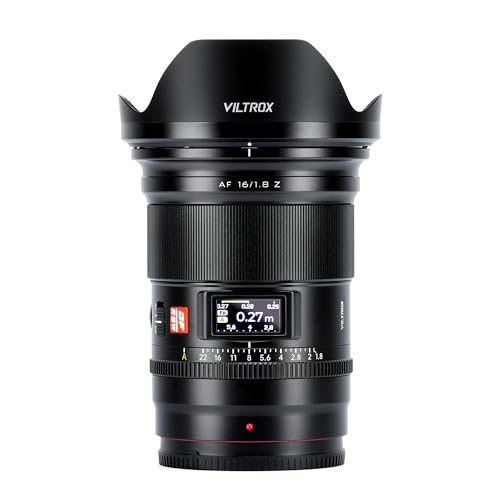
- 16mm full-frame autofocus prime
- Bright f/1.8 aperture for night scenes
- Compact full-metal build with LCD display
Best For: Travelers and night shooters wanting a compact wide prime
Creative Astro Wildcard
AstrHori 6mm F2.8 Circular Fisheye

- 220° circular fisheye perspective
- F2.8 aperture for low-light scenes
- Manual focus all-metal travel-friendly build
Best For: Creative shooters wanting dramatic star fields and extreme perspective
Versatile Zoom Pick

- Constant f/4 zoom from 24mm to 120mm
- Quiet STM autofocus and close focusing
- Works with FX and DX Nikon Z bodies
Best For: A single premium zoom for travel and general-purpose shooting
Fast Wide-Angle Prime

- Bright f/1.8 aperture for low light
- 16mm wide-angle view with 105.6° coverage
- STM autofocus with LCD and Fn1 button
Best For: Low-light shooters who want a bright wide prime for night scenes
Ultra-Wide Distortion-Control Pick

- 10mm ultra-wide view with 130.4° angle
- Zero-D optics help control distortion
- Fast f/2.8 aperture in a 420g body
Best For: Ultra-wide night landscapes with minimal distortion
Ultra-Wide Starter Pick

- Ultra-wide 12-28mm zoom for expansive night scenes
- 4.5 stops of optical VR for steadier handheld use
- Compact 205 g build for easy travel carry
Best For: DX-format Z users wanting a flexible wide-angle lens
Fast Astro Prime
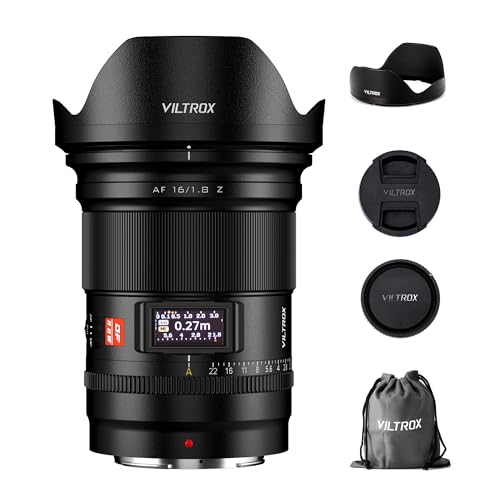
- Bright f/1.8 aperture for low-light and star shooting
- 16mm ultra-wide full-frame view with 105.6° angle
- Autofocus STM motor with quiet, precise operation
Best For: Full-frame Z users who need a fast astro prime
Dedicated Astro Scope Pick

- 105mm APO optic designed for wide-field astrophotography
- F2.8 aperture and manual helical focuser
- Z mount adapter included for Nikon mirrorless use
Best For: Shooters wanting a dedicated deep-sky APO lens
Ultra-Wide AF Pick – VILTROX AF 16mm F1.8 Z for Nikon Z
If you want a Nikon Z lens for astrophotography with a fast aperture and a modern feature set, the VILTROX AF 16mm F1.8 Z is a compelling option. Its 16mm full-frame design and f/1.8 brightness make it well suited to night skies, while the optical formula is built to support sharp corners and controlled color fringing.
Best For: Astrophotographers and night-sky shooters who want a fast, ultra-wide autofocus prime with strong value.
Pros:
- 16mm full-frame ultra-wide view is useful for starscapes and expansive skies.
- f/1.8 aperture helps in low light and can create shallow depth of field when needed.
- 3 aspherical and 4 ED elements are designed to improve corner-to-corner sharpness and reduce color bleeding.
- STM autofocus supports face and eye recognition for mixed photo/video use.
Cons:
- No image stabilization is included.
- This is a prime lens, so you do not get zoom flexibility.
- Some buyers may prefer Nikon’s native optics over third-party alternatives.
For shooters who want a fast wide-angle lens without stepping up to a zoom, this VILTROX is a practical astrophotography tool. The built-in LCD and click aperture ring add convenience, but the main draw remains the bright 16mm f/1.8 design.
Native Premium Option – Nikon NIKKOR Z 20mm f/1.8 S Bundle
For buyers seeking a Nikon Z lens for astrophotography from Nikon itself, this NIKKOR Z 20mm f/1.8 S bundle is the most established choice in the group. The 20mm ultra-wide view, f/1.8 aperture, and weather-sealed build make it a strong fit for low-light landscapes and star-filled skies.
Best For: Photographers who want a native Nikon ultra-wide prime for night skies, landscapes, and travel.
Pros:
- 20mm ultra-wide perspective is well suited to astrophotography and landscapes.
- f/1.8 aperture supports low-light shooting and background blur.
- Three aspherical and three ED elements, plus Nano Crystal and ARNEO coatings, help minimize flare, ghosting, and aberrations.
- Weather-sealed construction and silent STM autofocus improve field use.
Cons:
- The 20mm focal length is less wide than 16mm or fisheye alternatives.
- This bundle adds accessories that may not matter if you only want the lens.
- It is a premium-priced native option compared with third-party lenses.
This is the safest all-around pick if you want dependable Nikon optics and strong low-light performance. It is especially attractive for shooters who value native compatibility and a rugged, weather-sealed build.
Compact Wide Angle – VILTROX AF 16mm f/1.8 Z
The VILTROX AF 16mm f/1.8 Z is another strong Nikon Z lens for astrophotography, especially if you want a compact full-frame prime with a bright aperture. Its 16mm focal length gives you a wide field of view for the Milky Way, and the optical design focuses on corner resolution and reduced color bleeding.
Best For: Shooters who want a lightweight 16mm autofocus prime for stars, travel, and low-light landscapes.
Pros:
- 16mm full-frame focal length is ideal for wide sky compositions.
- f/1.8 aperture is useful for low-light scenes and night photography.
- 3 aspherical and 4 ED glass elements are designed to improve sharpness and suppress color bleeding.
- Built-in LCD display and 77mm filter compatibility add convenience.
Cons:
- No image stabilization is included.
- Manual control still may be preferred by some shooters over autofocus for astro work.
- It is a prime lens, so you cannot adjust framing with zoom.
This version of the 16mm VILTROX keeps the same astro-friendly focal length and bright aperture while emphasizing a compact, full-metal build. It is a sensible pick for photographers who want wide-angle reach without a lot of extra bulk.
Creative Astro Wildcard – AstrHori 6mm F2.8 Circular Fisheye
If your Nikon Z lens for astrophotography needs to be more creative than conventional, the AstrHori 6mm F2.8 Circular Fisheye is built for dramatic results. Its 220° field of view and true circular fisheye effect can turn the night sky into a bold, immersive frame, while the F2.8 aperture gives you some help in low light.
Best For: Photographers who want a manual circular fisheye for artistic star fields and extreme perspectives.
Pros:
- 220° field of view creates a true circular fisheye image.
- F2.8 aperture supports low-light shooting, including night scenes.
- All-metal body makes it compact and travel-ready.
- Manual focus gives full control for creative composition.
Cons:
- Manual focus only, so it is less convenient than AF options.
- Extreme fisheye distortion will not suit every astrophotography style.
- Not water resistant, so weather exposure needs extra care.
This lens is less about technical correction and more about visual impact. If you want a distinctive night-sky look and are comfortable working manually, it offers a very different take on astrophotography.
Versatile Zoom Pick – Nikon NIKKOR Z 24-120mm f/4 S
If you want a Nikon Z lens for astrophotography that can also handle everyday shooting, the 24-120mm f/4 S is a flexible all-in-one option. Its constant f/4 aperture, close-focus ability, and S-Line optics make it useful when you need one lens that can travel from wide scenes to tighter framing without changing glass.
Best For: Shooters who want one premium Nikon Z zoom for travel, landscapes, and general night-sky use.
Pros:
- Constant f/4 aperture across the full 24-120mm range
- Fast, quiet STM autofocus with close-focusing support
- Compatible with FX and DX Nikon Z bodies
- Custom control ring adds practical shooting flexibility
Cons:
- Not as bright as the f/1.8 and f/2.8 primes in this roundup
- No image stabilization listed in the supplied specs
- Heavier than the ultra-wide prime options
For astrophotography, this lens is less about maximum light gathering and more about versatility. If you want a premium zoom that can still serve many roles beyond night shots, it is the most adaptable pick here.
Fast Wide-Angle Prime – VILTROX 16mm f/1.8 Z
The VILTROX 16mm f/1.8 is a strong Nikon Z lens for astrophotography when you want a bright wide-angle view. The fast f/1.8 aperture helps in dim conditions, while the 16mm focal length and 105.6° angle of view make it well suited to landscapes, cityscapes, and night-sky scenes.
Best For: Photographers who want a bright, wide Nikon Z prime for low-light shooting and astrophotography.
Pros:
- Fast f/1.8 aperture for low-light performance
- 16mm wide-angle view with 105.6° coverage
- STM autofocus supports eye and face recognition
- Built-in LCD display and customizable Fn1 button
Cons:
- No image stabilization listed
- Fixed 16mm focal length limits framing flexibility
- Full-frame prime may be more lens than casual users need
This lens is the most straightforward “bright wide prime” option in the group. If your priority is a fast aperture and a broad field of view for night work, it is an easy lens to justify.
Ultra-Wide Distortion-Control Pick – Laowa 10mm F/2.8 Zero-D FF AF
If your Nikon Z lens for astrophotography needs an extremely wide view, the Laowa 10mm f/2.8 Zero-D FF stands out with its 130.4-degree angle of view. The fast f/2.8 aperture, compact 420g build, and close focusing distance make it a practical choice for dramatic night landscapes and very expansive sky compositions.
Best For: Shooters who want an ultra-wide Nikon Z prime with strong distortion control for night landscapes.
Pros:
- Ultra-wide 10mm focal length with 130.4° angle of view
- Zero-D design helps keep straight lines close to true
- Fast f/2.8 aperture for low-light work
- Lightweight 420g body with 12cm close focus
Cons:
- Fixed 10mm framing is very specialized
- No image stabilization listed
- May be more extreme than needed for general-purpose shooting
For astrophotography, this is the most dramatic wide-angle option here. It makes sense if you want maximum sky coverage while keeping distortion under control.
Ultra-Wide Starter Pick – Nikon Z DX 12-28mm PZ VR
If you’re looking for a Nikon Z lens for astrophotography on a DX body, the NIKKOR Z DX 12-28mm PZ VR is a flexible ultra-wide option for framing big night skies, Milky Way scenes, and foreground-heavy compositions. Its 12mm end gives you a dramatic field of view, while the 28mm end is useful when you want a slightly tighter, more natural look.
Best For: DX-format Z shooters who want an ultra-wide zoom that can double as a general-purpose travel and video lens.
Pros:
- 12-28mm range covers immersive wide-angle views for night landscapes.
- Built-in optical VR adds 4.5 stops of stabilization for steadier handheld shooting.
- Close focus down to 11 inches gives more composition flexibility.
- Lightweight 205 g design makes it easy to carry for location shooting.
Cons:
- Maximum aperture is f/3.5-5.6, so it is not as bright as faster astro primes.
- Designed for APS-C/DX cameras, not full-frame Z bodies.
- Power zoom design may be less appealing if you want a simple manual-first lens.
Overall, this is the most versatile pick here if you want one compact Nikon Z lens for astrophotography-adjacent wide-angle work and everyday use. It is best suited to smaller sensors and to shooters who value stabilization and zoom range over maximum light-gathering.
Fast Astro Prime – VILTROX AF 16mm F1.8
The VILTROX AF 16mm F1.8 is the strongest all-around Nikon Z lens for astrophotography in this group if your priority is low-light performance. Its full-frame 16mm design and f/1.8 aperture are built for dim scenes, giving you a wide field of view and a bright starting point for stars, night skies, and other low-light subjects.
Best For: Full-frame Nikon Z shooters who want a fast wide-angle prime for low-light and astro work.
Pros:
- f/1.8 aperture is well suited to low-light shooting and star work.
- 16mm focal length and 105.6° angle of view capture expansive scenes.
- Autofocus with STM stepping motor supports precise, quiet operation.
- Full metal body and dust-protected design add confidence for field use.
Cons:
- No image stabilization is included.
- It is a fixed focal length lens, so you do not get zoom flexibility.
- At 19.5 ounces, it is not the lightest option in the lineup.
If you want the brightest lens here for night skies, this is the most compelling choice. It balances a fast aperture, ultra-wide coverage, and autofocus in a way that makes it especially practical for full-frame Nikon Z shooters.
Dedicated Astro Scope Pick – SVBONY SV535 105mm APO
The SVBONY SV535 is a very different Nikon Z lens for astrophotography: instead of a classic wide-angle lens, it is a 105mm APO astro camera lens built for detailed deep-sky and Milky Way imaging. The supplied Z-mount adapter, F2.8 aperture, and integrated helical focuser make it a specialized option for shooters who want telescope-like framing with camera-body convenience.
Best For: Nikon Z astrophotographers who want a dedicated wide-field APO optic for deep-sky and Milky Way work.
Pros:
- 105mm focal length is tailored to wider deep-sky framing.
- F2.8 aperture helps capture brighter astro images.
- 5-group, 7-element APO design aims to minimize chromatic aberration.
- Integrated helical focuser supports fine manual focus adjustments.
Cons:
- Manual focus only, so it is less convenient for general photography.
- It is more specialized than a standard camera lens.
- Not a true wide-angle lens, so it is less suited to sweeping foreground landscapes.
This is the most specialized option in the set, and it makes sense if your priority is astro image quality rather than everyday versatility. For dedicated night-sky work on Nikon Z bodies, it offers a purpose-built design that goes beyond a typical photo lens.
How We Picked the Best Nikon Z Lens for Astrophotography
For this roundup, we focused on lenses that make sense for real night-sky use: wide focal lengths, bright apertures, strong optical correction, and autofocus or manual control that fits the job. We also considered format compatibility, since a Nikon Z Lens for Astrophotography can behave very differently on full-frame and DX bodies.
Quick Comparison
In simple terms, the fastest wide primes are best for capturing more sky and keeping ISO lower, while zooms offer flexibility for landscapes and framing. Specialty ultra-wide and fisheye options can be excellent for dramatic Milky Way compositions, and a stabilized zoom is useful if you want a lens that works well for travel beyond astrophotography.
Key Buying Factors for a Nikon Z Lens for Astrophotography
Aperture
A wider aperture such as f/1.8 or f/2.8 lets in more light, which helps reduce noise and keep shutter speeds practical before stars start trailing. If you frequently shoot dark skies, this is one of the most important specs.
Focal Length and Field of View
Ultra-wide focal lengths make it easier to capture the Milky Way, foreground scenery, and a broad swath of sky. Very wide lenses are ideal for sweeping astro scenes, while a standard zoom may be better if you also want one lens for hiking and travel.
Optical Quality
Look for good coma and distortion control, especially near the frame edges where stars can turn into smears or bird-shaped points. Sharp center performance matters, but edge performance is critical for clean night-sky images.
Focus Control and Handling
Autofocus is helpful for daytime use, but many astro shooters still prefer manual focus for precise star work. A useful focus ring, easy switching between AF and MF, and readable markings can make setup much easier in the dark.
Who Should Buy Which Nikon Z Lens for Astrophotography?
If you want the best all-around night-sky lens, choose a fast ultra-wide prime. If you need one lens for astrophotography and everyday shooting, a versatile zoom is the more practical pick. If you want dramatic, creative sky images, a fisheye or very wide specialty lens can be a strong fit. DX camera users should pay extra attention to crop factor, since a lens that seems ultra-wide on paper may frame more tightly on APS-C bodies.
For most buyers, the best Nikon Z Lens for Astrophotography is the one that balances brightness, field of view, and usability with the kind of night scenes you actually shoot.