
Choosing the right low glow trail camera for wildlife monitoring comes down to image clarity, night stealth, trigger speed, and how much connectivity you actually need.
Below, we focus on models that balance discreet infrared illumination with reliable performance in the field, whether you want a simple non-cellular camera or a connected option that sends images to your phone.
Best 10 Low Glow Trail Camera for Wildlife Monitoring Picks for 2026
Low-Glow Detail Pick

- Sony Starvis sensor for low-light capture
- True 4K video with sound and 64MP photos
- 100ft no-glow night vision and 0.1s trigger
Best For: wildlife monitoring when you want stealthy, high-detail non-cellular recording
Remote Multi-Camera Pick

- Links up to 23 cameras through CuddeLink
- Low-glow 850nm IR with 100ft+ range
- ¼-second trigger and 7 sensitivity settings
Best For: remote monitoring across multiple camera locations with minimal disturbance
Rugged Stealth Pick

- 64MP photos and 1296P HD video
- 0.1s trigger with 3 PIR sensors
- 100ft no-glow night vision and IP66 housing
Best For: buyers wanting a durable, non-cellular wildlife camera with fast trigger speed
Smart Cellular Scout

- AI buck detection with real-time alerts
- 40MP photos, 1080p video, and low-glow flash
- 4-carrier auto-connect cellular system
Best For: deer hunting and remote wildlife monitoring with app-based alerts
No-Glow Budget Pick

- 56MP photos and 4K video
- 0.2s trigger with 120° detection
- No-glow 940 IR LEDs for stealth
Best For: Simple wildlife monitoring without cellular or WiFi features
Connected Cellular Pick
Tactacam Reveal X 3.0 LTE Camera

- Auto-connects to AT&T or Verizon LTE
- Low-glow IR flash with fast trigger
- GPS and no SD card needed
Best For: Remote wildlife and property monitoring with phone alerts
Solar Smart Choice
4K 60MP Solar WiFi Trail Camera

- 4K video and 60MP stills
- 0.1s trigger with 65ft detection
- Solar power with 7800mAh battery
Best For: Longer wildlife monitoring with app control and solar charging
Cellular scouting pick

- AT&T 4G LTE sends photos to your phone
- 0.4s trigger speed for quick captures
- 96ft low-glow IR flash with IP66 weather protection
Best For: Remote wildlife monitoring with fewer blind trips
High-detail non-cellular pick

- 4K video with sound plus 48MP photos
- Low-glow LEDs for discreet nighttime capture
- 110ft motion detection and 0.4s trigger speed
Best For: Detailed SD-card scouting without plan costs
Stealth low-light favorite
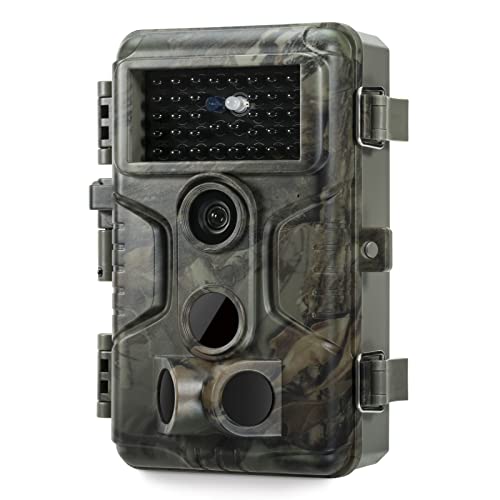
- Sony Starvis sensor for better low-light performance
- 0.1s trigger with 120° PIR detection
- 940nm no-glow infrared for discreet night use
Best For: Stealthy wildlife monitoring in low light
Low-Glow Detail Pick – GardePro A50 Trail Camera
If you want a low glow trail camera for wildlife monitoring that prioritizes image quality and stealth, the GardePro A50 is built for exactly that. Its Sony Starvis sensor, true 4K video, and 100-foot no-glow infrared give you clear nighttime coverage without spooking animals, while the fast 0.1s trigger helps catch quick movement in the field.
Best For: Hunters and wildlife watchers who want a non-cellular camera with strong low-light performance and discreet night capture.
Pros:
- Sony Starvis sensor for improved low-light image quality
- True 4K video with sound and 64MP photo capture
- 0.1s trigger speed with 120° PIR detection and up to 5-shot bursts
- 940nm no-glow infrared for stealthy nighttime monitoring
Cons:
- SD card and batteries are not included
- Non-cellular, so you must retrieve the card to view footage
Overall, the A50 is a strong fit if you value sharp detail, quiet operation, and dependable night performance over remote app access. It offers a balanced mix of image quality and field-ready practicality for long-term wildlife monitoring.
Remote Multi-Camera Pick – Cuddeback CuddeLink IR 2-Pack
This low glow trail camera for wildlife monitoring is designed for users who want remote checking without repeatedly entering the area. The Cuddeback CuddeLink IR uses low-glow 850nm illumination, a quick quarter-second trigger, and wireless linking to help you monitor game while keeping disturbance to a minimum.
Best For: Hunters and land managers who want a cellular, linkable system for checking multiple cameras remotely.
Pros:
- CuddeLink wireless network can link up to 23 cameras
- Low-glow 850nm IR LEDs with 100-foot-or-more night illumination
- ¼-second trigger speed with 7 sensitivity settings
- Runs on 4 D-cell batteries and supports SD cards up to 256GB
Cons:
- Video capture resolution is listed at 720p
- Bulkier two-pack setup may be more than some users need
If your priority is reducing trips into the field while still keeping a stealthy nighttime presence, this CuddeLink setup makes a lot of sense. It’s especially practical for larger properties where checking multiple cameras remotely is more valuable than maximizing video resolution.
Rugged Stealth Pick – GardePro E5S Trail Camera
The GardePro E5S is a practical low glow trail camera for wildlife monitoring if you want strong image quality without cellular fees or Wi-Fi setup. It combines 64MP photos, 1296P HD video, a 0.1s trigger, and 100-foot no-glow night vision to deliver discreet coverage in a simple, battery-efficient package.
Best For: Users who want a rugged, straightforward trail camera for wildlife tracking and property monitoring.
Pros:
- 64MP photos and 1296P HD video for sharp captures
- 0.1s trigger speed with 3 PIR sensors
- 100ft no-glow night vision for discreet night use
- IP66 waterproof rating for outdoor durability
Cons:
- No cellular or Wi-Fi connectivity
- Batteries and SD card are sold separately
For buyers who want reliable field performance without complicated setup, the E5S hits a sweet spot. It focuses on fast activation, stealthy night capture, and weather resistance, which makes it a solid everyday option for monitoring wildlife movement.
Smart Cellular Scout – Moultrie Edge 3 Trail Camera
If you want a low glow trail camera for wildlife monitoring with app-based convenience, the Moultrie Edge 3 is built around remote scouting. It delivers 40MP photos, 1080p HD video, low-glow infrared flash, and cellular photo delivery, plus AI buck detection to help filter activity that matters most.
Best For: Deer hunters and wildlife monitors who want real-time alerts and remote access without Wi-Fi.
Pros:
- AI buck detection with real-time photo alerts
- 4-carrier auto-connect cellular system with no SIM card needed
- 40MP photos and 1080p HD video
- Low-glow infrared flash with 100-foot range
Cons:
- Requires cellular service plan for full functionality
- Battery power is required
The Edge 3 is a strong fit when your goal is to monitor deer activity without repeatedly checking cards in the field. Its combination of smart detection, remote delivery, and low-glow nighttime imaging makes it especially useful for scouting and pattern tracking.
No-Glow Budget Pick – WOSPORTS 56MP 4K Trail Camera
If you want a low glow trail camera for wildlife monitoring without moving into app-based or cellular complexity, the WOSPORTS G600 keeps things straightforward. It combines 56MP photos, 4K video, and a 0.2s trigger with no-glow 940 IR LEDs, so it’s aimed at capturing natural animal behavior with minimal disturbance.
Best For: Hunters, landowners, and backyard users who want a simple non-cellular camera with strong image quality and invisible night vision.
Pros:
- 56MP stills and 4K video with selectable photo resolutions
- 0.2s trigger speed plus 120° wide detection and 1–3 burst mode
- No-glow 940 IR LEDs help keep wildlife from getting spooked
- Includes a 16GB memory card and a 2-inch LCD for on-device review
Cons:
- Non-cellular and non-WiFi, so there’s no remote app access
- Batteries are not included
- Maximum card support is up to 256GB, but storage details may require checking setup carefully
This is a practical pick if you value stealth, speed, and easy field setup over connected features. It fits especially well for basic wildlife monitoring, deer scouting, and general outdoor security.
Connected Cellular Pick – Tactacam Reveal X 3.0 LTE Camera
For a low glow trail camera for wildlife monitoring that can send updates remotely, the Tactacam Reveal X 3.0 is built around cellular convenience. Its low-glow IR flash, sub-half-second trigger, and auto-connect 4G LTE design make it a strong fit when you want fast capture and app-based access without relying on Wi-Fi.
Best For: Hunters and property owners who want remote photo delivery, simple setup, and long battery life in a cellular trail camera.
Pros:
- Auto-connect multi-carrier LTE works with AT&T and Verizon
- Low-glow IR flash for discreet night monitoring
- Sub-half-second trigger and 3-shot burst mode for fast game
- Built-in GPS and no SD card requirement simplify deployment
Cons:
- Requires cellular service for full functionality
- Viewing angle is narrower than some wide-angle trail cameras
- Designed for outdoor use only
This model makes sense if you’re monitoring remote land and want fewer trips into the field. The combination of long battery life, app control, and low-glow infrared helps it stand out for hands-off scouting and property checks.
Solar Smart Choice – 4K 60MP Solar WiFi Trail Camera
If you’re shopping for a low glow trail camera for wildlife monitoring with modern power and app features, this solar-powered model is built for extended use. It pairs 4K video, 60MP photos, a 0.1s trigger, and low-glow night vision with a 7800mAh battery and solar panel to support longer deployments in the field.
Best For: Users who want a solar-assisted, app-controlled trail camera with strong image quality and stealthy night capture.
Pros:
- 4K video and 60MP photos for highly detailed wildlife images
- 0.1s trigger and 65ft detection range for fast-moving animals
- Low-glow night vision helps reduce disturbance at night
- Solar power plus 7800mAh battery supports longer unattended use
Cons:
- WiFi app control works through a hotspot-style connection, not cellular
- Uses a micro memory card up to 128GB only
- Best feature set depends on using the app for setup and review
This is a strong option if you want stealthy night monitoring plus rechargeable power for longer sessions. The included 32GB card and weatherproof build make it especially appealing for users who want a more complete ready-to-run setup.
Cellular scouting pick – TACTACAM Reveal X 2.0
If you want a low glow trail camera for wildlife monitoring that sends results straight to your phone, the TACTACAM Reveal X 2.0 is built for fast scouting. It uses AT&T 4G LTE to deliver photos through the REVEAL app, so you can check activity without making extra trips to the woods. The 0.4s trigger speed and 96ft low-glow IR flash also make it a strong option for capturing moving animals at distance.
Best For: Hunters and land managers who want cell-based image delivery and stealthy night capture.
Pros:
- Sends photos to your phone over 4G LTE with no WiFi needed
- 0.4s trigger speed helps catch fast-moving wildlife
- 96ft low-glow IR flash is designed to stay discreet at night
- IP66 waterproof rating and flexible battery or solar power options
Cons:
- Requires a compatible SD card for operation
- Cellular service means ongoing data-plan cost
- Best performance depends on AT&T LTE coverage in the field
For buyers who value convenience, the Reveal X 2.0 stands out because it combines remote image access with a stealthy flash and quick trigger response. It is a practical choice when you want fewer site visits and more timely intel on wildlife movement.
High-detail non-cellular pick – SPYPOINT FORCE-4K
The SPYPOINT FORCE-4K is a low glow trail camera for wildlife monitoring if you prefer high-resolution scouting without cellular fees. It records 4K video with sound and 48MP photos to an SD card, while the low-glow LEDs help keep night captures discreet. A 0.4s trigger and 110ft motion detection range give it the speed and reach needed for covering bigger setups.
Best For: Budget-conscious hunters and wildlife trackers who want detailed SD-card footage without a data plan.
Pros:
- 4K video with sound and 48MP photos for detailed viewing
- Low-glow LEDs help reduce disturbance during night use
- 110ft motion detection and 0.4s trigger speed support wider coverage
- Built-in LCD screen makes setup and playback easier
Cons:
- Non-cellular design means you must retrieve the SD card to view media
- SD card is not included
- Requires on-site access more often than a cellular camera
This model fits buyers who want strong image quality and simple operation over remote delivery. It is a dependable pick when you want crisp captures, a wide field of view, and no recurring plan commitments.
Stealth low-light favorite – GardePro A3S
The GardePro A3S is a strong low glow trail camera for wildlife monitoring when you want fast, discreet captures in dim conditions. Its Sony Starvis sensor is designed for superior low-light performance, and the invisible 940nm no-glow infrared helps keep animals from noticing the camera at night. With a 0.1s trigger speed and 120b0 PIR detection angle, it is built for quick reactions and broad coverage.
Best For: Wildlife watchers who want stealthy night performance and very fast triggering in a non-cellular camera.
Pros:
- Sony Starvis sensor supports strong low-light image quality
- Invisible 940nm no-glow IR is ideal for discreet nighttime monitoring
- 0.1s trigger speed and 120b0 detection angle capture fast movement well
- Supports motion, time-lapse, and hybrid recording modes
Cons:
- Non-cellular and non-WiFi design requires SD card retrieval
- Batteries are required and sold separately
- Solar panel is optional and sold separately
For stealth-oriented scouting, the A3S offers a compelling mix of speed, night invisibility, and flexible recording modes. It makes sense if you want a camera that stays quiet in the field while still capturing useful detail.
How We Picked the Best Low Glow Trail Camera for Wildlife Monitoring
For this roundup, we prioritized cameras that are practical for wildlife monitoring first: low-visibility flash modes, dependable motion detection, good nighttime image quality, and specifications that make sense in real-world use. We also considered photo and video resolution, trigger speed, detection range, storage approach, and whether cellular or Wi-Fi features add value or just add complexity.
Because the best Low Glow Trail Camera for Wildlife Monitoring is not always the most connected one, we included both simple non-cellular units and models with LTE, Wi-Fi, or built-in memory for users who want remote access.
Quick Comparison
If you want the simplest setup, choose a non-cellular camera with no-glow or low-glow infrared and fast trigger timing. If you need remote scouting, cellular models are better because they send images without requiring you to visit the camera often. For long deployments, built-in memory or solar power can reduce maintenance.
Key Buying Factors for Low Glow Trail Camera for Wildlife Monitoring
Night Visibility and Flash Type
Low-glow infrared is a good middle ground when you want better illumination than no-glow models can provide, while still keeping disturbance down. True no-glow is usually more discreet, but image range and brightness may be slightly reduced.
Trigger Speed and Detection Range
Fast trigger speeds help catch animals before they leave the frame. For trails, feeders, and crossings, look for a responsive sensor and a useful detection range rather than chasing resolution alone.
Image and Video Quality
Higher megapixels can help with stills, but actual sensor quality matters more than headline numbers. For a Low Glow Trail Camera for Wildlife Monitoring, clear nighttime video and usable daytime color are more important than inflated specs.
Power, Storage, and Connectivity
Battery life, SD card support, built-in memory, or solar charging can affect how often you service the camera. Cellular models are helpful for remote sites, while non-cellular cameras are usually simpler and more affordable.
Who Should Buy Which Low Glow Trail Camera for Wildlife Monitoring?
Buy a non-cellular low-glow or no-glow camera if you want a straightforward, budget-friendlier option for backyard use, property scouting, or regular card checks. Choose a cellular model if the camera will be placed far away, checked less often, or used for continuous monitoring. If you need the easiest maintenance, look for built-in memory, multi-carrier support, or solar power. For most wildlife users, the best choice is the camera that matches your site distance, checking frequency, and lighting conditions—not the one with the biggest spec sheet.