
If you need cleaner production audio and easier post-sync, a camera mixer recorder with timecode can simplify your entire workflow. These tools combine on-set mixing, multi-channel recording, and accurate sync features in one compact package.
Below, we focus on 10 strong options for filmmakers, videographers, and content teams who want dependable recording, flexible inputs, and practical timecode support.
Best 10 Camera Mixer Recorder with Timecode Picks for 2026
Compact Camera Mixer Recorder
TASCAM FR-AV4 4-Channel Field Recorder

- 32-bit float recording with 133 dB dynamic range
- Four XLR/TRS inputs with low-noise preamps
- Built-in timecode, HDMI sync, and 6-track recording
Best For: Camera rigs needing four inputs and reliable timecode sync
Pro Camera Mixer Recorder
Zoom F8n Pro Bundle with Camera Mount

- 32-bit float recording up to 192kHz
- Eight XLR/TRS inputs with strong gain and low noise
- Dual SD slots plus included camera mount
Best For: Larger shoots needing eight inputs and backup recording
Budget Camera Mixer Recorder
TASCAM DR-60DmkII 4-Channel Recorder

- Four-channel recording to SD at up to 96kHz/24-bit
- Fits under a DSLR rig for compact setups
- Two XLR inputs plus two 3.5mm inputs
Best For: DSLR rigs needing a compact four-channel recorder
Wearable Timecode Audio Recorder

- 32-bit float recording for clip-free capture
- Bluetooth app control and wireless timecode sync
- Direct recording to microSD/SDHC on AAA power
Best For: Solo interviews and lightweight lav audio workflows
Precision Timecode Field Recorder Bundle
Zoom F6 6-Input Recorder with Headphones
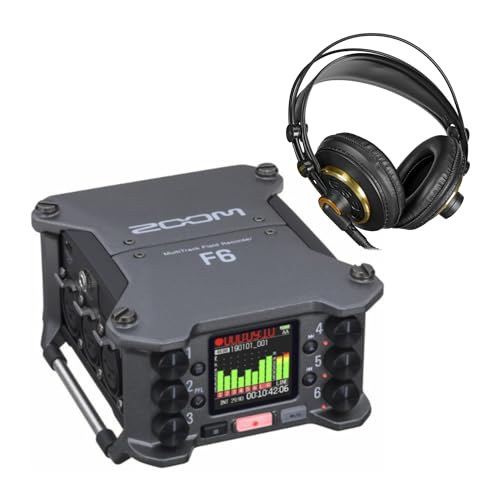
- 6-input, 14-track field recorder
- TCXO time code at 0.2 ppm accuracy
- iOS Bluetooth control and rugged build
Best For: Run-and-gun crews needing accurate sync and portable multitrack audio
Pro Timecode Field Mixer Recorder

- 10-channel field recorder/mixer with AutoMix
- Time code with jam sync and BNC connectors
- Dual SD slots plus iOS remote control
Best For: Film crews needing a feature-rich synced audio recorder
Portable Essential Recorder for Creators
Zoom H4 Essential 4-Track Recorder

- 4-track 32-bit float recording
- Built-in stereo mics and two XLR/TRS inputs
- USB-C audio interface and SD backup
Best For: Creators who want a simple portable recorder for clean audio
Pro Film Pick
Zoom F6 32-Bit Float Field Recorder

- 32-bit float recording helps prevent clipping
- Six XLR inputs support up to 14 tracks
- Timecode I/O for frame-accurate sync
Best For: Filmmakers and location crews needing multitrack sync audio
Simple Sync Choice
Zoom H1 XLR 2-Channel Recorder

- 32-bit/96kHz recording for clear audio
- Two XLR/TRS inputs plus 3.5mm I/O
- OLED waveform display for level monitoring
Best For: Interviews, podcasts, and compact two-input recording setups
Top Production Hub
Zoom F8n Pro 8-Input Field Recorder
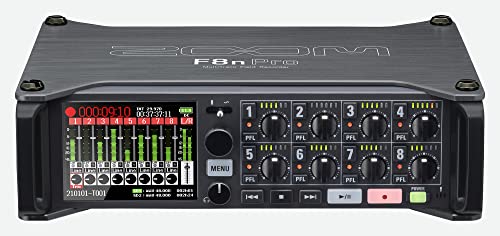
- 8 inputs and 10-track 32-bit float recording
- Timecode accuracy down to 0.2ppm
- Dual SD slots for redundant recording
Best For: Professional film and field audio workflows that need advanced sync
Compact Camera Mixer Recorder – TASCAM FR-AV4 4-Channel Field Recorder
If you want a camera mixer recorder with timecode that stays small but still covers serious production needs, the TASCAM FR-AV4 is built for exactly that job. It combines 32-bit float recording, four XLR/TRS inputs, and built-in timecode and HDMI sync features for modern video workflows.
Best For: Camera rigs that need four clean inputs, timecode, and easy HDMI-based sync.
Pros:
- 32-bit float recording with dual A/D converters for a wide 133 dB dynamic range.
- Four Ultra HDDA preamps with very low noise on XLR/TRS combo inputs.
- Built-in mixer plus 6-track recording to SDXC, including a stereo mix.
- Timecode generator, HDMI sync, and multiple timecode I/O options for video work.
Cons:
- Some wireless and app features require the optional AK-BT2 adapter.
- More advanced sync and control features may be more than casual users need.
The FR-AV4 is a strong fit when you need compact field recording with proper sync tools and flexible routing. It looks especially practical for creators who want a straightforward mixer-recorder setup that still supports camera production demands.
Pro Camera Mixer Recorder – Zoom F8n Pro Bundle with Camera Mount
The Zoom F8n Pro is a high-capacity camera mixer recorder with timecode for productions that need more inputs and stronger onboard recording options. This bundle also includes a camera mount, making it easier to secure the recorder alongside a camera setup.
Best For: Larger video shoots that need eight inputs, backup recording, and timecode support.
Pros:
- 32-bit float recording at up to 192kHz for flexible capture.
- Eight XLR/TRS combo inputs with 75dB gain preamps and -127 dBu EIN.
- Dual SD card slots for backup recording or longer sessions.
- Includes a camera mount sized specifically for the F8n Pro.
Cons:
- It is a larger, more capable system than many solo shooters need.
- The bundle focus on mounting may be unnecessary if you already have rigging solutions.
For production teams that want a serious recorder/mixer with timecode and room to scale, the F8n Pro is the most full-featured option in this group. The added camera mount makes it especially appealing for integrated camera rig workflows.
Budget Camera Mixer Recorder – TASCAM DR-60DmkII 4-Channel Recorder
The TASCAM DR-60DmkII is a practical camera mixer recorder for videographers who want a compact under-camera solution without moving up to a bigger field bag setup. It records up to four channels, adds limiter and high-pass filtering tools, and is designed to sit neatly under a DSLR rig.
Best For: DSLR and compact video rigs that need simple four-channel recording.
Pros:
- Records up to four channels to SD card at up to 96kHz/24-bit.
- Fits under a DSLR camera rig for compact on-camera workflows.
- Two XLR mic inputs with phantom power plus two 3.5mm inputs for lav or wireless gear.
- Upgraded HDDA preamps offer up to 64dB of gain with low noise.
Cons:
- Lacks the 32-bit float recording found on newer options.
- No built-in timecode features are listed in the supplied notes.
If you mainly need a reliable, rig-mounted recorder for basic camera audio capture, the DR-60DmkII keeps the setup straightforward. It is a useful fit for smaller productions that prioritize compactness and familiar inputs over advanced sync features.
Wearable Timecode Audio Recorder – Zoom F2-BT Lavalier Recorder
The Zoom F2-BT is a compact camera mixer recorder with timecode synchronization features built for simple, wearable video audio capture. With 32-bit float recording, Bluetooth control, and direct microSD recording, it is aimed at creators who need a lightweight lavalier recorder rather than a multi-input mixer.
Best For: Solo shooters and interview setups that want clip-free lav audio with wireless sync control.
Pros:
- 32-bit float recording helps prevent clipping without gain adjustments.
- Built-in Bluetooth supports app control and remote transport functions.
- Wireless timecode synchronization is supported.
- Runs on two AAA batteries and records directly to microSD/SDHC cards.
Cons:
- Single-channel lavalier design is less flexible than multi-input mixer recorders.
- No headphones jack is listed in the supplied notes.
The F2-BT makes sense when portability matters more than input count. For straightforward spoken-word production, it offers modern recording convenience in a very small package.
Precision Timecode Field Recorder Bundle – Zoom F6 6-Input Recorder with Headphones
If you need a camera mixer recorder with timecode for demanding video work, the Zoom F6 is built around accurate sync and clean multitrack capture. Its six-input, 14-track design, rugged body, and TCXO-based time code make it a practical choice for field recording where reliable timing matters. The included over-ear headphones add a monitoring layer right out of the box.
Best For: Run-and-gun filmmakers, location sound recordists, and small crews who want precise timecode and portable multitrack recording.
Pros:
- TCXO time code is rated at 0.2 ppm accuracy, even when powered off.
- High-quality mic preamps offer up to 75 dB gain with low EIN.
- Rugged, compact build is designed for tight spaces and tough shoots.
- iOS Bluetooth control lets you adjust levels, transport, and metadata remotely.
Cons:
- Bundle focus is on recording and monitoring, not built-in camera switching or video features.
- May be more recorder than casual users need for simple interviews.
The F6 stands out if your priority is dependable sync and high-quality audio in a compact field recorder. For crews that value accurate timecode and remote control, it offers a very practical production workflow.
Pro Timecode Field Mixer Recorder – Zoom F8n 10-Channel Recorder
For buyers comparing a camera mixer recorder with timecode, the Zoom F8n is a strong field option built for audio for video work. It combines 10-track recording, eight low-noise XLR/TRS inputs, advanced limiters, and time code with jam sync support, making it suitable for more complex productions. Battery power and dual SD card slots add flexibility on set.
Best For: Film crews and production sound teams that need a feature-rich recorder/mixer with dependable timecode.
Pros:
- 10-channel, 10-track recorder/mixer with Zoom AutoMix software.
- Eight mic preamps provide up to 75 dB gain and very low noise.
- Time code supports up to 0.2 ppm accuracy, with jam sync and BNC connectors.
- iOS app support enables wireless remote control, file renaming, and metadata entry.
Cons:
- More advanced than basic creators may need for simple recording setups.
- Designed for production workflows, so the feature set may take some learning.
The F8n is the most full-featured option in this set for synced production audio. If your workflow depends on timecode, multiple inputs, and remote control, it is clearly aimed at serious field use.
Portable Essential Recorder for Creators – Zoom H4 Essential 4-Track Recorder
The Zoom H4 Essential is a simpler choice if you want a camera mixer recorder with timecode features in a portable, creator-friendly package. It offers 4-track 32-bit float recording, built-in stereo microphones, and two XLR/TRS inputs for external mics, instruments, or a mixer. USB-C connectivity also makes it easy to use as an audio interface for recording or streaming.
Best For: Musicians, podcasters, and filmmakers who want an easy-to-use portable recorder for clean audio capture.
Pros:
- 4-track 32-bit float recording helps reduce concern about distorted takes.
- Built-in stereo mics plus two XLR/TRS inputs offer flexible source options.
- USB-C support works for recording or streaming to phone, tablet, or computer.
- Speaks to accessibility with spoken menu guidance.
Cons:
- Does not list dedicated timecode features like the larger field recorders here.
- Fewer inputs and tracks than the F6 or F8n.
The H4 Essential is best viewed as a portable recorder first, not a full production timecode hub. It suits creators who want straightforward capture, backup recording, and simple connectivity without a more complex field-audio setup.
Pro Film Pick – Zoom F6 32-Bit Float Field Recorder
If you need a camera mixer recorder with timecode for serious production work, the Zoom F6 is built for clean capture in demanding film and location setups. Its 32-bit float recording and dual AD converters are designed to avoid clipping, while the six XLR inputs and timecode I/O make it a strong fit for multi-source shoots that need reliable sync.
Best For: Filmmakers, location recordists, and crews needing frame-accurate sync with multiple XLR sources.
Pros:
- 32-bit float recording with dual AD converters helps capture very wide dynamic range without clipping.
- Six XLR inputs support up to 14 tracks for flexible production recording.
- Timecode I/O supports frame-accurate sync for filmmaking and broadcast workflows.
- Can work as a standalone recorder or a USB audio interface.
Cons:
- More feature-rich than a basic recorder, so it may be more than casual users need.
- Uses 4 AA batteries, so battery management matters on long shoots.
Overall, the F6 is a practical choice when the priority is dependable multitrack recording with timecode in a compact, travel-friendly package. It stands out most for crews that want professional sync and no-clipping capture in one unit.
Simple Sync Choice – Zoom H1 XLR 2-Channel Recorder
The Zoom H1 XLR is a compact camera mixer recorder with timecode-style workflow flexibility for creators who want straightforward high-quality capture. It records in 32-bit/96kHz, includes two XLR/TRS combo inputs, and adds a 3.5mm stereo input and headphone output for smaller productions, interviews, and portable setups.
Best For: Interviewers, podcasters, and filmmakers wanting a simple two-input recorder with flexible connections.
Pros:
- 32-bit/96kHz recording supports clear, detailed audio capture.
- Two XLR/TRS combo inputs handle microphones, instruments, and other sources.
- OLED waveform display helps monitor levels at a glance.
- 3.5mm stereo in/out adds useful connection flexibility.
Cons:
- Only two XLR/TRS inputs, so it is not built for larger multi-mic setups.
- Battery life is listed at about 10 hours, which may require planning for longer sessions.
For smaller shoots and portable recording needs, the H1 XLR keeps the workflow simple while still offering the core features many creators need. It is less expansive than a larger field mixer, but that simplicity is part of the appeal.
Top Production Hub – Zoom F8n Pro 8-Input Field Recorder
The Zoom F8n Pro is a high-end camera mixer recorder with timecode for film and field production where precision matters. With 8 XLR/TRS inputs, 10 channels of 32-bit float recording, and highly accurate timecode, it is designed for demanding shoots that need clean audio, redundancy, and dependable sync.
Best For: Professional film crews and field recordists needing a full-featured recorder/mixer with advanced sync.
Pros:
- 8-channel/10-track 32-bit float recording helps capture audio without clipping.
- Timecode accuracy down to 0.2ppm supports tight alignment with picture.
- Dual SD slots allow redundant recording for extra security.
- Can also function as an 8-in/4-out USB audio interface while recording to card.
Cons:
- It is a serious production tool, so it may be more than needed for simple recording jobs.
- Dual-card and interface workflows are powerful but can add setup complexity.
If your priority is a feature-rich recorder that can sit at the center of a professional audio workflow, the F8n Pro is the most capable option here. Its combination of inputs, timecode precision, and redundant recording makes it especially suited to set work.
How We Picked the Best Camera Mixer Recorder with Timecode
We prioritized field recorders and mixer-recorder hybrids that offer reliable timecode options, strong input flexibility, and recording quality suited to camera-based production. We also looked for models that make sense for real-world use: portable enough for rigs, capable enough for interviews and multi-source shoots, and simple enough to deploy quickly on set.
Quick Comparison
At a glance, the lineup breaks into three common groups: compact two-channel recorders for lightweight rigs, midrange 4-channel options for solo shooters and small crews, and advanced multi-input units for productions that need more tracks, better expandability, and tighter sync workflows. If you regularly manage multiple microphones, a Camera Mixer Recorder with Timecode becomes much more valuable as channel count rises.
Key Buying Factors for Camera Mixer Recorder with Timecode
Timecode Workflow
Check whether the recorder supports built-in timecode generation, wireless sync, or HDMI-related synchronization features. For multicam shoots, the most useful system is the one that fits your existing cameras and avoids extra setup steps.
Input Count and Connector Type
Match the recorder to your typical production. Dual-input models are great for interviews and compact rigs, while 4- to 8-input recorders are better for panels, documentary work, and productions with multiple lavs, booms, or wireless systems. Combo XLR/TRS inputs add flexibility for microphones and line-level sources.
Recording Format and Headroom
32-bit float recording is a major advantage if your shoot includes unpredictable volume levels, because it reduces the risk of clipping. If you do not need that workflow, strong limiters and clean preamps still matter for dependable capture.
Monitoring and Mix Control
Look for clear headphone monitoring, transport controls, and an interface that lets you adjust levels quickly. On set, speed matters almost as much as specs.
Who Should Buy Which Camera Mixer Recorder with Timecode?
Solo creators and lightweight run-and-gun shooters should lean toward compact recorders with simple timecode sync and minimal bulk. Small crews and documentary teams usually benefit most from 4-channel recorder/mixers that balance portability and flexibility. Larger productions, especially those working with multiple talent sources or multicam setups, should focus on higher-input models with stronger timecode support and more headroom for expansion.
If your workflow depends on clean sync and fewer headaches in post, choosing the right Camera Mixer Recorder with Timecode is one of the smartest upgrades you can make.