
Wildlife shooting demands smooth movement, strong support, and fast adjustments when the action changes without warning.
This roundup helps you compare the best gimbal tripod head for wildlife photography options for telephoto lenses, birding, and long outdoor sessions.
Best 10 Gimbal Tripod Head for Wildlife Photography Picks for 2026


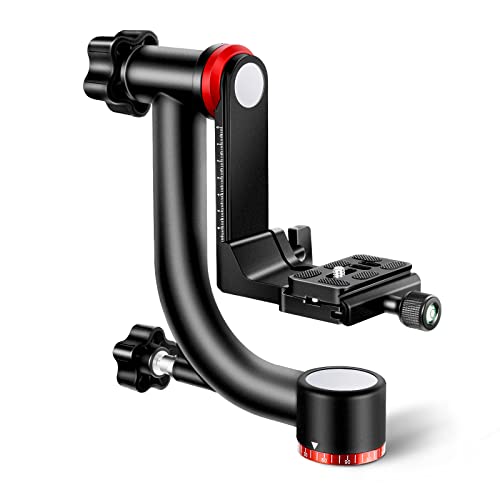

Editor's Choice – Benro GH5C Carbon Fiber Gimbal Head
If you want a gimbal tripod head for wildlife photography that can handle long glass without feeling bulky, the Benro GH5C is built for that job. Its carbon fiber construction keeps weight down while still offering the rigidity and vibration reduction needed for steady tracking of birds and other fast-moving subjects.
Best For: Wildlife shooters using heavy telephoto setups who want a lightweight, Arca-Swiss compatible gimbal with smooth pan and tilt control.
Pros:
- Carbon fiber build helps reduce weight and vibration during long sessions.
- Supports up to 66 lb for demanding DSLR, mirrorless, and super-telephoto rigs.
- Separate tension knobs make pan and tilt adjustments more precise.
- Arca-Swiss clamp and sliding plate simplify mounting and balancing.
Cons:
- Priced and positioned for serious telephoto use rather than casual setups.
- Not water resistant, so it still needs care in harsh field conditions.
Overall, the GH5C is a strong choice if your priority is stability, smooth movement, and a lighter carry for wildlife work. It is especially appealing for photographers who regularly balance large lenses and need reliable control in the field.
Pro-Grade Pick – Wimberley WH-200 Gimbal Head II
The Wimberley WH-200 is a classic gimbal tripod head for wildlife photography when you need a rugged, purpose-built platform for very large lenses. Its gimbal design lets you rotate around the lens center of gravity, which makes tracking birds and other moving subjects more controlled and less tiring.
Best For: Photographers who want a rugged, high-capacity gimbal for very large telephoto lenses and long-term use.
Pros:
- Gimbal design supports smooth movement around the lens center of gravity.
- Very high maximum weight recommendation of 100 lb.
- Arca Swiss style clamp works with a range of medium and telephoto lenses.
- Made in the USA and backed by a 10-year manufacturer warranty.
Cons:
- At 3.15 lb, it is heavier than some competing lightweight options.
- Not water resistant, so weather exposure should be managed carefully.
If you prioritize proven durability and serious load capacity over minimum weight, the WH-200 stands out. It is a strong fit for photographers using substantial telephoto setups who want a compact but robust gimbal head.
Best Value – Movo GH800 Carbon Fiber Gimbal Head
The Movo GH800 is a practical gimbal tripod head for wildlife photography if you want smooth handling without moving into the highest-priced tier. Its precision bearings are designed for fluid panning and tilting, while the adjustable Arca clamp and plate help balance a wide range of camera and telephoto lens combinations.
Best For: Birders and wildlife shooters looking for a carbon fiber gimbal with smooth motion and solid load support.
Pros:
- Precision bearings provide fluid panning and tilting for moving subjects.
- Carbon-fiber construction supports up to 30 lb while staying relatively light.
- Horizontally and vertically adjustable Arca clamp and plate aid balancing.
- Includes outdoor-focused positioning for birding and wildlife use.
Cons:
- Load capacity is lower than some premium heavy-duty gimbal heads.
- Backed by a 1-year warranty, which is shorter than some rivals.
The GH800 is a smart middle-ground option if you want dependable movement and a lighter carbon fiber build without paying for extreme load capacity. It makes sense for many wildlife shooters who need a capable, field-friendly gimbal.
Travel-Friendly Pick – Leofoto PG-1 Lightweight Gimbal Head
If portability matters as much as performance, the Leofoto PG-1 is a compact gimbal tripod head for wildlife photography that is easy to take into the field. It weighs just 2.2 lb, yet still offers a 55 lb maximum load, making it a compelling choice for photographers who travel light with telephoto gear.
Best For: Wildlife photographers who need a compact, travel-friendly gimbal with strong load support.
Pros:
- Lightweight at 2.2 lb, making it easy to pack and carry.
- Supports up to 55 lb, which is strong for its size.
- Includes 100mm Arca compatible QR plate for secure mounting.
- Side accessory sockets add flexibility for extra gear.
Cons:
- Maximum weight is slightly lower than the heaviest-duty alternatives.
- Not water resistant, so field protection is still important.
The PG-1 stands out when you want a compact head that does not sacrifice too much load support. For travel-focused wildlife photography, that balance of size and strength is a real advantage.
Ultra-Smooth Budget Gimbal – K&F CONCEPT 360° Panoramic Gimbal Head
If you’re shopping for a gimbal tripod head for wildlife photography and want a stable, straightforward option, this K&F CONCEPT model focuses on smooth movement and practical load support. Its 360-degree panoramic design, calibrated scale, and lens-platform balance adjustment make it easier to track birds and other moving subjects without constantly fighting the setup.
Best For: Bird photographers and wildlife shooters who want a rugged, high-capacity gimbal with repeatable positioning.
Pros:
- Supports up to 20kg/44lbs with a 6061 aluminum alloy build.
- 360° horizontal and vertical rotation for panoramic and multi-angle shooting.
- Horizontal lens-platform adjustment helps place the center of gravity for different camera-lens combinations.
- Calibrated scale supports repeatable setup changes.
Cons:
- Heavier than compact travel-oriented heads at 3.15 pounds.
- Not water resistant.
Overall, this is a practical choice if capacity and smooth motion matter more than compactness. The improved grease and sealing are aimed at consistent operation, making it appealing for regular outdoor use with telephoto gear.
3-in-1 Pro Pick – Fotopro E-6H Wildlife Gimbal Head
For a gimbal tripod head for wildlife photography that can also handle panoramic and hydraulic-style shooting, the Fotopro E-6H is built around versatility. It rotates and swings smoothly on any axis, and the floating arm can be locked at 180°, 90°, or 45° for quicker framing when birds or animals move unexpectedly.
Best For: Wildlife, bird, sports, and astrophotography shooters who want a versatile head with a lighter carry weight.
Pros:
- 3-in-1 design converts to hydraulic, gimbal, and 360° panoramic modes.
- Lightweight at 1.03kg/2.27lbs yet rated to carry up to 22lbs/10kg.
- Arca-Swiss long plate with safety lock adds convenience and security.
- Built for smooth tracking and vibration minimization in wildlife use.
Cons:
- Maximum weight rating is lower than some heavier-duty options.
- Not water resistant.
This head stands out if you want one tool that can do more than standard gimbal duty. The combination of light weight, smooth motion, and multiple shooting modes makes it a flexible option for long days in the field.
Portable Heavy-Duty Choice – NEEWER GM102 Telephoto Gimbal Head
The NEEWER GM102 is a strong contender if you want a gimbal tripod head for wildlife photography with a balance of portability and steady tracking. Its CNC-machined aluminum alloy body, 360° pan base, swing arm, and Arca-type quick release system are aimed at fast adjustments and secure support for telephoto setups in the field.
Best For: Wildlife and bird watchers who need a portable gimbal with quick-release convenience and a 15kg load rating.
Pros:
- Rated to support up to 15kg/33lb.
- 360° pan base plus swing arm and three-axis adjustment for tracking movement.
- Arca-type quick release plate makes swapping gear faster.
- Hollowed-out design keeps weight to 2.9lb/1320g for easier transport.
Cons:
- Not water resistant.
- You need to support the device by hand when adjusting knobs, per the notes.
For shooters who move around a lot, this model offers useful stability without becoming overly bulky. The quick-release design and portable frame make it a sensible pick for field work, especially when you need to follow fast subjects from a tripod or monopod.
Editor’s Pick – Movo GH700 MKII Gimbal Tripod Head
If you want a gimbal tripod head for wildlife photography that feels smooth and dependable without getting overly complicated, the Movo GH700 MKII is built around that use case. Its fluid panning and tilting, plus horizontally and vertically adjustable balance, make it easier to track birds and other moving subjects with a telephoto setup.
Best For: Birders and wildlife photographers who want a balanced, easy-to-use gimbal with strong load support.
Pros:
- Precision bearings help panning and tilting feel fluid on moving subjects.
- Arca clamp and plate adjust horizontally and vertically for better balance.
- Aluminum build supports up to 30 lbs while keeping the head relatively light.
- Includes both long and short Arca-Swiss quick-release plates.
Cons:
- Not water resistant.
- Heavier than some compact alternatives at 3.1 lbs for the head.
The GH700 MKII stands out as a practical value option if you want stable support for large lenses and a smoother follow-through when shooting in the field.
Best Budget Heavy-Duty – NEEWER GM101 Gimbal Tripod Head
The NEEWER GM101 is a straightforward gimbal tripod head for wildlife photography when you want heavy-duty support and smooth movement at a practical price point. Its bearing structure, 360-degree panning base, and Arca type quick-release plate make it a solid match for tracking birds, sports, and other fast-moving subjects.
Best For: Photographers who want a stable, versatile gimbal head with panoramic panning and broad camera compatibility.
Pros:
- Durable aluminum alloy construction supports up to 30 lbs.
- Bearing structure makes camera movement smoother and easier to adjust.
- 360° panning base with panoramic scales helps with precise rotation.
- Arca type quick release plate works with a wide range of DSLR setups.
Cons:
- Requires care when loosening knobs while the camera is mounted.
- Not water resistant.
For photographers who need dependable motion control and broad compatibility, the GM101 covers the core features without unnecessary extras.
Premium Lightweight – WEYLLAN PH9 Carbon Gimbal Head
The WEYLLAN PH9 is a premium gimbal tripod head for wildlife photography if you want smoother tracking and a lighter carbon-fiber arm. Its full bearing structure is designed for very fluid rotation, while the oversized build is meant to handle mainstream telephoto lenses with stable support.
Best For: Wildlife photographers who want a carbon-fiber gimbal with high load capacity and very smooth rotation.
Pros:
- Full bearing structure with 4 roller bearings and 1 thrust bearing for smooth rotation.
- Carbon fiber arm reduces weight while supporting up to 44 lbs / 20 kg.
- Oversized design is made for mainstream telephoto lenses.
- Includes 1/4″ and 3/8″ screws plus a bubble level for setup and alignment.
Cons:
- Maximum weight recommendation is listed at 33 lbs in the product details.
- Premium build may be more than casual users need.
If you prioritize smoother operation and a more refined feel for long-lens field work, the PH9 looks like the most specialized option here.
How We Picked the Best Gimbal Tripod Head for Wildlife Photography
We focused on models that make a Gimbal Tripod Head for Wildlife Photography easier to use in the field: smooth balance, secure Arca-style compatibility, dependable load ratings, and practical portability for long hikes or stationary hides. We also favored designs with useful pan and tilt control, durable materials, and setups that suit long lenses better than general-purpose tripod heads.
Quick Comparison
For heavy telephoto rigs, prioritize the most rigid and highest-capacity heads. For travel and hiking, lighter carbon fiber models can reduce fatigue while still offering strong support. If you want the simplest setup, look for an Arca-compatible clamp and plates you can leave mounted to your lens collar. If you value budget savings, aluminum options can still perform well, but they usually trade some weight and refinement for cost.
Key Buying Factors for a Gimbal Tripod Head for Wildlife Photography
Load Capacity and Balance
Match the head to your full kit, not just the lens. A safe load rating matters, but balance is what keeps a long lens steady and reduces drift. If your telephoto setup is front-heavy, choose a head with fine adjustment and a smooth tension feel.
Material and Weight
Carbon fiber is usually the best choice if you carry gear over distance. Aluminum is often less expensive and still durable, but it can add noticeable weight. For a Gimbal Tripod Head for Wildlife Photography, weight savings matter more than they do for studio work.
Arca-Swiss Compatibility
An Arca-style clamp is the most practical option for most wildlife photographers because it speeds up mounting and switching between supports. Check plate length and clamp width if you use larger lens collars or thick accessory plates.
Smooth Motion and Locking
Look for controlled pan rotation, predictable tilt movement, and secure locks that hold position without jerking. Smooth motion is essential when tracking birds in flight or mammals moving through brush.
Portability and Setup Time
Field work often rewards simple adjustment knobs, compact folding, and a design that is easy to pack. The best head is the one you can set up quickly, use confidently, and keep balanced with minimal fuss.
Who Should Buy Which Gimbal Tripod Head for Wildlife Photography?
Choose a premium heavy-duty model if you shoot large telephoto lenses and want maximum stability for serious birding or safari work. Pick a lightweight carbon fiber option if you hike often or shoot from remote locations. Choose a mid-range aluminum head if you want dependable performance at a lower cost and your lens setup is moderate. If you are new to wildlife photography, start with a straightforward Arca-compatible model that offers easy balancing and familiar controls.