
Choosing the right wireless video transmission system for live production can make your setup faster, cleaner, and far more flexible. The best options balance low latency, strong range, and stable signal handling without adding extra complexity.
Below, we focus on systems that fit real-world live production needs, from compact creator rigs to multi-camera events and broadcast-style workflows.
Best 10 Wireless Video Transmission System for Live Production Picks for 2026
Flagship Dual-Band Range Pick
Hollyland Pyro H 4K 1300ft TX/RX

- 4K/30 HDMI transmission with dual-band operation
- Up to 1,300 ft range and 60 ms latency
- Supports up to 4 receivers plus UVC streaming
Best For: Teams needing long-range multi-user monitoring and easy computer streaming
Long-Distance SDR Runner
DJI SDR Transmission Combo 3 km

- 1080p/60fps transmission with 35 ms latency
- Up to 3 km range and strong penetration
- Broadcast mode supports unlimited receivers
Best For: Large productions needing long-range, interference-resistant monitoring
Dual HDMI Value Pick
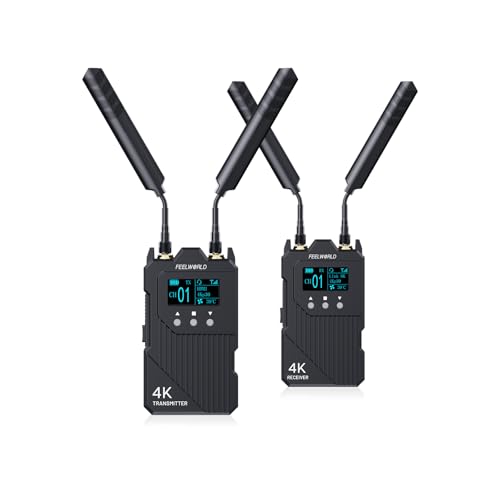
- 4K/30Hz HDMI transmission with 1000 ft range
- Receiver has dual HDMI outputs
- 0.08s latency and Type-C to Ethernet streaming support
Best For: Crews wanting 4K HDMI monitoring with simple live-stream output
Multi-Device Pro Monitor Choice

- 4K HDMI and 1080p SDI/HDMI transmission
- Up to 1312 ft range with 0.05s latency
- Feeds up to 5 devices with wireless and wired outputs
Best For: Professional crews needing multi-device monitoring and camera control
Silent 1080p Monitoring Pick

- Fanless 2W operation for quieter sets
- 40ms latency and 1080p60 output
- Compact 119g body with 300m claimed range
Best For: Quiet event shoots and portable live monitoring
Broadcast-Ready Dual-Transmitter Choice

- 2TX+1RX layout for dual-feed workflows
- HDMI/SDI with NDI, UVC, and RTMP support
- 33ms latency and up to 3,000ft claimed range
Best For: Multi-camera live production teams and streamers
App-Monitoring Long-Range Option

- Dual-band 2.4GHz/5GHz transmission
- Up to 4-device monitoring support
- 1200ft claimed range with under 60ms latency
Best For: Crews and solo creators who want smartphone monitoring
Budget Live Stream Link
1500ft 1080p Wireless HDMI Kit with UVC Out
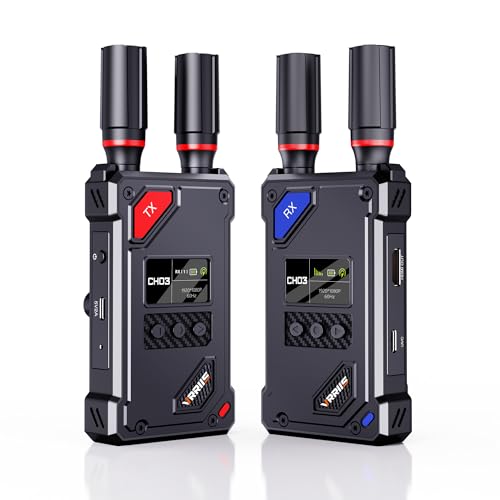
- 1500ft LOS range and 0.05s latency
- 20 channels with LCD interference display
- UVC out and HDMI loop out for live use
Best For: Small production teams and budget creators who need direct computer streaming
Pro Multi-Camera Choice
Cosmo C2 3000ft HDMI/SDI Live Stream System

- 2TX to 1RX workflow cuts cable clutter
- HDMI/SDI plus NDI, UVC, and RTMP support
- 3000ft LOS range with 33ms latency
Best For: Multi-camera live production and streaming workflows that need pro connectivity
Pocket 3 Creator Pick
Osmo Pocket 3 1640ft UVC Wireless System

- Built for DJI Osmo Pocket 3 workflows
- UVC out for direct webcam-style streaming
- 1640ft LOS range with 20 channels
Best For: Pocket 3 creators who want portable live streaming and monitoring
Flagship Dual-Band Range Pick – Hollyland Pyro H 4K 1300ft TX/RX
If you need a wireless video transmission system for live production with long reach and dependable monitoring, the Hollyland Pyro H is built for that job. It sends 4K/30 video over HDMI with dual-band 2.4 GHz and 5 GHz support, then adds smart channel scanning to help the system lock onto a cleaner frequency at startup.
Best For: Film crews, live streaming teams, ENG/EFP setups, and multi-user monitoring where range and receiver flexibility matter.
Pros:
- Up to 1,300 ft transmission range with 60 ms latency.
- Supports up to 4 receivers for shared monitoring.
- 4K UHD HDMI transmission with Smart Channel Scan.
- Includes UVC support for plug-and-play live streaming to a computer.
Cons:
- Video input/output is limited to HDMI.
- 4K transmission tops out at 24/25/30 fps, not higher frame rates.
- Best suited to teams already working within the Hollyland ecosystem.
The Pyro H stands out when your priority is stable long-distance monitoring and simple live output from the receiver. Its up-to-4-receiver support and UVC workflow make it especially useful for productions that need both crew visibility and a direct streaming path.
Long-Distance SDR Runner – DJI SDR Transmission Combo 3 km
The DJI SDR Transmission Combo is a strong fit if you want a wireless video transmission system for live production with serious reach and interference resistance. It supports 1080p/60fps monitoring, auto frequency hopping across 2.4 GHz, 5.8 GHz, and DFS bands, and adds USB-C monitoring for a more flexible workflow.
Best For: Live crews and camera teams working in complex RF environments that need long-distance, low-latency 1080p monitoring.
Pros:
- Up to 3 km transmission distance with strong penetration.
- 35 ms latency and up to 20 Mbps bitrate for smooth monitoring.
- USB-C monitoring joins SDI/HDMI output and direct Wi-Fi connection.
- Broadcast mode supports an unlimited number of receivers.
Cons:
- Maximum resolution is 1080p/60fps, not 4K.
- Designed around monitoring, so it is less focused on higher-end imaging specs.
- Best value comes when you need DJI-style integration and control features.
For productions that prioritize signal stability over 4K output, this DJI system is a very practical option. Its long range, broad band support, and unlimited receiver mode make it appealing for large sets, broadcast-style monitoring, and challenging locations.
Dual HDMI Value Pick – FEELWORLD WT1H 4K 1000ft
The FEELWORLD WT1H is a practical wireless video transmission system for live production if you want 4K HDMI monitoring, dual outputs at the receiver, and built-in tools for streaming workflows. It supports up to 4K/30Hz transmission, 1000 ft range, and ultra-low 0.08s latency for real-time use on set.
Best For: Filmmakers and live streamers who want 4K HDMI transmission with dual receiver outputs and simple OBS-style streaming support.
Pros:
- 4K/30Hz transmission with 1000 ft range.
- Receiver offers dual HDMI outputs for simultaneous monitoring.
- 0.08s latency supports responsive on-set viewing.
- Type-C to Ethernet adapter enables direct live streaming on a PC.
Cons:
- Range is lower than some higher-end long-distance systems.
- Live streaming support depends on the included Type-C to Ethernet adapter workflow.
- Only HDMI is listed, so it is not as flexible as SDI-capable options.
WT1H is a solid fit when you want a straightforward 4K HDMI transmission setup with useful receiver-side output options. It balances distance, latency, and streaming convenience in a package that works well for smaller crews and event coverage.
Multi-Device Pro Monitor Choice – Accsoon CineView SE 4K
If you need a wireless video transmission system for live production that can feed several monitors at once, the Accsoon CineView SE 4K is designed for that workflow. It supports 4K HDMI input/output, 1080p over SDI/HDMI, H.265 encoding, and a transmission setup that combines wireless and wired USB-C monitoring.
Best For: Professional crews that need multi-device monitoring, camera control, and a mix of wireless and wired viewing options.
Pros:
- Supports 4K HDMI transmission and 1080p via SDI/HDMI.
- Up to 1312 ft range with latency down to 0.05s.
- Can feed up to 5 devices using 4 wireless plus 1 wired connection.
- Offers USB-C video output and camera control features.
Cons:
- Latency and range figures are based on ideal test conditions.
- USB-C accessories and some cables are sold separately.
- Camera control support is limited to specific cameras and connection methods.
The CineView SE 4K is the most workflow-focused option in this group, especially for productions that need to monitor, record, and control cameras from multiple devices. Its combination of multi-receiver support and wired USB-C output makes it a strong fit for professional crews.
Silent 1080p Monitoring Pick – SYNCO XVision 1TX+1RX
If you want a wireless video transmission system for live production that stays quiet on set, the SYNCO XVision is built for low-noise monitoring and simple full-HD links. It sends 1080p at 60fps with a claimed 40ms latency and up to 300m range, making it a practical fit for cameras, laptops, TV boxes, and other HDMI-based workflows where portability matters.
Best For: Quiet event shoots, portable live monitoring, and small crews that need a compact 1TX+1RX link.
Pros:
- Fanless 2W design helps avoid extra noise on weddings, interviews, and music shoots.
- 40ms latency supports near real-time monitoring and faster camera adjustments.
- Up to 300m/984ft claimed range with strong signal penetration for larger spaces.
- Very lightweight at 119g with foldable antenna for easy transport.
Cons:
- Only a 1TX+1RX kit, so it is less flexible than multi-transmitter systems.
- NP-F battery is not included.
- Built around HDMI/HD port use, so it is not the broadest I/O option for complex rigs.
This is a straightforward choice when silence, portability, and quick setup matter more than advanced broadcast features. It looks especially strong for solo shooters and small teams that need dependable monitoring without adding fan noise or much weight.
Broadcast-Ready Dual-Transmitter Choice – Hollyland Cosmo C2 2TX+1RX
For teams building a wireless video transmission system for live production, the Hollyland Cosmo C2 stands out for its 2TX+1RX layout and broadcast-friendly feature set. It supports HDMI and SDI, claims 1080p60 with 33ms latency and up to 3,000ft line-of-sight range, and adds NDI, UVC, and RTMP options for streamlined streaming workflows.
Best For: Multi-camera live production teams, event crews, and streamers who want flexible input/output options.
Pros:
- 2TX and 1RX kit reduces cable clutter and helps keep two feeds synchronized.
- HEVO 2.0 frequency hopping is designed to improve stability in busy wireless environments.
- HDMI and SDI support, plus conversion and loopout, fit more professional rigs.
- NDI, UVC, and RTMP support simplifies computer, network, and platform streaming.
Cons:
- The kit is larger and more complex than a basic single-link system.
- Designed for production use, so it is likely more than casual users need.
- Range and latency figures are based on ideal line-of-sight conditions.
The Cosmo C2 is the most production-oriented option in this group, especially if you need dual transmission and multiple streaming paths. It is a strong fit when reliability, integration, and multi-device workflows matter more than minimal size.
App-Monitoring Long-Range Option – Accsoon CineView HE TX Only
If your wireless video transmission system for live production needs flexible monitoring, the Accsoon CineView HE focuses on app-based viewing and long-range stability. It uses dual-band 2.4GHz and 5GHz transmission, claims up to 1200ft range with under 60ms latency, and can stream to mobile devices while also working with compatible CineView receivers and monitors.
Best For: Crews and solo creators who want smartphone monitoring and a versatile HDMI transmitter.
Pros:
- Dual-band transmission is designed to improve stability and reduce interference.
- Supports monitoring on up to 4 devices with mixed app and monitor workflows.
- Long claimed range of 1200ft suits larger sets and event coverage.
- Flexible power options include NP-F, DC input, and USB-C.
Cons:
- This listing is transmitter only, so it is not a full kit by itself.
- NP-F batteries, DC cable, and USB-C cable are sold separately.
- Latency is lower than many basic options, but not as low as the fastest systems listed here.
The CineView HE is a practical pick if you value app monitoring and compatibility with a broader Accsoon ecosystem. It makes sense for production teams that want a flexible transmitter now and may expand the system later.
Budget Live Stream Link – 1500ft 1080p Wireless HDMI Kit with UVC Out
If you need a wireless video transmission system for live production that keeps setup simple, this Vrriis kit focuses on low-latency point-to-point HDMI transmission with useful live-streaming features. It offers up to 1500ft line-of-sight range, 0.05s delay, 20 manual channels, and UVC out so the receiver can feed a computer for OBS-style streaming without an extra capture device.
Best For: Small live production setups, monitoring, and budget-conscious creators who want UVC streaming plus loop out.
Pros:
- Up to 1500ft LOS range with 0.05s latency in open, interference-free conditions
- 20 adjustable channels with LCD signal/interference readouts for manual switching
- UVC out for direct computer streaming plus HDMI loop out for local monitoring
- Supports 1080p60 and multiple power options, including NP-F batteries and USB-C
Cons:
- Range can drop sharply with walls, brick, metal, or glass in the path
- Up to 5 RX use is supported, but transmission distance decreases as receivers are added
- Batteries are not included
Overall, this is a practical option when you want a simple wireless HDMI link with live-streaming output and straightforward channel control. It’s best suited to controlled environments where line-of-sight is realistic.
Pro Multi-Camera Choice – Cosmo C2 3000ft HDMI/SDI Live Stream System
For buyers comparing a wireless video transmission system for live production, the Hollyland Cosmo C2 is the most feature-rich option here. It supports 2TX to 1RX workflows, combines HDMI and SDI I/O, and adds NDI, UVC, and RTMP streaming support, making it a strong fit when you need one system for monitoring, production, and direct live broadcast output.
Best For: Multi-camera productions and streamers who need HDMI/SDI flexibility, long range, and network-based output options.
Pros:
- 2TX and 1RX setup reduces devices and cables while improving synchronization
- Seamless Frequency Hopping is designed to improve signal stability and anti-interference performance
- Up to 3000ft LOS range with 33ms ultra-low latency
- NDI, UVC, and RTMP support expands live streaming and network workflow options
Cons:
- More advanced feature set may be more than simple one-camera setups need
- Heavier, more production-oriented kit than the basic HDMI-only options
- Requires careful planning for power, since TX and RX use different battery options
If your priority is professional flexibility rather than the simplest plug-and-play link, this kit stands out. It’s the best fit in this group for complex live production environments that need room to grow.
Pocket 3 Creator Pick – Osmo Pocket 3 1640ft UVC Wireless System
This wireless video transmission system for live production is built around the DJI Osmo Pocket 3, so it makes sense for creators who want a direct plug-and-play workflow. It offers 1080p transmission, UVC out to a computer, 20 adjustable channels, and up to 1640ft line-of-sight range, giving Pocket 3 users a flexible way to send video to a TV, monitor, PC, or camera-based setup.
Best For: Osmo Pocket 3 users who want portable live streaming, monitoring, and multi-device output.
Pros:
- Optimized for DJI Osmo Pocket 3 with built-in Type-C transmitter connection
- UVC output lets the receiver act like a webcam for OBS and similar software
- 20 channels with LCD status, signal strength, resolution, and battery indicators
- Supports up to 5 RX units, plus HDMI loop out for local monitoring
Cons:
- Maximum range depends on clear line of sight and can drop with walls or metal obstacles
- NP-F batteries are supported but need to be purchased separately
- Best suited to Pocket 3 users, so it is less universal than standard HDMI kits
This is the most creator-specific option in the group, and that specialization is its strength. If your workflow centers on the Pocket 3, it offers the right mix of portability, UVC streaming, and monitoring features.
How We Picked the Best Wireless Video Transmission System for Live Production
We prioritized practical live-production features: latency that stays usable for monitoring and switching, dependable range in busy RF environments, and broad compatibility with HDMI, SDI, or both. We also considered power options, receiver flexibility, app support, and whether the system is better suited to field production or fixed-location streaming.
Quick Comparison
In simple terms, some systems emphasize long-distance links and stronger interference resistance, while others focus on portability, camera control, or dual-band convenience. For a Wireless Video Transmission System for Live Production, the right choice depends on whether you need the cleanest signal on set, the longest outdoor reach, or the easiest plug-and-play setup.
Key Buying Factors for Wireless Video Transmission System for Live Production
Latency
Lower latency matters most when the feed is used for live switching, confidence monitoring, or talent returns. A few extra milliseconds may be fine for basic viewing, but they become noticeable in fast-paced production.
Range and Interference Handling
Manufacturers often list ideal maximum range, but real performance depends on obstacles, RF congestion, and line of sight. Dual-band operation, frequency hopping, and robust antennas can help maintain a more stable link.
Video Format and I/O
Match the system to your cameras and switchers. HDMI-only models are often easier for creator rigs, while HDMI/SDI combinations are better for pro cameras and more flexible integration.
Audio, Control, and Monitoring
Some systems pass embedded audio, support camera control, or allow multiple receivers. These features can simplify multicam live production and reduce extra cabling.
Power and Mounting
Look for hot shoe, cage, or rig-friendly mounting, plus power options that fit your workflow. Battery flexibility matters on run-and-gun shoots, while AC or DC power may suit studio use.
Who Should Buy Which Wireless Video Transmission System for Live Production?
If you need a compact setup for creator livestreams or event coverage, choose a lightweight HDMI system with simple setup. If you work in broadcast, worship, or multicamera production, prioritize SDI support, lower latency, and stronger signal resilience. For long-range outdoor shoots, pick a system built for distance and interference protection. For smaller rigs or specialty cameras, a streamlined transmitter-receiver pair may be enough.
The best Wireless Video Transmission System for Live Production is the one that matches your camera chain, your environment, and how much delay your team can tolerate.