
Wildlife action does not wait for perfect daylight, so the right camera needs more than zoom. For dim forests, early mornings, and late-evening movement, sensor quality, autofocus, and lens flexibility matter just as much.
This roundup highlights 10 options that can help you capture wildlife more reliably in challenging light, from interchangeable-lens DSLRs to long-zoom cameras and a trail camera for remote monitoring.
Best 10 Wildlife Photography Camera for Low Light Picks for 2026
Canon EOS 90D Pick
32.5MP 10fps Dual Pixel AF Kit

- 32.5MP APS-C sensor with ISO 100-25600
- Dual Pixel AF with 5,481 selectable points
- 18-135mm lens with 4-stop stabilization
Best For: Wildlife shooters wanting a versatile DSLR for low light
Nikon P1100 Zoom Choice
125x Zoom Bridge with Optical VR

- 125x optical zoom covers 24-3000mm equivalent
- Dual Detect Optical VR adds stabilization
- Bird-watching mode and rotating LCD included
Best For: Birders and wildlife shooters who need extreme reach
Canon Rebel T7 Starter Pick
24.1MP Dual Zoom Wildlife Bundle
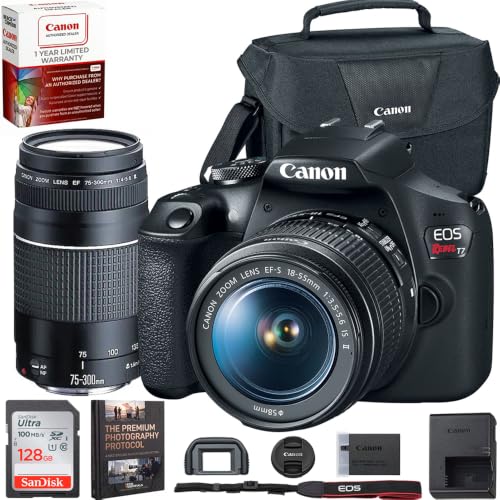
- 24.1MP APS-C sensor with low-light focus
- Includes EF 75-300mm telephoto lens
- Wi-Fi/NFC and 128GB card in the bundle
Best For: Beginners wanting an affordable wildlife DSLR kit
Kodak AZ405 Value Pick

- 40x optical zoom for distant wildlife
- Optical image stabilization helps handheld shots
- AA batteries make field use convenient
Best For: Casual wildlife shooters wanting easy long zoom
DSLR Low-Light Kit
Nikon D7500 Kit with 18-55mm & 70-300mm

- APS-C sensor with native ISO up to 51,200
- 51-point AF and 8 fps burst for moving wildlife
- Includes 18-55mm VR and 70-300mm lenses
Best For: Low-light wildlife shooters wanting DSLR control and lens reach
Long-Zoom Bridge Camera
KODAK PIXPRO AZ528 52x Optical Zoom

- 52x optical zoom for distant wildlife framing
- BSI CMOS sensor and optical stabilization
- 6 fps burst and built-in Wi-Fi
Best For: Casual wildlife shooting when long zoom and stabilization matter most
Night Trail Camera
Meidase P300 Pro WiFi Trail Camera

- 0.1s trigger with no-glow night vision
- 64MP photos and 1296p video
- 7800mAh battery and 64GB SD card included
Best For: Dedicated low-light wildlife monitoring and trail setups
Beginner DSLR Starter

- 24.1MP APS-C sensor with ISO up to 12800
- Dual Pixel CMOS AF with eye detection
- Includes 18-55mm and 75-300mm lenses
Best For: Beginners wanting an entry-level wildlife kit with extra zoom reach
High-ISO All-Rounder

- Native ISO 100–51,200, expandable to 1,640,000
- 51-point AF system with 8 fps burst shooting
- Weather-sealed body with included VR lens
Best For: Advanced wildlife shooters who need strong low-light performance
Long-Zoom Bridge Pick
Kodak PIXPRO AZ425 Wildlife Zoom

- 42x optical zoom for distant wildlife
- 20MP BSI CMOS sensor for improved low-light capture
- Optical image stabilization helps handheld shots
Best For: Beginners needing long zoom reach in a simple bridge camera
Canon EOS 90D Pick – 32.5MP 10fps Dual Pixel AF Kit
If you want a wildlife photography camera for low light that still gives you room to crop, the Canon EOS 90D is a strong all-around DSLR pick. Its 32.5MP APS-C sensor, DIGIC 8 processor, and ISO 100-25600 range are built for detail and usable results when the light drops. The included 18-135mm lens adds flexibility for subjects that move from open field to tree line.
Best For: Wildlife shooters who want a versatile DSLR with strong autofocus, good reach, and low-light flexibility.
Pros:
- 32.5MP APS-C sensor plus DIGIC 8 processor for detailed images and low-light performance.
- Dual Pixel CMOS AF with 5,481 selectable points helps with smooth focus in live view and video.
- 45-point all cross-type AF system supports fast subject tracking through the optical viewfinder.
- EF-S 18-135mm f/3.5-5.6 IS USM lens adds broad zoom range with 4-stop optical image stabilization.
Cons:
- The included lens starts at f/3.5, so it is not a fast prime for very dark conditions.
- At about 2 pounds, it is less compact than a small travel camera.
Overall, the EOS 90D is a practical choice if you want DSLR handling, strong tracking, and enough ISO range to keep working after sunset. It is especially appealing when you want one kit that can cover wildlife, sports, and travel without giving up autofocus confidence.
Nikon P1100 Zoom Choice – 125x Zoom Bridge with Optical VR
The Nikon COOLPIX P1100 is a wildlife photography camera for low light when distance matters more than interchangeable lenses. Its 125x optical zoom, Dual Detect Optical VR, and 24-3000mm equivalent range let you frame faraway birds and animals without moving closer. It is also easy to use, with bird-watching mode and a rotating LCD for flexible shooting angles.
Best For: Birders and wildlife hobbyists who need extreme zoom and simple point-and-shoot operation.
Pros:
- 125x optical zoom reaches a 24-3000mm equivalent range for very distant subjects.
- Dual Detect Optical VR helps steady shots, with stabilization rated at 4.0 stops.
- Bird-watching mode is built in for quicker wildlife setup.
- Supports RAW format, 4K UHD video, and a rotating LCD screen.
Cons:
- The 1/2.3-inch 16MP sensor is smaller than APS-C options, which can be a tradeoff in very low light.
- It is a 3.1-pound bridge camera, so it is not the lightest carry.
For long-reach wildlife shooting, the P1100 is hard to ignore because it gives you enormous zoom without needing extra lenses. If your priority is reach and stabilization over sensor size, it is a practical all-in-one option.
Canon Rebel T7 Starter Pick – 24.1MP Dual Zoom Wildlife Bundle
If you are shopping for a wildlife photography camera for low light on a beginner-friendly budget, the Canon EOS Rebel T7 is a straightforward DSLR bundle. Its 24.1MP APS-C sensor and DIGIC 4+ processor are listed for excellent low-light performance, and the included 75-300mm lens gives you telephoto reach for distant animals. Built-in Wi-Fi also makes sharing and remote control easy through the Canon Camera Connect app.
Best For: Beginners who want an affordable DSLR bundle with telephoto reach for wildlife.
Pros:
- 24.1MP APS-C sensor with DIGIC 4+ processor is specified for strong low-light performance.
- EF 75-300mm telephoto lens helps capture distant wildlife subjects.
- Built-in Wi-Fi/NFC supports sharing and remote control through the Canon app.
- Bundle includes two lenses, a 128GB card, bag, and guidebook.
Cons:
- The 9-point AF system is basic compared with newer wildlife-focused cameras.
- Continuous shooting tops out at 3 fps, which is modest for fast action.
The Rebel T7 makes sense if you want an easy entry into DSLR wildlife shooting and value the included telephoto lens. It is not the fastest body here, but the kit is practical for learning composition and working in dimmer outdoor conditions.
Kodak AZ405 Value Pick – 40x Zoom Bridge with OIS
The KODAK PIXPRO AZ405 is a simple wildlife photography camera for low light if you want long zoom, stabilization, and easy controls in one bridge body. Its 40x optical zoom and 24mm wide-angle lens give you flexible framing, while optical image stabilization helps keep handheld shots steadier at longer focal lengths. The AA battery design also makes it convenient for travel and field use.
Best For: Casual wildlife and travel shooters who want a straightforward bridge camera with long zoom.
Pros:
- 40x optical zoom provides strong reach for wildlife and distant subjects.
- Optical image stabilization helps reduce blur at longer zoom settings.
- 20MP BSI CMOS sensor offers solid detail for a bridge camera.
- AA battery power is convenient for travel and remote locations.
Cons:
- The small 1/2.3-inch sensor is not ideal for the most demanding low-light work.
- Maximum video is 1080p, so it lacks 4K recording.
The AZ405 is best viewed as a practical, easy-to-carry bridge camera rather than a specialized low-light machine. Still, for daylight-to-dusk wildlife outings where zoom range and convenience matter, it delivers a lot for the size.
DSLR Low-Light Kit – Nikon D7500 Kit with 18-55mm & 70-300mm
If you want a wildlife photography camera for low light that still gives you DSLR control, the Nikon D7500 is built around a 20.9MP APS-C sensor, EXPEED 5 processing, and a native ISO range that extends to 51,200. The included 18-55mm VR and 70-300mm lenses add flexible reach for field work, while the 51-point AF system and 8 fps burst rate help you keep up with moving subjects.
Best For: Photographers who want a capable DSLR kit for low-light wildlife, longer lens reach, and fast autofocus.
Pros:
- Native ISO 51,200 with expanded ISO up to 1,640,000 for low-light shooting flexibility
- 51-point autofocus system and 8 fps continuous shooting help track wildlife action
- Includes two lenses: 18-55mm VR and 70-300mm for wider scenes and distant subjects
- Optical stabilization on the bundled lens helps steady handheld shots
Cons:
- Maximum aperture on the bundled zoom lenses is not especially bright for very dark conditions
- Renewed kit may matter to buyers who prefer brand-new equipment
- Bulkier DSLR setup than a compact bridge or trail camera
Overall, this kit makes sense if you want a serious entry into low-light wildlife photography with real lens flexibility and proven DSLR handling. It leans more toward control and reach than convenience, but that tradeoff is useful in the field.
Long-Zoom Bridge Camera – KODAK PIXPRO AZ528 52x Optical Zoom
The KODAK PIXPRO AZ528 is a practical wildlife photography camera for low light when your priority is reach and stabilization rather than interchangeable lenses. Its 16MP BSI CMOS sensor, optical image stabilization, and 52x optical zoom make it easier to frame birds and distant animals, while the built-in Wi-Fi and 6 fps burst mode add convenience in the field.
Best For: Casual wildlife photographers who want a long zoom, stabilized handheld shooting, and simple all-in-one operation.
Pros:
- 52x optical zoom brings distant wildlife close without relying on digital zoom
- BSI CMOS sensor offers better low-light performance than a basic sensor design
- Optical image stabilization helps reduce blur at long focal lengths
- 6 fps burst mode can help catch quick animal movement
Cons:
- Smaller 1/2.3-inch sensor limits low-light depth compared with larger-sensor cameras
- Maximum aperture is not especially bright for very dark scenes
- 1080p video is solid, but not as advanced as higher-resolution hybrid cameras
This is a straightforward bridge camera for users who want easy reach to wildlife without carrying multiple lenses. It is best suited to daylight and mixed-light shooting, with low-light performance helped more by stabilization and sensor design than by raw sensor size.
Night Trail Camera – Meidase P300 Pro WiFi Trail Camera
If your goal is a wildlife photography camera for low light that can sit outdoors and watch for animal activity, the Meidase P300 Pro is built for that job. It uses a fast 0.1s trigger, no-glow 940nm IR night vision, and 64MP photos with 1296p video, so you can capture motion after dark without disturbing the scene.
Best For: Property owners, hunters, and backyard wildlife watchers who need a dedicated low-light trail camera.
Pros:
- 0.1s trigger speed helps catch fast-moving animals
- No-glow 940nm IR LEDs support discreet night captures
- 64MP photos and 1296p video provide strong detail for a trail camera
- 7800mAh rechargeable battery and included 64GB SD card add field convenience
Cons:
- Non-cellular design means no remote cellular image transmission
- Built for motion-triggered monitoring rather than handheld photography
- WiFi works for direct phone connection, not home routers or computers
This model is the most specialized low-light option in the group. It is not a general-purpose camera, but for automated wildlife monitoring in the dark, its trigger speed and invisible night vision are the key strengths.
Beginner DSLR Starter – Canon Rebel T7 Dual Zoom Kit
If you want a wildlife photography camera for low light without jumping straight into a pro body, the Canon EOS Rebel T7 is a practical entry point. Its 24.1MP APS-C sensor, Dual Pixel CMOS AF with eye detection, and ISO range up to 12800 give you a solid starting mix for daylight and dimmer conditions, while the included 18-55mm and 75-300mm lenses add reach for distant subjects.
Best For: Beginners who want an affordable DSLR kit with basic low-light flexibility and extra zoom reach for wildlife.
Pros:
- 24.1MP APS-C sensor with ISO 100–6400, expandable to H:12800
- Dual Pixel CMOS AF with eye detection AF helps keep subjects in focus
- Includes two lenses, including a 75-300mm option for farther wildlife shots
- Built-in Wi-Fi and NFC make sharing and remote use easier
Cons:
- 3 fps continuous shooting is modest for fast action
- Optical viewfinder coverage is about 95%, not full frame
- Full HD video only, not 4K
Overall, the Rebel T7 is better suited to learners than to demanding low-light wildlife specialists, but it gives you the essentials in a familiar DSLR package. The lens pair and autofocus features make it a workable first step if you want to practice with long reach and occasional low-light shooting.
High-ISO All-Rounder – Nikon D7500 18-140mm Bundle
The Nikon D7500 is the strongest wildlife photography camera for low light in this group if you want a DSLR built for performance. Its 20.9MP DX sensor, EXPEED 5 processor, native ISO up to 51,200, and 51-point AF system are all aimed at capturing subjects in tough lighting, while the included 18-140mm VR lens adds useful flexibility for field work.
Best For: Enthusiasts and advanced shooters who want high-ISO performance, fast autofocus, and a rugged DSLR for wildlife and action.
Pros:
- Native ISO 100–51,200, expandable to 1,640,000
- 51-point AF system and 8 fps burst rate for moving subjects
- Weather-sealed body suits harsher outdoor conditions
- Tilt touchscreen and optical stabilization on the included lens add versatility
Cons:
- The bundled kit is heavy at 8.8 pounds
- It is a DSLR body-lens system rather than a compact carry option
- Bundle extras add value, but also complexity if you only need the camera body
If your priority is low-light wildlife performance, the D7500 stands out for sensor sensitivity, autofocus coverage, and shooting speed. It’s the most capable option here for demanding outdoor use, especially when subjects move quickly or the light drops.
Long-Zoom Bridge Pick – Kodak PIXPRO AZ425 Wildlife Zoom
If you need a wildlife photography camera for low light with maximum reach, the KODAK PIXPRO AZ425 focuses on zoom and simplicity. Its 42x optical zoom, 20MP BSI CMOS sensor, and optical image stabilization help you frame distant birds or animals while reducing blur from hand movement, especially when you can’t get physically closer.
Best For: Beginners who want a long-zoom bridge camera for distant wildlife and straightforward shooting.
Pros:
- 42x optical zoom provides major reach for wildlife and sports
- 20MP BSI CMOS sensor is designed for better low-light performance
- Optical image stabilization helps keep handheld shots steadier
- 24mm wide-angle lens adds flexibility beyond telephoto shooting
Cons:
- 1/2.3-inch sensor is much smaller than DSLR sensors
- Top shutter speed of 1/2000 seconds is modest for action
- Best suited to simple operation rather than advanced control
The AZ425 is a sensible bridge-camera choice when zoom range matters more than deep manual control. For low-light wildlife work, its BSI sensor and stabilization help, but it is still best viewed as an accessible, reach-first option rather than a specialist performer.
How We Picked the Best Wildlife Photography Camera for Low Light
We focused on the features that matter most in a Wildlife Photography Camera for Low Light: sensor size, autofocus performance, usable high-ISO output, image stabilization, and focal length reach. We also considered whether the camera is practical in the field, including battery life, handling, and how easily it fits different shooting styles.
Because wildlife photography often involves fast, distant, or unpredictable subjects, we gave extra weight to models that offer quick focusing, telephoto flexibility, and dependable stabilization.
Quick Comparison
Broadly speaking, the DSLR kits in this roundup are the strongest all-around choices for low-light wildlife because they pair larger sensors with better lens options. Superzoom bridge cameras are easier to carry and give impressive reach, but they usually trade away some image quality in dim conditions. The trail camera stands apart as a remote, motion-activated tool rather than a handheld shooting solution.
Key Buying Factors for a Wildlife Photography Camera for Low Light
Sensor Size and Noise Control
Larger sensors typically produce cleaner images at higher ISO settings, which is important at dawn, dusk, and under canopy cover. APS-C DSLRs generally outperform small-sensor bridge cameras when light gets scarce.
Autofocus and Burst Speed
Wild subjects move quickly and unpredictably. Look for fast autofocus, strong subject tracking, and a shooting mode that can keep up with birds in flight, grazing animals, or sudden motion.
Lens Reach and Aperture
Long focal length matters for wildlife, but a lens that opens wider lets more light reach the sensor. If you need versatility, a DSLR with interchangeable lenses is usually the best path; if you want convenience, a superzoom can be a practical compromise.
Stabilization and Handheld Use
Optical or sensor-based stabilization helps reduce blur when shooting at long focal lengths or slower shutter speeds. This is especially useful when you cannot bring a tripod.
Durability and Power
Field work can mean weather changes, long waits, and limited charging opportunities. Battery life, grip comfort, and rugged build quality can matter as much as raw specs.
Who Should Buy Which Wildlife Photography Camera for Low Light?
If you want the best balance of low-light performance and wildlife versatility, choose an APS-C DSLR kit with a telephoto lens option. If portability and extreme zoom are your priorities, a superzoom bridge camera is easier to carry for travel and casual outings. If you are scouting or documenting animals around a fixed location, a trail camera is the right tool for remote capture.
For buyers comparing a Wildlife Photography Camera for Low Light, the best choice is the one that matches your shooting distance, how often you work in poor light, and how much gear you are willing to carry. In practice, that usually means prioritizing sensor quality first, then zoom reach, then convenience features.