
Choosing among video distribution amplifiers for home studios can be confusing because similarly named products may be designed for composite video, coaxial TV signals, CCTV, headphones, or compact stereo systems.
This roundup compares 10 options across those use cases, focusing on output count, connector compatibility, signal range, power requirements, and practical installation needs.
Best 10 Video Distribution Amplifiers for Home Studios Picks for 2026
Best RCA Distribution Hub

- Sends one RCA video and stereo-audio feed to eight outputs
- Metal enclosure with plug-and-play installation
- Works with consoles, DVD players, VCRs, projectors, and more
Best For: Large composite AV setups needing simultaneous feeds
Best Long-Run CCTV Booster

- Supports AHD, TVI, CVI, and analog CCTV formats
- Designed for coax runs up to 2,600 feet
- Targets 1080P signal loss, snow, and ghosting
Best For: Long-distance compatible CCTV installations
Best Antenna Distribution Amp
ClearStream JUICE4 4-Output Amplifier

- Splits boosted antenna or CATV signals to four TVs
- Supports ATSC 3.0, 4K/8K, and frequencies to 1.2 GHz
- Includes RG6 cable, power adapter, and mounting hardware
Best For: Four-display broadcast TV and coax monitoring setups
Studio Monitoring Splitter
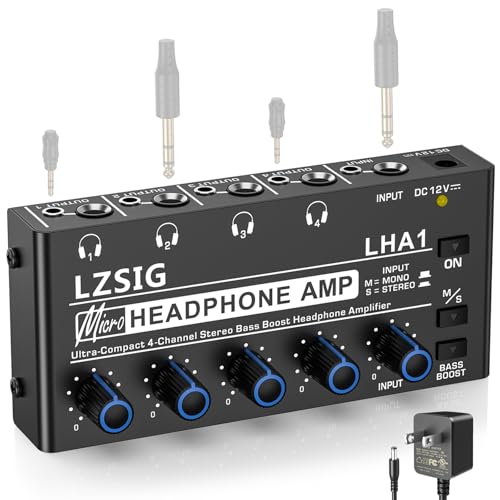
- Shares one source with four headphones
- Independent volume control per channel
- Supports 3.5mm and 6.35mm connections
Best For: Shared headphone monitoring in home studios
Multi-TV Signal Distribution

- Feeds up to eight connected devices
- Adds a stated +4dB boost per port
- Works with OTA antenna and standard cable signals
Best For: Distributing antenna or cable TV to multiple locations
Compact Session Splitter
Mackie HM-4 Headphone Amplifier

- Drives four headphones from one source
- Individual level control for each listener
- Compact metal body for flexible mounting
Best For: Tracking sessions and rehearsals with multiple listeners
Compact Studio Amp
Orb Audio Booster Mini Amplifier

- 25 watts per channel into 8-ohm speakers
- Optical, dual analog, and subwoofer outputs
- Compact aluminum design with remote support
Best For: Small speaker-based studio and TV setups
Cable TV Distribution Hub
9-Port Bi-Directional Signal Amplifier
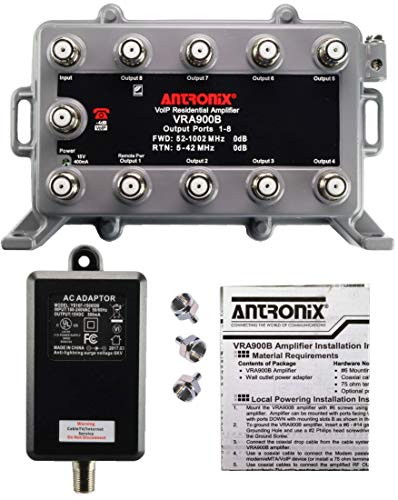
- Eight amplified output ports with active return
- Dedicated modem port for VoIP equipment
- Surge-protected aluminum housing
Best For: Multi-room cable TV systems
Multi-Listener Audio Hub
2-in/4-out Headphone Amplifier

- Two inputs and four stereo headphone outputs
- Independent volume control per listener
- Compact, low-noise design with 12V adapter
Best For: Shared studio headphone monitoring
Best RCA Distribution Hub – 8-Way Composite AV Splitter
For home studios using composite sources, this video distribution amplifier for home studios duplicates one RCA video-and-stereo-audio feed across as many as eight displays. Its hardware-only setup and color-coded connections make it a practical choice for multi-monitor playback, testing, or presentation systems.
Best For: Home studios, retro gaming setups, home theaters, and AV systems that need one composite source sent to up to eight displays.
Pros:
- Distributes one composite video and stereo-audio input to eight RCA outputs.
- Supports sources including DVD players, gaming consoles, VCRs, projectors, and TV boxes.
- Sturdy metal housing helps with heat dissipation and long-term durability.
- Plug-and-play design requires no software or drivers.
Cons:
- RCA cables are not included.
- Designed for composite RCA signals rather than modern digital video connections.
This is the strongest fit when your studio or entertainment system still relies on composite AV and needs many simultaneous outputs. The included power adapter and compact enclosure simplify installation, while the eight-way capacity supports larger display layouts.
Best Long-Run CCTV Booster – BNC HD Coax Amplifier
This BNC amplifier is aimed at surveillance installations where long coaxial runs weaken the picture. Among video distribution amplifiers for home studios, it is a specialized option for AHD, TVI, CVI, and analog CCTV signals rather than a general-purpose RCA studio splitter.
Best For: Home studios or properties with CCTV cameras that need signal compensation over long HD coaxial cable runs.
Pros:
- Supports AHD, CVI, TVI, and analog CCTV camera formats.
- Designed for transmission distances up to 2,600 feet.
- Supports 1080P video with signal-to-noise technology intended to reduce snow and ghosting.
- Plug-and-play coaxial installation is straightforward.
Cons:
- It is intended for BNC/coax CCTV systems, not RCA multi-output distribution.
- The supplied notes do not specify multiple output ports for feeding several displays.
Choose this model when the primary issue is distance-related loss in a compatible surveillance feed. Its value is in extending and cleaning up one CCTV signal path, so it is less suitable for a studio that needs to duplicate a source across several monitors.
Best Antenna Distribution Amp – ClearStream JUICE4 4-Output Amplifier
The ClearStream JUICE4 boosts and splits an antenna or CATV signal to four televisions or converter boxes. It can serve as a video distribution amplifier for home studios that monitor broadcast feeds, while its compact housing and broad frequency range suit indoor installations and select protected outdoor setups.
Best For: Studios or homes distributing over-the-air, CATV, or broadband coax signals to up to four TV receivers.
Pros:
- Provides four outputs without intended quality loss from splitting.
- Supports ATSC 3.0 NEXTGEN TV and 4K/8K UHD applications.
- Offers a 54–1,220 MHz operating range for antenna, CATV, and cable broadband use.
- Includes a 40-inch RG6 cable, power adapter, wall screws, and grounding screw.
Cons:
- It is designed for antenna and coaxial TV distribution, not RCA or HDMI studio sources.
- Reception still depends on tower distance and obstructions; amplification cannot create unavailable channels.
- Its four-output capacity may be limiting for larger distribution systems.
For broadcast monitoring, this is the most purpose-built option in the group. Low noise, surge protection, and a sealed zinc housing add installation flexibility, but buyers should confirm that their source and displays use compatible 75-ohm coax connections.
Best Compact 4-Way RCA Booster – 12V RCA AV Video Splitter
This compact RCA video splitter buffers one composite video input and replicates it across four outputs. Although marketed for cars, SUVs, and trucks, it can also work in a small home studio that uses 12V-powered RCA equipment and needs a simple four-display feed.
Best For: Small composite-video systems, vehicle entertainment installations, and portable 12V AV setups requiring four synchronized outputs.
Pros:
- Distributes one RCA video signal to four outputs simultaneously.
- Uses a buffered circuit to maintain signal strength and picture quality.
- Includes an adjustable level for different output requirements.
- Compact metal construction and LED power indicator support portable use.
Cons:
- Requires a 12V power connection and is primarily intended for vehicle AV systems.
- The notes describe video distribution only, not stereo-audio splitting.
- RCA cables are needed for the source and displays.
This is a sensible low-footprint choice when four composite video outputs are enough and a 12V supply is available. Its adjustable level and buffered outputs are useful for consistent feeds, but it lacks the eight-output capacity and audio routing of a dedicated composite AV distribution box.
Studio Monitoring Splitter – 4-Channel Headphone Amplifier
For home studios looking for video distribution amplifiers for home studios, the LZSIG LHA2 is an audio-focused option for sharing one source with up to four listeners. It offers independent level controls, stereo/mono switching, and compatibility with both 3.5mm and 6.35mm connections.
Best For: Shared headphone monitoring, tracking sessions, and small studio or stage setups.
Pros:
- Four independent headphone outputs with separate volume controls
- Supports 32–100Ω headphones and both 1/8-inch and 1/4-inch plugs
- Metal chassis, low-noise circuitry, and selectable bass boost
Cons:
- It is a headphone amplifier, not a mixer
- Designed for audio distribution rather than video signal distribution
The LZSIG is a practical choice when the goal is to let several people monitor the same audio source while retaining individual volume control. Its compact metal construction also suits desk-based sessions and portable studio work.
Multi-TV Signal Distribution – 8-Port Antenna Amplifier
For setups using video distribution amplifiers for home studios, the LSA48 is the most directly relevant option here for distributing an antenna or cable signal. Its eight outputs and included power supply are intended to feed multiple TVs while helping offset signal loss.
Best For: Distributing OTA antenna or standard cable TV signals to up to eight devices.
Pros:
- Eight output ports for connecting multiple TVs or devices
- Provides a stated +4dB boost per port
- Compact design with included power supply and F59 terminators
Cons:
- Not compatible with satellite TV
- Not intended for amplified antennas or pre-amplified installations
- Power supply is for indoor use only
The LSA48 fits home media distribution better than studio monitoring: it is designed for OTA and cable signals rather than HDMI or professional video workflows. Verify that the source is not already amplified and plan for separate connection cables.
Compact Session Splitter – Mackie HM-4 Headphone Amplifier
Although video distribution amplifiers for home studios can refer to broader signal-routing gear, the Mackie HM-4 handles the audio-monitoring side of a session. It drives four headphones from a single source and gives each listener a dedicated volume control.
Best For: Tracking sessions, rehearsals, and compact home-studio headphone distribution.
Pros:
- Four independent outputs with individual level controls
- Accepts a source with a 1/4-inch or 1/8-inch output
- Compact metal enclosure can be attached to a desk, rack, or stand
Cons:
- Provides headphone distribution rather than video distribution
- Uses a corded electric power source
The HM-4 is a straightforward, plug-and-play solution for giving several performers or collaborators separate headphone levels. Its small metal build is useful when desk or rack space is limited.
Compact Studio Amp – Orb Audio Booster Mini Amplifier
For home studios that need video distribution amplifiers for home studios with speaker support, the Orb Audio Booster is a compact Class D option. It delivers 25 watts per channel into 8-ohm speakers and accepts optical or analog sources, while its subwoofer pre-out adds flexibility for a fuller setup.
Best For: Small studio, desktop, TV, and bookshelf-speaker systems needing a compact integrated amplifier.
Pros:
- 25 clean watts per channel into 8 ohms.
- Optical input, two 3.5mm analog inputs, and subwoofer pre-out.
- Compact aluminum cabinet with dialogue boost, remote control support, and a 5V USB power slot.
Cons:
- Designed for speaker amplification rather than multi-zone video distribution.
- Requires an AAA battery for the remote.
The Booster is a practical choice when space is limited and you want a simple way to connect multiple audio sources to speakers. Its feature set is more useful for a compact listening station than for a dedicated coaxial distribution system.
Cable TV Distribution Hub – 9-Port Bi-Directional Signal Amplifier
For cable-based video distribution amplifiers for home studios, this 9-port unit is built to distribute cable TV signals across multiple destinations. It provides eight amplified output ports with active return and includes a dedicated modem port for VoIP equipment, but it is not intended for OTA antennas or satellite systems.
Best For: Cable TV installations serving multiple televisions or rooms, including systems with cable internet or VoIP service.
Pros:
- Eight amplified output ports with lossless forward and reverse operation.
- Dedicated modem port can help maintain VoIP service during a power failure.
- Includes surge protection, short-circuit protection, downward-facing F-ports, and a powder-coated aluminum housing.
Cons:
- Not recommended for OTA antennas or compatible with satellite systems.
- Not MoCA capable and may not work with cable systems requiring MoCA.
- Connection cables are not included.
This is the most directly suited option here for coaxial cable distribution, especially when several cable TV endpoints need service. Confirm your provider’s MoCA requirements and system compatibility before purchasing.
Multi-Listener Audio Hub – 2-in/4-out Headphone Amplifier
For home studios exploring video distribution amplifiers for home studios alongside shared headphone monitoring, this compact 2-in/4-out box provides four independently controlled stereo outputs. It mixes two playback devices and lets four listeners adjust volume separately through 3.5mm headphone connections.
Best For: Small recording, editing, or playback sessions where multiple people need individual headphone volume control.
Pros:
- Supports two playback devices and four simultaneous listeners.
- Independent volume control for each output channel.
- Compact design with NJM4556A low-noise op amp and included 12V power adapter.
Cons:
- It is an audio headphone distribution box, not a video signal amplifier.
- Native connections are 3.5mm; 6.35mm headphones require an adapter.
- Each listener’s volume control is independent, but the unit uses shared source inputs.
This unit makes sense for collaborative audio monitoring rather than routing video between displays. Its four separately controlled headphone outputs can be useful when a studio’s main need is quiet, flexible listening during shared sessions.
How We Picked the Best Video Distribution Amplifiers for Home Studios
We selected these models by comparing their intended signal types, input and output configurations, amplification features, and suitability for small studios or home entertainment setups. The list includes composite AV distribution boxes, BNC camera boosters, antenna and cable amplifiers, headphone amplifiers, and compact audio devices. Because these categories are not interchangeable, the best choice depends first on the signal you need to distribute.
We also considered setup simplicity, available outputs, power requirements, and whether a product is designed for short in-room connections or longer coaxial runs. Product descriptions and specifications should be checked carefully before purchase, particularly when matching connectors and video standards.
Quick Comparison
- Composite video: Choose an RCA distribution box when your source and displays use yellow, red, and white AV connectors.
- CCTV and BNC systems: Use a BNC video amplifier designed for AHD, TVI, or CVI signals and the required coaxial distance.
- OTA antenna or cable TV: Select an RF distribution amplifier with compatible F-connectors, gain, and return-path support where needed.
- Headphone monitoring: Choose a multi-channel headphone amplifier for sending one stereo source to several listeners.
- Compact stereo upgrades: Mini amplifiers are better for driving speakers or adding optical and subwoofer connectivity than for distributing video.
Key Buying Factors for Video Distribution Amplifiers for Home Studios
Signal and Connector Type
Start by identifying whether your source uses composite RCA, BNC, coaxial RF, optical audio, or 3.5mm stereo. A powered RCA splitter will not replace a BNC CCTV amplifier, and an antenna amplifier is not intended for line-level studio audio. Confirm both the connector and the supported signal standard before buying.
Output Count and Signal Distance
Count the devices you need to feed now, then allow some capacity for expansion. For short runs between nearby components, a basic distribution box may be sufficient. Longer coaxial or camera runs require an amplifier with a published transmission range and appropriate gain. Excessive gain can also introduce noise, so more amplification is not automatically better.
Power, Bandwidth, and Installation
Powered units generally provide more reliable distribution than passive splitters, but they need an outlet or suitable adapter. Check voltage requirements, mounting options, cooling, and cable-routing space. For RF equipment, review frequency coverage and whether the unit supports bidirectional or active-return operation. OTA antenna users should avoid models specifically restricted to cable systems.
Noise and Monitoring Quality
For studio monitoring, prioritize low noise, independent volume control, and enough output power for your headphones. Video users should look for stable signal reproduction rather than simply maximum gain. Use properly shielded cables and terminate unused RF outputs when recommended.
Who Should Buy Which Video Distribution Amplifiers for Home Studios?
Choose the 8-way RCA unit for distributing composite AV to several displays or recording devices. Choose the BNC booster for compatible CCTV cameras and extended coaxial runs. Choose an antenna or cable distribution amplifier when one RF source must feed multiple televisions or tuners, checking OTA compatibility first.
Choose the Mackie HM-4 or another multi-output headphone amplifier for collaborative recording and monitoring. A compact aux-input headphone mixer suits simple 3.5mm setups, while a small optical-input speaker amplifier is better for a compact listening system with powered or passive speakers. Match the product to your signal path rather than treating every amplifier as a universal distributor.