
A trail camera with night vision lets you see what passes through a yard, trail, or feeding area after dark—without staying up to watch it. The right choice depends less on the biggest megapixel number and more on where you’ll place it and how often you can check it.
These 10 picks cover straightforward SD-card cameras, phone-connected models, solar options, a cellular camera, and multipacks for monitoring more than one spot.
Best 10 Trail Camera with Night Vision Picks for 2026
Best No-Glow Range
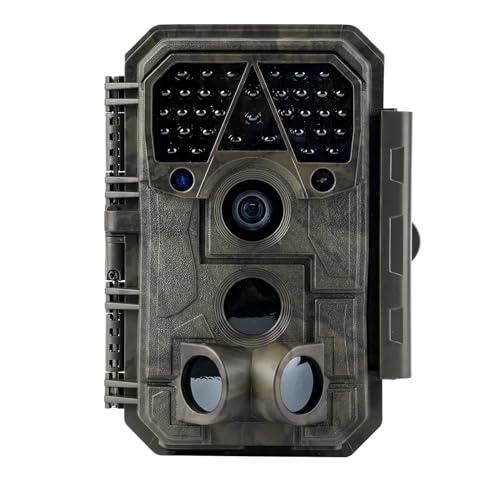
- 100-foot 940nm no-glow night vision
- 0.1-second claimed trigger
- No Wi-Fi or cellular connection
Best For: Discreet nighttime coverage without app setup
Best Solar App Access
MAXDONE 6000mAh Solar Trail Camera

- 6000mAh battery with solar charging
- 65-foot low-glow night vision
- Local app hotspot; 32GB card included
Best For: Nearby phone downloads with fewer battery changes
Best Wide-Angle Detection

- 100-degree detection angle
- 0.1-second trigger and five-shot burst
- Solar power; 32GB card included
Best For: Capturing movement across a wider trail or clearing
Best Adjustable Solar Setup
MAXDONE Solar WiFi Trail Camera
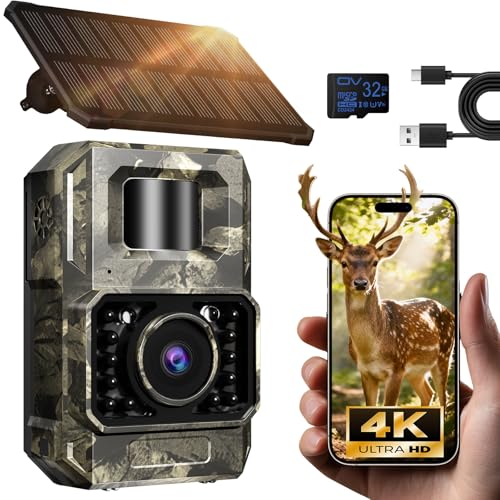
- Detachable, adjustable solar panel
- 65-foot 850nm low-glow night vision
- Local app access; check solar-version date
Best For: Flexible solar placement with nearby phone downloads
Best No-Glow Option

- 940nm no-glow IR; stated 80-foot range
- 0.2-second trigger and 120° detection
- 2-inch screen and included 16GB card
Best For: Discreet wildlife monitoring without cellular service
Best for Remote Monitoring

- Auto-connect AT&T/Verizon LTE
- 96-foot stated night-vision range
- Built-in GPS and storage; no SD card needed
Best For: Checking remote hunting land or property by phone
Best Two-Camera Kit

- Two cameras and two 16GB SD cards
- 0.3-second trigger; stated 60-foot range
- 48MP photos and 1080p video
Best For: Monitoring two locations with local recording
Best Two-Camera Starter Pack

- Two cameras for separate spots
- 0.3-second advertised trigger
- SD cards sold separately
Best For: Two-location monitoring with your own SD cards
Best Ready-to-Record Two-Pack

- Two 16GB SD cards included
- Two cameras for separate sites
- No remote Wi-Fi viewing
Best For: Two-location recording with included storage
Best Compact Wide-Angle Pick

- 130° detection angle
- Built-in 2-inch playback screen
- SD card not included
Best For: Wide-angle wildlife monitoring with on-camera playback
Best No-Glow Range – Meidase P70
If you want a trail camera with night vision that does not rely on an app, the Meidase P70 offers 940nm no-glow infrared illumination rated to 100 feet. Its built-in 2.4-inch screen lets you check captures at the camera.
Best For: Wildlife watchers who prioritize discreet nighttime coverage and on-camera review over wireless access.
Pros:
- 100-foot no-glow night vision and a claimed 0.1-second trigger.
- 64MP photos, 1296p video, and H.264 compression.
- IP66-rated housing; supports an optional Meidase solar panel.
Cons:
- No Wi-Fi or cellular connection for remote viewing.
- SD card and eight AA batteries are sold separately; the solar panel is also optional.
The P70 is a straightforward choice for longer-range, low-visibility night monitoring, provided you are comfortable visiting the camera to retrieve footage.
Best Solar App Access – MAXDONE 6000mAh Solar Trail Camera
This trail camera with night vision pairs a built-in 6000mAh rechargeable battery with solar charging, reducing routine battery changes. Its Wi-Fi/Bluetooth hotspot lets you review files in the app when you are near the camera.
Best For: Buyers who want solar power and phone-based retrieval without removing the memory card.
Pros:
- 65-foot low-glow night vision, with advertised 64MP photos and 4K video.
- App access through a local hotspot rated up to 55 feet.
- Includes a pre-installed 32GB card; IP66-rated housing.
Cons:
- The hotspot does not connect to home Wi-Fi or provide cellular access.
- Phone setup requires standing very close to the camera initially.
It suits a site you can walk up to for downloads: the app saves opening the camera, but it does not make footage available from afar.
Best Wide-Angle Detection – MAXDONE PH970S
For monitoring a wider path or clearing, this trail camera with night vision combines a stated 100-degree detection angle with a 0.1-second trigger and five-shot burst mode. It also pairs a 6000mAh rechargeable battery with solar charging.
Best For: Wildlife monitoring where a broad detection area and burst captures matter more than remote connectivity.
Pros:
- 65-foot low-glow infrared night vision and advertised 64MP photos and 4K video.
- 100-degree detection angle and five-shot burst mode.
- Pre-installed 32GB microSD card, app-based file access, and IP66 rating.
Cons:
- Its hotspot works only nearby, up to a stated 55 feet; it cannot join home Wi-Fi.
- Initial phone setup requires being within 0.5 foot of the camera.
The PH970S offers useful capture options for animals crossing a broad scene, but you still need to approach the unit to collect images through its app.
Best Adjustable Solar Setup – MAXDONE Solar WiFi Trail Camera
This trail camera with night vision has a detachable, adjustable solar panel, giving you more flexibility when positioning it for daylight. Its 850nm low-glow infrared is rated to 65 feet, and the TrailCam GO app transfers files over a local connection.
Best For: Buyers who want adjustable solar-panel placement and nearby app access to wildlife footage.
Pros:
- Detachable solar panel, rechargeable battery, and power-bank connection option.
- 65-foot low-glow night vision with adaptive lighting.
- Advertised 64MP photos and 4K video; pre-included SD card and IP66 rating.
Cons:
- Local Wi-Fi access is rated up to 55 feet in an open area; it does not connect to home Wi-Fi.
- Orders placed before December 25, 2025, were for a non-solar version, so verify the version if buying older stock.
The adjustable panel distinguishes this model when the best camera angle is not the sunniest one. Check the listing version before purchasing, particularly from older inventory.
Best No-Glow Option – WOSPORTS 64MP 4K Trail Camera
If you want a trail camera with night vision that works without cellular service or Wi-Fi, this WOSPORTS model pairs 32 no-glow infrared LEDs with an 80-foot stated night-vision range. It also offers 64MP photo settings and 4K video.
Best For: Wildlife watchers who want discreet night recording and on-camera image previews.
Pros:
- No-glow 940nm infrared illumination is designed to avoid startling wildlife.
- 0.2-second trigger, 120° detection angle, and up to three-shot bursts help capture movement.
- Built-in 2-inch screen lets you review footage at the camera; a 16GB memory card is included.
Cons:
- No cellular or Wi-Fi connection for remote viewing.
- AA batteries are not included; rechargeable and solar power options are sold separately.
Choose this one when concealed illumination and local controls matter more than phone alerts. Its IP66 rating also makes it a practical choice for outdoor placement.
Best for Remote Monitoring – Tactacam REVEAL X 3.0
For buyers who need a trail camera with night vision and phone access from a remote site, the Tactacam REVEAL X 3.0 uses cellular connectivity rather than Wi-Fi. Its integrated SIM selects between AT&T and Verizon coverage, while the REVEAL app handles setup and photo access.
Best For: Hunters and landowners who want cellular updates from distant locations.
Pros:
- Auto-connect LTE selects between two carriers based on available signal.
- Infrared night vision has a stated range of 96 feet.
- Built-in GPS and storage eliminate the need to buy a separate SD card.
- Sub-half-second trigger and three-shot burst mode suit moving game.
Cons:
- Remote features depend on usable cellular coverage.
- Its 60° field of view is narrower than the WOSPORTS model’s stated 120° detection angle.
This is the more convenient pick for checking activity without visiting the camera. Its IP66 rating and stated battery life of up to six-plus months also support longer outdoor deployments, though actual runtime will vary with use.
Best Two-Camera Kit – WOSODA G200 2-Pack
This WOSODA two-pack is a practical trail camera with night vision option for covering two spots at once. Each camera records 48MP photos and 1080p video, with low-glow 850nm infrared for black-and-white nighttime shots.
Best For: Buyers monitoring two trails, yard areas, or wildlife routes with local SD-card recording.
Pros:
- Two cameras and two 16GB SD cards are included.
- 0.3-second trigger and stated 60-foot detection and night-vision ranges.
- Straps and mounting hardware offer placement options; IP65-rated housing suits outdoor use.
Cons:
- Low-glow infrared is less concealed than a no-glow setup.
- Footage is stored locally rather than sent to a phone over cellular service.
The appeal here is coverage: you can watch two locations without buying a second camera separately. If invisible illumination or remote alerts are priorities, consider a different model.
Best Two-Camera Starter Pack – WOSODA G200 2-Pack
If you need a trail camera with night vision for two locations, this WOSODA G200 pack offers two battery-powered cameras with 850nm low-glow infrared, a stated 60-foot night-vision range, and 1080p video. The cameras record to SD cards rather than connecting over Wi-Fi.
Best For: Monitoring two trails or wildlife spots when you already have SD cards.
Pros:
- Two cameras cover separate locations.
- Advertised 0.3-second trigger speed and detection up to 60 feet.
- IP65-rated housings, mounting hardware, and photo or video modes.
Cons:
- SD cards are not included.
- No cellular or Wi-Fi access; footage must be retrieved locally.
This is the practical two-camera option if local recording suits your setup. Expect black-and-white nighttime footage, despite the listing’s separate “Night Color” specification.
Best Ready-to-Record Two-Pack – WOSODA G200 with SD Cards
This trail camera with night vision package pairs two WOSODA G200 cameras with two included 16GB SD cards. Each camera offers 850nm low-glow infrared, a stated 60-foot night-vision range, and 1080p video, making the bundle convenient for setting up two recording spots.
Best For: Buyers who want two locally recording cameras with storage included.
Pros:
- Includes two 16GB SD cards and mounting accessories.
- Advertised 0.3-second trigger speed with detection up to 60 feet.
- IP65-rated housings and selectable photo or video modes.
Cons:
- No Wi-Fi connection for remote viewing.
- Nighttime captures are described as black and white.
Choose this bundle over a camera-only two-pack if included storage matters. The listing gives conflicting still-image resolution figures—48MP in its headline and bullets versus 30MP in its specifications—so verify that detail before buying.
Best Compact Wide-Angle Pick – KJK 36MP 2.7K Trail Camera
If you want a compact trail camera with night vision and an on-camera screen, the KJK model combines a 2-inch color display with 850nm low-glow infrared. Its stated 75-foot night-vision reach and 130° detection angle suit wider wildlife-monitoring areas.
Best For: Wildlife watchers who want wide-angle coverage and playback at the camera.
Pros:
- Advertised sub-0.1-second trigger and 130° detection angle.
- 36MP photos, 2.7K video with sound, and a built-in playback screen.
- IP66-rated enclosure and included mounting strap and stand.
Cons:
- SD card is not included.
- No Wi-Fi or app for remote setup or viewing.
The built-in screen makes field setup and review straightforward without a phone. Its speed, range, and battery-life figures are manufacturer claims, so treat them as specifications rather than guaranteed field results.
How We Picked the Best Trail Camera with Night Vision
We organized these 10 options around the decisions that matter in the field: how you retrieve images, how the camera is powered, how many locations you need to cover, and whether its night-vision and motion-detection features suit the site. The selection includes non-connected cameras, Wi-Fi/Bluetooth models, solar-powered options, a cellular model, and two-camera packs. Listed resolutions and trigger speeds are useful starting points, but they do not establish real-world image quality on their own.
Quick Comparison: Which Type Fits Your Setup?
- Non-cellular, non-Wi-Fi: A simple choice when you can visit the camera to check its SD card. The Meidase P70 and WOSPORTS model fit this category.
- Wi-Fi/Bluetooth: Convenient for nearby access, but check each model’s app and connection range. Local wireless access is not the same as cellular delivery.
- Solar-powered: Worth considering for long deployments where the panel can receive adequate sunlight. Battery performance will still depend on conditions and settings.
- Cellular: The Tactacam REVEAL X 3.0 suits locations where remote image delivery matters; confirm coverage, plan costs, and setup requirements before buying.
- Two-camera packs: Useful for covering two trails or comparing activity at separate entry points. Check what accessories, including SD cards, each listing actually includes.
Key Buying Factors for a Trail Camera with Night Vision
Night Illumination and Image Detail
Look at the infrared flash type, stated illumination range, and sample night footage if available. No-glow IR can be useful where a visible flash would be distracting. Megapixel and 4K claims alone cannot tell you how clearly an animal will appear at night; illumination, motion blur, and placement also matter.
Triggering and Field of View
Trigger speed matters when subjects cross a narrow path quickly, while a wider field of view can help cover a clearing. A broad view may also make distant animals appear smaller. Aim the camera across expected movement and clear nearby branches that could cause false triggers.
Power, Storage, and Weather Exposure
Consider how often you can swap batteries or retrieve an SD card. More frequent recordings, video capture, wireless use, and cold weather can shorten runtime. For exposed locations, check the stated weather rating and mount the camera so water does not collect around its seals.
Who Should Buy Which Trail Camera with Night Vision?
Choose a basic SD-card model if you want low-complexity monitoring and can make regular visits. Pick Wi-Fi/Bluetooth for easier access while you are near the camera, not for alerts from miles away. Consider solar when the mounting location gets reliable sun; choose cellular when remote delivery is the priority and ongoing service costs make sense. If coverage matters more than advanced connectivity, a two-pack can be a practical starting point. For fast-moving subjects, compare the stated trigger speed, then check night samples before making your final choice.