
A 150-inch screen can turn a spare room, media space, or backyard into a true viewing destination—but the right screen depends on more than diagonal size.
This roundup compares fixed-frame, motorized, manual pull-down, and portable options so you can match screen material, installation style, and room conditions to your projector.
Best 10 Projector Screens for 150 Inch Home Theater Picks for 2026
Best Fixed-Frame White Screen

- 150-inch 16:9 white screen with 1.1 gain
- 160-degree viewing angle and velvet-wrapped frame
- Supports Full HD, 4K/8K, HDR, and active 3D
Best For: Dedicated theaters with compatible 16:9 projectors
Best Motorized Screen

- Powered 16:9 screen with RF remote and wall controls
- 1.2-gain PVC surface with 178-degree viewing angle
- Wall- or ceiling-mount design with dual power interfaces
Best For: Multipurpose rooms needing convenient remote operation
Best Gray Fixed-Frame Screen

- 150-inch 16:9 gray screen with 1.0 gain
- 160-degree viewing angle and velvet-wrapped aluminum frame
- Supports Full HD, 4K/8K, HDR, and active 3D
Best For: Dedicated rooms favoring a gray fixed-frame surface
Best Portable Outdoor Screen

- Lightweight 2.8-pound foldable polyester design
- Washable white fabric with a 160-degree viewing angle
- Suitable for indoor, outdoor, travel, and event use
Best For: Portable movie nights and temporary installations
Premium Fixed-Frame Pick
150-Inch CineWhite UHD-B Screen
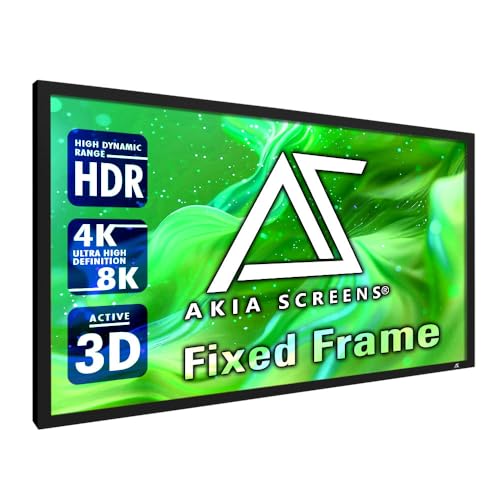
- ISF-certified 1.3-gain material
- Supports 8K, 4K, HDR, and 3D
- Tensioned black-velvet fixed frame
Best For: Dedicated indoor home theaters
Retractable Value Pick
150-Inch Manual Pull-Down Screen

- Manual auto-lock height adjustment
- 1.1-gain MaxWhite 2 material
- Wall- or ceiling-mount installation
Best For: Multipurpose rooms using standard-throw projectors
Portable Budget Pick
Foldable 150-Inch Projection Screen

- Lightweight, foldable polyester design
- Supports front and rear projection
- Washable and suitable for indoor or outdoor use
Best For: Portable movie nights and temporary setups
Best Motorized Pick
YODOLLA 150-Inch Electric Screen

- Automatic wall- or ceiling-mounted operation
- 16:9 matte PVC surface with 160° viewing angle
- Wired and wireless remotes included
Best For: Permanent home theater installations needing push-button control
Best Outdoor Setup
ZUVMITG 150-Inch Screen with Stand

- Reinforced freestanding frame
- Windproof stakes, ropes, and sandbags included
- Supports front and rear projection
Best For: Backyard movies, camping, and portable indoor/outdoor use
Best Fixed-Frame White Screen – Silver Ticket STR 150
For shoppers comparing projector screens for 150 inch home theater setups, this Silver Ticket STR Series model is a strong fixed-frame option. Its 16:9, 150-inch white surface has a 1.1 gain rating, a 160-degree viewing angle, and support for Full HD, 4K/8K, HDR, and active 3D content.
Best For: Dedicated home theaters using long-, short-, or ultra-short-throw projectors and a native 16:9 image.
Pros:
- Black velvet-wrapped aluminum frame helps absorb stray light around the image.
- Wide 160-degree viewing angle with no stated resolution loss at viewing angles.
- Tensioning-rod assembly is designed for a crisp, flat viewing surface.
- Horizontal adjustment is available through the top and bottom mounting brackets.
Cons:
- Wall-mounted fixed-frame design has no legs or stand option.
- Some ultra-short-throw projectors may not be compatible with this frame.
- Installation requires assembly and permanent-style mounting space.
The white material offers a versatile balance for movie, gaming, and 3D viewing. Confirm the available wall dimensions and projector compatibility before ordering, especially with a UST projector.
Best Motorized Screen – WASJOYE 150-Inch Electric
This WASJOYE model adds powered operation to the projector screens for 150 inch home theater category. The 16:9 screen measures about 130.71 inches wide by 73.62 inches high and includes RF remote control, wall controls, a 1.2-gain PVC surface, and a 178-degree viewing angle.
Best For: Home theaters, offices, schools, or multipurpose rooms where remote-controlled screen deployment is useful.
Pros:
- Motorized up-and-down operation with RF remote control and wall-mounted control panel.
- Quiet motor is rated below 42 dB and supports inching adjustments.
- Dual-side power interfaces can simplify installation planning.
- Four-layer matte PVC surface includes a black backing to reduce light penetration.
Cons:
- Two people are required for installation according to the supplied notes.
- AAA batteries for the remote are not included.
- Recommended for medium- to long-focal-length projectors, so projector compatibility should be checked.
Choose this screen when convenience matters more than a simple manual setup. Its wall- or ceiling-mount flexibility and remote operation make it practical for rooms that serve more than one purpose.
Best Gray Fixed-Frame Screen – Silver Ticket STR Gray 150
For projector screens for 150 inch home theater installations, this gray Silver Ticket STR Series screen provides a fixed-frame alternative to a white surface. It uses a light-gray, 1.0-gain material in a 16:9 format and is designed for Full HD, 4K/8K, HDR, and active 3D projection.
Best For: Dedicated viewing rooms where a gray screen surface and broad seating coverage are preferred.
Pros:
- 150-inch diagonal viewing area with a 160-degree viewing angle.
- Light-gray material is designed with reflective properties that can appear white in use.
- Heavy-duty aluminum frame is wrapped in light-absorbing black velvet.
- Works with long-, short-, and ultra-short-throw projectors, subject to compatibility checks.
Cons:
- No legs or stand option is available for this wall-mounted frame.
- Some UST projectors may not work with the STR frame.
- Assembly and wall mounting are required.
This model is worth considering if you want the structure and clean borders of a fixed frame while choosing gray material. Measure the wall and test the projected image beforehand, particularly when using an ultra-short-throw projector.
Best Portable Outdoor Screen – AAJK 150-Inch Foldable
Among projector screens for 150 inch home theater use, this AAJK model is aimed at flexibility rather than permanent installation. The washable, foldable 16:9 polyester screen provides a 132-by-73-inch viewing area, a 160-degree viewing angle, and a lightweight 2.8-pound design for indoor or outdoor movie sessions.
Best For: Backyard movies, parties, travel, classrooms, offices, and temporary home theater setups.
Pros:
- Foldable, lightweight design can fit in a backpack or suitcase.
- Soft-touch white material is described as crease-free and nontransparent.
- Washable fabric can be cleaned by hand or in a washing machine.
- Can be attached using hooks, brackets, nails, or double-sided tape.
Cons:
- Requires manual mounting rather than a motorized deployment system.
- Temporary attachment methods may require extra setup and suitable support points.
- Supplied warranty description is limited to 30 days.
This is the most convenient choice when portability and social viewing are priorities. Its flexible mounting options suit occasional screenings, but a fixed-frame screen is better for a dedicated theater installation.
Premium Fixed-Frame Pick – 150-Inch CineWhite UHD-B Screen
For shoppers comparing projector screens for 150 inch home theater setups, the Akia Screens fixed-frame model emphasizes a smooth, high-contrast presentation. Its ISF-certified CineWhite UHD-B material, 1.3 gain, 180-degree viewing angle, and support for 8K, 4K, HDR, and Active 3D make it well suited to a dedicated indoor viewing room.
Best For: Dedicated home theaters seeking a permanently mounted 150-inch screen with a polished, cinema-style appearance.
Pros:
- ISF-certified CineWhite UHD-B material offers 1.3 gain and full Lambertian diffusion.
- Supports 8K, 4K Ultra HD, HDR, and Active 3D formats.
- Black velvet-wrapped aluminum frame helps absorb overshoot and improve perceived contrast.
- Rod-and-spring tensioning keeps the viewing surface flat and wrinkle-free.
Cons:
- Fixed installation is less flexible than a retractable or portable screen.
- Its large frame requires substantial wall space and careful installation.
- Designed primarily for controlled-light indoor or sheltered environments.
This is the strongest fit when image consistency and a finished home-theater look matter more than portability. The included mounting kit and compatibility with standard, short-throw, and ultra-short-throw systems add installation flexibility, though projector compatibility should still be confirmed.
Retractable Value Pick – 150-Inch Manual Pull-Down Screen
The Elite Screens Manual Series is a practical option for projector screens for 150 inch home theater use when you want to clear the wall after viewing. Its manual pull-down design, 16:9 format, MaxWhite 2 material, and dual wall- or ceiling-mount capability provide a straightforward installation for compatible front-projection systems.
Best For: Home theaters, multipurpose rooms, and presentation spaces that need a large screen that retracts when not in use.
Pros:
- 150-inch 16:9 screen provides a 130.7-by-73.5-inch viewing area.
- Manual auto-lock mechanism allows variable height settings.
- MaxWhite 2 material has 1.1 gain and a 180-degree viewing angle.
- Supports 4K Ultra HD and Active 3D projection and carries a two-year warranty.
Cons:
- Not compatible with short-throw or ultra-short-throw projectors.
- Manual operation requires pulling the screen down and retracting it by hand.
- Retractable construction does not provide the permanently tensioned surface of a fixed-frame screen.
Choose this model if flexibility is more important than a fixed, framed installation. Its retractable case suits rooms with multiple uses, but the stated short-throw limitation is an important consideration before purchase.
Portable Budget Pick – Foldable 150-Inch Projection Screen
For flexible projector screens for 150 inch home theater setups, the Mdbebbron foldable screen prioritizes easy storage and transport. The lightweight polyester design folds into a compact size, supports front and rear projection, and can be mounted with hooks, ropes, brackets, nails, or double-sided tape for indoor or outdoor movie use.
Best For: Portable movie nights, temporary home-theater setups, offices, classrooms, and sheltered outdoor viewing.
Pros:
- Lightweight two-pound design folds for backpack or suitcase storage.
- 150-inch 16:9 format offers an approximately 130-by-73-inch viewing area.
- Supports both front and rear projection with a 160-degree viewing angle.
- Polyester material is washable and designed to resist creasing when folded or crushed.
Cons:
- Requires separate hooks, ropes, brackets, nails, or tape for mounting.
- Portable fabric construction does not offer the rigid frame of a fixed screen.
- Listed support is for 1080p Full HD rather than the higher-format support cited by some fixed screens.
This is the most convenient choice when portability and setup versatility outweigh a permanent, perfectly rigid installation. It is particularly useful for temporary indoor or outdoor presentations, provided you have a suitable way to secure the fabric flat.
Best Motorized Pick – YODOLLA 150-Inch Electric Screen
For shoppers comparing projector screens for 150 inch home theater setups, the YODOLLA is a convenient wall- or ceiling-mounted option with automatic operation. Its 16:9 matte PVC surface offers a 160-degree viewing angle and 1.2 gain, while the included wired and wireless remotes simplify everyday use.
Best For: Home theaters, living rooms, and occasional indoor or outdoor movie nights where powered operation is preferred.
Pros:
- Automatic roll-up operation with wired and wireless remote controls.
- 16:9 viewing area supports 4K, 3D, and 1080P projection.
- Can be mounted on a wall or ceiling using the included hardware.
- Auto-lock positioning and a quiet motor help provide flexible, smooth operation.
Cons:
- Requires a nearby power source and a suitable permanent mounting location.
- The overall motorized assembly is approximately 141.34 inches wide, so careful measuring is essential.
- A slight new-PVC odor may be present initially and may require airing out.
The YODOLLA stands out when convenience matters more than portability. Measure the mounting area carefully before ordering, since the housing and assembly extend beyond the 150-inch diagonal viewing size.
Best Outdoor Setup – ZUVMITG 150-Inch Screen with Stand
For projector screens for 150 inch home theater use that can move outdoors, the ZUVMITG combines a freestanding frame with front- and rear-projection capability. Its washable milk-silk fabric is designed for 4K HD images, and the included stakes, ropes, and sandbags add support for backyard or camping setups.
Best For: Outdoor movie nights, camping, tailgating, and buyers who want a portable screen that also works indoors.
Pros:
- Includes a reinforced base and steel support frame for improved stability.
- Windproof kit includes four ground stakes, two ropes, and two sandbags.
- Supports front and rear viewing with a 160-degree viewing angle.
- Folds for storage and includes a dedicated carrying bag.
Cons:
- Outdoor use still requires securing the screen with the included accessories in windy conditions.
- The stand-based design needs open floor space rather than a permanent wall mount.
- The supplied dimensions and listing measurements should be checked against your available setup area.
This is the more practical choice for flexible indoor/outdoor viewing. Its stability accessories and carrying bag make it better suited to changing locations than a motorized screen, though setup space and wind conditions still need consideration.
Best Lightweight Option – TOWOND 150-Inch Portable Screen
The TOWOND is a practical pick among projector screens for 150 inch home theater setups when portability is a priority. This manual 16:9 screen uses a foldable stand, supports front and rear projection, and weighs 11.5 pounds with its carry bag for easier transport to a backyard, campsite, or event.
Best For: Travelers and families who want a lightweight screen for backyard films, camping, sports, presentations, and other temporary setups.
Pros:
- Tool-free stand assembly is designed to take about five minutes.
- Supports both front and rear projection with a 160-degree viewing angle.
- Includes a carry bag and folds for transport in a car trunk.
- Thick polyester fabric is designed to resist creasing.
Cons:
- Indoor installation requires a room wider than 140 inches according to the supplied note.
- Manual setup lacks the remote-controlled convenience of a motorized screen.
- As a freestanding screen, it needs floor space and proper securing outdoors.
The TOWOND makes sense for buyers who value quick assembly and easy transport over permanent installation. Confirm your room width before ordering, particularly if you plan to use the full-size screen indoors.
How We Picked the Best Projector Screens for 150 Inch Home Theater
We focused on 150-inch models designed for home theater, movie nights, gaming, presentations, or outdoor viewing. The selection includes fixed-frame screens for a clean permanent installation, motorized and manual screens for flexible rooms, and portable designs with stands or foldable materials.
We also considered aspect ratio, stated 4K, 8K, HDR, and 3D compatibility, front- and rear-projection support, setup requirements, portability, and the practical demands of handling a screen this large. Product specifications and included accessories can vary, so confirm dimensions, mounting hardware, return terms, and current availability before purchasing.
Quick Comparison
- Best for a dedicated theater: Fixed-frame screens generally provide the flattest viewing surface and the most polished appearance.
- Best for concealed installation: Motorized screens retract when not in use and can mount to a wall or ceiling.
- Best for simple wall mounting: Manual pull-down screens offer straightforward operation without electrical wiring.
- Best for outdoor use: Portable screens with stands or foldable panels are easier to transport and set up.
- Best for flexible projection: Models supporting front and rear projection work well for changing indoor and outdoor layouts.
Key Buying Factors for Projector Screens for 150 Inch Home Theater
Screen Size and Room Depth
A 150-inch 16:9 screen is approximately 131 inches wide and 74 inches tall, before accounting for borders or a frame. Measure the wall, ceiling, viewing distance, projector throw distance, and seating layout before ordering. A screen that fits the wall may still overwhelm a narrow room.
Fixed, Motorized, Manual, or Portable Design
Fixed-frame screens are stable and typically easier to keep uniformly taut. Motorized models add convenience but need power access and careful mounting. Manual pull-down versions are usually simpler and more affordable. Portable screens are useful when storage and transport matter, although stands can require extra floor space and may be less stable outdoors.
Material, Gain, and Viewing Angle
White screen material is a versatile choice for controlled rooms, while higher-gain surfaces may produce a brighter image but can narrow viewing angles or emphasize hotspots. For a large audience, prioritize a wide, even viewing angle. Dark-room performance, ambient-light rejection, and projector brightness should be considered together rather than judged by screen claims alone.
Compatibility and Installation
Most modern screens can display 4K or 8K-source content, but the screen does not create resolution on its own. Check the projector’s throw ratio, mounting position, keystone limitations, screen border dimensions, and whether the package includes brackets, a stand, remote, or carrying case. Outdoor buyers should also plan for wind, uneven ground, and safe anchoring.
Who Should Buy Which Projector Screens for 150 Inch Home Theater?
Choose a fixed-frame screen if you are building a dedicated theater and want a consistently taut surface. Choose a motorized screen if the room has multiple uses and you want the screen hidden between viewing sessions. A manual pull-down model suits budget-conscious installations where occasional adjustment is acceptable.
For movie nights away from a permanent setup, choose a portable screen with a stand or a foldable outdoor screen. If you expect varied seating positions or want indoor/outdoor flexibility, prioritize wide viewing angles, sturdy support, manageable setup, and front/rear projection capability. Finally, verify the exact product dimensions and accessories before committing—at 150 inches, small specification differences have a major impact on installation.