
Motorized camera macro rails make close-up photography more repeatable by moving the camera in controlled increments instead of relying on manual adjustments. That matters when you are capturing focus stacks, recording time-lapse sequences, or fine-tuning composition at high magnification.
This roundup compares dedicated macro focusing rails with larger motorized camera sliders that can also support macro workflows. The right choice depends on travel range, movement precision, camera support, control options, and how portable your setup needs to be.
Best 10 Motorized Camera Macro Rails Picks for 2026
Best 4-Axis Pick

- Four-axis movement with 360° swivel
- Dual lead-screw sliders for precise control
- Supports cameras up to 5.5 lb
Best For: Portable, multi-directional macro positioning
Best Automated Stacking System
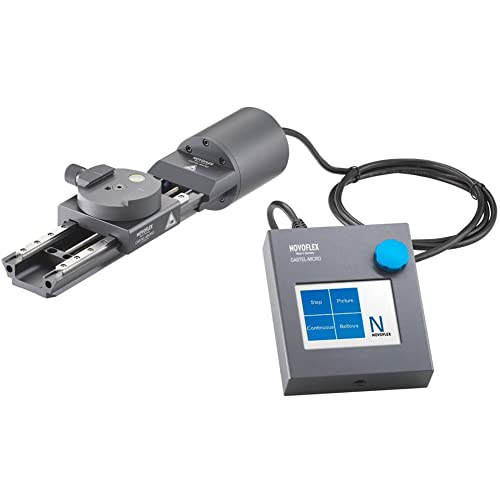
- Automates precise focus-stacking movements
- Supports setups up to 50x magnification
- Designed and manufactured in Germany
Best For: Professional, high-magnification focus stacking
Best Compact Manual Rail
SIRUI MS18 Macro Focusing Rail

- Quick adjustment and fine side-knob control
- 360° rotating head with Arca-Swiss plate
- Removable feet for tabletop or tripod use
Best For: Compact tabletop macro and product photography
Best Long Motorized Slider
NEEWER ER1 Motorized Camera Slider

- 120cm motorized travel with app control
- Manual, video, and time-lapse modes
- Includes 4400mAh NP-F750 battery
Best For: Product video, time-lapse, and long camera moves
Best Value Manual Rail

- Four-way rack-and-pinion adjustment
- Lightweight aluminum construction
- Supports cameras up to 2.5 kg
Best For: Detailed product and close-up photography
Best Motorized Option
Accsoon TOPRIG S60 Camera Slider

- Bluetooth app and button control
- Supports time-lapse shooting
- Up to 4 kg horizontal load
Best For: Automated macro and time-lapse movement
Best Precision Rail
NiSi NM-200S Macro Focusing Rail

- 1 mm adjustment per rotation
- 180 mm adjustment range
- 360-degree rotating camera clamp
Best For: Tripod-mounted precision macro photography
Best App-Controlled Motorized Rail
GVM 32-Inch Carbon Fiber Slider

- Six programmable shooting modes
- iOS and Android app control
- Lightweight carbon-fiber construction
Best For: Programmed tracking, panoramic, and time-lapse shots
Best Precision Macro Rail
Haoge FM-160 Wormdrive Macro Rail

- 115mm precision travel
- 1mm engraved reference scales
- Arca-type clamp and tripod threads
Best For: Manual macro positioning and focus stacking
Best Versatile Motorized Slider
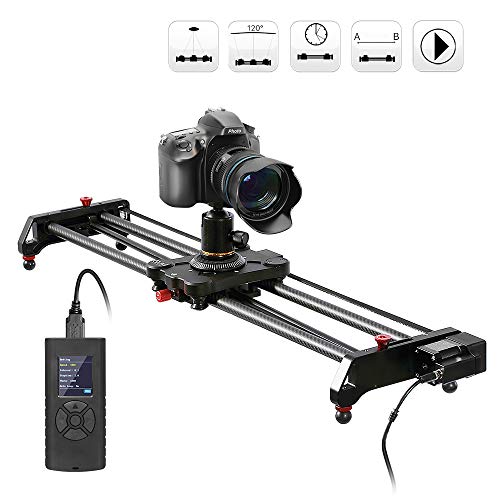
- Six automated shooting modes
- Adjustable travel and timing settings
- Supports 120-degree panoramas
Best For: Automated tracking, video, and time-lapse work
Best 4-Axis Pick – NEEWER GM-MP3 Macro Rail
For photographers comparing motorized camera macro rails and precision positioning tools, the NEEWER GM-MP3 provides four-axis adjustment and a rotating top platform for close-up work, time-lapse videos, and detailed framing.
Best For: Macro photographers who want portable, multi-directional camera positioning.
Pros:
- Offers four-way movement plus a 360° swivel for flexible composition.
- Dual lead-screw sliders provide smooth control, with 100mm travel per slider and 200mm combined movement in the same direction.
- Supports cameras up to 5.5 lb while weighing 1.6 lb, and includes Arca-type mounting hardware.
Cons:
- It is a manual focusing rail rather than an automated stacking system.
- The positioning lock must be pushed down to stabilize the camera.
The GM-MP3 is a strong all-around choice when precise manual control matters more than automated focus stacking. Its aluminum construction and tripod compatibility also make it practical for field use.
Best Automated Stacking System – NOVOFLEX CASTEL-MICRO
The NOVOFLEX CASTEL-MICRO stands out among motorized camera macro rails for automated focus-stacking workflows. Mount the camera and lens, initiate the sequence with one click, and let the rail handle precise incremental movement.
Best For: Professional macro imaging and automated focus stacking, including high-magnification work.
Pros:
- Automates rail movements for precise, effortless focus stacking.
- Supports setups capable of reaching up to 50x magnification with compatible microscope lenses and accessories.
- German engineered and manufactured for professional imaging applications.
Cons:
- At 1.62 kg, it is heavier than the other macro-focused rails listed here.
- The supplied notes do not identify included lens, bellows, or control accessories.
This is the most specialized option in the roundup. Its automated stacking capability and potential for very high magnification make it a better fit for dedicated macro stations than casual close-up shooting.
Best Compact Manual Rail – SIRUI MS18 Macro Focusing Rail
The SIRUI MS18 is a compact manual alternative for shoppers considering motorized camera macro rails but primarily needing precise close-up adjustments. It combines a quick-adjustment button, fine side-knob control, and a 360° rotating head.
Best For: Tabletop macro, product photography, and photographers who value a compact, adaptable rail.
Pros:
- Provides quick adjustment alongside fine tactile control.
- Its 360° rotating head and Arca-Swiss quick-release plate simplify angle changes and mounting.
- Removable feet support tabletop shooting or direct tripod mounting, and two rails can be stacked for four-way adjustment.
Cons:
- It is a manual focusing rail, not an automated motorized system.
- Its compact design is intended for close-up positioning rather than long camera moves.
At 440 g, the MS18 is the lightest rail in this selection. Choose it for controlled manual macro composition, especially when detachable feet and flexible mounting are more useful than automated movement.
Best Long Motorized Slider – NEEWER ER1 Motorized Camera Slider
The NEEWER ER1 is a long-format motorized camera slider for automated tracking, video, and time-lapse moves. Its app control, optional 2.4G remote control support, and 120cm carbon-fiber rail make it more video-oriented than dedicated macro focusing rails.
Best For: Product videos, time-lapse photography, and broad camera movements where a long travel distance is useful.
Pros:
- Offers manual, video, and time-lapse modes with adjustable speed, interval, and exposure.
- Uses a quiet stepper motor and includes a 4400mAh NP-F750 battery for extended operation.
- Supports horizontal loads up to 11 lb and includes 1/4-inch and 3/8-inch tripod threads.
Cons:
- The notes warn that minor shake may occur during macro photography.
- The 2.4G remote control and charger are not included.
- At 2.5 kg, it is less portable than compact macro rails.
The ER1 is best viewed as a motorized video slider that can handle some macro applications, not as a dedicated precision stacking rail. Its long travel, app control, and battery-powered operation favor dynamic video and time-lapse work.
Best Value Manual Rail – 4-Way Macro Focusing Slider
If you want motorized camera macro rails but primarily need accurate manual positioning, this four-way aluminum focusing rail offers a practical alternative. Its two 6-inch slides provide forward, backward, left, and right adjustment, while the rack-and-pinion mechanism supports fine focus control.
Best For: Product photography and close-up work involving textures, patterns, and intricate designs.
Pros:
- Four-way adjustment supports precise camera positioning.
- Lightweight aluminum construction with a gear train for controlled movement.
- Quick-release plate and standard 1/4-inch screw simplify camera mounting.
- Supports up to 2.5 kg.
Cons:
- Manual operation rather than motorized movement.
- Listed adjustment is limited to two 6-inch slides.
- Not water resistant.
This is a straightforward choice for photographers who value precise, hands-on macro adjustments. It is best suited to controlled tabletop shooting rather than automated motion or time-lapse work.
Best Motorized Option – Accsoon TOPRIG S60 Camera Slider
Among motorized camera macro rails, the Accsoon TOPRIG S60 stands out for wireless control and automated movement. Bluetooth app control supports time-lapse features, while physical buttons allow operation without the app.
Best For: Macro, time-lapse, and motion-controlled shooting with compatible light cameras.
Pros:
- Bluetooth app control enables remote operation and time-lapse functions.
- Full button operation allows manual control without the app.
- Designed for stability with lenses up to 200mm and macro lenses.
- Supports up to 2.5 kg vertically and 4 kg horizontally.
Cons:
- Heavier than the manual focusing rails at 1.5 kg.
- Maximum vertical load is limited to 2.5 kg.
- Not water resistant.
The TOPRIG S60 is the most automation-focused option in this roundup. Its app connectivity and stated support for panorama and time-lapse work make it a strong fit when repeatable slider movement matters.
Best Precision Rail – NiSi NM-200S Macro Focusing Rail
For photographers comparing motorized camera macro rails with precision manual systems, the NiSi NM-200S focuses on controlled, repeatable adjustments. It provides 1 mm movement per rotation across a 180 mm range, plus quick positioning and a rotating camera clamp.
Best For: Precision macro photography using tripod-based camera and lens setups.
Pros:
- Fine 1 mm-per-rotation adjustment over a 180 mm range.
- Quick-position button helps make larger positioning changes efficiently.
- 360-degree rotating clamp allows camera orientation changes without removing the rail mount.
- Arca-Swiss compatibility plus 1/4-inch and 3/8-inch screw holes supports flexible mounting.
Cons:
- Manual focusing rail rather than a motorized slider.
- Its supplied notes do not specify a maximum load.
- Requires compatible Arca-type mounting equipment for some setups.
The NM-200S is a strong choice when fine focus increments, broad mounting compatibility, and flexible camera orientation are more important than automated movement. Its quick-position control also helps balance precision with efficient setup.
Best App-Controlled Motorized Rail – GVM 32-Inch Carbon Fiber Slider
For creators seeking motorized camera macro rails with programmable movement, the GVM slider combines wireless app control with six shooting modes. Its carbon-fiber construction, adjustable legs, and multi-angle mounting options make it suited to controlled studio work and portable video setups.
Best For: App-programmed tracking, panoramic, time-lapse, and video shots.
Pros:
- Six shooting modes with adjustable start/end points, speed, dwell time, and pauses.
- Bluetooth app control works with iOS and Android devices.
- Eight-layer carbon fiber helps keep the rail lightweight and stable.
- Multiple 1/4-inch and 3/8-inch ports support horizontal, vertical, and 45-degree setups.
Cons:
- At 32 inches and 5 pounds, it is less compact than a dedicated manual macro rail.
- Its advanced motorized features may be more than needed for simple focus adjustments.
The GVM is the most feature-rich option here for repeatable camera movement and programmed motion. Choose it when wireless control and cinematic tracking matter more than minimal size.
Best Precision Macro Rail – Haoge FM-160 Wormdrive Macro Rail
The Haoge FM-160 is a precision-focused alternative to motorized camera macro rails, using a wormdrive adjustment screw for controlled close-up positioning. Its compact travel range, engraved scale, and Arca-type compatibility make it practical for macro photography and focus stacking.
Best For: Fine manual adjustments, focus stacking, and close-up photography.
Pros:
- Provides 115mm, or 4.53 inches, of front-to-back movement.
- Fine adjustment screw advances 4mm per full rotation.
- 1mm engraved scales support repeatable positioning.
- Includes an Arca-type clamp and 1/4-inch-20 tripod threads.
Cons:
- It is manually operated rather than motorized.
- The listed maximum weight recommendation is 14.1 ounces, limiting heavier setups.
- It is not water resistant.
For photographers who prioritize precise, incremental control over automated movement, the FM-160 is the most specialized choice. Its modest travel and light weight suit portable macro work, provided your camera setup stays within the stated capacity.
Best Versatile Motorized Slider – 31-Inch Electric Camera Rail
This 31-inch electric camera slider is a versatile pick among motorized camera macro rails for users who want programmed motion without focusing exclusively on close-up work. It supports tracking, panoramic, time-lapse, and video modes, with adjustable travel settings and multi-angle tripod mounting.
Best For: Budget-conscious creators needing automated tracking and time-lapse movement.
Pros:
- Six-in-one operation includes tracking, panoramic, time-lapse, and video shooting.
- Allows adjustment of start and end points, speed, distance, dwell time, and pauses.
- Supports 120-degree panoramic shooting through its red-knob configuration.
- Multiple 1/4-inch and 3/8-inch screw holes support different tripod angles.
Cons:
- Its 31-inch rail is much larger than a compact macro focusing stage.
- The supplied notes do not specify wireless app control or construction material.
- Setup requires configuring the red knobs for certain shooting modes.
This slider makes sense when automated camera travel and multiple shooting modes are more important than a compact macro-only design. Its adjustable motion settings also make it useful for repeatable time-lapse and tracking sequences.
How We Picked These Motorized Camera Macro Rails
We focused on movement control, focusing precision, mounting flexibility, and practical use in macro photography. The selection includes dedicated four-way and worm-drive focusing rails, automated stacking systems, and longer motorized sliders suited to time-lapse or camera movement beyond a tabletop macro setup.
We also considered features that affect real-world usability: Arca-Swiss compatibility, rotating clamps, tripod mounting, app or wireless control, battery operation, construction materials, and the ability to make repeatable adjustments. A long slider is not automatically a better macro rail, so we distinguish between close-up focusing tools and general-purpose motorized camera motion systems.
Quick Comparison
| Best For | Look For | Typical Advantage |
|---|---|---|
| Focus stacking | Fine step control and stable mounting | Repeatable changes between frames |
| Precision manual macro work | Worm drive or four-axis adjustment | Accurate composition and focus positioning |
| Time-lapse macro | Motorized travel, app control, and battery power | Programmable camera movement |
| Studio setups | Longer travel and higher load capacity | More movement range for larger subjects |
| Travel photography | Compact design and quick-release mounting | Faster setup with less equipment |
Key Buying Factors for Motorized Camera Macro Rails
Movement Precision
For focus stacking, the smallest controllable increment matters more than maximum travel. Fine, repeatable steps help maintain consistent overlap between images. Worm-drive rails and dedicated stacking systems are generally better suited to this work than broad-purpose sliders designed primarily for video.
Axis and Travel Range
A single-axis rail changes camera-to-subject distance, while four-way systems can also adjust framing horizontally and vertically. Longer motorized sliders provide dramatic travel and time-lapse motion, but they may be less convenient for precise tabletop composition. Match the rail’s range to your subject size and working distance.
Mounting and Stability
Check whether the rail accepts your tripod head, Arca-Swiss plate, or camera cage. A secure 1/4-inch connection, useful tripod mounting, and a rigid metal or carbon-fiber structure reduce vibration. Also verify the load rating with your camera, lens, flash, and accessories installed.
Controls, Power, and Noise
App and wireless controls are useful for programmed motion and time-lapse sequences, while manual controls can be faster for still-life adjustments. Battery capacity affects field use, and motor noise matters if you are recording video or working near sound-sensitive subjects.
Who Should Buy Which Motorized Camera Macro Rails?
Choose a dedicated precision rail if your priority is focus stacking, controlled close-up framing, or studio macro photography. A four-way rail is especially useful when you need to reposition the composition without moving the tripod. A worm-drive model suits photographers who prefer deliberate, finely controlled manual adjustments.
Choose an automated stacking rail when repeatability and programmed focus increments are central to your workflow. For macro time-lapse, product videos, or wider camera moves, a longer motorized slider with app control offers more creative range. Just confirm that its minimum movement and stability meet your close-up requirements before treating it as a true macro focusing rail.