
If you’re looking for smoother handheld shots, better tracking, and more controlled movement, a motorized camera gimbal for filmmaking can make a big difference.
In this roundup, we focus on options that suit different rigs, from smartphones to mirrorless cameras and DSLRs, so you can choose the right balance of payload, portability, and features.
Best 10 Motorized Camera Gimbal for Filmmaking Picks for 2026
Compact Mirrorless Gimbal
DJI RS 3 Mini for Mirrorless Cameras
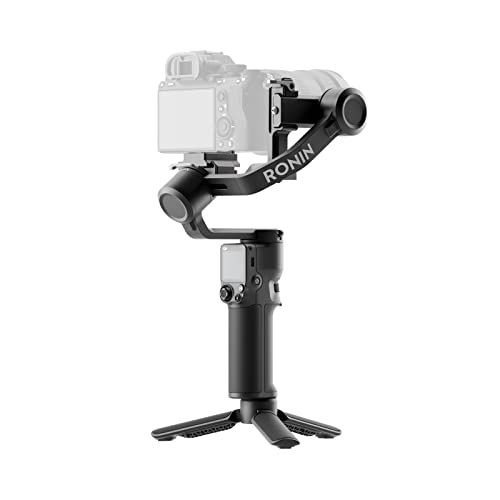
- 795g lightweight body for easy travel use
- 2 kg payload suits compact camera and lens setups
- Native vertical shooting for social video
Best For: travel-friendly mirrorless shooters
Phone Gimbal
DJI Osmo Mobile 7 for iPhone and Android

- 3-axis stabilization for smooth mobile footage
- Built-in tripod and foldable design
- ActiveTrack 7.0 with up to 10 hours of use
Best For: mobile filmmakers and solo creators
Motorized Slider System
IFOOTAGE Shark Nano II for Gimbal Motion

- Syncs with DJI gimbals for multi-axis motion
- Up to 8 programmable motion points
- Quiet brushless motor with AI tracking
Best For: gimbal users wanting slider-style motion
Pro Camera Gimbal
FeiyuTech SCORP-C2 for Mirrorless Rigs

- 7.7 lb payload for heavier camera setups
- App-free AI tracking for solo shooting
- Native vertical video plus accessory support
Best For: mirrorless shooters with pro accessories
Budget-Friendly Phone Gimbal
hohem iSteady X3 SE for iPhone & Android

- Detachable magnetic remote up to 32.81 feet
- iSteady 8.0 3-axis stabilization
- Foldable 0.79 lb body with 11-hour battery
Best For: Beginner phone filmmakers and travel vloggers
All-in-One Creator Gimbal
DJI Osmo Mobile 8 with AI Tracking

- Native tracking with audio and lighting
- 360° pan rotation with built-in tripod and extension rod
- 10-hour battery plus phone charging
Best For: Phone creators who want tracking and built-in accessories
Pro Hybrid Camera Gimbal
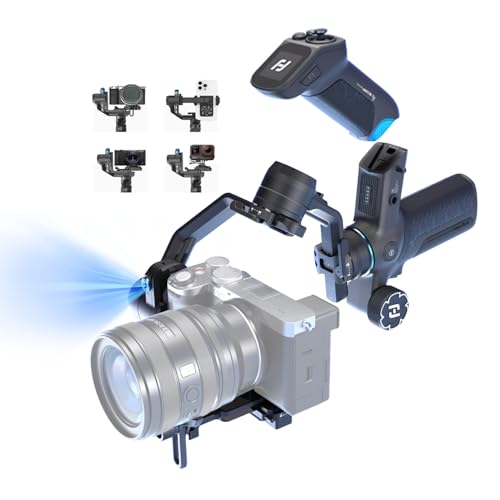
- 4.4 lb payload for mirrorless cameras and more
- AI tracking with 59 ft range
- Detachable handle with 1.3-inch OLED screen
Best For: Hybrid filmmakers using cameras, action cams, and phones
Smart Phone Gimbal Starter
DJI Osmo Mobile 7P for iPhone & Android

- 3-axis phone stabilization
- Tracking, lighting, and mic support
- Built-in rod, tripod, and 10-hour runtime
Best For: Mobile filmmakers and solo creators who shoot mainly on a smartphone
Hybrid Camera Flex
FeiyuTech SCORP Mini-3-Pro Multi-Device Gimbal

- Supports cameras, action cams, and smartphones
- AI tracking up to 18 meters
- Detachable handle works as a remote
Best For: Shooters who need one gimbal for multiple device types
Pro Camera Tracking Rig
FeiyuTech SCORP 2 for DSLR & Mirrorless

- Built-in AI tracking sensor
- Quick vertical filming setup
- Touchscreen and wireless/cable control
Best For: DSLR and mirrorless filmmakers who want built-in tracking and fast control
Compact Mirrorless Gimbal – DJI RS 3 Mini for Mirrorless Cameras
If you need a motorized camera gimbal for filmmaking that stays light without giving up real camera support, the DJI RS 3 Mini is built for exactly that. At 795g, it is easy to carry for travel or long shooting days, while the 2 kg tested payload and 3-axis stabilization make it practical for compact mirrorless rigs.
Best For: Filmmakers using lightweight cameras who want a portable gimbal with native vertical shooting.
Pros:
- Ultra-light 795g design that is comfortable for extended handheld use
- 2 kg payload supports a wide range of camera and lens combinations
- Native vertical shooting is convenient for social content
- Bluetooth shutter control simplifies starting photo or video capture
Cons:
- Designed for camera setups, not phones
- Requires the DJI Ronin app for activation and full functionality
The RS 3 Mini is a strong pick if portability matters as much as stabilization. It delivers the core features most solo filmmakers need, especially when shooting handheld, low-angle footage, or quick vertical clips.
Phone Gimbal – DJI Osmo Mobile 7 for iPhone and Android
For creators looking for a motorized camera gimbal for filmmaking on a phone, the DJI Osmo Mobile 7 focuses on stability, speed, and convenience. Its 3-axis stabilization, foldable design with built-in tripod, and ActiveTrack 7.0 make it a practical choice for solo shooting, streaming, and everyday mobile production.
Best For: Phone filmmakers and content creators who want a lightweight gimbal with built-in tripod support.
Pros:
- 3-axis stabilization helps deliver smooth, steady footage
- Built-in tripod and foldable design make solo shooting easier
- ActiveTrack 7.0 supports subject tracking in more scenarios
- Up to 10 hours of use plus phone charging via USB-C
Cons:
- Only for phones, not dedicated cameras
- Max payload is limited to 300 g
The Osmo Mobile 7 is best when you want a compact, easy-to-use phone rig that still feels production-ready. It is especially useful for creators who value quick setup, tracking, and all-day mobility.
Motorized Slider System – IFOOTAGE Shark Nano II for Gimbal Motion
If your motorized camera gimbal for filmmaking needs to do more than stabilize a shot, the IFOOTAGE Shark Nano II adds controlled slider movement to the mix. It is designed to work with DJI gimbals through the included RS adapter, giving you synchronized multi-axis motion, customizable paths, and app or touchscreen control for more advanced cinematic moves.
Best For: Filmmakers who want programmable slider motion paired with compatible DJI gimbals.
Pros:
- Works with DJI gimbals for synchronized multi-axis movement
- Up to 8 customizable motion points for complex shot paths
- AI face and object tracking help keep subjects centered
- Brushless motor runs quietly for interviews and live recording
Cons:
- It is a motorized slider, not a standalone gimbal
- Best value depends on already using a compatible DJI gimbal
The Nano II is a smart upgrade for filmmakers who already rely on a gimbal but want more motion control. Its quiet operation, tracking tools, and flexible programming make it well suited to polished studio or on-location shots.
Pro Camera Gimbal – FeiyuTech SCORP-C2 for Mirrorless Rigs
For filmmakers shopping for a motorized camera gimbal for filmmaking with serious payload capacity, the FeiyuTech SCORP-C2 is aimed at mirrorless and hybrid camera setups. It combines app-free AI tracking, native vertical shooting, and an open platform for accessories, making it a versatile choice for solo video work and more built-out rigs.
Best For: Mirrorless camera users who need higher payload support and built-in AI tracking.
Pros:
- 7.7 lb payload supports many full-frame and mirrorless setups
- Built-in AI tracking works without relying on an app
- Native vertical shooting is ready for social content
- Open platform supports monitors, fill lights, and more
Cons:
- Heavier-duty design is less travel-friendly than mini gimbals
- Best suited to interchangeable-lens cameras rather than phones
The SCORP-C2 stands out when you need a capable, camera-first stabilizer that can handle more demanding rigs. Its combination of payload, tracking, and expansion options makes it a flexible pick for serious production work.
Budget-Friendly Phone Gimbal – hohem iSteady X3 SE for iPhone & Android
If you want a motorized camera gimbal for filmmaking without a steep learning curve, the hohem iSteady X3 SE is a practical phone-first option. It focuses on smooth 3-axis stabilization, easy controls, and portability, making it a solid pick for vlogs, travel clips, and casual run-and-gun shooting.
Best For: First-time gimbal users who want a lightweight, foldable stabilizer for smartphone filmmaking, vlogging, and travel.
Pros:
- Detachable magnetic remote lets you start recording from up to 32.81 feet away.
- iSteady 8.0 3-axis stabilization is designed to keep footage smooth during jogging or jumping.
- Foldable 0.79 lb design makes it easy to pack for travel and on-the-go shoots.
- 11-hour battery life supports long filming days and live streaming sessions.
Cons:
- Built for smartphones only, not dedicated cameras.
- 0.66 lb payload means it is best suited to phones within the listed limit.
- Designed more for simplicity and mobility than advanced cinema rig setups.
Overall, the iSteady X3 SE is a strong value choice if you want a compact phone gimbal that is easy to use and dependable for everyday video creation. Its app features and remote control add flexibility, but its biggest advantage is how approachable it is for beginner filmmakers.
All-in-One Creator Gimbal – DJI Osmo Mobile 8 with AI Tracking
The DJI Osmo Mobile 8 is a feature-packed motorized camera gimbal for filmmaking on a phone, especially if you want tracking, lighting, and audio support in one compact setup. Its 3-axis stabilization, 360° pan rotation, and built-in extension rod make it well suited to dynamic vlogging, travel footage, and hands-free shooting.
Best For: Creators who want an easy-to-use phone gimbal with tracking, built-in support gear, and flexible shooting angles.
Pros:
- Native tracking with audio and lighting support helps streamline solo shooting.
- 360° horizontal rotation expands movement options for immersive shots.
- Built-in extension rod and tripod reduce the need for extra accessories.
- 10-hour battery and phone charging support are useful for long filming days.
Cons:
- Works with cellphones only, not mirrorless cameras or action cams.
- Some setup and app features may require using DJI’s latest Mimo download source.
- More feature-rich than a basic gimbal, which may be more than some casual users need.
For creators who want a smarter phone gimbal, the Osmo Mobile 8 stands out by combining stabilization with tracking and built-in shooting tools. It is especially appealing if you want a single device to cover vlogging, low-angle shots, and hands-free filming with minimal setup.
Pro Hybrid Camera Gimbal – Feiyu SCORP Mini 3 Pro
If your motorized camera gimbal for filmmaking needs to handle more than a phone, the Feiyu SCORP Mini 3 Pro is built for hybrid setups. With a 4.4 lb payload, AI tracking, and support for mirrorless cameras, action cams, and smartphones, it is aimed at creators who want one stabilizer for more demanding shoots.
Best For: Filmmakers and content creators who need a compact gimbal that can support cameras, action cams, and phones.
Pros:
- 4.4 lb maximum payload supports heavier mirrorless camera rigs.
- Upgraded AI tracking is designed to keep subjects locked in during fast movement.
- Detachable handle with 1.3-inch OLED screen gives direct control over settings.
- Quick-release mount helps switch between horizontal and vertical shooting in seconds.
Cons:
- More specialized than a simple phone gimbal, so it may be more than casual users need.
- Heavier-duty feature set can add complexity compared with beginner-friendly models.
- Best suited to users who will take advantage of its broader camera compatibility.
The SCORP Mini 3 Pro is the most filmmaking-focused option here because it is designed for serious camera versatility, not just smartphone use. If you want smoother footage from a mirrorless camera, action cam, or phone and need stronger payload support, it is the most capable pick in this roundup.
Smart Phone Gimbal Starter – DJI Osmo Mobile 7P for iPhone & Android
If you want a motorized camera gimbal for filmmaking that makes phone shooting feel immediate and polished, the DJI Osmo Mobile 7P is built around speed, tracking, and easy setup. It offers 3-axis stabilization, a multifunctional module with intelligent tracking and lighting, and app-driven tools like ShotGuides and One-Tap Edit for faster results.
Best For: Mobile creators who want quick launch, native tracking, and an all-in-one phone rig for filming on the go.
Pros:
- 3-axis stabilization is designed to keep phone footage steady and smooth.
- Multifunctional module adds intelligent tracking, lighting, and DJI Mic 2 / Mic Mini reception.
- Built-in extension rod and tripod make vlogging and wide selfies easier without extra gear.
- Up to 10 hours of operating time supports longer filming sessions.
Cons:
- Made for cellphones, so it is not a camera gimbal for mirrorless or DSLR rigs.
- Maximum weight recommendation is 300 g, so larger phones or heavy accessories may be limiting.
- DJI Mimo download note may require getting the app from DJI directly rather than Google Play.
This is a strong choice if your filmmaking workflow is centered on a smartphone and you want a compact setup that gets moving fast. The tracking and quick-start features make it especially practical for solo creators who need stable footage without a complicated rig.
Hybrid Camera Flex – FeiyuTech SCORP Mini-3-Pro Multi-Device Gimbal
The FeiyuTech SCORP Mini-3-Pro is a motorized camera gimbal for filmmaking when you need one stabilizer that can handle more than a phone. It supports mirrorless cameras, compact cameras, action cameras, and smartphones, while adding AI tracking, a detachable remote handle, and a 4.4 lb payload for flexible solo shooting.
Best For: Creators who switch between cameras and smartphones and want a versatile stabilizer with AI tracking.
Pros:
- Four-in-one compatibility covers mirrorless, compact, action cameras, and smartphones.
- AI tracking reaches up to 18 meters with a fast 0.003s response time.
- Detachable handle doubles as a remote control for long-distance or solo operation.
- 4.4 lb payload and modular quick-release design support flexible setups and horizontal/vertical switching.
Cons:
- Heavier than a phone-only gimbal at 1 kg.
- Max payload is 2 kg, so larger camera builds still need to stay within limits.
- More modular than a simple phone stabilizer, which may add setup complexity for beginners.
For filmmakers who want one stabilizer to move between devices, this model offers a lot of range without sacrificing useful controls. Its mix of AI tracking, remote handling, and payload capacity makes it a practical pick for solo shoots and mixed-content workflows.
Pro Camera Tracking Rig – FeiyuTech SCORP 2 for DSLR & Mirrorless
If your search for a motorized camera gimbal for filmmaking is focused on DSLR or mirrorless work, the FeiyuTech SCORP 2 is aimed at a more traditional camera setup. It includes an integrated AI tracking sensor, wireless or cable control, a 1.3-inch touchscreen, and a quick vertical-shooting system designed to keep camera operation efficient.
Best For: DSLR and mirrorless shooters who want built-in AI tracking and fast vertical filming setup.
Pros:
- Integrated AI sensor enables subject tracking without extra accessories.
- Quick-install L-shaped plates make vertical filming faster to set up.
- Supports wireless Bluetooth control or cable control for flexible operation.
- 1.3-inch touchscreen and multifunction knob provide direct, hands-on control.
Cons:
- Compatible with cameras only, not smartphones.
- At 1070 g, it is heavier than compact phone gimbals.
- Maximum weight recommendation of 2500 g means larger camera builds still need to stay within limits.
This is the most camera-centric option in the group, and it makes sense if your filmmaking setup already revolves around interchangeable-lens gear. The built-in tracking and streamlined vertical workflow are particularly useful for creators who want pro-style control without adding extra accessories.
How We Picked the Best Motorized Camera Gimbal for Filmmaking
We prioritized stabilization quality, payload support, vertical shooting, battery convenience, tracking features, portability, and overall value. For a Motorized Camera Gimbal for Filmmaking, the best choice is the one that matches your camera weight and shooting style first, then adds the features you’ll actually use.
Quick Comparison
Phone gimbals are best for lightweight run-and-gun content, social video, and travel. Compact camera gimbals work well for mirrorless setups, while higher-payload models are better for larger lenses and more demanding productions. If you need extra flexibility, look for native vertical mode, AI tracking, and easy balancing controls.
Key Buying Factors for a Motorized Camera Gimbal for Filmmaking
Payload and Camera Compatibility
Always match the gimbal’s rated load to your camera, lens, mic, and accessories combined. A comfortable margin helps the motors work efficiently and reduces strain.
Stabilization and Axis Control
Three-axis stabilization is the standard for smooth cinematic movement. Pay attention to pan range, tilt clearance, and whether the gimbal handles fast walking shots or slower, more deliberate motion better.
Tracking and Smart Features
Features like subject tracking, face tracking, native vertical shooting, and app-based controls can save time on solo shoots. These are especially useful for creators who film interviews, tutorials, or social-first content.
Portability and Setup Speed
If you travel often or shoot quickly, weight and foldability matter. Lightweight designs are easier to carry, while quick-release systems and intuitive controls make setup less frustrating.
Battery Life and Workflow
Longer battery life matters on production days, but so does charging speed and ease of use. A gimbal that is simple to rebalance and power up can keep your workflow moving.
Who Should Buy Which Motorized Camera Gimbal for Filmmaking?
Choose a phone gimbal if you mainly shoot with a smartphone and want the lightest, most convenient setup. Pick a mirrorless or DSLR model if you need better image quality, interchangeable lenses, and stronger payload support. Content creators who work solo should favor tracking and vertical shooting, while filmmakers who value motion shots or multi-rig flexibility may prefer a more robust stabilizer with a higher load rating.
In short, the right choice depends less on brand and more on how you plan to film. Focus on compatibility, control, and the features that actually improve your day-to-day shooting.