
A front-and-rear motorcycle camera can capture what happens ahead and behind you without relying on a single helmet-mounted viewpoint. The best choice depends on where you ride, how you want to mount it, and whether you need clear footage after dark.
These 10 options range from basic dual-lens recorders to higher-resolution systems and navigation screens with built-in cameras. Use the guide below to narrow down the features worth paying for.
Best 10 Motorcycle Camera with Front and Rear Picks for 2026
Best for Detailed Ride Records

- 4K front and 1080p rear recording
- 160° views and IP67-rated components
- GPS trip data and wired remote
Best For: Riders seeking detailed footage and route records
Best Navigation-and-Camera Combo
UNITOPSCI 5-Inch CarPlay Screen

- Dual 1080p camera recording
- Wireless CarPlay and Android Auto
- IP67 design; SD card not included
Best For: Riders combining navigation and ride recording
Best Compact Wired Setup
VSYSTO D6L Dual 1080p Dash Cam
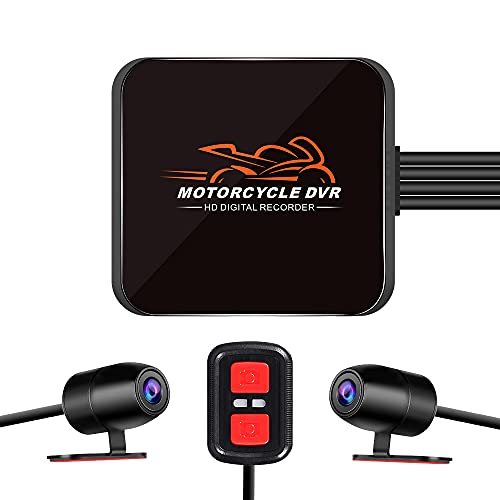
- Dual 1080p cameras with 130° lenses
- Compact recorder and wired controller
- Wi-Fi app access and G-sensor
Best For: Riders wanting a compact wired dash-cam setup
Best Helmet-Mounted Option

- Helmet-mounted dual 2K recording
- Up to eight hours of battery runtime
- IP66 protection and 64GB card included
Best For: Riders preferring portable, battery-powered recording
Best for Navigation
6-Inch CarPlay Screen with Dual 2K Cameras

- Dual 2K/30fps front and rear cameras
- 6-inch display with CarPlay and Android Auto
- IP68-rated screen; supports cards up to 128GB
Best For: Riders seeking recording and phone-based navigation in one screen
Best Screen-Free Setup

- Dual 1080p/30fps cameras; no built-in display
- Wi-Fi app, G-sensor, and loop recording
- IP67 rating and 24-hour parking mode
Best For: Riders prioritizing discreet, app-accessible recording
Best Compact Display
SIXTOP Dual 1080p GPS Dash Cam

- Dual 1080p recording and 3-inch IPS screen
- GPS logging, Wi-Fi app, and four display modes
- Parking mode needs a separate ACC cable
Best For: Riders wanting compact on-bike viewing with GPS data
Ready-to-Ride Pick

- 1080p front and rear recording
- 32GB card included
- IP67 rating and 2-inch screen
Best For: Riders wanting dual 1080p recording with included storage
Display Flexibility Pick
Dual-Lens Dash Cam with IPS Screen

- 1080p front and 720p rear
- Four display modes
- Memory card not included
Best For: Riders who want flexible on-bike viewing
Parking-Mode Pick

- Hardwire kit included
- 720p front and 480p rear
- IP67 cameras; IP65 main unit
Best For: Riders prioritizing included parking-mode hardware
Best for Detailed Ride Records – Vantrue F1 4K Dual Dash Cam
If you want a motorcycle camera with front and rear coverage that prioritizes detail and trip records, the Vantrue F1 pairs a 4K front camera with a 1080p rear camera. Both lenses offer 160° viewing angles, and the system includes GPS trip data.
Best For: Riders who want high-resolution front footage, wide coverage, and route information alongside their recordings.
Pros:
- Records front and rear simultaneously at up to 4K and 1080p at 30 fps.
- IP67-rated cameras and accessories suit wet or dusty rides.
- GPS mileage statistics, collision-triggered file locking, and a wired remote add useful documentation controls.
- 5 GHz Wi-Fi supports app previews, downloads, and firmware updates.
Cons:
- Rear footage is limited to 1080p rather than matching the front camera’s 4K resolution.
- Installation involves mounting two cameras and routing their wiring.
The F1 is a strong fit when recording detail and ride data matter more than having a built-in display. Its wired remote also makes it easier to mark an important clip while riding.
Best Navigation-and-Camera Combo – UNITOPSCI 5-Inch CarPlay Screen
For riders who want navigation and recording in one setup, this motorcycle camera with front and rear 1080p recording adds a 5-inch touchscreen with wireless CarPlay and Android Auto. It can display camera views and play recorded files on the device.
Best For: Riders who want a handlebar screen for smartphone navigation, media, and dual-camera recording.
Pros:
- Front and rear cameras record at 1080p with loop recording.
- Wireless CarPlay and Android Auto provide access to compatible phone navigation and media.
- Dual Bluetooth supports separate screen audio and headset or helmet calls.
- IP67-rated design and automatic brightness adjustment suit changing riding conditions.
Cons:
- An SD card is not included.
- The 5-inch display requires mounting space, unlike a screenless camera system.
Choose this model if the screen will serve as part of your everyday riding setup. If recording resolution is the main priority, its dual 1080p cameras are less detailed on paper than higher-resolution options in this roundup.
Best Compact Wired Setup – VSYSTO D6L Dual 1080p Dash Cam
The VSYSTO D6L is a motorcycle camera with front and rear 1080p recording for riders who prefer a compact main unit they can place under the seat. Its cameras have 130° lenses and starlight night-vision capability for low-light riding.
Best For: Riders seeking a small, wired dual-camera system with app access and an easy-to-reach emergency-recording control.
Pros:
- Two 1080p cameras provide front and rear coverage.
- Wi-Fi app connection lets you view and download clips without removing the memory card.
- Wired controller and G-sensor can mark emergency footage.
- Selectable loop-recording intervals help manage storage.
Cons:
- At 130° per lens, the stated viewing angle is narrower than some alternatives here.
- The system requires routing cables for both cameras and the controller.
The D6L keeps its focus on core dash-cam functions rather than a navigation screen or 4K video. Its compact recorder and wired control are practical advantages if you have room to route the cables neatly.
Best Helmet-Mounted Option – MUFU V40S Dual 2K Camera
If you would rather mount your motorcycle camera with front and rear coverage on your helmet than wire cameras to the bike, consider the MUFU V40S. It records dual 2K video, runs on a built-in 4,000mAh battery, and includes a 64GB memory card.
Best For: Riders who want portable front-and-rear recording without a bike-mounted, hardwired camera system.
Pros:
- Dual 2K lenses and an f/1.7 aperture support detailed recording in varied light.
- Battery runtime is stated at up to eight hours.
- IP66 protection and a quick-release power buckle suit changing weather and frequent removal.
- Loop recording, tilt-triggered file locking, and Wi-Fi app access cover key dash-cam functions.
Cons:
- Recording time depends on battery charge rather than the motorcycle’s power supply.
- Helmet placement may not appeal to riders who prefer permanently mounted cameras.
The V40S trades a fixed installation for portability. Its included card and stated eight-hour maximum runtime make it worth considering for day rides, provided charging fits your routine.
Best for Navigation – 6-Inch CarPlay Screen with Dual 2K Cameras
If you want a motorcycle camera with front and rear recording that also handles navigation, this model combines dual 2K/30fps cameras with a 6-inch wireless CarPlay and Android Auto display. It can show both camera views at once, while loop recording supports microSD cards up to 128GB.
Best For: Riders who want front-and-rear footage, phone-based navigation, and media controls in one handlebar-mounted screen.
Pros:
- Dual 2K/30fps cameras with simultaneous front and rear viewing.
- Bright 6-inch, 60Hz touchscreen with an anti-glare design and sun visor.
- Wireless CarPlay and Android Auto support voice-controlled phone features.
- IP68-rated screen and tamper-resistant mounting bracket.
Cons:
- Each camera’s stated field of view is 110°, narrower than some alternatives here.
- Navigation and phone features require a connected smartphone.
This is the most feature-packed display option of the three. Choose it if an integrated riding screen matters as much as the footage; if you only need a recorder, its extra interface may be unnecessary.
Best Screen-Free Setup – Driauto 1080p Dual-Camera DVR
For riders who prefer to keep the cockpit clear, this motorcycle camera with front and rear recording uses two 1080p/30fps cameras without a built-in display. Its stated 150° camera coverage, Wi-Fi app access, and loop recording make it a practical footage-focused option.
Best For: Riders who want a screen-free dual-camera recorder with app viewing and parking surveillance.
Pros:
- Dual 1080p/30fps cameras with wide-angle coverage and full-color night vision.
- IP67-rated construction and a stated operating range of −20°C to 70°C.
- G-sensor locks impact footage; loop recording supports cards up to 128GB.
- Wi-Fi app access and a 24-hour parking mode.
Cons:
- No built-in screen for checking footage directly on the bike.
- Recording resolution is 1080p rather than the 2K stated for the CarPlay model.
Its appeal is straightforward coverage without another display to mount. Check that its 12–24V power requirements suit your bike, particularly if parking surveillance is a priority.
Best Compact Display – SIXTOP Dual 1080p GPS Dash Cam
This motorcycle camera with front and rear recording pairs dual 1080p footage with a compact 3-inch IPS screen. It is a useful middle ground if you want on-bike viewing, GPS route and speed logging, and Wi-Fi app access without a larger navigation display.
Best For: Riders who want a small built-in screen plus GPS data and smartphone access to recordings.
Pros:
- Simultaneous 1080p front and rear recording with four display modes.
- GPS logs speed and location; Wi-Fi app supports viewing and downloads.
- Night vision and HDR address challenging lighting.
- G-sensor protects impact footage, alongside loop recording.
Cons:
- Parking monitoring requires a separately purchased ACC cable.
- Memory card is not included, and supported capacity tops out at 64GB.
- IP65 rating is lower than the other two products’ stated ratings.
The SIXTOP offers more on-bike feedback than a screen-free DVR while keeping its display modest. Budget for the memory card—and the ACC cable if you plan to use its 24-hour parking mode.
Ready-to-Ride Pick – Upriding Dual 1080P Dash Cam
If you want a motorcycle camera with front and rear recording without buying a memory card separately, this Upriding kit includes a 32GB card. Both cameras are listed at 1080p, and the 2-inch screen lets you review footage on the unit.
Best For: Riders who want dual 1080p recording and included storage.
Pros:
- 1080p front and rear recording at 30 fps.
- IP67 waterproof rating and night-vision feature.
- G-sensor file locking and loop recording.
- Includes a 32GB card and wired controller.
Cons:
- Small 2-inch screen may feel cramped for reviewing details.
- Listed 120-degree field of view is narrower than some wide-angle alternatives.
This is a practical choice when included storage and matching front-and-rear resolution matter more than a larger display.
This motorcycle camera with front and rear coverage pairs a 1080p front camera with a 720p rear camera. Its 2-inch IPS display offers split-screen viewing and four display modes, which may appeal to riders who want to check both views on the bike.
Best For: Riders who prioritize on-device viewing options over equal-resolution cameras.
Pros:
- Split-screen display with four viewing modes.
- IP67 waterproof rating and HDR feature.
- Loop recording, G-sensor locking, and wired controller.
Cons:
- Rear footage is 720p, not 1080p.
- No TF card included; listing specifies support for 32GB–64GB cards.
- ACC cable for parking monitoring is sold separately.
The display controls are the main draw here. Budget for a compatible card, and check the additional cable requirement if parking monitoring is important to you.
For riders shopping for a motorcycle camera with front and rear views plus parked-bike coverage, this TEWOLISES model includes a hardwire kit. It records at 720p in front and 480p in back, making it an entry-level option rather than a high-definition upgrade for both views.
Best For: Riders who value an included parking-mode hardwire kit over video resolution.
Pros:
- Hardwire kit included for impact- or motion-triggered parking recording.
- 3-inch display and wired remote for manual file locking.
- G-sensor locking and loop recording.
- IP67-rated cameras for exposed mounting positions.
Cons:
- 720p front and 480p rear footage offer limited detail.
- Main unit is IP65-rated, below the cameras’ IP67 rating.
Choose this one for the included parking setup and larger screen, while keeping the main unit sheltered as appropriate for its IP65 rating.
How We Picked the Best Motorcycle Camera with Front and Rear
We compared the listed recording resolutions, front-and-rear coverage, mounting formats, weather-resistance claims, and practical features such as loop recording, Wi-Fi access, GPS, parking mode, and included storage. The selection spans basic DVR systems, higher-resolution dash cams, a helmet-mounted option, and CarPlay-style screens with cameras. Specifications alone do not prove real-world image quality, so treat night-vision and waterproof claims as features to verify against current listings and owner footage.
Quick Comparison: Which Type Fits Your Ride?
For maximum stated front-camera detail, start with a 4K-front setup such as the Vantrue F1, but check its rear resolution separately. The MUFU V40S is the helmet-mounted choice in this list, with a built-in battery rather than the usual bike-mounted arrangement. If you also want navigation and phone integration, compare the two motorcycle CarPlay screen options; their displays take up more cockpit space than a compact DVR. The remaining dual-camera systems offer combinations of 1080p or 720p recording, Wi-Fi, GPS, parking features, or included storage. A lower-resolution unit may suit occasional documentation, while frequent highway or night riding makes sample footage especially important.
Key Buying Factors for a Motorcycle Camera with Front and Rear
Resolution and Usable Footage
Check the resolution of each camera, not just the headline number. A 4K front camera paired with a 1080p rear camera records different levels of detail in each direction. Frame rate, compression, exposure, and lens placement also affect whether footage is useful. Look for daytime and nighttime samples from both cameras before buying.
Mounting, Power, and Weather Protection
Bike-mounted systems need secure camera positions with a clear view past luggage, windscreens, and the rider. Confirm that the cables reach your intended front and rear mounting points and that the power connection suits your motorcycle. Battery-powered helmet mounting avoids bike wiring but requires charging and adds weight to the helmet. Check which parts carry an IP rating: an IP65, IP66, or IP67 camera rating does not necessarily apply to every connector, screen, or control unit.
Everyday Recording Features
Loop recording helps prevent a full card from stopping routine capture; a G-sensor may lock clips after an impact. GPS can add location or speed data, while Wi-Fi makes it easier to retrieve clips without removing a card. Parking mode is useful only if its power requirements and battery-drain safeguards fit your bike. Check supported card capacity, whether a card is included, and how easily you can access saved footage with gloves off at the roadside.
Who Should Buy Which Motorcycle Camera with Front and Rear?
Choose a higher-resolution front-and-rear system if identifying details is your priority. Pick a compact, hardwired dual-camera DVR if you want automatic recording with minimal cockpit clutter. Consider a CarPlay screen if you also need a visible navigation and phone interface, but confirm the camera functions you want work independently of phone connectivity. A helmet-mounted model suits riders who switch motorcycles, provided its battery life and mounting method meet your needs. For a tight budget, prioritize reliable mounting, continuous dual-channel recording, and readable sample footage over a long extras list.