
If you’re expanding a recording setup, a microphone preamp with ADAT output is one of the easiest ways to add clean extra channels without rebuilding your whole studio.
This roundup focuses on practical picks for home recording, hybrid rigs, and project studios that need more inputs, better gain, and simple digital expansion.
Best 10 Microphone Preamp with Adat Output Picks for 2026
8-Channel ADAT Expansion
Behringer ADA8200 8-Channel ADAT Mic Preamp

- 8 XLR mic inputs
- ADAT-supported digital expansion
- 48 kHz max sample rate
Best For: Budget ADAT expansion for adding eight mic inputs
Compact USB-C Interface with ADAT
Focusrite Clarett+ 2Pre USB-C Interface with ADAT

- Two Clarett+ preamps
- ADAT optical input for expansion
- USB-C bus powered
Best For: Portable small-studio setups that may expand via ADAT
Low-Noise Single-Channel Preamp
RO03 Ultra-Low-Noise Mic Preamp

- 120 dB EIN noise performance
- 66 dB gain with 1 MΩ instrument input
- XLR/TRS/TS outputs with Type-C power
Best For: Quiet single-channel analog preamp use for streaming or home recording
Eight-Preamp Interface with ADAT
Focusrite Clarett+ 8Pre 18-In/20-Out Interface

- Eight Clarett+ preamps
- ADAT optical input for expansion
- Dual headphone outputs
Best For: Larger recording setups needing many preamps and future expansion
Budget Rack Preamp
Rockville PPA20 1U Rack Mount Pre-Amplifier
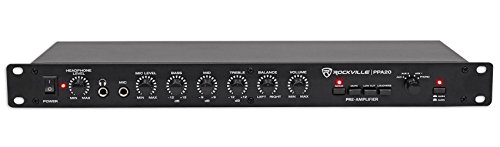
- 3-band EQ for flexible tone shaping
- RCA, AUX, mic, XLR, and headphone connections
- Low cut filter and ground lift for cleaner operation
Best For: Affordable rack analog preamp and monitor control
ADAT Expansion Unit
Focusrite Scarlett OctoPre Dynamic 8-In/8-Out
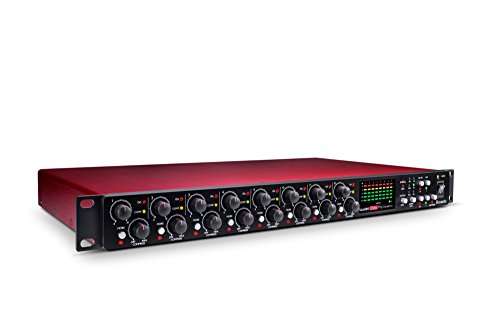
- Eight mic preamps plus eight balanced line inputs
- Simple ADAT optical expansion for extra channels
- Compression, phantom power, and Word Clock I/O
Best For: Expanding an ADAT-capable interface with eight channels
USB-C Studio Interface
Fender Quantum HD 8 26x30 USB-C Audio Interface

- Next-generation MAX-HD mic preamps with 32-bit/192 kHz converters
- ADAT expansion with 16 channels plus standalone preamp mode
- Auto Gain, loopback, DSP mixer, and re-amp outputs
Best For: Modern hybrid studios needing interface features and ADAT scaling
Clean Gain Preamp Pick

- Up to +75dB clean gain for low-output mics
- -120dB EIN and DC analog power for low noise
- 48V phantom power plus balanced XLR output
Best For: Vocalists and home recordists who need quiet gain and simple output flexibility
Compact ADAT Interface Pick
Focusrite Scarlett 16i16 4th Gen

- Two mic preamps with up to 69dB gain
- ADAT, S/PDIF, MIDI, and 16-in/16-out I/O
- 24-bit/192kHz converters with Auto Gain and Clip Safe
Best For: Small studios needing ADAT expansion and an efficient recording workflow
Expanded I/O ADAT Pick
Focusrite Scarlett 18i16 4th Gen

- Four mic preamps with up to 69dB gain
- ADAT, S/PDIF, MIDI, and 18-in/16-out I/O
- 24-bit/192kHz converters with Auto Gain and Clip Safe
Best For: Growing studios that want more built-in mic inputs and ADAT expansion
8-Channel ADAT Expansion – Behringer ADA8200 8-Channel ADAT Mic Preamp
Behringer ADA8200 Audiophile 8 In/8 Out ADAT Audio Interface with Midas Mic Preamplifiers
Check Price On AmazonIf you need a microphone preamp with adat output for adding more inputs to a compact rig, the Behringer ADA8200 is built around straightforward eight-channel expansion. It uses wired XLR input, supports ADAT, and tops out at 48 kHz, making it a practical fit for users who want simple digital connectivity and a lot of channels in one box.
Best For: Adding eight mic preamps to an ADAT-capable interface for budget-friendly studio expansion.
Pros:
- 8 channels of XLR mic input
- Supports ADAT digital connection for expansion
- Compact audio MIDI interface format with wired connectivity
- Includes a 1-year warranty
Cons:
- Maximum sample rate is limited to 48 kHz
- No software or operating system is included
- Bulkier than a single-channel mic preamp
Overall, the ADA8200 is a channel-count solution rather than a boutique preamp, which is exactly what many ADAT workflows need. It is a sensible option when the main priority is getting more usable mic inputs into a computer-based setup.
Compact USB-C Interface with ADAT – Focusrite Clarett+ 2Pre USB-C Interface with ADAT
If you want a microphone preamp with adat output support in a compact desktop interface, the Focusrite Clarett+ 2Pre gives you a strong starting point. It pairs two Clarett+ preamps with an ADAT optical input for expanding via compatible outboard gear, while also offering USB-C bus power and Focusrite Control for day-to-day studio use.
Best For: Small studios that want clean built-in preamps plus ADAT expansion in a portable USB-C interface.
Pros:
- Two professional-quality Clarett+ preamps
- ADAT optical input for digital expansion
- USB-C bus powered for portable setups
- Improved headphone output and included software bundle
Cons:
- Only two onboard preamps before expansion
- ADAT is an input for expansion, not an output on the listed specs
- Requires compatible outboard gear to use the full ADAT expandability
This is a good choice if you want clean recording quality now and room to grow later. The ADAT support makes it especially useful when you plan to add more channels without replacing the whole interface.
Low-Noise Single-Channel Preamp – RO03 Ultra-Low-Noise Mic Preamp
For buyers searching for a microphone preamp with adat output-style studio integration, the RO03 is more of a standalone front-end preamp than a digital expander. Its focus is on a low-noise single-channel signal path, up to 66 dB of gain, and flexible outputs for feeding an audio interface, mixer, or speaker chain.
Best For: Streamers and home-recording users who want a quiet external mic preamp with flexible analog outputs.
Pros:
- Updated design emphasizes ultra-low noise and 120 dB EIN
- 66 dB gain range with 1 MΩ instrument input
- XLR/TRS/TS output options with Type-C power input
- Designed for dynamic, condenser, ribbon, and instrument use
Cons:
- No ADAT output is listed in the supplied specs
- Single-channel design only
- Input ports cannot be used simultaneously
As a practical budget preamp, the RO03 makes the most sense when clean gain and flexible analog routing matter more than digital expandability. If your workflow depends on ADAT, this one is not the right match, but it can still serve as a useful external front end.
Eight-Preamp Interface with ADAT – Focusrite Clarett+ 8Pre 18-In/20-Out Interface
If you need a microphone preamp with adat output support in a larger interface, the Focusrite Clarett+ 8Pre is aimed at studios that want many clean inputs and room to expand. It includes eight professional-quality Clarett+ preamps, ADAT optical input for digital expansion, and dual headphone outputs for tracking and mixing.
Best For: Multi-mic recording setups that need eight built-in preamps and ADAT expandability.
Pros:
- Eight professional-quality Clarett+ preamps
- ADAT optical input for adding more channels
- Two transparent analogue headphone outputs
- Improved A-D and D-A converters with low-noise design
Cons:
- Larger and more elaborate than a simple preamp box
- ADAT is listed as an input for expansion, not a standalone output feature
- May be more interface than a small project studio needs
The Clarett+ 8Pre is the most channel-rich option here for users building a serious recording setup. Its value comes from combining eight good preamps with digital expansion, so it can grow with more microphones and outboard gear.
Budget Rack Preamp – Rockville PPA20 1U Rack Mount Pre-Amplifier
If you need a microphone preamp with adat output, this Rockville unit is not that type of solution; it is a rack-mount analog preamp and control center for home audio, studio recording, or live setups. What it does offer is broad input flexibility, 3-band EQ shaping, and handy monitoring controls in a compact 1U chassis.
Best For: Users who want an affordable rack preamp with multiple analog inputs, EQ, and headphone monitoring.
Pros:
- 3-band EQ for bass, midrange, and treble shaping
- Multiple inputs and outputs, including RCA, AUX, 1/4″ mic, XLR, and headphone out
- Useful controls like tape monitor, mono/stereo switch, balance, mute/pad, and loudness compensation
- Low cut filter and ground lift help reduce unwanted noise and hum
Cons:
- No ADAT output or digital expansion
- Designed around line-level and analog connectivity rather than multichannel interface duties
- Less suited to modern digital studio expansion needs
For buyers comparing options in the microphone preamp with adat output category, this model is better viewed as a practical analog alternative. It makes sense when your priority is straightforward control, monitoring, and rack convenience rather than digital I/O.
ADAT Expansion Unit – Focusrite Scarlett OctoPre Dynamic 8-In/8-Out
The Focusrite Scarlett OctoPre Dynamic is a true microphone preamp with adat output for expanding an existing interface. It adds eight Scarlett mic preamps, eight line inputs, and simple optical ADAT connectivity, making it a strong fit for adding more channels to a recording setup.
Best For: Studio owners and engineers who need eight extra mic preamps and ADAT expansion.
Pros:
- Eight natural-sounding Scarlett mic preamps
- Simple ADAT connectivity for easy expansion
- Flexible analogue compression on every channel
- Word Clock I/O plus 48V phantom power on every channel
Cons:
- Requires an ADAT-equipped audio interface to use its main expansion feature
- More specialized than a simple standalone preamp
- Best value only if you need extra multichannel inputs
This is the most straightforward choice here if your goal is to grow a recording system without replacing your main interface. The combination of preamps, compression, and ADAT makes it a practical channel-expansion tool for modern studios.
USB-C Studio Interface – Fender Quantum HD 8 26×30 USB-C Audio Interface
The Fender Quantum HD 8 is a high-channel-count USB-C interface with next-generation mic preamps, ADAT expansion, and standalone ADAT preamp mode. If you want a microphone preamp with adat output built into a modern recording interface, this model gives you digital connectivity, Auto Gain, and hybrid studio routing in one unit.
Best For: Creators who want a modern USB-C interface with ADAT expansion and strong routing features.
Pros:
- ADAT expansion with 16 channels plus S/PDIF I/O
- Standalone ADAT preamp mode for hybrid setups
- Next-generation MAX-HD mic preamps with 32-bit/192 kHz converters
- Auto Gain, loopback, DSP monitor mixer, and dual re-amp outputs
Cons:
- More interface than a simple dedicated preamp
- Feature set may be more than needed for basic recording
- Best suited to users who will use the digital routing and expansion tools
Among these options, this is the most complete match for a studio that wants both high-quality preamps and ADAT-based expansion. It stands out for creators who value flexible routing, interface features, and room to scale.
Clean Gain Preamp Pick – JCANOL MIC-1 Mic Preamp
If you need a microphone preamp with adat output-style workflow flexibility but are also prioritizing clean gain, the JCANOL MIC-1 is built for straightforward studio use. It delivers up to +75dB of transparent gain, -120dB EIN noise performance, 48V phantom power, and balanced XLR plus 3.5mm dual outputs for simple integration with different recording setups.
Best For: Vocalists and home recordists who want low-noise gain for dynamic or condenser mics, plus a compact preamp with flexible output options.
Pros:
- Up to +75dB clean gain helps low-output dynamic microphones reach usable levels.
- -120dB EIN and dedicated DC analog power are designed to keep interference and noise low.
- 48V phantom power supports condenser microphones, and the metal shell helps reduce EMC interference.
- Balanced XLR output plus 3.5mm Mic Out/Line Out adds practical connection flexibility.
Cons:
- The two input ports cannot be used at the same time.
- It does not include the ADAT expansion found on full audio interfaces.
- The feature set is focused on preamp duties rather than multi-channel recording.
Overall, this is a strong budget-friendly preamp choice if your main priority is clean microphone gain rather than a full interface. It makes the most sense for users who want a compact, low-noise front end with basic output versatility.
Compact ADAT Interface Pick – Focusrite Scarlett 16i16 4th Gen
For anyone shopping a microphone preamp with adat output in a compact interface format, the Scarlett 16i16 4th Gen is an easy place to start. It combines two mic preamps, ADAT, S/PDIF, and MIDI I/O with 16 inputs and 16 outputs, plus 69dB of gain, 24-bit/192kHz conversion, and Focusrite workflow tools like Auto Gain and Clip Safe.
Best For: Small studios and project setups that need ADAT expansion, modern converters, and a simple recording workflow.
Pros:
- Includes ADAT, S/PDIF, and MIDI I/O alongside 16-in/16-out connectivity.
- Two mic preamps with up to 69dB of gain suit a range of recording sources.
- 24-bit/192kHz converters with 122dB dynamic range support detailed capture.
- Auto Gain and Clip Safe help speed up setup and prevent clipping.
Cons:
- Only two mic preamps are built in, so larger mic setups rely on expansion.
- Users needing more onboard preamps may outgrow it quickly.
- It is more of a full interface than a dedicated standalone preamp.
This model stands out when you want a modern USB-C interface that can expand through ADAT without giving up quality preamps and converters. It is a practical choice for lean studios that value clean connectivity and fast workflow tools.
Expanded I/O ADAT Pick – Focusrite Scarlett 18i16 4th Gen
If your search for a microphone preamp with adat output points toward a bigger interface, the Scarlett 18i16 4th Gen offers more onboard input headroom. It features four mic preamps, ADAT, S/PDIF, and MIDI I/O, along with 18 inputs and 16 outputs, 69dB of gain, 24-bit/192kHz converters, and the same Auto Gain and Clip Safe workflow aids.
Best For: Growing studios that want more built-in mic inputs and ADAT expansion in a single USB interface.
Pros:
- Four mic preamps give you more direct recording flexibility than the 16i16.
- ADAT, S/PDIF, and MIDI I/O support expanded studio routing.
- 24-bit/192kHz converters and 122dB dynamic range support detailed recordings.
- Auto Gain and Clip Safe simplify level setting and clipping protection.
Cons:
- It is still an interface, not a dedicated standalone microphone preamp.
- Users who only need one or two channels may be paying for extra capacity.
- Expansion-focused buyers may still need external gear for very large setups.
Compared with smaller models, this one makes more sense when you expect your studio to grow and want more mic inputs on the front end. It offers a balanced mix of onboard preamps, ADAT expansion, and modern conversion in a single unit.
How We Picked These Microphone Preamp with Adat Output Options
We looked for units that make studio expansion straightforward: solid preamp gain, low noise performance, ADAT connectivity, and the kind of input/output flexibility most buyers actually need. We also favored models that fit common workflows, from adding channels to an interface to building a more capable front end for drums, vocals, and instruments.
Quick Comparison
Not every option here serves the same purpose. Some products are dedicated expansion preamps, while others are full audio interfaces that include ADAT for future growth. If you already own an interface, a dedicated ADAT preamp is often the simpler add-on. If you’re replacing an older interface, a larger all-in-one unit may be the better long-term value.
Key Buying Factors for a Microphone Preamp with Adat Output
Channel Count
Decide how many microphones you need to record at once. Two channels may be enough for solo work, but drums, ensembles, and live sessions usually benefit from 8 or more inputs.
Gain and Noise Performance
Look for enough clean gain for dynamic and ribbon mics, plus a low equivalent input noise spec if you want quieter recordings. More gain is not automatically better if the preamp gets noisy near the top of the range.
ADAT Expansion Limits
ADAT is great for adding channels, but it has limits depending on sample rate and port count. Check whether the unit supports 8 channels at 44.1/48 kHz and how that changes at higher rates before you buy.
Phantom Power and Instrument Support
Make sure the unit provides 48V phantom power for condenser mics if you need it. Combo inputs, line inputs, and Hi-Z support matter if your setup includes guitars, synths, or outboard gear.
Standalone or Interface Use
Some buyers need a dedicated Microphone Preamp with Adat Output as an expander, while others want a full interface with ADAT for future add-ons. Choose based on whether your main goal is expansion or replacement.
Who Should Buy Which Microphone Preamp with Adat Output?
Choose a dedicated ADAT preamp if you already have an interface and only need more mic inputs. Choose a larger USB-C interface with ADAT if you want to consolidate your setup and leave room for expansion. If you mostly record one or two sources, a smaller interface may be more cost-effective than a rack of extra channels.
In short, the best choice depends on how many inputs you need now and how much you expect your studio to grow later.