
Choosing the right microphone preamp under 500 can dramatically improve gain, noise floor, and overall vocal clarity without forcing a studio-sized budget.
Below, we’ve narrowed the field to 10 standout options for creators who want cleaner recordings, more usable gain, and the right feature set for their mic and workflow.
Best 10 Microphone Preamp Under 500 Picks for 2026
Inline Dynamic Boost
Triton Audio FetHead in-Line Microphone Preamp
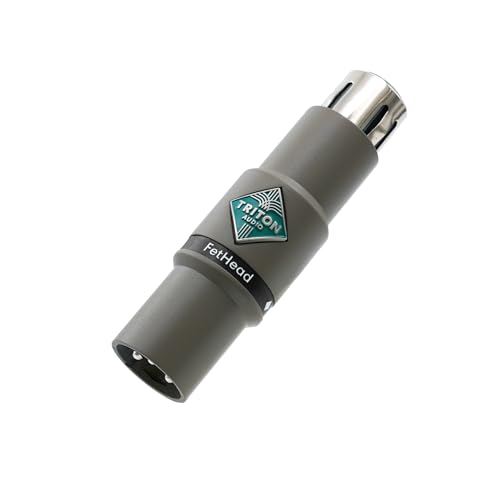
- Low-noise Class-A JFET gain boost
- Shielded in-line design
- 4 matched JFETs for consistent operation
Best For: Dynamic and ribbon mic users needing a compact gain boost
High-Gain Desktop Option
MIC-1 Mic Preamp with Phantom Power

- Up to +75dB clean gain
- 120dB EIN ultra-low-noise performance
- Balanced XLR and 3.5mm outputs
Best For: Users who want one versatile preamp for mics and instruments
500-Series Rack Preamp
PRE-573 MKIII 500 Series Microphone Preamp

- 80dB mic gain in 500 Series format
- Switchable impedance and phantom power
- LED meter and DI support
Best For: Engineers with a 500 Series rack needing a flexible preamp module
Dynamic Mic Booster
StudioMan DPM1 XLR Dynamic Microphones Preamp

- +29dB clean gain boost
- Built for dynamic and ribbon mics
- Metal casing for interference shielding
Best For: Creators needing a simple inline booster for quiet dynamic mics
500 Series Studio Pick
Heritage Audio Lang 312L 500 Series Microphone Preamp
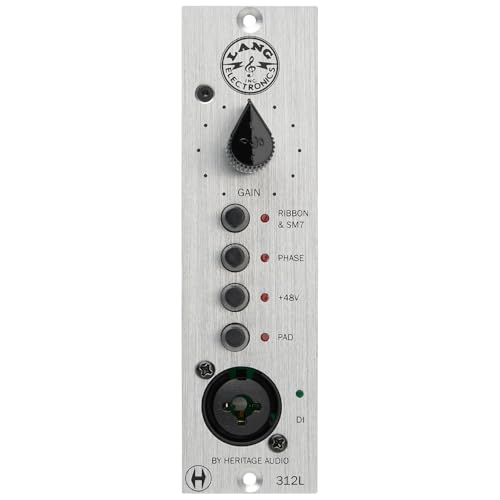
- 500 Series mic preamp/DI module
- Built-in +25dB lifter and +48V phantom power
- Phase button and -20dB pad included
Best For: 500 Series users needing a compact mic preamp/DI module
Inline Gain Booster
Bolanle NK1 In-Line Mic Preamp 28dB Gain

- 28dB inline gain boost for low-output mics
- Works with 48V phantom power systems
- Metal-shielded XLR design for interference resistance
Best For: Dynamic mic users needing a compact inline gain boost
Channel Strip Value Pick
dbx DBX286SV Microphone Preamp & Processor

- Mic preamp with compression, de-essing, enhancement, and gating
- XLR mic input plus 1/4" TRS line input
- Rack-mountable 1U unit with metering LEDs
Best For: Vocals and voice setups needing preamp plus onboard processing
Best with Extra Features

- Adds 28dB gain for dynamic microphones
- Tiny 3.8 x 0.4 x 0.4 inch build
- Ultra-light at 0.317 ounces
Best For: Dynamic mics that need a simple in-line gain boost
Balanced Mic Preamp

- 20dB gain with balanced circuitry
- 48V power for dynamic and condenser mics
- Ultra-low-noise black metal design
Best For: Podcasting, home studios, and live streaming
High-Gain Desktop Preamp

- 19–66dB variable gain range
- -120dB EIN ultra-low-noise claim
- Works with mics and instruments
Best For: Flexible budget recording setups needing high gain
Inline Dynamic Boost – Triton Audio FetHead in-Line Microphone Preamp
If you need a microphone preamp under 500 that sits right at the mic, the Triton Audio FetHead is a simple in-line option built for clean gain on low-output sources. Its low-noise Class-A JFET design and shielded enclosure make it a practical pick when you want to lift a dynamic or ribbon mic signal without adding a bulky box to your setup.
Best For: Dynamic and ribbon mic users who want a compact in-line gain boost.
Pros:
- Low-noise Class-A JFET amplification for clean signal boosting
- Double single-ended amplifier topology for focused in-line operation
- Shielded enclosure helps reduce interference
- Uses 4 matched JFETs for consistent performance
Cons:
- Designed as an in-line preamp, not a full-featured studio channel strip
- No built-in output controls or multi-input routing
For buyers who mainly need more usable level from a quiet mic, this FetHead keeps the job straightforward. It’s a tidy solution when you want gain at the source rather than pushing an interface preamp harder.
High-Gain Desktop Option – MIC-1 Mic Preamp with Phantom Power
For shoppers comparing a microphone preamp under 500, this MIC-1 aims for versatility with high gain, low noise, and multiple connection options. It offers up to +75dB of clean gain, 120dB EIN performance, 48V phantom power, and both balanced XLR and 3.5mm outputs, making it a flexible choice for home studio and portable recording setups.
Best For: Recorders who want a feature-rich preamp for dynamic mics, condensers, and instruments.
Pros:
- Up to +75dB clean gain for low-output microphones
- 120dB EIN ultra-low-noise spec for transparent recording
- 48V phantom power supports dynamic and condenser mics
- Balanced XLR plus 3.5mm outputs add routing flexibility
Cons:
- Two input ports cannot be used at the same time
- More features may be more than needed for simple one-mic setups
This model stands out if you want one box that can cover mic and instrument use while staying focused on low-noise gain. The metal shell and dedicated analog power are useful extras for keeping interference down in busy desktop setups.
500-Series Rack Preamp – PRE-573 MKIII 500 Series Microphone Preamp
If your microphone preamp under 500 needs to fit a modular rack, the PRE-573 MKIII is a 500 Series channel with serious headroom. It provides 80dB of mic gain, switchable impedance, phantom power, DI, and an LED output meter, so it works as a practical front end for mic, line, or instrument sources in a 500 Series system.
Best For: 500 Series users who want a rackmount mic, line, and DI preamp.
Pros:
- 500 Series form factor for modular rack setups
- 80dB of mic gain for low-level sources
- Switchable impedance and phantom power
- Built-in LED output level meter and DI function
Cons:
- Requires a 500 Series rack chassis
- Less convenient for standalone desktop use
This is the most studio-rack-oriented pick in the group, aimed at users who already have a 500 Series environment. If you need a flexible preamp module with monitoring and routing features, it is well suited to that workflow.
Dynamic Mic Booster – StudioMan DPM1 XLR Dynamic Microphones Preamp
When you’re shopping for a microphone preamp under 500, the StudioMan DPM1 is aimed squarely at low-output dynamic and ribbon microphones. It adds +29dB of clean gain in a plug-and-play XLR format, and it requires 48V phantom power from the mixer or interface while not passing that power to the mic.
Best For: Dynamic and ribbon mic users who need a simple inline gain booster.
Pros:
- +29dB clean, transparent gain for quiet mics
- Designed for dynamic and ribbon microphones
- Metal casing helps shield against interference and hum
- Plug-and-play XLR setup keeps installation simple
Cons:
- Not compatible with condenser microphones
- Requires 48V phantom power to operate
- Does not pass phantom power to the microphone
The DPM1 makes sense if your goal is to reduce noise by boosting level before the interface preamp has to work hard. It is a focused utility piece rather than an all-purpose preamp, which is exactly what some vocal and streaming setups need.
500 Series Studio Pick – Heritage Audio Lang 312L 500 Series Microphone Preamp
If you want a microphone preamp under 500 for a 500 Series rack, the Heritage Audio Lang 312L is built for straightforward gain, phantom power, and utility in a compact module. It also adds DI support, so it can cover more than just mic duties in a studio setup.
Best For: 500 Series users who want a mic preamp/DI module with simple, high-gain utility.
Pros:
- 500 Series microphone preamp/DI module for modular setups
- Built-in +25dB lifter for extra gain
- Includes +48V phantom power, phase button, and -20dB pad
- Stainless steel construction
Cons:
- Requires a 500 Series rack, so it is not a standalone desktop unit
- Focuses on core preamp features rather than added processing
Overall, the 312L makes sense if you already run 500 Series gear and want a clean, practical preamp module with a few useful controls. It is more specialized than a general-purpose preamp, but that is also what makes it a strong fit for a modular studio.
Inline Gain Booster – Bolanle NK1 In-Line Mic Preamp 28dB Gain
For a microphone preamp under 500 that is meant to solve low-output mic issues fast, the Bolanle NK1 is an in-line XLR booster with 28dB of gain. Its Class A transistor circuit and metal-shielded case are aimed at cleaner, more stable signal delivery for dynamic microphones and other XLR gear.
Best For: Users who need an inline XLR gain boost for dynamic mics like the SM7B or SM58.
Pros:
- 28dB gain from a Class A transistor amplification circuit
- Compatible with 48V phantom power supplies
- XLR male-to-female inline design for simple connection
- Alloy-shielded metal case for interference resistance
Cons:
- Designed as an inline booster, not a full-featured channel strip
- Limited to XLR-based use cases
This is a practical choice when your main goal is adding gain without adding a larger piece of studio hardware. If you need a simple, direct solution for quiet dynamic microphones, the NK1 keeps the setup compact.
Channel Strip Value Pick – dbx DBX286SV Microphone Preamp & Processor
If you want a microphone preamp under 500 that does more than amplification, the dbx 286s combines mic preamp functions with compression, de-essing, enhancement, and gating. It is a rack-mountable channel strip designed for vocal shaping and basic processing in one unit.
Best For: Vocal recording or live voice setups that need preamp gain plus onboard processing.
Pros:
- Mic preamp plus 4 independent processing sections
- Includes compression, de-esser, enhancer, and expander/gate
- XLR mic input and 1/4" TRS line input for added flexibility
- Metering LEDs help monitor audio and processor status
Cons:
- Rack-mountable 1U design is less portable than inline options
- More complex than a simple preamp if you only need clean gain
The dbx 286s stands out if you want a single box that can handle both preamp duties and common voice-processing tasks. It is a solid fit for users who value control and convenience over minimalism.
Best with Extra Features – 28dB Dynamic Mic Preamp
If you need a microphone preamp under 500 that simply gives a dynamic mic more level, this inline booster is built for that job. It adds up to 28dB of gain in a very small body, so it can be a practical add-on when your mic signal is too quiet.
Best For: Dynamic microphone users who want a compact in-line gain boost.
Pros:
- Adds 28dB gain for dynamic microphones
- Very compact size for easy placement in a signal chain
- Lightweight design at just 0.317 ounces
Cons:
- Designed specifically as an in-line booster rather than a full-featured preamp
- Notes only mention dynamic microphones, not condenser support
Overall, this is a straightforward pick if your main goal is more clean level from a dynamic mic without adding bulk. It looks best suited to simple gain-boost use cases rather than all-in-one studio routing.
Balanced Mic Preamp – 20dB Low-Noise Booster
For buyers searching for a microphone preamp under 500 with a cleaner, more flexible feature set, this model focuses on transparent gain and broad mic compatibility. It offers 20dB gain, 48V power, and a fully balanced circuit design aimed at keeping noise low.
Best For: Home studios, podcasting, and live streaming with dynamic or condenser microphones.
Pros:
- 20dB gain with balanced amplification circuitry
- Includes 48V power for use with dynamic and condenser microphones
- Fully balanced circuit design for ultra-low noise and clean sound
- Compact, lightweight, and housed in a black metal case
Cons:
- Lower gain than some higher-output preamps
- Product notes do not mention instrument support
This is a solid middle-ground option if you want a compact preamp that supports more than just one microphone type. The emphasis here is on clean, practical gain rather than extreme boosting.
High-Gain Desktop Preamp – 66dB Ultra-Low-Noise RO03
If you want a more capable microphone preamp under 500 for varied recording setups, the RO03 stands out for its wide gain range and flexible outputs. The notes highlight 19–66dB of gain, very low noise performance, and support for dynamic, condenser, ribbon, and instrument use.
Best For: Budget-conscious recording setups that need high gain and flexible input/output options.
Pros:
- Variable gain range from 19 to 66dB
- Rated for very low noise with -120dB EIN
- Supports dynamic, condenser, ribbon microphones, and instruments
- XLR, TRS, TS line out options with USB Type-C power input
Cons:
- Two input ports cannot be used at the same time
- Notes recommend TRS line input for lowest noise, which may require the right cable setup
Overall, this is the most feature-rich option in the group if you need gain headroom and multi-use flexibility. The tradeoff is that it asks for a bit more attention to cabling and hookup choices.
How We Picked the Best Microphone Preamp Under 500
We focused on real-world value for a Microphone Preamp Under 500, prioritizing low-noise performance, usable gain range, compatibility with dynamic, condenser, and ribbon microphones, and whether each unit suits home studios, streaming, podcasting, or instrument recording. We also considered build quality, power requirements, and how easy each preamp is to integrate into a typical setup.
Quick Comparison: What You’re Really Choosing
Not every preamp serves the same purpose. In-line boosters are ideal when your dynamic mic sounds too quiet and your interface lacks clean gain. 500-series preamps are better for users already invested in modular racks and seeking more premium signal paths. Channel strip units add processing, which can be a smart shortcut if you want compression or gating in one box. If you need simplicity, a plug-and-play in-line model is usually the fastest upgrade.
Key Buying Factors for a Microphone Preamp Under 500
Gain and Noise Performance
Look for enough clean gain to match your microphone. Low-output dynamics and ribbons often need more headroom, while condensers usually need less gain but benefit from low self-noise and stable phantom power.
Power and Compatibility
Check whether the preamp requires phantom power, passes phantom power through, or is designed only for dynamic mics. If you record multiple mic types, broader compatibility can save you from buying a second unit later.
Form Factor
In-line boosters are compact and affordable, 500-series units are more expandable, and channel strips offer the most features but also the most complexity. Choose the format that best matches your desk space and signal chain.
Extra Processing
Features like compression, de-essing, gating, or enhancement can be valuable for podcasts and live voice work. For pure tracking, however, a clean, transparent preamp is often the better buy.
Who Should Buy Which Microphone Preamp Under 500?
Streamers, podcasters, and voice actors who need an easy upgrade should start with an in-line booster or compact preamp. Musicians building a more serious recording chain may prefer a 500-series option for better expansion and studio flexibility. If you want to shape the sound on the way in, a channel strip like the dbx unit can be a practical all-in-one choice.
For most buyers, the best Microphone Preamp Under 500 is the one that matches the mic you already own, gives you enough clean gain, and adds only the features you’ll actually use.