
Digitizing film at home can preserve family photos, reduce clutter, and make hard-to-view negatives easier to share. The best film scanners under $300 balance image quality, format support, speed, and simple controls.
We’ve selected 10 affordable scanners with features such as built-in displays, high-resolution capture, USB connectivity, and support for common 35mm, 110, 126, and Super 8 formats.
Best 10 Film Scanners Under 300 Picks for 2026
Best All-in-One Value
Magnasonic FS71 24MP Film Scanner

- Supports multiple film and slide formats
- 5-inch display with HDMI viewing
- Standalone scanning with SD-card storage
Best For: Families preserving mixed-format film and slides
Best for Smooth Feeding

- Smooth tray helps streamline scanning
- Supports 135mm, 110mm, and 126mm formats
- Direct saving to SD/SDHC cards up to 32GB
Best For: Routine digitization of common film and slides
Best Complete Starter Kit

- Scans film, slides, photos, and business cards
- Includes 8GB SD card and accessories
- Large 5-inch screen and three-year warranty
Best For: Beginners digitizing mixed household media
Best for Family Viewing
DigitPro C190 22MP Film Scanner

- 5-inch LCD for preview and playback
- Supports 35mm, 110, 126, 50mm slides, and Super 8
- Includes HDMI cable and built-in memory
Best For: Scanning and sharing family memories on a TV
Easy Touchscreen Pick
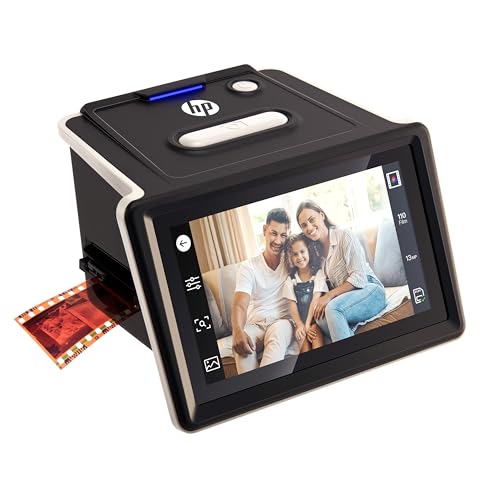
- 5-inch touchscreen with preview and gallery mode
- Supports 135, 126, and 110 film formats
- USB-C powered with direct SD-card saving
Best For: Simple home scanning without a computer
Large-Screen All-Rounder
KODAK Slide N Scan Film Scanner
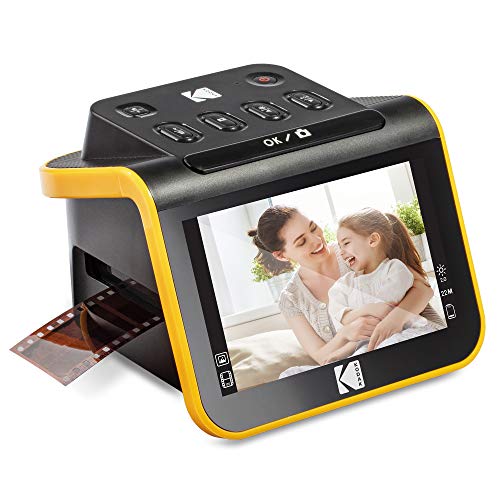
- 22MP scanning with a 5-inch LCD
- Supports multiple negative and slide formats
- Includes adapters, USB, and HDMI cables
Best For: Family photo archives and easy sharing
Complete Kit Choice
DigitConvert Slide & Negative Scanner

- 22MP scanning with 5-inch LCD and gallery mode
- Includes five adapters and HDMI/USB cables
- Supports JPEG saving and SD cards up to 64GB
Best For: One-touch scanning and family slide shows
Best All-in-One Controls

- 7-inch touchscreen with built-in editing
- 13MP CMOS scanning for negatives and slides
- Supports 135, 126, and 110 formats
Best For: Beginners wanting simple, computer-free control
Best for Easy Batch Projects

- 14MP scanning with 22MP interpolated output
- Large 7-inch real-time preview screen
- Works without a computer or drivers
Best For: Digitizing mixed film collections independently
Best Resolution and Format Range

- 24MP CMOS sensor with 3600 dpi listed resolution
- Supports 35mm, 110, 126, Super 8, and 8mm
- Includes an SD card for immediate saving
Best For: Varied film collections needing broad format support
Best All-in-One Value – Magnasonic FS71 24MP Film Scanner
For shoppers comparing film scanners under 300, the Magnasonic FS71 is a practical all-in-one option for digitizing several common film and slide formats. It scans quickly, works without a computer, and includes a large screen for previewing images.
Best For: Families preserving mixed-format film and slides with straightforward, standalone controls.
Pros:
- Supports 35mm, 110, 126, and Super 8 film, plus 135, 126, and 110 slides.
- Uses a 5-inch LCD screen and can display images through HDMI.
- Saves JPEG files to an SD card and scans images in less than five seconds each.
- Offers brightness, RGB color, flip, and mirror adjustments without extra software.
Cons:
- SD card and HDMI cable are not included.
- Windows 7 is listed as the minimum system requirement.
The FS71 stands out when format flexibility and easy, computer-free scanning matter most. Its 24MP output, large preview display, and included film trays make it a convenient choice for home archiving.
Best for Smooth Feeding – KODAK Slide N Scan Max
Among film scanners under 300, the KODAK Slide N Scan Max focuses on a streamlined workflow. Its smooth-moving tray, direct SD-card saving, and one-touch editing help reduce interruptions while digitizing a collection.
Best For: Users who want convenient batch-style scanning of 135mm, 110mm, and 126mm film and slides.
Pros:
- Smooth-moving tray feeds film without constant repositioning.
- Supports 135mm, 110mm, and 126mm slides and negatives, including color and black-and-white film.
- Saves directly to SD or SDHC cards up to 32GB without requiring a computer.
- Captures images up to 4208 x 3120 resolution using a 13MP CMOS sensor with 22MP interpolation.
Cons:
- SD-card support is limited to 32GB.
- The supplied details list USB connectivity rather than HDMI output.
This KODAK model is a solid fit for buyers prioritizing an uncomplicated feed system and direct storage. Its broad support for common formats and simple editing controls make it well suited to routine home digitization.
Best Complete Starter Kit – DigitPro M129A Photo Scanner
For shoppers seeking film scanners under 300 with accessories included, the DigitPro M129A offers a broad home-archiving package. It handles film, slides, printed photos, and business cards while saving scans directly to the included SD card.
Best For: Beginners and families who want to digitize both film collections and loose printed photos without a computer.
Pros:
- Converts 35mm slides, 135 and 110 negatives, printed photos, and business cards into JPEGs.
- Includes a large 5-inch HD viewing screen with wide viewing angles.
- Includes an 8GB SD card, holders, photo trays, cleaning brush, power adapter, and USB cable.
- Offers one-touch operation and a three-year warranty.
Cons:
- The listed resolution is 1080P rather than a megapixel specification.
- At 1.5 kg, it is heavier than several compact film-only scanners.
The M129A is appealing when convenience extends beyond film scanning. Its included memory card, photo support, large screen, and long warranty create a ready-to-use package for household archives.
Best for Family Viewing – DigitPro C190 22MP Film Scanner
Among film scanners under 300, the DigitPro C190 combines one-touch scanning with convenient viewing options. Its 5-inch LCD, HDMI cable, and support for several film formats make it useful for both archiving and sharing memories.
Best For: Users who want to scan common film formats and show the results on a TV or the built-in display.
Pros:
- Supports 35mm/135, 110, 126, 50mm slides, and Super 8 film in color or black and white.
- Includes a 5-inch LCD for preview, playback, and sharing.
- Provides built-in 128MB memory and supports external SD cards up to 64GB.
- Includes an HDMI cable, film holders, cleaning brush, and a 12-month warranty.
Cons:
- External SD card is not included.
- The supplied details list 1080P resolution rather than a full megapixel output specification.
The C190 is a strong choice for simple scanning sessions followed by group viewing. Its format coverage, built-in storage, large screen, and included HDMI cable make it especially practical for family projects.
Easy Touchscreen Pick – HPFS500 Film & Slide Scanner
For shoppers comparing film scanners under 300, the HPFS500 is a convenient option for digitizing 135, 126, and 110 negatives and slides without relying on a computer during scanning. Its touchscreen preview, USB-C power, and direct SD-card saving make it practical for home archiving.
Best For: Users who want straightforward scanning with an integrated touchscreen and flexible film-format support.
Pros:
- 5-inch all-angle touchscreen supports previewing, editing, and gallery mode.
- 13MP CMOS sensor with 22MP interpolation is designed for detailed digital captures.
- Handles 135, 126, and 110 film strips and positive slides.
- Saves scans directly to an SD card and runs from USB-C power.
Cons:
- SD card is needed for direct storage and is not listed as included.
- USB-C power still requires a PC USB port or external 5V adapter.
The HPFS500 stands out for its compact design and simple on-device workflow. It is a sensible choice when ease of use and broad format compatibility matter more than advanced computer-based scanning controls.
Large-Screen All-Rounder – KODAK Slide N Scan Film Scanner
Among film scanners under 300, the KODAK Slide N Scan offers a user-friendly way to convert common negatives and slides to digital files. Its 5-inch LCD, one-touch controls, and included adapters suit family archives and casual scanning sessions.
Best For: Home users who want a large preview screen, simple editing, and support for several older film formats.
Pros:
- 22MP resolution and a 5-inch LCD provide high-resolution captures and easy viewing.
- Supports 135, 110, and 126 negatives plus 50mm, 135, 110, and 126 slides.
- One-touch software offers color, brightness, resizing, and date/time adjustments.
- Includes film adapters, cleaning brush, USB cable, and HDMI cable.
Cons:
- SD or SDHC storage up to 32GB is supported, but the card is not included.
- Its listed minimum system requirement is Windows 7, with computer connection available through USB.
The KODAK model is appealing for its accessible controls and broad format coverage. The gallery mode and HDMI connection also make it useful for sharing scanned memories on the scanner’s screen or a larger display.
Complete Kit Choice – DigitConvert Slide & Negative Scanner
If you are comparing film scanners under 300 and want a ready-to-use package, this DigitConvert scanner includes the cables, power adapter, cleaning brush, and five film adapters needed to get started. It scans several negative and slide formats and saves standard JPEG files to an SD card.
Best For: Users who want one-touch scanning, TV viewing, and a generous included accessory kit.
Pros:
- 22MP digital scanning supports 135/110 negatives and several slide formats, including Super 8.
- 5-inch LCD offers wide-angle viewing, editing, and gallery mode.
- One-touch operation includes film selection, color and brightness adjustments, and date/time stamps.
- Includes HDMI and USB cables, power adapter, cleaning brush, five adapters, and a 36-month warranty.
Cons:
- SD card is not included, though FAT32 or exFAT cards up to 64GB are supported.
- The scanner must remain plugged into a power source during use.
- The listed resolution is 1080P rather than an optical megapixel specification.
This model emphasizes convenience, with direct JPEG creation, PC or Mac export, and HDMI playback for slide shows. It is a strong fit for buyers who value included accessories and simple controls over a more specialized scanning setup.
Best All-in-One Controls – HP Film & Slide Scanner
If you want film scanners under 300 that are simple to operate without a separate computer, the HP FilmScan combines a 7-inch touchscreen with on-device editing. Its 13MP CMOS sensor handles color and black-and-white negatives, while USB and HDMI support make sharing straightforward.
Best For: Beginners and families who want easy previewing, editing, and scanning from one compact device.
Pros:
- Large 7-inch color touchscreen for previewing and basic editing
- 13MP CMOS sensor captures color and black-and-white film
- Supports 135, 126, and 110 formats with a quick-feed tray
- USB transfer and HDMI slideshow output add flexibility
Cons:
- Its listed resolution is 1200 dpi, lower than some higher-megapixel alternatives
- The notes do not mention an included SD card
The HP stands out for its approachable touchscreen workflow and built-in editing tools. It is a practical choice when convenience and direct viewing matter more than maximum stated resolution.
Best for Easy Batch Projects – ClearClick Virtuoso 3.0
Among film scanners under 300, the ClearClick Virtuoso 3.0 is designed for straightforward scanning without a computer or drivers. It previews images on a large 7-inch screen and saves them to an SD card, with support for several common film and slide formats.
Best For: Users digitizing mixed collections who value a large preview screen and a self-contained workflow.
Pros:
- Scans at 14MP or 22MP interpolated resolution
- Large 7-inch LCD provides real-time previews
- Supports 35mm, 110, and 126 negatives plus 50mm slides
- Requires no computer or drivers and includes a 2-year warranty
Cons:
- SD card is not included and must be 32GB or less
- Mini HDMI cable is not included
- 22MP output is interpolated rather than the listed 14MP scanning quality
The Virtuoso 3.0 offers a convenient balance of format support, on-device viewing, and simple file saving. Keep the missing SD card and HDMI cable in mind when planning your setup.
Best Resolution and Format Range – BEONEGLOBAL ClearScan P7
For shoppers comparing film scanners under 300, the BEONEGLOBAL ClearScan P7 offers a high stated 24MP output and broad format compatibility. Its 7-inch LCD, one-touch controls, adjustable image sizing, and included SD card make it ready for convenient scanning at home.
Best For: Film owners with varied collections, including 35mm, 110, 126, Super 8, and 8mm material.
Pros:
- 24MP CMOS sensor is designed for detailed, color-accurate captures
- Supports 35mm/135, 126, 110, Super 8, and 8mm film and slides
- 7-inch LCD enables immediate preview and adjustment
- Includes an SD card for out-of-box saving
Cons:
- The notes list USB connectivity but do not specify HDMI output
- Its one-year manufacturer warranty is shorter than the ClearClick model’s listed warranty
The ClearScan P7 is the most versatile option here for format coverage and stated resolution. It is especially appealing if you want an included SD card and simple controls for a varied film archive.
How We Picked the Best Film Scanners Under 300
We focused on scanners priced below $300 that are designed for home users rather than professional labs. Our comparison emphasizes supported film formats, advertised scan resolution, screen size, connection options, ease of use, and the ability to save files without complicated software. Models that handle multiple formats are especially useful for mixed family archives.
Resolution claims can vary by manufacturer, so we treat megapixel ratings as a comparison point rather than a guarantee of final image quality. Film condition, dust, focus, color processing, and the scanner’s sensor all affect results.
Quick Comparison
| What to Compare | Why It Matters |
|---|---|
| Supported formats | Determines whether the scanner works with your negatives, slides, or movie film. |
| Resolution | Higher capture ratings can provide more flexibility for cropping and reprints. |
| Display size | Larger screens make framing and reviewing scans more convenient. |
| Storage and transfer | Check for SD cards, USB connections, or direct computer transfer. |
| Controls and workflow | Simple holders and one-touch controls make large archives faster to process. |
Key Buying Factors for Film Scanners Under 300
Film and Slide Compatibility
Start with the formats in your collection. Most options support 35mm negatives and slides, while some also handle 110 and 126 film. Super 8 or 8mm compatibility is less common and should be verified before purchase, particularly if you are digitizing home movies.
Image Quality and Resolution
Choose a higher-resolution model if you plan to crop images, make moderate prints, or retain detail for future editing. For casual viewing and social sharing, a lower-resolution scanner may be sufficient. Look for practical features such as brightness or color adjustment, which can matter as much as the advertised megapixel number.
Screen, Storage, and Connectivity
A built-in LCD lets you preview images without immediately connecting a computer. Larger displays are easier to use, but they may increase the unit’s size. Confirm whether the scanner saves to an SD card, transfers through USB, or requires a specific operating system or application.
Scanning Speed and Handling
If you have hundreds of frames, film holders and a quick reload process can save more time than a small resolution upgrade. Check whether the holder keeps film flat and whether the scanner can advance through a strip efficiently.
Who Should Buy Which Film Scanners Under 300?
Choose a compact, straightforward model if you mainly need to digitize occasional 35mm negatives and slides. A scanner with a larger screen is better for users who want to preview and save images without working at a computer. If your archive includes 110, 126, Super 8, or 8mm material, prioritize broad format support over headline resolution.
For large collections, select the model with the most convenient film-loading workflow, dependable storage options, and useful image adjustments. Buyers seeking the best possible archival quality may eventually prefer a dedicated higher-end scanner or professional digitizing service, but these film scanners under $300 can be practical for family archives, online sharing, and everyday preservation.