
Choosing the right monitor can make a bigger difference on set than upgrading a lens. A good display helps you judge focus, exposure, and framing with confidence, especially when your camera’s built-in screen is too small or too dim.
Below, we’ve narrowed the field to ten practical options for creators who need a dependable external camera monitor for cinema cameras, from compact touchscreen models to brighter picks built for outdoor work.
Best 10 External Camera Monitor for Cinema Cameras Picks for 2026
Ultra-Bright Touch Pick
NEEWER F700 7" 2000nit 4K HDMI Field Monitor

- 2000-nit 7-inch IPS touch display
- 4K HDMI loop in/out with headphone jack
- Waveform, peaking, HDR, and custom LUTs
Best For: Bright-location cinema shooters who want a feature-rich field monitor
Pro Control Upgrade
VILTROX DC-550 Pro II 5.5" HDMI 2.0 Monitor

- Direct control of exposure and focus settings
- 1400-nit 5.5-inch Full HD touchscreen
- HDMI 2.0 4K60 with onion skin and LUT support
Best For: Shooters who want camera control plus a compact bright monitor
Budget Field Helper
NEEWER F100 7" HD Camera Monitor

- 7-inch IPS monitor with 1280x800 resolution
- Peaking, check field, pixel-to-pixel, and safe frames
- Lightweight build with included sunshade
Best For: Budget-conscious shooters who need core monitoring tools
Compact Bundle Choice
FEELWORLD S55 V3 6" 4K HDMI Monitor Kit
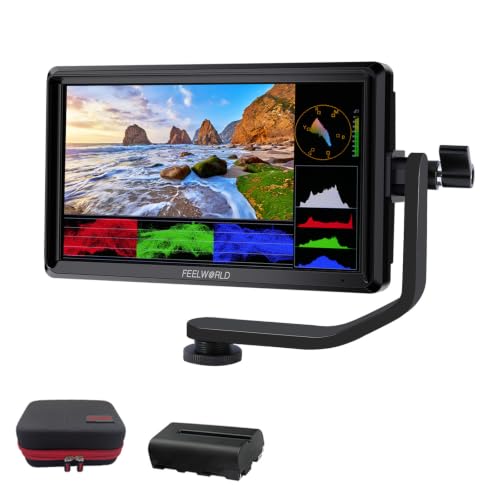
- 6-inch Full HD screen with 4K HDMI loop-out
- Focus assist, false color, zebra, and histogram
- Includes battery, case, sunshade, and tilt arm
Best For: Portable rig users who want a ready-to-shoot monitor bundle
Pro Monitoring Pick
VILTROX DC 550 Pro 5.5" Touch Screen DSLR Camera Field Monitor

- 1200-nit screen for brighter shooting conditions
- 3D LUT, waveform, vector, histogram, and false color tools
- 4K HDMI input/loop out with touch and wheel control
Best For: Creators who want a bright, feature-heavy field monitor
Workflow Choice
osee T5+ 5.5 Inch 1000nits Camera Monitor

- 1000-nit screen for outdoor-friendly monitoring
- Customizable false color plus waveform, histogram, and vector tools
- 8 MySets workflow with quick joystick switching
Best For: Users who value fast setup changes and exposure-focused tools
Brightest Value
VILTROX DC 550 5.5" Touch Screen DSLR Camera Field Monitor

- 1200-nit display for the brightest viewing in this set
- Full HD 1920x1080 panel with 4K HDMI input/loop out
- Includes 3D LUT, waveform, vector, histogram, and quick-release hood
Best For: Outdoor shooters who want maximum brightness and full monitoring tools
Touchscreen rig monitor
FEELWORLD F5 Pro V4 6" Touchscreen Field Monitor

- 6-inch 1080p IPS touchscreen
- 3D LUT, waveform, vector, histogram
- F970 kit with DC 8.4V output
Best For: Beginner filmmakers and compact rigs
Sunlight-ready field monitor
FEELWORLD FW568 PRO 6" 1200nit Monitor

- 1200-nit screen for outdoor use
- Waveform, vectorscope, RGB histogram
- Lightweight 204g body for rigs
Best For: Outdoor videographers and filmmakers
Budget 7-inch monitor
FEELWORLD FW759 7" IPS Monitor

- 7-inch IPS display for easier framing
- Focus peaking, false color, histogram
- Lightweight 300g body with HDMI input
Best For: Beginners and lightweight indoor rigs
Ultra-Bright Touch Pick – NEEWER F700 7" 2000nit 4K HDMI Field Monitor
If you need an external camera monitor for cinema cameras that stays readable outdoors, the NEEWER F700 is built around a 2000-nit 7-inch IPS touch screen with 1080p resolution and 4K HDMI loop in/out. It also brings a full set of exposure and focus tools, plus custom LUT support, so it fits well into a more serious on-set workflow.
Best For: Bright-location shooters who want a touch-friendly cinema monitor with strong monitoring tools and flexible power.
Pros:
- 2000-nit brightness with auto and manual backlight control for outdoor use
- 4K HDMI loop in/out and headphone monitoring support
- Includes waveform, vectorscope, zebras, false color, peaking, HDR, and more
- Supports 15 built-in and up to 60 custom 3D LUTs
Cons:
- Battery and accessory-heavy setup adds bulk compared with smaller monitors
- Uses a 7-inch body that may be more than minimal rigs need
- DC cable is not included for one of the power options
Overall, the F700 is a strong pick if brightness and monitoring flexibility matter more than compact size. Its mix of touch control, LUT loading, and multiple power options makes it a practical field display for demanding cinema camera setups.
Pro Control Upgrade – VILTROX DC-550 Pro II 5.5" HDMI 2.0 Monitor
The VILTROX DC-550 Pro II is a compact external camera monitor for cinema cameras that leans hard into control and signal quality. It pairs a 1400-nit 5.5-inch Full HD touchscreen with HDMI 2.0 4K60 support, direct camera control, and customizable analysis tools for more efficient shooting.
Best For: Creators who want direct camera control, a bright compact monitor, and advanced framing tools in one rig-friendly package.
Pros:
- Direct camera control for aperture, shutter, ISO, white balance, focus mode, and shutter trigger
- HDMI 2.0 input/loop-out supports up to 4096×2160 at 60Hz
- 1400-nit touchscreen is designed for visibility in bright conditions
- Movable waveform, histogram, vectorscope, RGB parade, and onion skin tools
Cons:
- 5.5-inch screen is smaller than many field monitors
- Advanced feature set may be more than casual users need
- Included kit adds accessories, but also more overall setup than a bare-bones monitor
In practice, this model stands out when you want both monitoring and camera operation from the same screen. For cinema-camera users who value efficiency, the Pro II offers a particularly polished feature mix for a compact monitor.
Budget Field Helper – NEEWER F100 7" HD Camera Monitor
If you’re shopping for an external camera monitor for cinema cameras on a simpler budget, the NEEWER F100 focuses on the basics that matter on set. Its 7-inch IPS display, 1280×800 resolution, and HDMI input make it a straightforward assist monitor for framing and focus.
Best For: Shooters who want a lightweight, no-fuss field monitor with core focus and exposure aids.
Pros:
- 7-inch IPS screen with a thin, lightweight design
- Includes peaking focus assist, check field, pixel-to-pixel, and safe frame options
- Sunshade helps improve visibility in outdoor use
- Wide compatibility with DSLR cameras, camcorders, stabilizers, and rigs
Cons:
- 450-nit brightness is modest for very bright environments
- Lower 1280×800 resolution than newer Full HD monitors
- Battery is not included, so you’ll need to source power separately
The F100 makes sense when you need a practical on-camera display without paying for premium brightness or advanced extras. It’s a solid utility monitor for rig builds where weight, simplicity, and essential monitoring tools are the priority.
Compact Bundle Choice – FEELWORLD S55 V3 6" 4K HDMI Monitor Kit
The FEELWORLD S55 V3 is a compact external camera monitor for cinema cameras that aims to stay light while still covering the essentials. It combines a 6-inch Full HD display, 4K HDMI input and loop-out, and a bundled battery-and-case kit for shooters who want an all-in-one starter setup.
Best For: Lightweight rigs, gimbals, and handheld setups that need a compact monitor bundle with practical tools.
Pros:
- Compact 6-inch 1920×1080 display with 160-degree viewing angle
- 4K HDMI input and loop-out for live monitoring to another display
- Includes focus assist, false color, zebra, histogram, zoom, and image flip tools
- Bundle comes with battery, carry case, sunshade, tilt arm, and cables
Cons:
- 500-nit brightness is lower than high-brightness field monitors
- Smaller screen may feel cramped for users who prefer larger displays
- Power options are useful, but the included kit still suits lighter-duty builds best
The S55 V3 is a sensible choice when portability and convenience matter more than raw brightness. Its bundled accessories make it especially appealing for creators who want to get filming quickly with minimal add-ons.
Pro Monitoring Pick – VILTROX DC 550 Pro 5.5" Touch Screen DSLR Camera Field Monitor
If you want an external camera monitor for cinema cameras that balances brightness, touch control, and a full monitoring toolkit, the VILTROX DC 550 Pro is built for practical on-set use. Its 5.5-inch FHD panel, 1200-nit brightness, and 4K HDMI support make it a flexible option for checking focus, exposure, and color in a compact rig.
Best For: Shooters who want a bright, feature-rich field monitor with 3D LUT support and easy touchscreen control.
Pros:
- 1200-nit brightness helps visibility in tougher lighting.
- Includes 3D LUT, waveform, vector, histogram, false color, focus assist, and audio tools.
- 4K HDMI input/loop out supports up to 4K30 signal handling.
- Touchscreen plus physical wheel/button control offers flexible menu navigation.
Cons:
- 5.5-inch screen may feel small for users who prefer a larger viewing area.
- Listed native resolution is 1920×1080, not a higher-end cinema-monitor panel.
- Best suited to HDMI-based setups rather than more advanced video workflows.
Overall, this model stands out if you want a compact monitor with strong brightness and a deep set of image tools without moving into a much larger rig. It is especially appealing for creators who rely on quick touchscreen access and LUT-based monitoring.
Workflow Choice – osee T5+ 5.5 Inch 1000nits Camera Monitor
For buyers comparing an external camera monitor for cinema cameras, the osee T5+ focuses on speed and exposure control rather than raw brightness alone. Its 1000-nit panel, customizable false color tools, and up to 8 MySets workflow are designed to help you move quickly on location while still monitoring LOG and HDR footage effectively.
Best For: Shooters who want customizable exposure tools and a streamlined on-set workflow.
Pros:
- 1000-nit brightness is strong for outdoor use.
- Customizable false color tools help tailor exposure checks to different camera models.
- 8 MySets and one-key joystick control support fast switching on set.
- Supports LOG/HDR preview, 3D LUTs, waveform, histogram, vector, and zebra tools.
Cons:
- Battery is not included.
- Brightness is lower than 1200-nit alternatives in this group.
- At 5.5 inches, it remains a compact monitor rather than a large display solution.
The T5+ is a strong fit if your priority is efficient operation and exposure accuracy. Its combination of customizable false color and preset MySets makes it especially useful when you need repeatable monitoring setups across shoots.
Brightest Value – VILTROX DC 550 5.5" Touch Screen DSLR Camera Field Monitor
If you need an external camera monitor for cinema cameras that emphasizes visibility, the VILTROX DC 550 is the brightest of this group at 1200 nits. It pairs that panel with a 5.5-inch 1920×1080 display, 4K HDMI input/loop out, and a useful set of monitoring tools for focus, exposure, and color review.
Best For: Outdoor shooters who want a bright monitor with a full set of field-monitoring features.
Pros:
- 1200-nit brightness is the strongest option listed here.
- Full HD 1920×1080 resolution supports detailed monitoring.
- Includes 3D LUT, waveform, vector, histogram, focus assist, false color, and audio tools.
- Quick-release hood helps block hard light during outdoor filming.
Cons:
- Only one HDMI port is listed, so connectivity is straightforward but limited.
- 5.5-inch size may be compact for users wanting a larger on-rig display.
- Feature set is broad, but the monitor still relies on HDMI-based workflows.
This model is a strong pick when brightness matters most and you still want the standard tools expected from a cinema-focused field monitor. The included hood, batteries, and carry case also make it practical for location work.
Touchscreen rig monitor – FEELWORLD F5 Pro V4 6" Touchscreen Field Monitor
If you want an external camera monitor for cinema cameras that keeps a rig compact while improving framing and focus, the FEELWORLD F5 Pro V4 is built around a 6-inch 1080p touchscreen with 4K HDMI input/output. Its monitoring tools, LUT preview, and F970 external kit make it a practical fit for creators who need more control than a camera’s rear display without adding unnecessary bulk.
Best For: Beginner filmmakers, vloggers, and videographers who want a lightweight on-camera monitor with touch control and useful exposure tools.
Pros:
- 6-inch Full HD IPS touchscreen gives a larger, more intuitive viewing area.
- Includes 3D LUT support plus waveform, vector, and histogram tools for monitoring exposure and color.
- F970 external kit can power wireless transmission gear and includes DC 8.4V output for camera power.
- Lightweight 245g design works well on gimbals, handheld rigs, and tripod setups.
Cons:
- 500-nit brightness is more suited to indoor or controlled-light setups than harsh sun.
- Best value comes when you will use the advanced monitoring tools regularly.
Overall, the F5 Pro V4 is a strong option if you need a compact external monitor that helps with focus, framing, and exposure while staying easy to mount on a cinema-style rig.
Sunlight-ready field monitor – FEELWORLD FW568 PRO 6" 1200nit Monitor
The FEELWORLD FW568 PRO is an external camera monitor for cinema cameras and other rigged setups that need strong visibility outdoors. Its 6-inch Full HD IPS screen, 1200-nit brightness, and 4K HDMI in/out are aimed at creators who want clearer monitoring under sunlight, along with built-in tools for judging exposure and focus more accurately.
Best For: Videographers and filmmakers who shoot outdoors and want a brighter monitor with professional exposure tools.
Pros:
- 1200-nit brightness is designed for better visibility in direct sunlight.
- Waveform, vectorscope, RGB histogram, focus assist, and LUT preview support more precise monitoring.
- 6-inch 1920×1080 IPS display provides a sharp image in a compact form factor.
- Lightweight 204g build suits gimbals and stabilizers.
Cons:
- Smaller 6-inch screen may feel limited if you want a larger display for detailed review.
- Battery bag is geared toward NP-F style power setups, so it may not fit every rig workflow.
For outdoor production, the FW568 PRO stands out as a practical monitor-first upgrade that focuses on brightness, image analysis tools, and easy rig mounting rather than extra bulk.
Budget 7-inch monitor – FEELWORLD FW759 7" IPS Monitor
If you are shopping for an external camera monitor for cinema cameras and want a bigger viewing area without moving into a heavier pro rig, the FEELWORLD FW759 is a straightforward 7-inch option. It offers a 1280×800 IPS display, 4K HDMI input support, and core monitoring aids like focus peaking and false color for easier framing and exposure checks.
Best For: Beginner creators who want a larger, lightweight monitor for indoor shoots, travel, and tripod setups.
Pros:
- 7-inch screen gives a larger viewing experience than a camera’s built-in display.
- Focus peaking, histogram, false color, over-exposure warning, zoom, and safe frame help prevent missed shots.
- Lightweight 300g design and slim 17mm thickness keep rigs manageable.
- Supports 4K HDMI input up to 4K@30Hz and works with common DSLR, mirrorless, and camcorder setups.
Cons:
- 400-nit brightness is more limited for bright outdoor shooting.
- 1280×800 resolution is lower than newer Full HD monitors.
The FW759 is a sensible pick when you want a simple external monitor that improves visibility and shooting confidence without adding much weight or complexity to your setup.
How We Picked the Best External Camera Monitor for Cinema Cameras
We focused on monitors that offer a useful balance of image quality, brightness, and onboard tools. For cinema-camera use, that means prioritizing high-nit screens for daylight visibility, 1080p-class displays for clearer focus judgment, and features like waveform, false color, focus peaking, 3D LUT support, and HDMI loop-through where available.
We also considered size, power options, and mounting flexibility. A monitor should fit your rig without creating unnecessary bulk, while still being easy to power and position on a cage, handle, or gimbal.
Quick Comparison
Smaller 5.5-inch models are usually better for lightweight rigs, handheld work, and setups where portability matters. Six- and seven-inch monitors give you more screen space for checking focus and exposure, which can be helpful on narrative, interview, and studio shoots.
Brightness is one of the biggest separators. Around 400 nits is fine indoors, but 1000 to 2000 nits is much better for bright locations. If you shoot outdoors often, a higher-brightness External Camera Monitor for Cinema Cameras is usually worth the added cost.
Key Buying Factors for External Camera Monitor for Cinema Cameras
Screen Size and Resolution
Choose 5.5 inches for compact rigs and 6 to 7 inches if you want easier-to-read menus and a more comfortable viewing area. Full HD panels are preferable when you need accurate focus checking.
Brightness and Outdoor Usability
Higher brightness helps preserve visibility in sunlight. If you shoot run-and-gun, documentaries, or exterior scenes, prioritize a bright display and expect to use the included sunshade as backup rather than your primary solution.
Monitoring Tools
Waveform, false color, histogram, focus peaking, and LUT support are the most useful tools for serious video work. If you deliver cinematic color, 3D LUT support is especially valuable for previewing your intended look on set.
Connectivity and Compatibility
Look for HDMI input and, when needed, loop-out for passing the signal to another device. Make sure the monitor supports the output resolution and frame rates your camera sends, especially if you work in 4K workflows.
Power and Mounting
Battery compatibility, external power options, and a secure mount matter more than they seem. A monitor that’s easy to power and position will save time every shoot day.
Who Should Buy Which External Camera Monitor for Cinema Cameras?
If you want the best all-around visibility, look at brighter 6- to 7-inch models. If you need the smallest possible rig, a 5.5-inch touchscreen monitor is easier to balance on compact cinema setups. For indoor studio or controlled-light work, a lower-brightness monitor can still be a smart value choice.
In short, the best External Camera Monitor for Cinema Cameras is the one that matches your shooting style: bright for daylight, compact for mobility, and tool-rich for demanding exposure and focus work.