
A classic car deserves a dash cam that protects your investment without distracting from its interior. The right choice depends on how discreetly it mounts, what it records, and how it draws power.
These 10 options range from tiny front-facing cameras to dual- and four-channel systems. Use the guide below to narrow them down based on your car’s electrical setup and where you park.
Best 10 Dash Cam for Classic Cars Picks for 2026
Best for Connected Features
REDTIGER F7N TOUCH 4K Dual Dash Cam
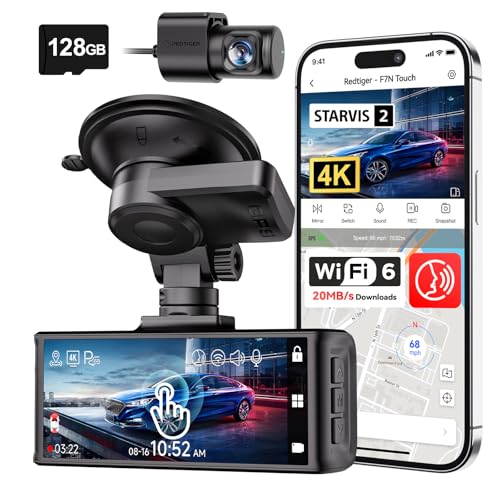
- 4K front and 1080P rear recording
- GPS, app access, and three control methods
- 128GB card included
Best For: Owners who want detailed footage and easy phone access
Best for Flexible Rear Coverage
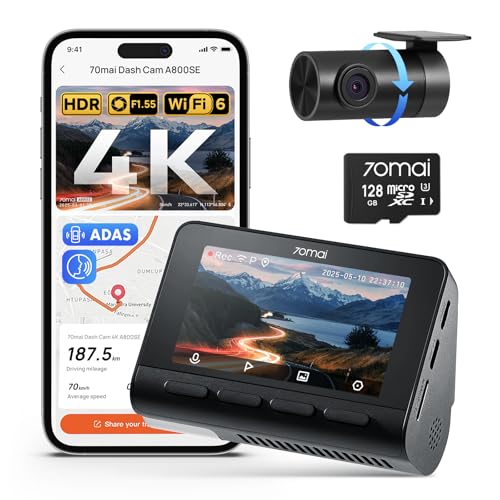
- 4K front and adjustable 1080P rear camera
- Wi-Fi 6 app access and built-in GPS
- 128GB card included
Best For: Drivers choosing between cabin and rear-road footage
Best for Adjustable Mounting
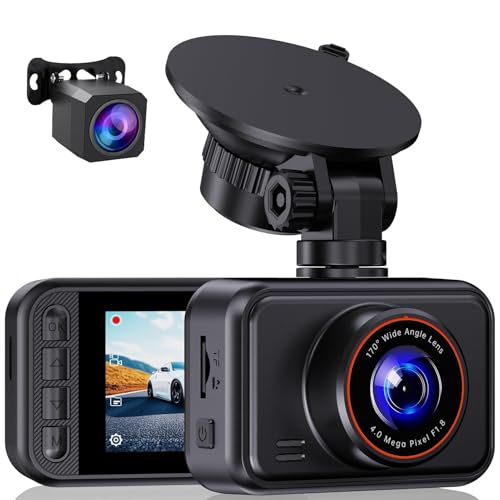
- 360° removable suction mount
- 2.5K front and 1080P rear recording
- MicroSD card sold separately
Best For: Owners who want easy camera repositioning
Best for Simple On-Device Control
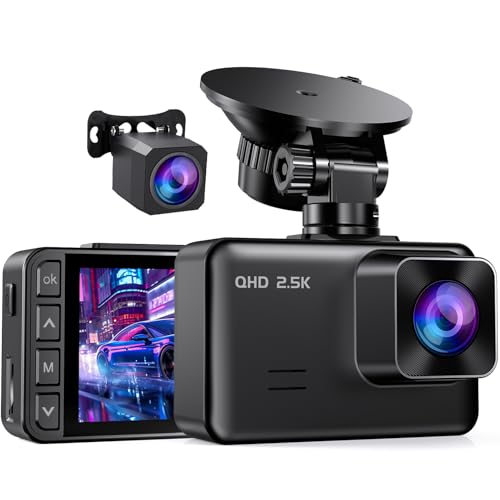
- 2.5K front and 1080P wired rear camera
- 2-inch screen with physical controls
- Parking mode needs a separate hardwire kit
Best For: Drivers who prefer on-camera controls
Budget-Friendly Front Coverage

- Compact front-facing design
- 1296P video with 170° coverage
- App playback; microSD card not included
Best For: Small, phone-controlled front coverage
Most Discreet

- Key-sized windshield camera
- 1080p video with glare-reducing polarizer
- Remote features have subscription requirements
Best For: Low-visibility installation and voice control
Best Front-and-Rear Coverage

- Front and rear cameras included
- 2.5K front video upscaled to 4K
- GPS and 128GB card included
Best For: Two-way coverage with GPS data
Discreet Wide-Angle Pick

- Compact camera with low-profile mount
- 1440p video and 180-degree view
- Built-in GPS; 16GB card included
Best For: Unobtrusive front coverage with GPS
Screen-Free 4K Pick

- Compact, screen-free design
- 4K front video and 160-degree lens
- 32GB card included; 5GHz Wi-Fi
Best For: Minimal-looking 4K front recording
Four-Channel Coverage Pick

- Four simultaneous 1080p views
- 128GB card and supercapacitor
- GPS logger and parking hardwire kit sold separately
Best For: Multi-angle coverage around the vehicle
Best for Connected Features – REDTIGER F7N TOUCH 4K Dual Dash Cam
If you want a dash cam for classic cars with front-and-rear coverage and convenient ways to retrieve footage, the REDTIGER F7N TOUCH combines 4K front recording, a 1080P rear camera, built-in GPS, and app access. Its suction-cup mount is removable, though you will still need to route a cable to the rear camera.
Best For: Owners who want high-resolution footage and phone-based access without giving up on-device controls.
Pros:
- STARVIS 2 front sensor, HDR/WDR, and a 170° front view support recording in varied lighting.
- Voice commands, touchscreen, and physical buttons offer several ways to operate it.
- Includes a 128GB card; GPS, loop recording, and G-sensor clip locking are built in.
Cons:
- Parking monitoring requires a separately purchased hardwire kit.
- The wired rear camera adds installation work.
The included storage and multiple control options make this a feature-rich choice. For a classic car, plan the cable route and power connection before mounting it.
Best for Flexible Rear Coverage – 70mai A800SE 4K Dash Cam
The 70mai A800SE is a dash cam for classic cars when you want to choose between filming behind the vehicle and recording the cabin: its 1080P rear camera has an adjustable lens, paired with a 4K front camera. Wi-Fi 6 and an included 128GB card also make it practical to access and store clips.
Best For: Drivers who value adjustable rear-camera coverage and quick phone-based footage access.
Pros:
- Adjustable rear lens can face the cabin or the road behind the car.
- F1.55 front aperture and dual HDR are designed to help in difficult lighting.
- Includes GPS, G-sensor clip locking, a 128GB card, and Wi-Fi 6 app access.
Cons:
- The rear camera records at 1080P rather than 4K.
- Parking surveillance is optional; the supplied notes do not specify what additional equipment it needs.
Its adjustable rear lens is the standout feature if your preferred camera angle may change. Check where the windshield mount and rear-camera cable will sit in your particular car before installation.
Best for Adjustable Mounting – E-YEEGER S60 Dual Dash Cam
For a dash cam for classic cars that you can reposition or remove, the E-YEEGER S60 pairs a 360° suction mount with a compact front unit. It records at 2.5K in front and 1080P in back, with a 2-inch screen for checking the view and settings.
Best For: Owners who prioritize an adjustable, removable windshield mount and straightforward on-camera controls.
Pros:
- 360° suction mount simplifies angle adjustments and removal.
- 170° front lens and WDR help capture a broad view in changing light.
- Loop recording and G-sensor locking help preserve impact footage.
Cons:
- No microSD card is included.
- 24-hour parking monitoring requires a separately purchased compatible Type-C hardwire kit.
The mount is its clearest advantage for owners who do not want to leave the front unit in place all the time. Budget for a memory card and allow for rear-camera wiring.
Best for Simple On-Device Control – E-YEEGER S50 Dual Dash Cam
If you prefer physical buttons over app setup, the E-YEEGER S50 is a dash cam for classic cars worth considering. Its 2-inch screen lets you review clips and adjust settings on the camera, while its wired rear unit adds 1080P coverage behind the 2.5K front camera.
Best For: Drivers who want basic front-and-rear recording with accessible, on-camera settings.
Pros:
- 170° front and 160° rear views cover both directions.
- F/1.6 front aperture, starlight sensor, and WDR support low-light recording.
- Physical buttons and a 2-inch display allow local playback and settings changes.
Cons:
- The rear camera needs a cable routed through the vehicle.
- 24-hour parking mode requires the separately sold V5F three-core hardwire kit.
This is a practical pick if a screen and buttons matter more to you than phone-based features. With the standard car charger, it records only while it receives vehicle power, so plan separately if parked-car coverage is essential.
Budget-Friendly Front Coverage – Veement V300 1296P
If you want a dash cam for classic cars without a bulky windshield display, the compact Veement V300 offers front-facing 1296P recording. Its 170° lens covers a wide stretch of road, and the VeeCar app lets you review footage on your phone.
Best For: Drivers who want a small, app-controlled front camera and do not need rear coverage.
Pros:
- 1296P recording and a wide 170° field of view.
- Built-in Wi-Fi supports local previews and clip downloads through the app.
- Loop recording, G-sensor, and support for microSD cards up to 256GB.
Cons:
- Records only the road ahead.
- MicroSD card is sold separately; the camera needs continuous USB-C power.
The V300 is a straightforward way to add discreet front coverage, but plan a tidy power-cable route before fitting it to a classic dashboard.
For a dash cam for classic cars where windshield clutter matters, the key-sized Garmin Dash Cam Mini 3 is worth considering. It records 1080p video across a 140° view, while its built-in polarizer helps cut windshield glare.
Best For: Owners who prioritize a barely noticeable camera and simple, voice-controlled incident recording.
Pros:
- Key-sized body and low-profile adhesive mount.
- Polarizer reduces windshield glare in recorded video.
- Voice commands can save video or control audio recording.
Cons:
- 1080p resolution is lower than the other front cameras in this lineup.
- Remote live view and parking alerts require constant power, active Wi-Fi, and a paid Vault subscription.
The Mini 3 keeps the camera visually understated. Check the subscription and connectivity requirements before buying it specifically for remote parking features.
If your dash cam for classic cars needs to record traffic behind you as well as ahead, the ROVE R2-4K Dual includes both cameras and a 128GB microSD card. Its front camera records at 2.5K and upscales to 4K for playback; the rear records at 1080p.
Best For: Owners who want front-and-rear footage, GPS driving data, and a memory card in the box.
Pros:
- Simultaneous front and rear recording, with a Sony STARVIS 2 front sensor for low-light footage.
- Built-in GPS records route, location, and speed data.
- Includes a 128GB microSD card and supports cards up to 1TB.
Cons:
- Front video is upscaled 4K, not native 4K.
- Parking mode requires a separate hardwire kit; rear-camera installation adds cabling.
This is the more involved installation of the three, but its included rear camera makes sense when coverage in both directions is the priority.
Discreet Wide-Angle Pick – Garmin Dash Cam 67W
If you want a dash cam for classic cars that stays relatively unobtrusive, the pocket-sized Garmin Dash Cam 67W is worth considering. Its 180-degree lens records 1440p video, and saved incident clips include GPS location, date, and time.
Best For: Drivers who want a compact front-facing camera with wide coverage and built-in GPS.
Pros:
- Compact body and low-profile magnetic mount help keep the installation discreet.
- Records 1440p video across a 180-degree field of view, with HDR optics.
- Includes a 16GB microSD card and supports voice commands for saving video.
Cons:
- Parking Guard requires Wi-Fi; remote Live View also requires constant power and active Wi-Fi.
- The included 16GB card may be limiting if you want more recording storage.
This is a practical choice when preserving the view through a classic car’s windshield matters. Check your power setup before counting on monitoring while parked.
For a dash cam for classic cars that avoids adding another screen to the cabin, this compact galphi model records front-facing 4K video without a display. Its 160-degree lens and 5GHz Wi-Fi app connection make it a straightforward option for capturing and retrieving footage.
Best For: Drivers who prefer a small, screen-free front camera with 4K recording.
Pros:
- Screen-free design keeps the camera visually simple.
- Records 4K video with a 160-degree field of view.
- Includes a pre-installed 32GB card; loop recording and a G-sensor help manage incident footage.
Cons:
- Parking mode requires a separate Type-C hardwire kit.
- Reviewing video through the app may not suit buyers who want an on-camera screen.
Choose this one if a minimal-looking front camera is the priority. Budget for the hardwire kit if you want its time-lapse parking mode.
If your search for a dash cam for classic cars is driven by coverage rather than a minimal installation, the ZMOPO D435 records front, rear, left, and right views through four 1080p channels. It includes a 128GB card and uses a supercapacitor.
Best For: Owners who want footage from multiple sides of their vehicle and accept a more involved installation.
Pros:
- Four simultaneous 1080p camera views provide broader coverage than a front-only unit.
- Includes a 128GB memory card, with loop recording and incident locking.
- 5GHz Wi-Fi supports app-based video downloads and sharing.
Cons:
- Parking mode needs an optional ACC hardwire kit, sold separately.
- Location and speed tracking require a separately purchased GPS logger.
- Four-channel coverage involves more cameras and cabling than a single front camera.
The broader view may justify the extra installation effort if documenting activity around the whole car is your goal. Do not assume GPS or hardwired parking operation is included out of the box.
How We Picked the Best Dash Cam for Classic Cars
We compared the listed cameras by coverage, stated resolution, size, connectivity, and features such as GPS and parking recording. We also considered concerns specific to older vehicles: visible wiring, limited mounting space, and electrical systems that may not suit an always-on camera. A higher resolution or wider feature list is not automatically better if installation compromises the car’s appearance or drains its battery.
Product names do not establish real-world image quality, included hardwiring accessories, or compatibility with every vehicle. Confirm the current package contents and power requirements before ordering.
Quick Comparison: Which Setup Fits Your Car?
Front-Only, Dual-Channel, or All-Around Coverage
A compact front-only model, such as the Garmin Mini 3, Veement 1296P, or galphi 4K, is the simplest route when discreet installation matters most. A front-and-rear camera adds evidence for rear-end incidents but requires routing a cable to the back window. The REDTIGER, 70mai, ROVE, and two 2.5K-plus-1080p options fit that general category. The four-channel 360 View system covers more directions, including the cabin, at the cost of more mounting and wiring.
If you want a wide forward view without a rear camera, the Garmin 67W lists a 180-degree field of view. Wide coverage can capture more of an intersection, though objects at the edges may appear smaller.
Key Buying Factors for a Dash Cam for Classic Cars
Mounting and Reversibility
Check windshield clearance, mirror placement, and local rules on obstructed views. A small camera tucked behind the mirror is less conspicuous than a large screen. Plan a reversible cable route along existing trim; avoid drilling, cutting original upholstery, or placing adhesive on delicate surfaces without checking the material first.
Power and Parking Mode
Check whether your car has a suitable 12-volt outlet and whether it switches off with the ignition. Some classic cars use different electrical arrangements, including positive-ground or 6-volt systems, that standard dash-cam adapters may not support. Ask a qualified auto electrician before connecting one to an unfamiliar system. Parking recording often needs a compatible hardwire kit or external battery, and a low-voltage cutoff helps protect the starting battery. Verify what the chosen model includes rather than assuming “24H parking mode” works straight from the box.
Footage and Everyday Use
Prioritize readable footage in the conditions you actually drive in, especially at night. GPS can add location and speed data; Wi-Fi makes clip transfers easier. Check whether a suitable microSD card is included, its supported capacity, and whether the camera recommends a high-endurance card for repeated recording.
Who Should Buy Which Dash Cam for Classic Cars?
For an unobtrusive weekend driver, start with a compact front-only camera. For regular road use, a dual-channel setup offers a practical balance of coverage and complexity. Consider four channels if side impacts or cabin activity are particular concerns and you accept the extra installation work. If your car spends long periods in storage, prioritize battery-safe parking power over advertised recording hours. The best Dash Cam for Classic Cars is the one you can install cleanly, power safely, and check easily after every drive.