
A cine lens can make manual focusing and exposure changes more predictable, but the right focal length matters just as much as the markings on the barrel. This roundup covers 10 Micro Four Thirds-mount options spanning an 8mm ultra-wide to an 85mm telephoto.
Whether you shoot on a GH-series camera, BMPCC 4K, or another compatible body, use the picks to narrow down the field of view and working distance your projects actually need.
Best 10 Cinema Lens for Micro Four Thirds Picks for 2026
Versatile 16mm Pick
Meike 16mm T2.2 Mini Cine Lens

- 32mm full-frame-equivalent view on MFT
- T2.2 manual-focus prime
- No image stabilization
Best For: Moderately wide, manually focused video scenes
Low-Light Pick

- Fast T1.2 maximum aperture
- 270-degree manual-focus throw
- S35-coverage lens with M4/3 mount
Best For: Low-light footage and controlled focus pulls
Landscape Wide-Angle Pick
Meike 12mm T2.2 Metal Cine Lens

- Listed 92-degree angle of view
- T2.2 manual-focus prime
- All-metal construction
Best For: Wide landscape videography
Close-Focus Wide Pick
Meike 12mm T2.2 Mini Cine Lens

- 22cm minimum focusing distance
- 24mm full-frame-equivalent focal length on MFT
- No image stabilization
Best For: Close-subject shots with wide framing
Everyday Focal Length
Meike 25mm T2.2 Mini Cinema Lens
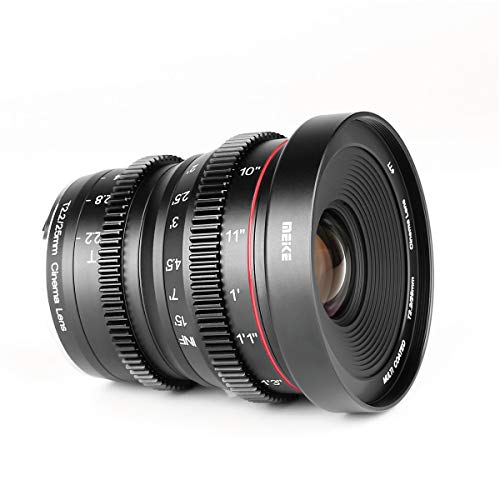
- 25mm manual-focus MFT prime
- T2.2 maximum aperture
- Aluminum body; multi-coated glass
Best For: General-purpose MFT video with manual controls
Portrait Reach
Meike 50mm T2.2 Mini Cinema Lens

- 50mm; stated 100mm-equivalent view
- T2.2 for shallow-depth-of-field shots
- Manual focus; little reported focus breathing
Best For: Portraits and tighter MFT video compositions
Wide-Scene Pick

- 16mm focal length; stated 73° view
- T2.2 all-metal manual prime
- No image stabilization
Best For: Landscapes and wide MFT video shots
Interview-Friendly Prime
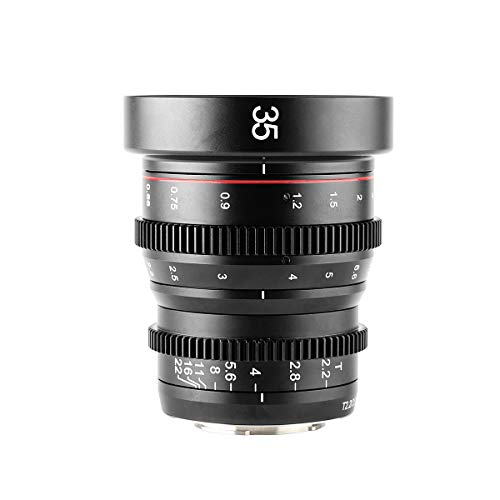
- 35mm, 70mm-equivalent framing
- T2.2 aperture for subject separation
- Manual-focus MFT mount
Best For: Interview and portrait video
Tight-Framing Prime

- 85mm fixed focal length
- T2.2 aperture
- Manual-focus MFT mount
Best For: Tight portrait compositions
Ultra-Wide Prime

- 8mm, 16mm-equivalent framing
- Stated 108-degree view
- Manual-focus MFT mount
Best For: Wide shots in limited space
Versatile 16mm Pick – Meike 16mm T2.2 Mini Cine Lens
If you want a cinema lens for micro four thirds with a moderately wide view, this manual-focus Meike 16mm gives you a 32mm full-frame-equivalent field of view. Its MFT mount suits cameras such as the GH5, BMPCC 4K, and Z Cam E2.
Best For: Everyday video scenes that need a moderately wide prime and deliberate manual focus.
Pros:
- T2.2 maximum aperture.
- Designed to deliver smooth, circular bokeh with little to no focus breathing.
- 13-element, 10-group optical construction intended for sharp, clear video.
Cons:
- Manual focus and exposure require hands-on operation.
- Some cameras may need M mode or a release-without-lens setting enabled.
- No image stabilization.
The 16mm focal length sits between the wider 12mm options and the tighter 24mm lens in this roundup. Choose it if that middle-ground framing matters more than autofocus or stabilization.
Low-Light Pick – SIRUI Night Walker 24mm T1.2
For a cinema lens for micro four thirds when lighting is limited, the SIRUI Night Walker 24mm stands out for its T1.2 maximum aperture. This manual-focus, M4/3-mount prime is listed for cameras including the BMPCC 4K, GH-series models, and Z Cam.
Best For: Low-light filming and subject-focused shots where a fast cine prime is useful.
Pros:
- T1.2 aperture allows filming in lower light without relying as heavily on high ISO.
- 270-degree focus-ring rotation supports precise manual pulls.
- Aluminum housing and a 0.3m minimum focus distance.
- Designed for minimal focus breathing and controlled aberrations.
Cons:
- Manual focus takes practice, especially at wide apertures.
- Its 24mm focal length is less suited to very wide framing than the 12mm options here.
The main reason to pick this lens is its T1.2 aperture; its long focus throw also makes sense for planned focus moves. Note that its S35 coverage describes the lens design, not a wider field of view on an MFT camera.
Landscape Wide-Angle Pick – Meike 12mm T2.2 Metal Cine Lens
If wide landscape framing is your priority, this cinema lens for micro four thirds pairs a 12mm focal length with a listed 92-degree angle of view. It is a manual-focus MFT prime compatible with cameras including the GH5, BMPCC 4K, and Z Cam E2.
Best For: Landscape videography and other shots that call for a wide view.
Pros:
- Listed 92-degree angle of view for expansive framing.
- T2.2 maximum aperture offers room for shallow-depth-of-field shots.
- All-metal construction.
- 14 elements in 10 groups, designed for sharp images with low distortion.
Cons:
- Manual focus and exposure require direct control.
- No image stabilization.
This is the 12mm option to consider when the stated wide angle of view and metal build are deciding factors. Check your planned framing against the other Meike 12mm listing, whose supplied angle-of-view specifications differ.
Close-Focus Wide Pick – Meike 12mm T2.2 Mini Cine Lens
This cinema lens for micro four thirds offers a 12mm focal length, a T2.2 maximum aperture, and a stated 22cm minimum focusing distance. Meike lists a 24mm full-frame-equivalent focal length on MFT bodies and compatibility with cameras such as the GH5, BMPCC 4K, and Z Cam E2.
Best For: Wide manual-focus shots that benefit from focusing close to the subject.
Pros:
- 22cm minimum focusing distance.
- T2.2 maximum aperture and 15-element, 10-group optical construction.
- Designed to produce smooth, circular bokeh with little to no focus breathing.
Cons:
- Manual operation may require M mode or a release-without-lens setting.
- No image stabilization.
- The supplied angle-of-view figure differs from that of the other Meike 12mm listing, so verify framing requirements before buying.
The close-focus specification gives this 12mm version a clear reason to consider it for nearby subjects. Because the two Meike 12mm listings report different optical details, compare their exact model numbers rather than treating them as interchangeable.
Everyday Focal Length – Meike 25mm T2.2 Mini Cinema Lens
Meike 25mm T2.2 Manual Focus Prime Mini Cinema Lens for Micro Four Thirds MFT M43 Mount Cameras
Check Price On AmazonIf you want a cinema lens for Micro Four Thirds with a versatile 25mm focal length, this Meike manual-focus prime is worth considering. It pairs a T2.2 maximum aperture with an aircraft-grade aluminum body and multi-coated optical glass.
Best For: MFT shooters who want a manual 25mm prime for general-purpose video.
Pros:
- 25mm fixed focal length with a stated 49.7° diagonal view.
- T2.2 maximum aperture.
- Aluminum construction and multi-coated glass elements.
Cons:
- Manual focus and exposure require hands-on operation.
- Not water-resistant.
Choose this one when 25mm framing suits your shots and you are comfortable operating a manual lens. Its stated materials and coating are useful considerations, but weather protection is not part of the package.
For tighter framing, this cinema lens for Micro Four Thirds offers a 50mm focal length that the supplied notes describe as 100mm-equivalent. Its T2.2 aperture and manual-focus design make it a compact option for deliberately composed video shots.
Best For: MFT filmmakers shooting portraits and other tighter compositions.
Pros:
- 50mm focal length provides a stated 24.8° view angle.
- T2.2 aperture supports shallow-depth-of-field shots.
- Supplied notes report little focus breathing and good center-to-corner sharpness.
Cons:
- Manual focus may be less convenient for fast-moving subjects.
- Not water-resistant.
This is the longer-framing choice of the three. Consider it when subject separation and a narrow field of view matter more than the flexibility of a wider lens.
If wide scenes are your priority, this cinema lens for Micro Four Thirds combines a 16mm focal length with a stated 73° view angle. The all-metal, manual-focus prime is aimed at shooters comfortable setting up shots themselves.
Best For: MFT landscape videography and other wide compositions.
Pros:
- 73° stated view angle suits expansive scenes.
- T2.2 maximum aperture.
- All-metal construction.
Cons:
- Manual operation may require enabling M mode or “Release without lens” on the camera.
- No image stabilization; not water-resistant.
Pick the 16mm when a wider view is the main goal. Check your camera’s manual-lens settings before shooting, and plan for stabilization separately if your setup needs it.
Interview-Friendly Prime – Meike 35mm T2.2 Mini Prime
If you want a cinema lens for micro four thirds that suits interviews and portraits, this manual-focus 35mm prime offers a 37-degree view and a 70mm-equivalent focal length. Its T2.2 aperture gives you room to separate a subject from the background.
Best For: Interview and portrait video on Micro Four Thirds cameras.
Pros:
- T2.2 aperture supports shallow-depth-of-field shots.
- Compact Mini Prime design.
- Designed for little focus breathing, with sharpness across the frame.
Cons:
- Manual focus and exposure require hands-on control.
- Your camera may need M mode or “Release without lens” enabled.
This is a practical pick when a tighter, subject-focused frame matters more than autofocus convenience. Check your camera settings before shooting with this manual lens.
For shooters comparing a cinema lens for micro four thirds, this manual-focus 85mm prime is the option here for especially tight framing. Its T2.2 aperture supports shallow-depth-of-field video, while the compact Mini Prime design keeps the setup straightforward.
Best For: Portrait video and shots where you can work with a long focal length.
Pros:
- 85mm fixed focal length suits tight compositions.
- T2.2 aperture supports background separation.
- Notes describe little focus breathing and good center-to-corner sharpness.
Cons:
- Manual focus and exposure take active adjustment.
- A fixed 85mm focal length gives you no zoom flexibility.
Choose this lens when tight framing is the priority. The supplied notes give conflicting angle-of-view and equivalent-focal-length figures, so confirm framing for your camera and shooting space before buying.
If your cinema lens for micro four thirds needs to capture more of the scene, this manual-focus 8mm prime is the widest choice in this group. It offers a stated 108-degree view and 16mm-equivalent focal length in a compact Mini Prime design.
Best For: Wide video compositions and shots in limited space.
Pros:
- 8mm focal length and stated 108-degree view capture a broad scene.
- T2.9 maximum aperture.
- Notes describe little focus breathing and sharpness across the frame.
Cons:
- Manual focus requires hands-on operation.
- Fixed focal length offers no zoom flexibility.
This is the pick for a broad field of view rather than tight subject framing. The supplied notes disagree on the optical construction, so verify that specification if it matters to your purchase.
How We Picked the Best Cinema Lens for Micro Four Thirds
We organized the 10 listed lenses around decisions filmmakers can make from published specifications: mount, focal length, maximum T-stop, and manual-focus design. The selection runs from 8mm to 85mm and includes both compact Meike-style primes and the faster SIRUI Night Walker 24mm T1.2. Similar-looking 12mm and 16mm listings may represent different product lines or versions; check the exact model, dimensions, and gear specifications before ordering. This is a buying comparison, not a claim that every lens was independently lab-tested.
Quick Comparison: Which Focal Length Fits?
On a Micro Four Thirds camera, an 8mm lens gives an ultra-wide view suited to cramped spaces or dramatic establishing shots. The 12mm and 16mm options offer progressively less exaggerated wide shots; 16mm can be especially versatile for handheld scenes and two-person coverage. A 24mm or 25mm lens provides a natural-looking general-purpose angle, while 35mm, 50mm, and 85mm options move toward tighter interviews, details, and portraits. As a rough full-frame field-of-view comparison, double the stated focal length—but remember that perspective also depends on camera position.
Key Buying Factors for a Cinema Lens for Micro Four Thirds
Mount and Image Coverage
Confirm the listing specifies an MFT or M4/3 mount, not merely compatibility with an MFT camera through an adapter. The SIRUI 24mm is described as an S35 lens with an M4/3 mount: its larger intended image circle does not change its 24mm focal length or make it a 35mm lens on an MFT sensor. Check your camera’s active sensor crop, particularly for unusual recording modes.
T-Stops and Low-Light Needs
T-stops describe transmitted light, making them useful when matching exposure between cine lenses. Most options here are listed at T2.2, the 8mm at T2.9, and the SIRUI 24mm at T1.2. A faster maximum aperture can help in dim scenes, but it also reduces depth of field and makes focus more demanding.
Rigging and Lens Matching
Look up focus and iris gear placement, front diameter, filter compatibility, weight, and minimum focus distance if you use a follow-focus, matte box, or gimbal. For a multi-lens kit, verify whether the exact versions share color rendering and physical dimensions; matching brand names alone is no guarantee.
Who Should Buy Which Cinema Lens for Micro Four Thirds?
Start with a 24mm or 25mm if you need one everyday Cinema Lens for Micro Four Thirds. Choose 12mm or 16mm for interiors, moving-camera work, or broader environmental coverage; pick 8mm only when an emphatically wide look is the goal. Add 35mm or 50mm for closer compositions, then consider 85mm when you have enough space to back up. If low-light shooting is the priority, compare the T1.2 24mm against the T2.2 alternatives, while factoring in the extra precision wide-open focusing requires.