
Choosing a cinema camera with full frame sensor comes down to more than resolution alone. The right model should balance dynamic range, autofocus, recording formats, and real-world rigging needs.
This roundup focuses on cameras that can handle narrative, commercial, documentary, and hybrid production work without forcing you to compromise on image quality or workflow.
Best 10 Cinema Camera with Full Frame Sensor Picks for 2026
Hybrid 8K Workhorse

- 45MP full-frame sensor
- 8K/60P internal RAW recording
- Internal cooling fan for continuous shooting
Best For: Hybrid creators who need full-frame video and stills
RED Color in a Compact Body

- 6K full-frame sensor
- REDCODE RAW with RED color science
- 32-bit float audio and swiveling 4-inch monitor
Best For: Filmmakers wanting RED-style capture in a compact body
Pro Modular Cinema Body

- 6K full-frame BSI sensor
- Genlock, timecode, XLR, SDI, and HDMI
- Native RF mount with PL adapter support
Best For: Production crews needing a flexible full-frame cinema body
Fast-AF Cine Zoom Package

- 10.2MP full-frame BSI sensor
- Up to 4K 120p with Fast Hybrid AF
- Includes 24-105G zoom and variable ND
Best For: Run-and-gun shooters who want fast autofocus and a zoom kit
Canon C80 6K Full-Frame Cinema Body

- 6K full-frame BSI sensor
- C-Log 2/3 for grading
- Built-in ND filters and XLR inputs
Best For: Filmmakers needing a compact Canon cinema body with pro controls
Sony FX6 Full-Frame Cinema Camera

- 4K full-frame BSI sensor
- Up to 4K 120p recording
- Variable ND and fast Hybrid AF
Best For: Crews and solo shooters needing speed and strong low-light performance
Canon C80 Kit with RF 24-70mm

- 6K full-frame sensor
- Triple Base ISO for mixed light
- Includes RF 24-70mm f/2.8 lens
Best For: Filmmakers wanting a ready-to-shoot Canon cinema kit with a lens
Blackmagic Pick
Blackmagic Cinema Camera 6K Full-Frame L-Mount

- 6K full-frame sensor with 13 stops of dynamic range
- Records 12-bit Blackmagic RAW plus H.264 proxies
- Includes DaVinci Resolve Studio and a 5" HDR screen
Best For: Filmmakers who want a full-frame 6K cinema body with Blackmagic RAW workflow
Sony Pick
Sony FX3 Full-Frame Cinema Camera Bundle

- 12.1MP full-frame sensor with 4K up to 120 fps
- 5-axis stabilization plus Real-time Eye AF
- 10-bit 4:2:2 internal recording and active cooling
Best For: Solo operators, gimbal users, and small crews that want a compact full-frame cinema camera
Power Bundle Pick
Blackmagic Cinema Camera 6K Power Bundle
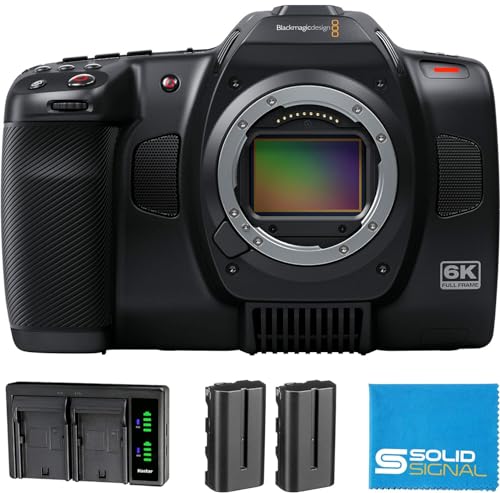
- Full-frame 6K sensor with 13 stops of dynamic range
- Adds two NP-F570 batteries and a dual charger
- Records Blackmagic RAW to CFexpress Type B or USB-C SSD
Best For: Filmmakers who want the Blackmagic 6K full-frame camera plus extra power accessories
Hybrid 8K Workhorse – Canon EOS R5 C
If you want a cinema camera with full frame sensor that can switch between serious stills and high-end video, the Canon EOS R5 C is built for that hybrid workflow. Its 45MP full-frame sensor, internal cooling fan, and 8K/60P internal RAW recording make it a strong pick for creators who need one body for both production and photography.
Best For: Hybrid shooters who need a compact full-frame body for 8K video and high-resolution stills.
Pros:
- 45MP full-frame CMOS sensor with 8K/60P internal RAW recording
- Internal cooling fan supports nonstop 8K/60P shooting
- Dual Pixel CMOS AF with Eye/AF Head Detection for reliable focus tracking
- Multiple recording formats, including XF-AVC and MP4, for different workflows
Cons:
- Body-only design means you need to supply your own RF lens
- More feature-rich than a simple run-and-gun camera, so setup can take time
The R5 C stands out when your priority is high-resolution capture without giving up still-photo capability. It is a practical choice for creators who want cinema-grade video tools in a compact full-frame package.
RED Color in a Compact Body – Nikon RED Z Cinema ZR
The Nikon RED Z Cinema ZR is aimed at shooters who want a cinema camera with full frame sensor performance plus RED-style color tools in a portable body. With a 6K full-frame sensor, 15+ stops of dynamic range, and REDCODE RAW capture, it is built for productions that care about image latitude and post-production flexibility.
Best For: Filmmakers and content creators who want RED color science in a compact full-frame camera.
Pros:
- 6K full-frame sensor with 15+ stops of dynamic range
- Captures REDCODE RAW (R3D NE) footage with RED color science and Log curve
- 32-bit float audio recording with support for external microphones
- Large 4-inch DCI-P3 touchscreen monitor that swivels
Cons:
- Kit lens is a 50mm prime, so you may need additional lenses for versatility
- No viewfinder is listed in the supplied details
This camera is a compelling option if you value raw capture and strong monitoring tools in a lightweight package. It favors creators who want a streamlined rig with serious cinema-grade image and audio features.
Pro Modular Cinema Body – Canon EOS C400
The Canon EOS C400 is a true cinema camera with full frame sensor design for productions that need strong image quality and professional connectivity. Its 6K full-frame BSI sensor, 6K RAW support, and modular I/O make it a fit for narrative work, documentaries, and live-event setups that rely on flexible rigging.
Best For: Professional crews that need a full-frame cinema body with robust connectivity and lens flexibility.
Pros:
- 6K full-frame BSI sensor for detailed cinematic capture
- 6K RAW support and Dual Pixel CMOS AF II for demanding shoots
- Pro connectivity including Genlock, timecode, XLR inputs, SDI, and HDMI
- Native RF mount with PL mount adapter support
Cons:
- At 10.2 pounds, it is heavier than compact mirrorless-style options
- Designed more for production rigs than minimal handheld use
The C400 is best when you need a production-ready camera body rather than an all-in-one compact solution. It offers the kind of I/O and mounting flexibility that makes sense on sets with multiple crew roles and accessories.
Fast-AF Cine Zoom Package – Sony FX6 with 24-105G
If you need a cinema camera with full frame sensor speed and flexibility, the Sony FX6 is built for fast-moving productions. It combines a 10.2MP full-frame back-illuminated sensor, high sensitivity, and up to 4K 120p recording with a kit zoom lens, making it useful for run-and-gun work, events, and documentary shooting.
Best For: Crews and solo shooters who want a lightweight full-frame cinema body with a versatile zoom kit.
Pros:
- 10.2MP full-frame BSI sensor with high sensitivity and 15+ stops of dynamic range
- Fast Hybrid AF with 627 phase-detection points and Eye-AF tracking
- Up to 4K 120p, DCI 4K 60p, and FHD 240p recording
- Electronically controlled variable ND filter for quick exposure control
Cons:
- Included monitor is limited to 1280 x 720 resolution
- Designed around a cinema workflow, so it may feel more specialized than a general-purpose camera
The FX6 kit is a strong match if you want speed, autofocus, and built-in exposure control in a full-frame cinema body. The included 24-105mm lens also makes it easier to start shooting without assembling a separate kit.
Canon C80 6K Full-Frame Cinema Body – Full-Frame 6K RF-Mount Camera
If you want a cinema camera with full frame sensor support that’s built for serious production, the Canon EOS C80 is aimed squarely at filmmakers who need resolution, latitude, and workflow flexibility. Its 6K full-frame BSI sensor, C-Log 2/3 profiles, built-in ND filters, and Dual Pixel AF make it a practical choice for controlled shoots, documentary work, and solo operation.
Best For: Filmmakers who want a compact full-frame Canon cinema body with pro video features.
Pros:
- 6K full-frame BSI sensor for detailed capture and rich dynamic range
- C-Log 2/3 supports flexible color grading in post-production
- Built-in ND filters and dual XLR inputs add set-ready convenience
- RF mount with adapter support for EF or PL flexibility
Cons:
- Body-focused setup may require additional lenses and accessories
- At 6 pounds, it is not the lightest option for run-and-gun use
The C80 stands out as a full-frame cinema tool that combines image quality with working pro features, especially for users already invested in Canon glass or adaptable mount ecosystems.
Sony FX6 Full-Frame Cinema Camera – 4K 120p Compact Body
The Sony FX6 is a strong cinema camera with full frame sensor coverage for creators who prioritize speed, sensitivity, and high-frame-rate capture. Its 4K full-frame back-illuminated sensor, high ISO ceiling, 15+ stop dynamic range, and electronically controlled variable ND make it a capable choice for fast-moving productions.
Best For: Crews and solo shooters who need a compact full-frame cinema camera with strong low-light performance.
Pros:
- 4K full-frame BSI sensor with up to 15+ stops of dynamic range
- Up to 4K 120p, DCI 4K 60p, and FHD 240p recording
- Electronically controlled optical variable ND filter for quick exposure control
- Fast Hybrid AF with 627 phase-detection points and Eye-AF tracking
Cons:
- Body-only package means you’ll need to add lenses and media
- Smaller 1-inch sensor size is listed in the details, so verify specifications against your needs
For production teams that want a compact full-frame cinema camera with high sensitivity and versatile frame-rate options, the FX6 is built around speed and practical shooting control.
Canon C80 Kit with RF 24-70mm – Full-Frame 6K Lens Kit
For buyers who want a cinema camera with full frame sensor coverage and a ready-to-shoot lens bundle, this Canon EOS C80 kit is the more complete option. It pairs the C80’s 6K full-frame sensor, Triple Base ISO, and Cinema RAW Light recording with an RF 24-70mm f/2.8 lens, giving filmmakers a flexible starting point for demanding productions.
Best For: Filmmakers who want a full-frame Canon cinema kit with an included standard zoom lens.
Pros:
- 6K full-frame sensor designed for professional cinema-quality capture
- Triple Base ISO values of 800, 3200, and 12800 for varied lighting
- Records in Cinema RAW Light, XF-AVC, or MP4 for workflow flexibility
- Includes RF 24-70mm f/2.8 lens for broad everyday shooting coverage
Cons:
- Kit adds cost compared with body-only camera options
- Still requires a full production setup beyond the included lens and card
This kit is a practical pick if you want a full-frame cinema package that reduces the need to source a lens separately while still leaving room for a professional post-production workflow.
Blackmagic Pick – Blackmagic Cinema Camera 6K Full-Frame L-Mount
Blackmagic Design Cinema Camera 6K, Full Frame Sensor, L Mount (CINECAM60KLFL)
Check Price On AmazonIf you want a cinema camera with full frame sensor quality in a compact body, the Blackmagic Design Cinema Camera 6K is built around image-first filmmaking. It combines a 6K full-frame sensor, 13 stops of dynamic range, and dual gain ISO up to 25,600, making it a strong fit for controlled productions and low-light shooting.
Best For: Filmmakers who want a full-frame 6K cinema body with Blackmagic RAW workflow and a bright built-in display.
Pros:
- Full-frame 6K sensor with native 6048 x 4032 resolution
- Records 12-bit Blackmagic RAW and H.264 proxies
- Includes DaVinci Resolve Studio for editing and color work
- Built-in 5″ 1500-nit HDR LCD reduces the need for an external monitor
Cons:
- Uses a Leica L lens mount, so lens compatibility depends on your setup
- Manual-focused cinema workflow may not suit casual shooters
- No in-body stabilization is listed in the supplied notes
Overall, this is a practical choice for creators who care more about image quality, codec flexibility, and post-production control than run-and-gun convenience. It looks especially appealing if you already work in the Blackmagic ecosystem.
Sony Pick – Sony FX3 Full-Frame Cinema Camera Bundle
The Sony FX3 is a compact cinema camera with full frame sensor performance aimed at hybrid shooters who need video-first features in a lightweight body. Its 12.1MP full-frame Exmor R sensor supports UHD 4K up to 120 fps, strong low-light performance, and over 15 stops of dynamic range.
Best For: Solo operators, gimbal users, and small crews that want a compact full-frame cinema camera with fast autofocus.
Pros:
- Full-frame 12.1MP sensor with 4K up to 120 fps
- 5-axis in-body stabilization and Real-time Eye AF
- 10-bit 4:2:2 internal recording with S-Log3 and S-Cinetone
- Bundle adds a bag, 64GB card, tripod, reader, and other accessories
Cons:
- Lower still-photo resolution than many hybrid full-frame cameras
- Bundle weight and extras may be more than some users need
- Uses Sony E mount, so lens selection depends on that ecosystem
For creators who prioritize speed, autofocus, and flexible rigging, the FX3 is one of the most practical full-frame cinema options here. The bundled accessories make it easier to start shooting right away.
Power Bundle Pick – Blackmagic Cinema Camera 6K Power Bundle
If you are shopping for a cinema camera with full frame sensor performance and want extra battery support from day one, this Blackmagic Design Cinema Camera 6K power bundle is a straightforward option. It delivers the same full-frame 6K imaging, 13 stops of dynamic range, and dual gain ISO up to 25,600 as the base model, with added batteries and a dual charger.
Best For: Filmmakers who want the Blackmagic 6K full-frame camera plus extra power accessories in one package.
Pros:
- Full-frame 6K sensor with native 6048 x 4032 resolution
- Includes two additional NP-F570 batteries and a dual charger
- Records Blackmagic RAW and supports CFexpress Type B or USB-C SSD storage
- Comes with DaVinci Resolve Studio and a microfiber cloth
Cons:
- Uses a Leica L mount, so lens compatibility matters
- No built-in stabilization is listed in the supplied notes
- Bundle is heavier than the base camera alone because of the extra accessories
This bundle makes sense if you want the camera itself plus a little more shooting endurance without piecing together accessories separately. It keeps the same image-focused Blackmagic workflow while improving readiness for longer sessions.
How We Picked the Best Cinema Camera with Full Frame Sensor
We prioritized image quality, codec and recording options, autofocus performance, monitoring tools, power and media flexibility, and how practical each camera is for solo operators or larger crews. We also looked at whether each Cinema Camera with Full Frame Sensor offers strong heat management, usable ergonomics, and a clear upgrade path for serious production work.
Quick Comparison
In broad terms, Canon and Sony models here lean toward dependable autofocus, robust pro video tools, and familiar on-set workflows. Blackmagic options emphasize raw capture, color depth, and value for filmmakers who plan to grade heavily. The Nikon RED Z model stands out for audio and RED color science, making it appealing for users who want a cinematic image with a modern hybrid setup.
Key Buying Factors for a Cinema Camera with Full Frame Sensor
Resolution and Recording Formats
Look beyond headline megapixels or 6K/8K branding. Check whether the camera records internally in RAW, 10-bit 4:2:2, or a compressed codec that matches your editing setup. If you deliver for streaming, corporate work, or fast turnaround projects, efficient codecs may matter more than maximum resolution.
Autofocus and Stabilization
For run-and-gun work, reliable subject tracking and face detection can save time and shots. If you shoot handheld often, in-body stabilization or lens-based stabilization can also make a major difference.
Cooling, Battery Life, and Media
Long interviews, events, and outdoor shoots demand cameras that can record for extended periods without overheating. Also confirm whether the body uses widely available media and batteries, since that can affect total ownership cost.
Mount, Rigging, and Audio
A Cinema Camera with Full Frame Sensor should fit your lens ecosystem and support the accessories you already own. Built-in ND filters, timecode, XLR audio, and external monitor support can speed up production and reduce the need for extra rigging.
Who Should Buy Which Cinema Camera with Full Frame Sensor?
Choose Canon if you want dependable autofocus, strong color, and a polished hybrid-cinema workflow. Choose Sony if you value compact bodies, fast readout, and strong low-light or handheld shooting. Choose Blackmagic if your priority is image control, RAW workflows, and maximum value for post-production. Choose Nikon RED Z if audio capture and RED-style color science are key parts of your workflow.
For most buyers, the best choice is the camera that fits your shooting style, lens mount, and post-production pipeline—not just the highest specs on paper.