
The best cassette recorders for interviews make it easier to capture conversations without relying on a phone’s notifications, storage, or battery life. This roundup includes traditional tape recorders, portable cassette players, and compact digital voice recorders.
Use the comparison and buying advice below to choose the right format, microphone setup, power source, and playback options for your interview workflow.
Best 10 Cassette Recorders for Interviews Picks for 2026
Best Analog Starter
Jensen MCR-100 Cassette Recorder

- One-touch cassette recording
- Automatic level control
- Built-in mic and portable handle
Best For: Simple analog interviews and notes
Best for Long Interviews
Sunlan 16GB Digital Voice Recorder

- 16GB digital storage
- Noise reduction and voice activation
- Up to 30 hours of recording
Best For: Extended interviews and USB file transfer
Best Cassette-and-Radio Combo
Mersoco T201BUS Cassette Recorder
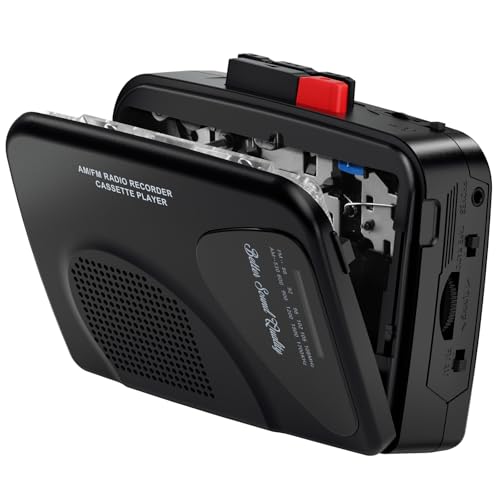
- Records external sound to cassette
- AM/FM radio included
- AA battery or 5V power options
Best For: Portable analog recording and radio use
Best Feature-Rich Digital Pick

- Stereo recording with noise reduction
- Voice activation and A-B repeat
- MP3/WAV files via Micro USB
Best For: Organized digital interview recording and review
Best Cassette-to-USB Hybrid
QFX RETRO-39BT Shoebox Recorder

- Built-in mic records to standard cassette
- Converts audio to MP3 on a USB drive
- Bluetooth, FM, and AC/battery operation
Best For: Voice interviews, lectures, and cassette-to-USB conversion
Best Digital Alternative

- 64GB storage for extended recording capacity
- Voice activation and adjustable recording gain
- USB-C transfer with WAV and MP3 support
Best For: Digital interviews, meetings, lectures, and computer transfer
Best Simple Interview Cassette Recorder
PROSCAN PRC124AMZ Cassette Recorder

- One-touch recording for interviews and classes
- Free-standing and external microphone options
- Portable AC/DC design with headphone and AUX jacks
Best For: Straightforward cassette recording for interviews, classes, and conferences
Best Value Starter

- External and built-in microphone recording
- Aux input for compatible phones and computers
- AC or battery operation with carrying handle
Best For: Beginners recording interviews, voice notes, and audio to cassette
Most Versatile Boombox

- Built-in microphone records interviews to cassette
- Adds AM/FM radio, USB, and Bluetooth
- AC or battery powered with stereo speaker
Best For: Users wanting recording plus broad playback features
Best Simple Voice Recorder

- Built-in microphone for voice recording
- Simple buttons and clear labels
- Battery or AC powered with headphone and aux connections
Best For: Straightforward interviews, lectures, and voice notes
Best Analog Starter – Jensen MCR-100 Cassette Recorder
For shoppers comparing cassette recorders for interviews, the Jensen MCR-100 is a straightforward analog option with a built-in condenser microphone, one-touch recording, and automatic level control. Its retractable handle and headphone jack also make it practical for portable or private use.
Best For: Simple cassette-based interviews, lectures, notes, and on-the-go recording.
Pros:
- One-touch recording simplifies operation.
- Automatic level control helps maintain consistent recording volume.
- Built-in microphone, external microphone jack, auxiliary input, and headphone jack provide flexible connections.
- Retractable handle supports portable use.
Cons:
- Records to cassette rather than offering direct digital file transfer.
- Its mono built-in microphone may be less suitable for stereo capture.
- The listed warranty is limited to 90 days.
The MCR-100 makes sense when physical tapes and uncomplicated controls matter most. Choose it over a digital recorder if you specifically want cassette recording or auxiliary-source recording.
Best for Long Interviews – Sunlan 16GB Digital Voice Recorder
Among cassette recorders for interviews, this compact Sunlan device is actually a digital voice recorder designed for convenient file storage and playback. It combines a sensitive microphone, noise-reduction processing, voice activation, and up to 30 hours of continuous recording.
Best For: Extended interviews, lectures, meetings, and users who want easy USB file transfer.
Pros:
- 16GB storage provides substantial recording capacity.
- DSP noise reduction and a sensitive microphone are designed to capture speech clearly.
- Voice-activated recording can reduce silent sections and conserve power.
- USB connectivity supports use as a removable storage device.
Cons:
- It records WAV files digitally rather than onto physical cassette tapes.
- The built-in microphone operates in mono.
- Battery life is listed as up to 30 hours for recording and 7 hours for playback.
This is the more practical choice for interviewers who need searchable, transferable digital recordings rather than tape-based archiving. The one-button controls and A-B repeat function are useful when reviewing key answers.
Best Cassette-and-Radio Combo – Mersoco T201BUS Cassette Recorder
For buyers specifically seeking cassette recorders for interviews, the Mersoco T201BUS offers manual cassette recording alongside AM/FM radio playback. It can record external sounds or broadcasts to tape, includes a 3.5mm earphone, and runs on two AA batteries or a 5V DC supply.
Best For: Portable cassette recording, field use, radio recording, and basic lecture or seminar capture.
Pros:
- Supports recording external sound and AM/FM broadcasts to cassette.
- Dual power options suit indoor and outdoor use.
- Compact design includes built-in speakers and a 3.5mm earphone.
- Visible play, record, fast-forward, and rewind controls are simple to operate.
Cons:
- Two AA batteries are required for battery-powered use.
- Manual recording controls may require more attention than one-touch digital models.
- Its stated frequency response is 125–6.3 kHz, which may limit high-frequency detail.
The T201BUS is a versatile analog pick when radio functionality and cassette recording are equally important. It is best suited to straightforward speech capture rather than advanced interview production.
Best Feature-Rich Digital Pick – HoTiyan 8GB Voice Recorder
Although it is a digital voice recorder rather than a cassette deck, the HoTiyan H-10001 is worth considering alongside cassette recorders for interviews. It offers a higher-sensitivity microphone, noise reduction, voice activation, stereo recording, and MP3/WAV file support in a compact design.
Best For: Interviewers who want compact digital recording with playback controls and organized file management.
Pros:
- Supports stereo recording with a higher-sensitivity microphone and noise reduction.
- Voice activation can reduce quiet sections and save storage space.
- Offers A-B repeat, variable playback speed, timestamps, and password protection.
- 8GB storage and Micro USB transfer support convenient file management.
Cons:
- It does not record onto physical cassette tapes.
- Continuous recording is listed at up to 20 hours per charge.
- Storage is more limited than the 16GB digital alternative in this roundup.
The H-10001 is a strong digital alternative for users who value review and organization features. Its stereo recording and playback tools make it particularly useful when interviews need repeated listening or speed adjustment.
Best Cassette-to-USB Hybrid – QFX RETRO-39BT Shoebox Recorder
If you want cassette recorders for interviews with extra playback flexibility, the QFX RETRO-39BT combines a built-in microphone with cassette recording, USB MP3 conversion, Bluetooth, FM radio, and line-in support. Its mono speaker and compact carry-handle design make it better suited to spoken audio and personal listening than room-filling sound.
Best For: Voice interviews, lectures, casual mixtapes, and users who want to convert cassette or other audio sources to USB.
Pros:
- Records to cassette with its built-in mono microphone.
- Can save cassette, Bluetooth, FM, mic, or line-in audio as MP3 on a USB drive.
- Supports AC power or four C batteries for portable use.
- Includes Bluetooth, FM radio, USB playback, and a 3.5mm headphone jack.
Cons:
- Mono sound and natural tape hiss are less suitable for polished recordings.
- USB recording supports USB drives, but there is no SD card slot.
- Four C batteries are required for battery operation and are not included.
Choose this model if you specifically want a traditional cassette recorder with modern USB and Bluetooth features. For interviews where compact digital file management is the priority, a dedicated digital voice recorder may be more convenient.
Best Digital Alternative – EVISTR L357 Voice Recorder
Although it is not a cassette deck, the EVISTR L357 is a practical alternative to cassette recorders for interviews when you want searchable digital files. It offers a built-in noise-reduction microphone, adjustable recording gain, voice activation, and direct computer transfer through USB-C.
Best For: Interviews, meetings, lectures, and users who prefer long digital recording times and simple file transfer.
Pros:
- 64GB storage can hold up to 4,660 hours at 32Kbps, according to the supplied specifications.
- Records WAV or MP3 audio with up to 1536Kbps stereo recording.
- Voice activation and seven recording-gain levels help reduce silent sections and adjust capture sensitivity.
- Offers up to 32 hours of continuous recording and transfers files to Windows or Mac via USB-C.
Cons:
- Does not record or play physical cassette tapes.
- Its small screen may be less convenient for navigating extensive recordings.
- Digital features may feel less familiar to shoppers specifically seeking a tape-based workflow.
This is the strongest choice in the group for interviewers who value capacity, voice-activated recording, and quick file transfer over cassette compatibility. It is especially practical when recordings need to move directly to a computer for review or transcription.
Best Simple Interview Cassette Recorder – PROSCAN PRC124AMZ Cassette Recorder
PROSCAN Cassette Player & Recorder with Microphone, Headphone Jack, Aux in, Black
Check Price On AmazonThe PROSCAN PRC124AMZ keeps the cassette-recording experience straightforward, making it a sensible option for shoppers comparing cassette recorders for interviews, classes, and conferences. It includes one-touch recording, a free-standing microphone, an external microphone jack, and automatic level control.
Best For: Basic interview, classroom, and conference recording when physical cassette operation is the main requirement.
Pros:
- One-touch recording is convenient for starting interviews and classes.
- Includes a free-standing microphone plus an external microphone input.
- Automatic level control is designed to support clear, consistent recordings.
- Portable 1.8-pound design with carry handle, headphone jack, AUX input, and AC/DC operation.
Cons:
- Supplied notes do not list USB, Bluetooth, or digital file conversion features.
- Recording requires cassette media and does not offer the digital storage convenience of a voice recorder.
- The product is lightweight, but it is less compact than a mini digital recorder.
Pick the PROSCAN when you want a conventional tape recorder with simple controls and flexible microphone options. Its automatic level control and one-touch button are useful for spoken-word recording, while the lack of digital conversion makes it a more traditional choice.
Best Value Starter – Portable Cassette Recorder
For shoppers comparing cassette recorders for interviews, this portable model offers straightforward voice recording through its included external microphone or built-in condenser microphone. Its speaker, carrying handle, AC adapter, and optional battery operation make it practical for basic recording at home or while traveling.
Best For: Beginners who want a simple cassette recorder for interviews, voice notes, or recording audio from a phone, laptop, or tablet.
Pros:
- Records through the included external microphone or built-in microphone.
- Aux-in cable supports recording from compatible devices with a headphone jack.
- Includes a built-in speaker, carrying handle, AC adapter, and 3.5mm headphone jack.
- Large buttons and portable design are easy to use.
Cons:
- Four C batteries are required for portable battery operation but are not included.
- Recording is to cassette tape rather than a digital file.
This is a sensible pick when ease of use and included accessories matter more than advanced controls. The external microphone is especially useful for getting started with interview recording without buying additional equipment.
Most Versatile Boombox – KLIM Cassette Recorder
Among cassette recorders for interviews, the KLIM stands out for adding radio, USB, and Bluetooth functions to a portable cassette boombox. Its built-in microphone can record directly to cassette, while the 3W stereo speaker, handle, and dual power options support flexible use at home or on the go.
Best For: Users who want an interview-capable cassette recorder that also serves as a radio, USB player, and Bluetooth speaker.
Pros:
- Records to cassette from the built-in microphone or radio.
- Supports playback or recording from USB, with an included 8GB USB drive.
- Includes AM/FM radio, Bluetooth, a stereo speaker, and an earphone jack.
- Runs from AC power or four C-cell batteries.
Cons:
- Four C-cell batteries are not included.
- Its boombox-style feature set may be more than needed for simple interview recording.
This model is a strong choice if you want one device for recording, listening, and casual media playback. Choose it over a simpler recorder when Bluetooth, USB, and radio functionality are useful alongside cassette recording.
Best Simple Voice Recorder – Coby CVR-22
The Coby CVR-22 is a practical choice among cassette recorders for interviews when you prefer a basic, self-contained design. Its built-in microphone is intended for voice notes, lectures, and interviews, while battery or AC power and simple controls make it easy to use in different settings.
Best For: Interviewers, students, and seniors who want uncomplicated voice recording with cassette playback in a compact unit.
Pros:
- Built-in microphone supports recording voice notes, lectures, and interviews.
- Simple buttons and clear labels are accessible for new users.
- Battery or AC operation provides flexible placement and use.
- Offers a headphone jack and aux input for listening options.
Cons:
- Four C batteries are required and may need to be purchased separately.
- It does not list an included external microphone.
- The supplied notes do not specify advanced recording controls.
The Coby is best viewed as a no-frills cassette recorder for spoken audio. Its built-in microphone and uncomplicated controls keep the setup simple, while the headphone and aux connections add useful listening flexibility.
How We Picked the Best Cassette Recorders for Interviews
We selected these models for practical interview use, considering recording format, microphone availability, portability, power options, playback convenience, and ease of operation. The list includes classic cassette machines for users who want physical tapes, along with digital voice recorders that offer simpler file transfer and longer recording capacity.
Because recording quality depends on the room, speaker distance, and background noise as much as the device itself, we prioritized useful features such as built-in microphones, headphone jacks, voice activation, USB connectivity, and external input support. We also considered whether each recorder is suitable for quick field interviews, classroom work, meetings, or archival use.
Quick Comparison
| Recorder type | Best for | Main advantage | Potential limitation |
|---|---|---|---|
| Cassette recorder | Hands-on interviews and physical archives | Simple tactile operation and removable tapes | Requires tapes and later digitization for easy sharing |
| Digital voice recorder | Frequent interviews, lectures, and meetings | Reusable storage and straightforward computer transfer | May offer fewer traditional playback controls |
| Boombox-style recorder | Home, classroom, or group use | Larger speaker, radio, and multiple inputs | Less compact for mobile reporting |
| Compact portable recorder | Travel and casual recording | Lightweight design and fast setup | Small speakers and limited microphone flexibility |
Key Buying Factors for Cassette Recorders for Interviews
Recording Format and Storage
Choose cassette recording if you need physical media, analog playback, or compatibility with an existing tape archive. Digital models are generally more convenient for repeated interviews because files can be copied, backed up, and transcribed without real-time tape conversion. Check the advertised storage capacity and whether the device supports USB transfer.
Microphone Placement and Inputs
A built-in microphone is convenient, but it works best when the recorder is positioned close to both speakers. Models with an external microphone input or auxiliary input provide more flexibility, especially for interviews conducted in noisy spaces or with a dedicated microphone. Avoid placing the recorder near table vibrations, air vents, or handling noise.
Power and Portability
Battery-powered units are useful in the field, while AC or USB power is convenient for desks and long sessions. If you interview away from outlets, confirm the battery type, carry spares, and check whether recording can continue while charging. A compact body is easier to carry, but larger units may have more accessible controls and stronger speakers.
Monitoring and Playback
Headphone output helps you monitor a conversation privately and check whether the recording is working. Built-in speakers are useful for quick review, although they are not a substitute for headphones when evaluating quiet speech or background noise.
Who Should Buy Which Cassette Recorders for Interviews?
Choose a traditional cassette recorder if you value physical tapes, straightforward one-touch recording, or compatibility with older recordings. A digital voice recorder is the better fit for journalists, students, researchers, and frequent interviewers who need reusable storage and simple file management. Pick a boombox-style model for home or classroom use where radio, speakers, Bluetooth, or multiple power options matter. For travel and occasional conversations, select the smallest recorder that still provides dependable microphone placement, sufficient storage, and convenient power.